My Auntie Pat wasn’t trying to impress anyone. I’d stopped by her house on a random Tuesday afternoon to drop off a book she’d loaned my mama, and the smell hit me before I even got through the screen door. That savory, sage-heavy aroma wrapped around me like a hug you didn’t know you needed. She was standing at the stove in her house shoes, stirring a big pot of turkey stock, with a pan of cornbread cooling on the counter. “You might as well stay,” she said, not even looking up. “You know I’m making the dressing.”
And honestly, that was it. I sat at her kitchen table for the next two hours, watching her work like it was nothing. She didn’t have a recipe written down. She just knew—a pinch of this, a handful of that, a little more sage because “that’s what makes it taste like something.” She crumbled that cornbread with her hands, added some leftover white bread she’d saved in the freezer, and poured in broth until the mixture looked “right.” I asked her how she knew when it was ready, and she just laughed. “Baby, you just know. You been watching your whole life.”
That afternoon changed how I thought about dressing. It wasn’t about fancy techniques or complicated steps. It was about feel and memory and a little bit of faith. I messed up my first two attempts after that day—too dry, then too soggy. But I kept at it, calling her with questions, until I got it right. This classic Black folks cornbread dressing with sage is the result of those phone calls and my own kitchen trials. It’s the dressing that shows up on my table every Thanksgiving and Christmas, and honestly, it’s the dish my family fights over. Maybe you’ve been there—standing in your kitchen, hoping to recreate that taste from your childhood. Let me tell you, this recipe gets you there.
Why You’ll Love This Recipe
Let me be straight with you—this isn’t fancy restaurant dressing. This is the kind of dressing that tastes like Sunday dinner at your grandmother’s house. It’s rich, it’s savory, and that sage flavor hits you right in the soul. Here’s why this recipe works for real families on real budgets:
- Budget-Friendly Ingredients: You probably already have most of this in your pantry. Cornmeal, eggs, chicken broth, onions, and celery cost next to nothing. No fancy truffle oil or imported cheeses here.
- Feeds a Crowd Without Breaking the Bank: This recipe stretches to feed 10-12 people easily. That’s less than a dollar a serving for a dish that tastes like a million bucks.
- Picky Eater Approved: My nephew swears he doesn’t like “stuffing,” but he’ll eat three helpings of this dressing. The texture is soft and comforting, nothing weird or challenging.
- Make-Ahead Magic: You can prep this the day before and just bake it when you’re ready. That’s a lifesaver when you’re juggling a turkey and three other sides.
- Leftovers That Reheat Like a Dream: Honestly, this dressing might be better the next day. The flavors meld together overnight, and it reheats beautifully in the oven or microwave.
What makes this recipe different from all the others online? It’s the technique. Most recipes tell you to use boxed cornbread mix and call it a day. Not this one. We’re making cornbread from scratch—it’s cheaper, and the texture is way better for soaking up that seasoned broth. Plus, I’m sharing my auntie’s trick of adding a little white bread to the mix. It sounds weird, but it gives the dressing that soft, almost custardy texture that keeps people coming back for more.
This isn’t just good dressing. It’s the kind that makes you close your eyes after that first bite. It’s comfort food at its finest—simple, honest, and made with love. Perfect for feeding your family without stressing over complicated steps or expensive ingredients.
What Ingredients You Will Need
This recipe uses simple, honest ingredients that work together to create that deep, savory flavor you remember from family dinners. Most of these are pantry staples, and none of them will require a special trip to a fancy grocery store.
For the Cornbread
- 2 cups yellow cornmeal (I prefer Albers or Quaker for consistent texture)
- 1 cup all-purpose flour
- 1 tablespoon baking powder
- 1 teaspoon salt
- 1/4 cup granulated sugar (just a touch of sweetness to balance the savory)
- 2 large eggs, room temperature
- 1 1/2 cups buttermilk (adds tenderness; regular milk works too)
- 1/2 cup vegetable oil or melted butter (butter gives richer flavor)
For the Dressing

- 6 cups crumbled cornbread (from the recipe above, about one full 9×13 pan)
- 2 cups stale white bread cubes (day-old sandwich bread works perfect—tear it into small pieces)
- 1 cup unsalted butter (2 sticks)
- 2 cups finely diced yellow onion (about 2 medium onions)
- 1 1/2 cups finely diced celery (about 4-5 stalks)
- 1/2 cup finely diced green bell pepper (optional, but my auntie swears by it)
- 4 cloves garlic, minced
- 2 tablespoons dried sage (this is non-negotiable—it’s the star of the show)
- 1 tablespoon dried thyme
- 1 teaspoon black pepper
- 1 teaspoon salt (plus more to taste)
- 1/2 teaspoon poultry seasoning (adds that classic holiday flavor)
- 4 cups chicken or turkey stock (homemade is best, but store-bought works fine)
- 3 large eggs, beaten
- 1/4 cup fresh parsley, chopped (for color and freshness)
Ingredient Tips: For the cornbread, I really recommend making it from scratch. Boxed mixes have a sweeter, cake-like texture that doesn’t hold up well in dressing. If you’re in a pinch, use Jiffy corn muffin mix and skip the sugar in the recipe. For the sage, dried is actually better than fresh here—it has a more concentrated flavor that stands up to baking. And please, don’t skimp on the butter. This is dressing, not a diet. The butter is what makes it rich and satisfying.
Substitution Guidance: If you’re gluten-sensitive, use a gluten-free all-purpose flour blend in the cornbread and gluten-free bread for the cubes. For a dairy-free version, use vegan butter and unsweetened almond milk mixed with a teaspoon of lemon juice in place of buttermilk. The texture will be slightly different, but the flavor will still be there.
Equipment Needed
You don’t need a professional kitchen to make this dressing. Here’s what you’ll need:
- 9×13 baking dish (for the cornbread and for baking the dressing)
- Large mixing bowls (one for cornbread batter, one for the dressing mixture)
- Large skillet or Dutch oven (for sautéing the vegetables)
- Whisk (for mixing cornbread batter)
- Wooden spoon or spatula (for stirring the dressing)
- Measuring cups and spoons
- Chef’s knife and cutting board
- Aluminum foil (for covering the dressing while baking)
If you don’t have a 9×13 dish, you can use a large cast-iron skillet or two 8×8 pans. The baking time might vary slightly, so keep an eye on it. I’ve used a disposable aluminum pan before when bringing dressing to a family gathering—it works perfectly and saves on cleanup. For the sautéing, any large pan will do. I’ve made the vegetable base in a stockpot when my skillet was busy with gravy. It’s all good.
Preparation Method
Take your time with this. Good dressing can’t be rushed. Plan for about 45 minutes of prep and 45 minutes of baking. The cornbread needs to cool completely before you crumble it, so I recommend making it a day ahead.
Step 1: Make the Cornbread
Preheat your oven to 400°F (200°C). Grease your 9×13 baking dish with butter or cooking spray. In a large bowl, whisk together the cornmeal, flour, baking powder, salt, and sugar. In a separate bowl, beat the eggs, then add the buttermilk and oil. Pour the wet ingredients into the dry ingredients and stir until just combined—a few lumps are fine. Pour the batter into the prepared dish and bake for 20-25 minutes, until golden brown and a toothpick inserted in the center comes out clean. Let it cool completely. I usually make this the night before and leave it on the counter covered with a clean kitchen towel.
Step 2: Prepare the Bread Cubes
While the cornbread cools, tear your white bread into small cubes, about 1/2 inch each. Spread them on a baking sheet and let them sit out overnight to dry out. If you’re short on time, toast them in a 300°F (150°C) oven for 10-15 minutes, stirring once. You want them dry but not browned.
Step 3: Sauté the Vegetables
In a large skillet or Dutch oven, melt the butter over medium heat. Add the diced onions, celery, and green bell pepper if using. Cook for 8-10 minutes, stirring occasionally, until the vegetables are soft and translucent. The onions should look glassy, not browned. Add the minced garlic and cook for another minute until fragrant. Remove from heat and let it cool slightly.
Step 4: Crumble the Cornbread
Break the cooled cornbread into large chunks in a very large mixing bowl. Use your hands to crumble it into fine pieces—this is the most satisfying part. You want a mix of fine crumbs and slightly larger pieces for texture. Add the dried bread cubes and toss to combine.
Step 5: Combine Everything
Pour the sautéed vegetables and butter over the cornbread mixture. Add the dried sage, thyme, black pepper, salt, and poultry seasoning. Toss everything together with your hands or a wooden spoon until the seasonings are evenly distributed. This is where you start to smell the magic happening.
Step 6: Add the Broth and Eggs
In a separate bowl, beat the three eggs. Slowly pour the chicken stock into the beaten eggs while whisking constantly—this tempers the eggs so they don’t scramble when they hit the hot mixture. Pour this liquid mixture over the cornbread and stir gently but thoroughly. The mixture should look very wet, almost like thick oatmeal. If it seems dry, add another 1/2 cup of stock. The dressing will absorb the liquid as it bakes.
Step 7: Bake the Dressing
Preheat your oven to 375°F (190°C). Transfer the dressing mixture to a greased 9×13 baking dish. Spread it evenly. Cover with aluminum foil and bake for 30 minutes. Remove the foil and bake for another 15-20 minutes, until the top is golden brown and the edges are crispy. The center should be set but still moist—not dry and crumbly. Let it rest for 10 minutes before serving. This resting time is crucial; it allows the dressing to firm up so it slices beautifully.
Cooking Tips & Techniques
I’ve made this dressing more times than I can count, and I’ve learned a few things the hard way. Let me save you some trouble.
Don’t Overmix the Cornbread Batter. I know it’s tempting to keep stirring until it’s smooth, but overmixing makes the cornbread tough. Stir just until the flour disappears. A few lumps are your friends.
The Moisture Test. Before you pour the dressing into the baking dish, grab a handful and squeeze it. It should hold together easily but not drip liquid. If it’s too dry, add more broth a quarter cup at a time. If it’s too wet, add a handful of breadcrumbs. This test has saved me more times than I can count.
Use Cold Stock. I learned this from my auntie. If your stock is hot, it can start cooking the eggs before the dressing goes in the oven. Cold stock keeps everything uniform and prevents that weird scrambled egg texture in your finished dressing.
Let the Cornbread Go Stale. Fresh cornbread crumbles too easily and turns to mush. Day-old cornbread has the perfect texture for soaking up broth without falling apart. If you’re in a rush, spread the crumbled cornbread on a baking sheet and bake at 300°F for 10 minutes to dry it out.
Don’t Skip the Foil. Baking covered for the first 30 minutes steams the dressing and keeps it moist. Uncovering at the end gives you that beautiful golden top. I once forgot the foil and ended up with dry, crusty dressing. Never again.
Timing Strategy. Make the cornbread two days ahead. Sauté the vegetables the night before. Assemble the dressing the morning of your meal. Pop it in the oven 45 minutes before you’re ready to eat. This breaks the work into manageable chunks and keeps you from losing your mind on the big day.
Variations & Adaptations
This recipe is a great starting point, but don’t be afraid to make it your own. Here are some variations I’ve tried and loved:
Southern Sausage Dressing: Brown 1 pound of breakfast sausage in the skillet before sautéing the vegetables. Remove the sausage, crumble it, and add it back when you combine everything. The rendered fat adds incredible flavor. My brother-in-law requests this version every year.
Turkey Neck Broth Version: Instead of using plain chicken stock, simmer turkey necks with onion, celery, and garlic for two hours. Strain the broth and use it in the dressing. This adds a deep, smoky flavor that’s hard to beat. It’s more work, but the flavor payoff is huge.
Gluten-Free Adaptation: Use a gluten-free cornbread mix (check the label) and gluten-free bread for the cubes. The texture will be a bit more crumbly, so add an extra egg to help bind everything together. I’ve made this for my cousin who has celiac, and she said it was the best dressing she’d had in years.
Vegetarian Version: Substitute vegetable stock for chicken stock and use vegan butter. Add an extra cup of sautéed mushrooms for that umami flavor. It won’t taste exactly like the original, but it’s delicious in its own right. My vegetarian niece gives it two thumbs up.
Spicy Creole Twist: Add 1/2 cup diced andouille sausage, 1 teaspoon smoked paprika, 1/2 teaspoon cayenne pepper, and 1/4 cup chopped green onions. This gives the dressing a Louisiana kick that’s perfect for Mardi Gras or any festive occasion.
Serving & Storage Suggestions
This dressing is best served warm, straight from the oven. Let it rest for 10 minutes after baking, then scoop it onto plates alongside your turkey, ham, or even fried chicken. The contrast between the crispy edges and the soft, moist center is everything.
What to Serve With It: This dressing pairs beautifully with roasted turkey and giblet gravy. It also works with baked ham, smothered pork chops, or even a simple roast chicken. For a complete soul food spread, add collard greens, mac and cheese, and candied yams. A side of cranberry sauce cuts through the richness perfectly.
Storage: Leftover dressing keeps in the refrigerator for up to 4 days in an airtight container. The flavors actually get better after a day or two as the herbs meld together. To reheat, cover with foil and warm in a 350°F oven for 15-20 minutes, or microwave individual portions for 1-2 minutes.
Freezing: This dressing freezes beautifully. Let it cool completely, then wrap the entire dish tightly in plastic wrap and aluminum foil. Freeze for up to 3 months. To serve, thaw overnight in the refrigerator and reheat covered in a 350°F oven for 25-30 minutes. I always make a double batch and freeze one for a rainy day.
Pro Tip: If you’re reheating a large batch, add a splash of chicken stock before warming to restore moisture. The dressing tends to dry out slightly in the fridge, and that extra liquid brings it back to life.
Nutritional Information & Benefits
Let’s be honest—this is comfort food, not health food. But it does have some redeeming qualities. Here’s the approximate nutritional breakdown per serving (based on 12 servings):
| Nutrient | Amount Per Serving |
|---|---|
| Calories | 385 |
| Total Fat | 22g |
| Saturated Fat | 11g |
| Cholesterol | 95mg |
| Sodium | 720mg |
| Total Carbohydrates | 38g |
| Dietary Fiber | 3g |
| Sugars | 6g |
| Protein | 8g |
Health Highlights: The cornmeal provides complex carbohydrates and a good amount of fiber, which helps with digestion. Celery and onions are low-calorie vegetables rich in antioxidants and vitamin K. Sage has been studied for its anti-inflammatory properties and may help with cognitive function. The eggs add high-quality protein. That said, this dish is high in saturated fat and sodium, so enjoy it in moderation as part of a balanced diet.
Dietary Considerations: This recipe contains gluten (from the flour and bread), dairy (from the butter and buttermilk), and eggs. For allergen-friendly versions, see the variations section above.
Conclusion
This classic Black folks cornbread dressing with sage is more than a recipe—it’s a connection to family, tradition, and the kind of cooking that comes from the heart. It’s the dish that shows up on tables across the South every holiday season, bringing people together with its familiar, soul-warming flavor. I’ve made this dressing for Thanksgiving, Christmas, Easter Sunday, and random Tuesday dinners when I needed a taste of home. Every time, it delivers.
I hope you’ll make this recipe your own. Add a little more sage if you like things savory. Throw in some sausage if that’s how your family does it. Use your grandmother’s cast iron skillet instead of a baking dish. The beauty of this dressing is that it welcomes your personal touch. Don’t be afraid to experiment and find your perfect version.
When you make it—and I really hope you do—come back and let me know how it turned out. Did your family fight over the crispy edges? Did you add your own twist? I’d love to hear about it. Share your photos, leave a comment, and pass this recipe along to someone who needs a taste of comfort. Because honestly, good food is meant to be shared. Now go on and get in that kitchen. Your family is waiting.
Frequently Asked Questions
Can I use boxed cornbread mix for this recipe?
You can, but I don’t recommend it. Boxed mixes like Jiffy are sweeter and have a finer texture that turns mushy in dressing. Homemade cornbread has a heartier crumb that holds up better. If you’re in a pinch, use Jiffy and skip the sugar in the cornbread recipe.
Why is my dressing dry?
Dry dressing usually means you didn’t add enough liquid or you baked it too long. The mixture should look very wet before baking—almost like thick oatmeal. Also, make sure you cover it with foil for the first 30 minutes of baking to trap steam.
Can I make this dressing ahead of time?
Absolutely. You can assemble the dressing completely, cover it, and refrigerate it for up to 24 hours before baking. Add 10-15 minutes to the baking time if starting from cold. You can also bake it fully, then reheat it the next day.
What’s the difference between dressing and stuffing?
The main difference is how they’re cooked. Stuffing is cooked inside the turkey cavity, while dressing is baked in a separate dish. Dressing is more common in Southern cooking and tends to be moister and more custard-like in texture.
Can I freeze leftover dressing?
Yes! Let the dressing cool completely, then wrap it tightly in plastic wrap and aluminum foil. Freeze for up to 3 months. Thaw overnight in the refrigerator and reheat covered in a 350°F oven. Add a splash of broth before reheating to restore moisture.
Pin This Recipe!
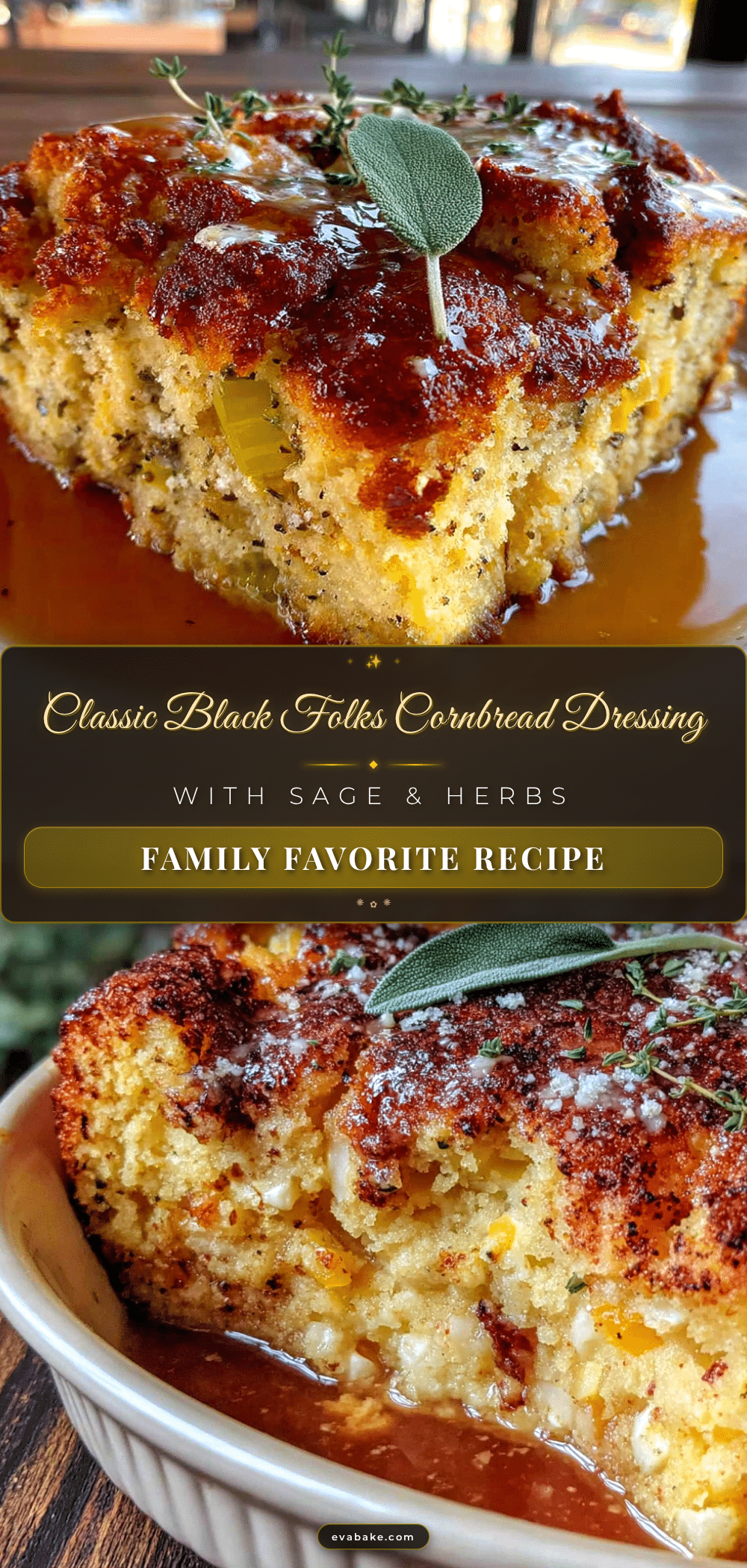
Classic Black Folks Cornbread Dressing with Sage – Best Ever

This classic Black folks cornbread dressing with sage is rich, savory, and tastes like Sunday dinner at your grandmother’s house. Made from scratch with simple ingredients, it’s the perfect comfort food for holidays and family gatherings.
- Prep Time: 45 minutes
- Cook Time: 45 minutes
- Total Time: 1 hour 30 minutes
- Yield: 12 servings 1x
- Category: Side Dish
- Cuisine: Southern / Soul Food
Ingredients
- 2 cups yellow cornmeal
- 1 cup all-purpose flour
- 1 tablespoon baking powder
- 1 teaspoon salt
- 1/4 cup granulated sugar
- 2 large eggs, room temperature
- 1 1/2 cups buttermilk
- 1/2 cup vegetable oil or melted butter
- 6 cups crumbled cornbread
- 2 cups stale white bread cubes
- 1 cup unsalted butter (2 sticks)
- 2 cups finely diced yellow onion (about 2 medium onions)
- 1 1/2 cups finely diced celery (about 4–5 stalks)
- 1/2 cup finely diced green bell pepper (optional)
- 4 cloves garlic, minced
- 2 tablespoons dried sage
- 1 tablespoon dried thyme
- 1 teaspoon black pepper
- 1 teaspoon salt
- 1/2 teaspoon poultry seasoning
- 4 cups chicken or turkey stock
- 3 large eggs, beaten
- 1/4 cup fresh parsley, chopped
Instructions
- Make the cornbread: Preheat oven to 400°F (200°C). Grease a 9×13 baking dish. Whisk together cornmeal, flour, baking powder, salt, and sugar. In a separate bowl, beat eggs, then add buttermilk and oil. Pour wet into dry and stir until just combined. Pour into prepared dish and bake 20-25 minutes until golden and a toothpick comes out clean. Cool completely.
- Prepare the bread cubes: Tear white bread into 1/2-inch cubes. Spread on a baking sheet and let dry overnight, or toast at 300°F (150°C) for 10-15 minutes until dry but not browned.
- Sauté the vegetables: In a large skillet or Dutch oven, melt butter over medium heat. Add onions, celery, and bell pepper (if using). Cook 8-10 minutes until soft and translucent. Add garlic and cook 1 minute more. Remove from heat and cool slightly.
- Crumble the cornbread: Break cooled cornbread into large chunks in a large mixing bowl. Use hands to crumble into fine pieces with some larger bits. Add dried bread cubes and toss to combine.
- Combine everything: Pour sautéed vegetables and butter over cornbread mixture. Add sage, thyme, black pepper, salt, and poultry seasoning. Toss until evenly distributed.
- Add broth and eggs: In a separate bowl, beat eggs. Slowly pour chicken stock into beaten eggs while whisking constantly. Pour this liquid over the cornbread mixture and stir gently until very wet, like thick oatmeal. Add more stock if needed.
- Bake the dressing: Preheat oven to 375°F (190°C). Transfer mixture to a greased 9×13 baking dish. Cover with foil and bake 30 minutes. Remove foil and bake 15-20 minutes more until top is golden and edges crispy. Let rest 10 minutes before serving.
Notes
Make cornbread a day ahead for best texture. The dressing mixture should look very wet before baking. Cover with foil for first 30 minutes to keep moist. Let rest 10 minutes after baking for easier slicing. Leftovers keep 4 days in fridge or freeze up to 3 months.
Nutrition
- Serving Size: 1 serving (1/12 of r
- Calories: 385
- Sugar: 6
- Sodium: 720
- Fat: 22
- Saturated Fat: 11
- Carbohydrates: 38
- Fiber: 3
- Protein: 8
Keywords: cornbread dressing, sage dressing, soul food dressing, Thanksgiving dressing, Southern dressing, Black folks dressing, holiday side dish