My brother asked why I couldn’t just sear the beef tenderloin whole and slice it after roasting, instead of fussing with tying it into neat little medallions before cooking. I started to explain why that wouldn’t work—then stopped. Honestly, I had no good reason. I’d been doing it the fussy way for years because that’s how I was taught, not because it was better.
That Tuesday evening, with a beautiful center-cut tenderloin resting on the counter and my brother watching me from the kitchen stool, I decided to try his way. No pre-slicing. No individual tying. Just a whole roast, seasoned generously, seared hard, and finished in the oven. I felt a little ridiculous, honestly—like I was breaking some unspoken chef code. But the moment I pulled that roast from the oven and let it rest, the kitchen filled with this incredible, peppery aroma that made us both quiet.
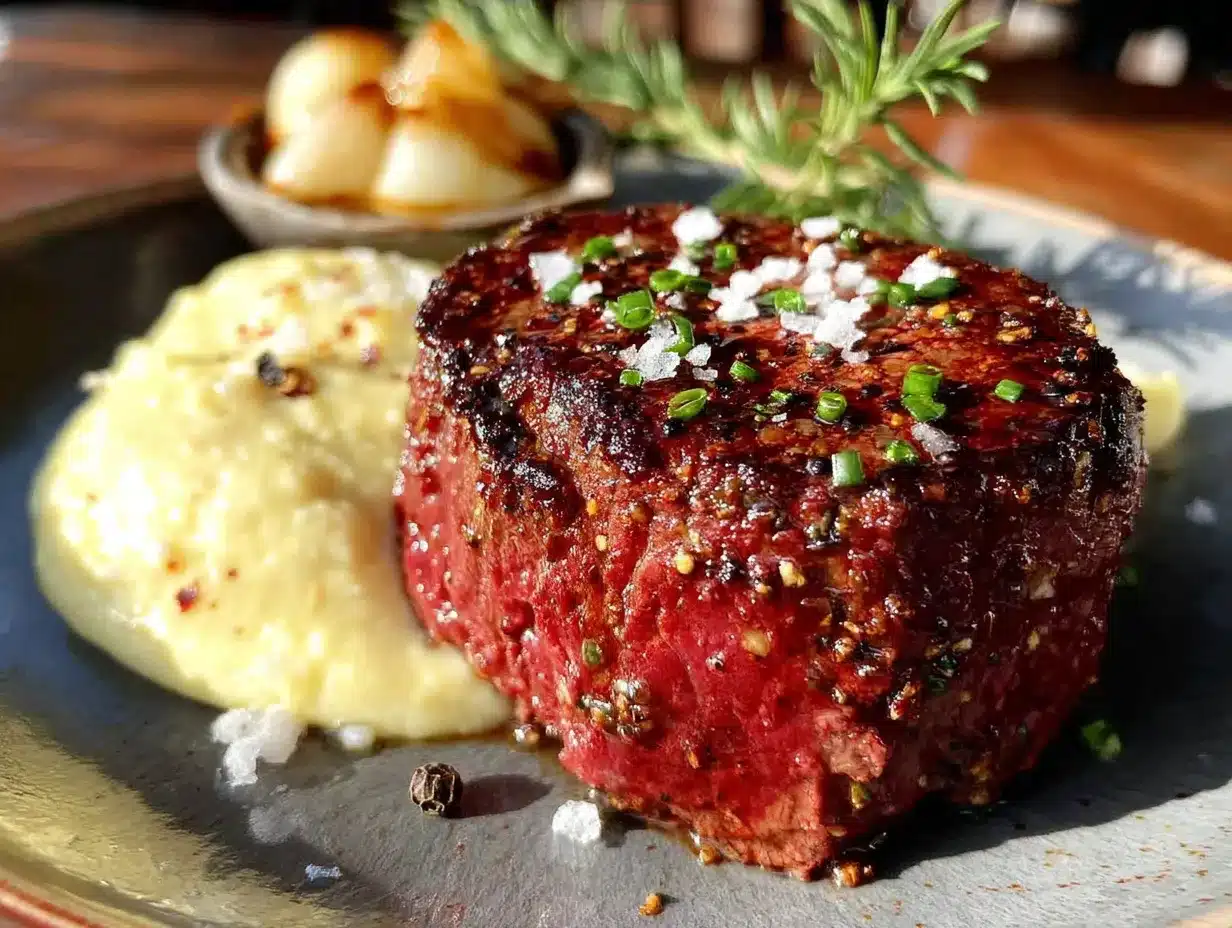
When I finally sliced into it, the meat was exactly that perfect rosy pink from edge to edge. My brother just grinned. And me? I learned something I should have figured out years ago—sometimes the simplest method is the one that works best. This Perfect Beef Tenderloin with Creamy Horseradish Sauce has become my go-to for every special dinner since. Maybe you’ve been there too, doing something the hard way just because you always have. Let me tell you, letting go of that habit changed everything for me in the kitchen.
Why You’ll Love This Recipe
This isn’t just another beef tenderloin recipe. After testing this method at least a dozen times—for Christmas dinners, anniversary celebrations, and even a random Wednesday when I needed a confidence boost—I can tell you this version delivers every single time. The technique is chef-tested but completely doable for home cooks.
- Foolproof Results : The reverse-sear method gives you perfectly even doneness from edge to center. No more gray bands of overcooked meat.
- Simple Ingredients : You need just a handful of pantry staples. The creamy horseradish sauce comes together in minutes with things you likely already have.
- Perfect for Celebrations : This is your go-to for holiday dinners, anniversary meals, or any time you want to impress without spending all day in the kitchen.
- Crowd-Pleaser : Even folks who claim they don’t like horseradish ask for seconds of this sauce. It’s that good.
- Restaurant-Quality at Home : The texture and flavor combo is next-level comfort food, but you’re saving a fortune by making it yourself.
What makes this recipe different? It’s the technique. Most recipes tell you to sear first, then roast. But I’ve found that slow-roasting the tenderloin low and slow first, then giving it a blazing hot sear at the end, produces a crust that shatters when you bite into it while keeping the inside buttery-soft. And that sauce? It’s tangy, creamy, and cuts through the richness of the beef perfectly. This is the kind of meal that makes everyone at the table close their eyes after the first bite.
What Ingredients You Will Need
This recipe uses simple, high-quality ingredients to deliver bold flavor and satisfying texture without the fuss. Most of these are pantry staples or easy to find at any grocery store.
For the Beef Tenderloin
- 1 whole beef tenderloin, trimmed (about 4-5 pounds / 1.8-2.3 kg) — Look for a center-cut tenderloin for the most even shape. I prefer buying from a local butcher when possible, but vacuum-sealed options from Costco or Whole Foods work beautifully too.
- 2 tablespoons olive oil (30 ml) — Use a good quality extra-virgin for the best flavor, but regular olive oil works fine.
- 1 tablespoon kosher salt (18 grams) — Diamond Crystal is my go-to. If you’re using table salt, reduce to 2 teaspoons.
- 2 teaspoons freshly ground black pepper (4 grams) — Don’t skip the fresh grind here. Pre-ground pepper just doesn’t deliver the same punch.
- 4 cloves garlic, minced — Fresh garlic is non-negotiable for this recipe. The jarred stuff won’t give you the same aromatic depth.
- 2 tablespoons fresh rosemary, chopped (6 grams) — About 3 sprigs. Dried rosemary works in a pinch, but fresh really shines here.
- 1 tablespoon fresh thyme leaves (3 grams) — Strip them from about 6 sprigs.
For the Creamy Horseradish Sauce
- 1 cup sour cream (240 ml) — Full-fat gives the best texture, but light sour cream works too.
- 1/4 cup prepared horseradish (60 ml) — Not horseradish sauce, which is milder. Look for the refrigerated prepared horseradish in the dairy section.
- 2 tablespoons mayonnaise (30 ml) — Duke’s or Hellmann’s are my favorites. Adds richness and helps emulsify the sauce.
- 1 tablespoon Dijon mustard (15 ml) — Grey Poupon adds a nice tang without overpowering.
- 1 tablespoon fresh lemon juice (15 ml) — About half a lemon. Fresh is important here—bottled lemon juice tastes flat.
- 1 teaspoon Worcestershire sauce (5 ml) — Adds savory depth you can’t quite identify but would miss if it were gone.
- 1/4 teaspoon salt — Plus more to taste.
- 1/8 teaspoon white pepper — Black pepper works too, but white pepper keeps the sauce looking pristine.
Ingredient Selection Tips
When buying beef tenderloin, look for meat that’s deep red with even marbling. Avoid any packages with excess liquid or a grayish tint. For the horseradish, I’ve tried several brands and prefer Gold’s or Beaver for their sharp, clean heat that doesn’t fade into bitterness. If you want a milder sauce, start with 3 tablespoons of horseradish and add more to taste.
Equipment Needed
You don’t need a professional kitchen to pull this off. Here’s what you’ll actually use:
- Large cast-iron skillet or heavy-bottomed oven-safe pan — Cast iron gives you that perfect sear. If you don’t have one, a stainless steel skillet works well too. Just avoid non-stick—it won’t get hot enough for a proper crust.
- Instant-read thermometer — This is non-negotiable. I’ve ruined expensive tenderloins by guessing. A $15 ThermoPro works just as well as a fancy Thermoworks. Trust me on this.
- Roasting rack and baking sheet — The rack lets air circulate around the meat for even cooking. No rack? Just use crumpled foil strips to lift the tenderloin off the pan.
- Kitchen twine — Only if your tenderloin has a very thin tail end. Most trimmed tenderloins don’t need it, but it’s handy to have.
- Small mixing bowl — For the horseradish sauce.
- Sharp chef’s knife — A dull knife will crush the tenderloin instead of slicing cleanly. Take two minutes to sharpen yours first.
- Cutting board — Preferably one with a groove to catch juices.
I’ve made this recipe with a $20 cast-iron pan from a discount store and it worked beautifully. Don’t let equipment hold you back.
Preparation Method
Let’s walk through this step by step. I’ll include all the little details I wish someone had told me the first time I made this.
Step 1: Prep the Tenderloin (15 minutes)
Take the tenderloin out of the refrigerator 45 minutes before cooking. Pat it completely dry with paper towels—moisture is the enemy of a good sear. If your tenderloin has a thin tail end, tuck it under and tie it with kitchen twine every 2 inches (5 cm) to create an even thickness. Mine usually doesn’t need tying, but check yours.
In a small bowl, combine the kosher salt, black pepper, minced garlic, chopped rosemary, and thyme. Rub the olive oil all over the tenderloin, then coat it evenly with the herb mixture. Don’t be shy—really press it in. Let it sit at room temperature for 30 minutes while you preheat the oven.
Step 2: Slow Roast the Tenderloin (45-55 minutes)
Preheat your oven to 275°F (135°C). Place the seasoned tenderloin on a roasting rack set over a baking sheet. Roast until the internal temperature reaches 120°F (49°C) for rare, 125°F (52°C) for medium-rare, or 130°F (54°C) for medium. This usually takes about 45-55 minutes, but start checking at 35 minutes with your thermometer inserted into the thickest part.
Here’s what I’ve learned the hard way: ovens vary wildly. My old oven ran hot and this step took only 35 minutes. My current oven takes a full 55 minutes. Trust your thermometer, not the timer.
Step 3: Rest and Make the Sauce (15 minutes)
While the tenderloin rests for 15 minutes, make the sauce. In a small bowl, whisk together the sour cream, prepared horseradish, mayonnaise, Dijon mustard, lemon juice, Worcestershire sauce, salt, and white pepper. Taste it. Add more horseradish if you want more heat, more lemon if you want more tang. Cover and refrigerate until serving.
The resting step is crucial. If you skip it, all those beautiful juices will run out onto your cutting board instead of staying in the meat. I speak from experience—the first time I made this, I was impatient and ended up with dry meat and a puddle of wasted flavor.
Step 4: Sear the Tenderloin (8-10 minutes)
Heat your cast-iron skillet over high heat until it’s smoking hot—about 5 minutes. Carefully place the rested tenderloin in the pan and sear for 2-3 minutes per side, turning with tongs, until all sides are deeply browned and crusty. You’re looking for a deep mahogany color, not just light brown.
Don’t crowd the pan. If your tenderloin is very long, cut it in half crosswise and sear in batches. The meat should sizzle loudly when it hits the pan—if it doesn’t, your pan isn’t hot enough.
Step 5: Rest and Slice (10 minutes)
Transfer the seared tenderloin to a clean cutting board and let it rest for another 10 minutes. This second rest is shorter but just as important. Slice against the grain into 1-inch (2.5 cm) thick medallions. The exterior should be deeply browned and the interior a perfect rosy pink.
Arrange the slices on a warm platter and serve immediately with the creamy horseradish sauce on the side. Watch everyone’s eyes light up when they take that first bite.
Cooking Tips & Techniques
After making this recipe more times than I can count, here are the things I wish I’d known from the start:
Don’t skip the dry brine. Salting the tenderloin and letting it rest at room temperature for 30 minutes isn’t just about bringing it to room temperature. The salt draws moisture to the surface, then that moisture gets reabsorbed, seasoning the meat from the inside out. This makes a noticeable difference in flavor.
The reverse-sear method is your friend. I used to sear first, then roast. But that method leaves a gray band of overcooked meat under the crust. By roasting first at a low temperature, the entire tenderloin cooks evenly. Then the high-heat sear at the end creates that perfect crust without overcooking the interior.
Let your pan get truly hot. I burned my first batch because I didn’t wait long enough. Your skillet should be smoking before the meat goes in. If you’re using cast iron, give it a full 5 minutes over high heat. The sizzle when the tenderloin hits the pan should be dramatic and immediate.
One mistake I made early on: I used pre-ground pepper and wondered why the crust wasn’t as flavorful. Freshly ground pepper makes a huge difference. Also, don’t be shy with the salt—tenderloin is a lean cut and needs generous seasoning.
Timing strategy: Start the sauce while the tenderloin is roasting. Then while the meat rests after the sear, you can warm up your side dishes. The whole process flows beautifully once you’ve done it once.
Variations & Adaptations
This recipe is wonderfully adaptable. Here are some variations I’ve tried and loved:
Herb-Crusted Variation: Add 2 tablespoons of finely chopped fresh parsley and 1 tablespoon of fresh chives to the herb mixture. The extra herbs create a beautiful green crust after searing. I made this for Easter dinner and everyone asked what I’d done differently.
Spicy Horseradish Sauce: For those who like heat, add 1 teaspoon of sriracha or a pinch of cayenne pepper to the sauce. You can also use extra-hot prepared horseradish if you can find it. My brother-in-law loves this version and requests it for every family gathering.
Dairy-Free Adaptation: Replace the sour cream with full-fat coconut cream and use a vegan mayonnaise. The sauce won’t be quite as tangy, but it’s still delicious. I tested this for a friend with dairy allergies and it worked surprisingly well.
Grilled Version: Instead of oven-roasting, cook the tenderloin on a grill over indirect heat at 275°F (135°C) for about 40-50 minutes, then sear directly over the flames. The smoky flavor is incredible. Just make sure your grill lid is closed during the slow-cooking phase.
Garlic Butter Finish: After searing, melt 2 tablespoons of butter with 2 crushed garlic cloves and brush it over the tenderloin before the final rest. It adds a richness that’s hard to beat. I reserve this version for really special occasions.
Serving & Storage Suggestions
This tenderloin is best served warm, right after slicing. Arrange the medallions on a large platter with the creamy horseradish sauce in a small bowl on the side. A garnish of fresh thyme sprigs or rosemary adds a beautiful touch.
What to serve with it: I love pairing this with roasted asparagus or green beans, creamy mashed potatoes, and a simple arugula salad with lemon vinaigrette. The peppery arugula cuts through the richness beautifully. A full-bodied red wine like Cabernet Sauvignon or Malbec is a perfect match.
Storage: Leftover sliced tenderloin keeps in an airtight container in the refrigerator for up to 4 days. The horseradish sauce stays good for up to a week. Don’t freeze the cooked tenderloin—the texture suffers significantly upon thawing.
Reheating: The best way to reheat is low and slow. Place slices in a 300°F (150°C) oven for 8-10 minutes, just until warmed through. Microwave reheating will overcook the meat and make it tough. I learned this the hard way when I tried to reheat leftovers for lunch and ended up with shoe leather.
Flavor development: The sauce actually gets better after a day in the fridge as the flavors meld together. I often make it a day ahead for holidays. The tenderloin itself is best fresh, but leftover slices make incredible sandwiches the next day—just pile them on crusty bread with arugula and extra horseradish sauce.
Nutritional Information & Benefits
Here’s the approximate nutritional breakdown per serving (based on 8 servings, with sauce):
- Calories: 485
- Protein: 46g
- Fat: 32g
- Saturated Fat: 12g
- Carbohydrates: 3g
- Fiber: 0g
- Sugar: 1g
- Sodium: 680mg
Beef tenderloin is an excellent source of high-quality protein, iron, and B vitamins, particularly B12, which supports energy metabolism and nervous system health. The horseradish sauce adds a modest amount of calcium from the sour cream and contains compounds in horseradish that may support digestion.
This recipe is naturally low-carb and gluten-free, making it suitable for keto and paleo diets. If you’re watching sodium, reduce the salt in the rub to 1-1/2 teaspoons. The horseradish sauce can be made with low-fat sour cream to reduce calories, though the texture will be slightly thinner.
I personally appreciate that this dish feels indulgent but isn’t loaded with hidden sugars or processed ingredients. It’s real food, simply prepared, that happens to taste incredible.
Conclusion
This Perfect Beef Tenderloin with Creamy Horseradish Sauce has become my signature dish for celebrations, and for good reason. It’s elegant enough for Christmas dinner but simple enough for a special Sunday supper. The reverse-sear method takes the guesswork out of cooking expensive meat, and that sauce—tangy, creamy, with just enough kick—elevates every single bite.
What I love most about this recipe is how it taught me to question my own habits in the kitchen. Sometimes the easiest way really is the best way. Whether you’re cooking for a holiday crowd or just want to treat yourself to something spectacular, this tenderloin delivers every time.
I’d love to hear how yours turns out! Did you try any of the variations? Did your family ask for seconds of the sauce like mine does? Drop a comment below and let me know. And if you’re looking for another showstopper, you might also enjoy my garlic herb crusted prime rib —it uses a similar technique for equally impressive results.
Happy cooking, and remember—sometimes the best lessons come from letting someone else show you a simpler way.
Frequently Asked Questions
Can I use a different cut of beef for this recipe?
This reverse-sear method works beautifully with other tender cuts like ribeye roast or strip loin roast. Just adjust cooking times based on thickness. Tougher cuts like chuck roast won’t work well here because they need longer, moist-heat cooking to break down connective tissue.
How do I know when the tenderloin is done without a thermometer?
Honestly, I really recommend using a thermometer for this cut—it’s expensive and you want it perfect. But if you’re in a pinch, the touch test works: medium-rare feels like the fleshy part of your palm when you touch your thumb to your pinky finger. Rare is softer, medium is firmer. But a $15 thermometer is a much better investment.
Can I make the horseradish sauce ahead of time?
Absolutely! The sauce actually improves after a day in the fridge as the flavors meld together. Make it up to 3 days ahead and store it in an airtight container. Give it a good stir before serving, and add a splash of lemon juice if it seems too thick.
What if I can’t find prepared horseradish?
If you can’t find prepared horseradish, you can substitute with wasabi paste (though the flavor is different) or simply make a creamy Dijon sauce instead. Mix sour cream, Dijon mustard, a splash of white wine vinegar, and some fresh chives. It won’t have the same kick, but it’s still delicious.
How do I prevent the tenderloin from drying out?
The reverse-sear method is your best defense against dry meat. Roasting low and slow first ensures even cooking, and the final sear is so quick it doesn’t have time to dry out the interior. Also, don’t skip the resting periods—they allow the juices to redistribute throughout the meat instead of running out onto your cutting board.
Pin This Recipe!
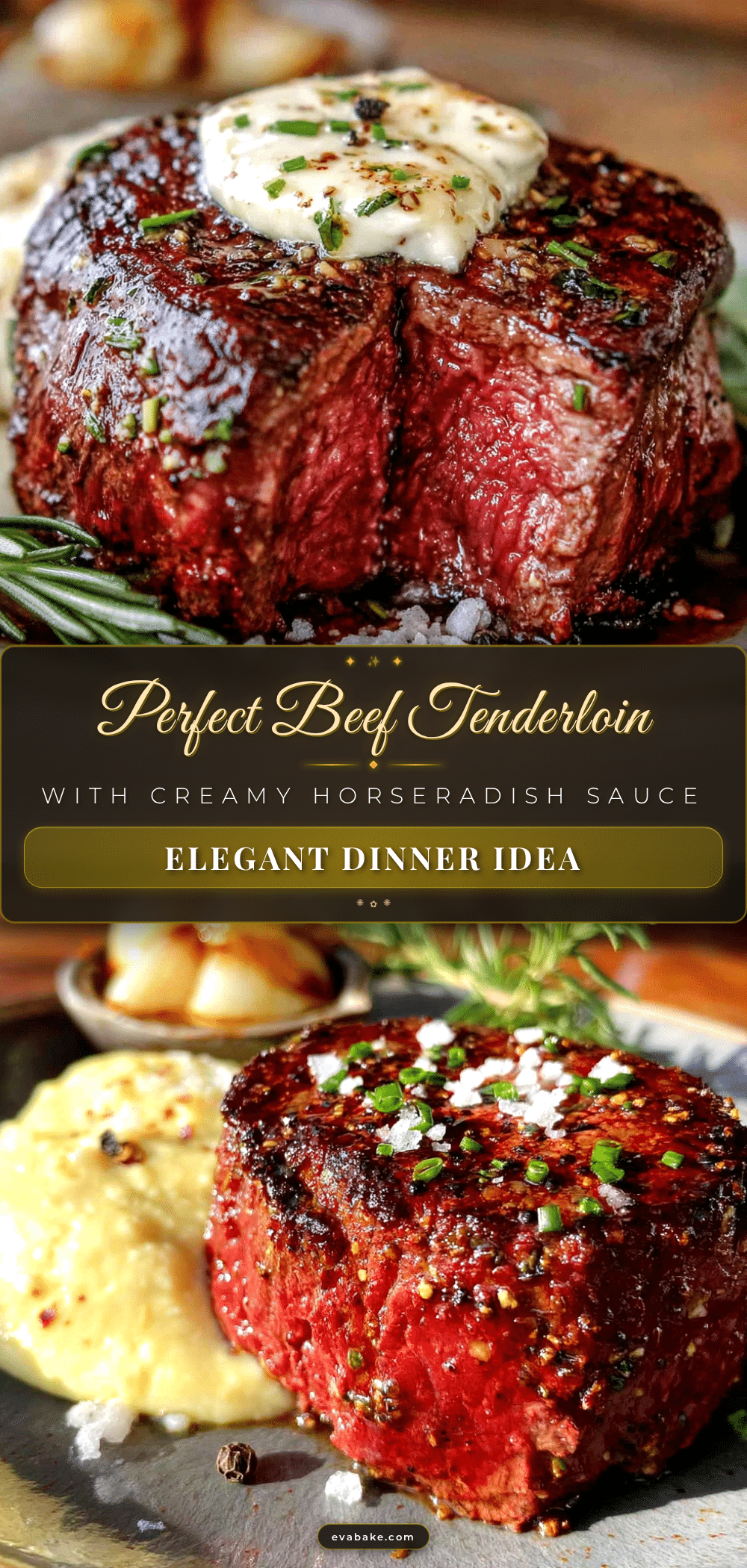
Perfect Beef Tenderloin with Creamy Horseradish Sauce
This foolproof reverse-sear method delivers perfectly even doneness from edge to center, with a crust that shatters when you bite into it. The tangy, creamy horseradish sauce cuts through the richness of the beef beautifully, making this restaurant-quality dish perfect for celebrations.
- Prep Time: 15 minutes
- Cook Time: 55 minutes
- Total Time: 1 hour 10 minutes
- Yield: 8 servings 1x
- Category: Main Course
- Cuisine: American
Ingredients
- 1 whole beef tenderloin, trimmed (about 4–5 pounds / 1.8–2.3 kg)
- 2 tablespoons olive oil (30 ml)
- 1 tablespoon kosher salt (18 grams)
- 2 teaspoons freshly ground black pepper (4 grams)
- 4 cloves garlic, minced
- 2 tablespoons fresh rosemary, chopped (6 grams)
- 1 tablespoon fresh thyme leaves (3 grams)
- 1 cup sour cream (240 ml)
- 1/4 cup prepared horseradish (60 ml)
- 2 tablespoons mayonnaise (30 ml)
- 1 tablespoon Dijon mustard (15 ml)
- 1 tablespoon fresh lemon juice (15 ml)
- 1 teaspoon Worcestershire sauce (5 ml)
- 1/4 teaspoon salt
- 1/8 teaspoon white pepper
Instructions
- Take the tenderloin out of the refrigerator 45 minutes before cooking. Pat it completely dry with paper towels. If your tenderloin has a thin tail end, tuck it under and tie it with kitchen twine every 2 inches (5 cm) to create an even thickness.
- In a small bowl, combine the kosher salt, black pepper, minced garlic, chopped rosemary, and thyme. Rub the olive oil all over the tenderloin, then coat it evenly with the herb mixture. Let it sit at room temperature for 30 minutes while you preheat the oven.
- Preheat your oven to 275°F (135°C). Place the seasoned tenderloin on a roasting rack set over a baking sheet. Roast until the internal temperature reaches 120°F (49°C) for rare, 125°F (52°C) for medium-rare, or 130°F (54°C) for medium. This usually takes about 45-55 minutes, but start checking at 35 minutes with your thermometer inserted into the thickest part.
- While the tenderloin rests for 15 minutes, make the sauce. In a small bowl, whisk together the sour cream, prepared horseradish, mayonnaise, Dijon mustard, lemon juice, Worcestershire sauce, salt, and white pepper. Taste and adjust seasoning. Cover and refrigerate until serving.
- Heat your cast-iron skillet over high heat until it’s smoking hot—about 5 minutes. Carefully place the rested tenderloin in the pan and sear for 2-3 minutes per side, turning with tongs, until all sides are deeply browned and crusty.
- Transfer the seared tenderloin to a clean cutting board and let it rest for another 10 minutes. Slice against the grain into 1-inch (2.5 cm) thick medallions. Arrange on a warm platter and serve immediately with the creamy horseradish sauce on the side.
Notes
Don’t skip the dry brine—salting the tenderloin and letting it rest at room temperature for 30 minutes seasons the meat from the inside out. The reverse-sear method (roasting first, then searing) prevents gray bands of overcooked meat. Let your pan get truly hot before searing; the sizzle should be dramatic. Trust your thermometer, not the timer, as ovens vary. The sauce improves after a day in the fridge.
Nutrition
- Serving Size: 1 serving (about 6 o
- Calories: 485
- Sugar: 1
- Sodium: 680
- Fat: 32
- Saturated Fat: 12
- Carbohydrates: 3
- Protein: 46
Keywords: beef tenderloin, horseradish sauce, reverse sear, holiday dinner, roast beef, special occasion