Let me tell you, the scent of ripe tomatoes, fresh cucumbers, and briny olives mingling with the sharp tang of feta cheese is enough to make anyone’s mouth water. The first time I made this Fresh Greek Salad, or Horiatiki as the locals call it, I was instantly hooked. It was one of those moments where you pause, take a deep breath, and just smile because you know you’re onto something truly special. I remember sitting on my little balcony, the sun warming my skin, and savoring each bite of this vibrant salad that felt like a pure, nostalgic comfort from a faraway place.
When I was knee-high to a grasshopper, my grandma used to tell me stories about her summer days in Crete, where the simplicity of fresh ingredients made every meal feel like a celebration. Years ago, I stumbled upon this recipe trying to recreate that magic for a family gathering, and honestly, it’s been a staple ever since. My family couldn’t stop sneaking the salad off the serving bowl (and I can’t really blame them). It’s dangerously easy to whip up, bright, fresh, and perfect for potlucks, a sweet treat for your kids, or just to brighten up your Pinterest cookie board.
I’ve tested this Fresh Greek Salad recipe multiple times (in the name of research, of course) and it’s become a go-to for family gatherings and gifting when I want to share a little Mediterranean sunshine. It feels like a warm hug on a plate, and trust me—you’re going to want to bookmark this one.
Why You’ll Love This Fresh Greek Salad (Horiatiki) Recipe
Honestly, this Greek salad is one of those recipes that wins hearts instantly, and here’s why:
- Quick & Easy: Comes together in under 15 minutes—perfect for busy weeknights or last-minute cravings.
- Simple Ingredients: No fancy grocery trips needed; you likely already have everything in your kitchen or nearby store.
- Perfect for Any Occasion: Great for brunch, potlucks, cozy dinners, or even as a refreshing lunch.
- Crowd-Pleaser: Always gets rave reviews from kids and adults alike—it’s hard not to love!
- Unbelievably Delicious: The texture combo of crisp veggies, creamy feta, and olives is next-level Mediterranean comfort food.
What sets this Fresh Greek Salad apart from the rest? Well, the secret lies in the balance: the salty, crumbly feta paired with the juicy tomatoes and earthy olives, all kissed by a drizzle of extra virgin olive oil and a sprinkle of oregano. I recommend using a robust Greek olive oil like Kalamata’s own for the best flavor. Plus, the salad is tossed by hand, not over-mixed, so you get those perfect bites with a mix of textures. It’s not just good—it’s the kind of recipe that makes you close your eyes after the first bite, savoring every note.
This salad feels like comfort food reimagined—fresh, wholesome, and no-fuss, yet packed with soul-soothing satisfaction. It’s ideal for impressing guests without the stress or turning a simple meal into something memorable.
What Ingredients You Will Need
This Fresh Greek Salad recipe uses simple, wholesome ingredients to deliver bold flavor and satisfying texture without the fuss. Most are pantry staples or easy to find at your local market. Here’s what you’ll need:
- Ripe Roma Tomatoes, roughly chopped (about 3 medium) – the star of the salad with juicy sweetness
- Cucumber, peeled and sliced thickly (1 large) – adds refreshing crunch
- Red Onion, thinly sliced (1 small) – provides sharpness and color contrast
- Green Bell Pepper, sliced into rings (1 medium) – for that mild, fresh bite
- Kalamata Olives, pitted (about 1/2 cup) – briny, earthy depth (I love the brand Peloponnese for authentic taste)
- Feta Cheese, block style, cut into large chunks or crumbled (about 200g / 7 oz) – creamy and salty (choose a quality feta for best results)
- Extra Virgin Olive Oil (3 tablespoons) – the flavor foundation (go for a robust Greek EVOO if possible)
- Red Wine Vinegar (1 tablespoon) – adds a subtle tang
- Dried Oregano (1 teaspoon) – classic Greek seasoning that pulls it all together
- Salt and freshly ground black pepper to taste
You can swap ingredients easily if needed: use English cucumber for a less seedy option, or swap red wine vinegar with lemon juice for a brighter zing. For a dairy-free alternative, leave out the feta or use a plant-based cheese.
Equipment Needed
- A large mixing bowl – I prefer ceramic or glass to keep the flavors pure and avoid any metallic taste.
- A sharp knife – essential for clean slicing of tomatoes, cucumbers, and peppers.
- A cutting board – a sturdy one makes prep safer and easier.
- Measuring spoons – to get that perfect balance of olive oil and vinegar.
- Salad serving bowl or platter – presentation counts, right?
If you don’t have a fancy salad bowl, no worries—any large bowl will do. A handheld citrus juicer is helpful if you choose lemon juice instead of vinegar, but you can just squeeze by hand. I’ve tried this salad with various knives and boards, and honestly, the sharper the knife, the cleaner the cuts, which means prettier salad pieces and a nicer presentation.
Preparation Method
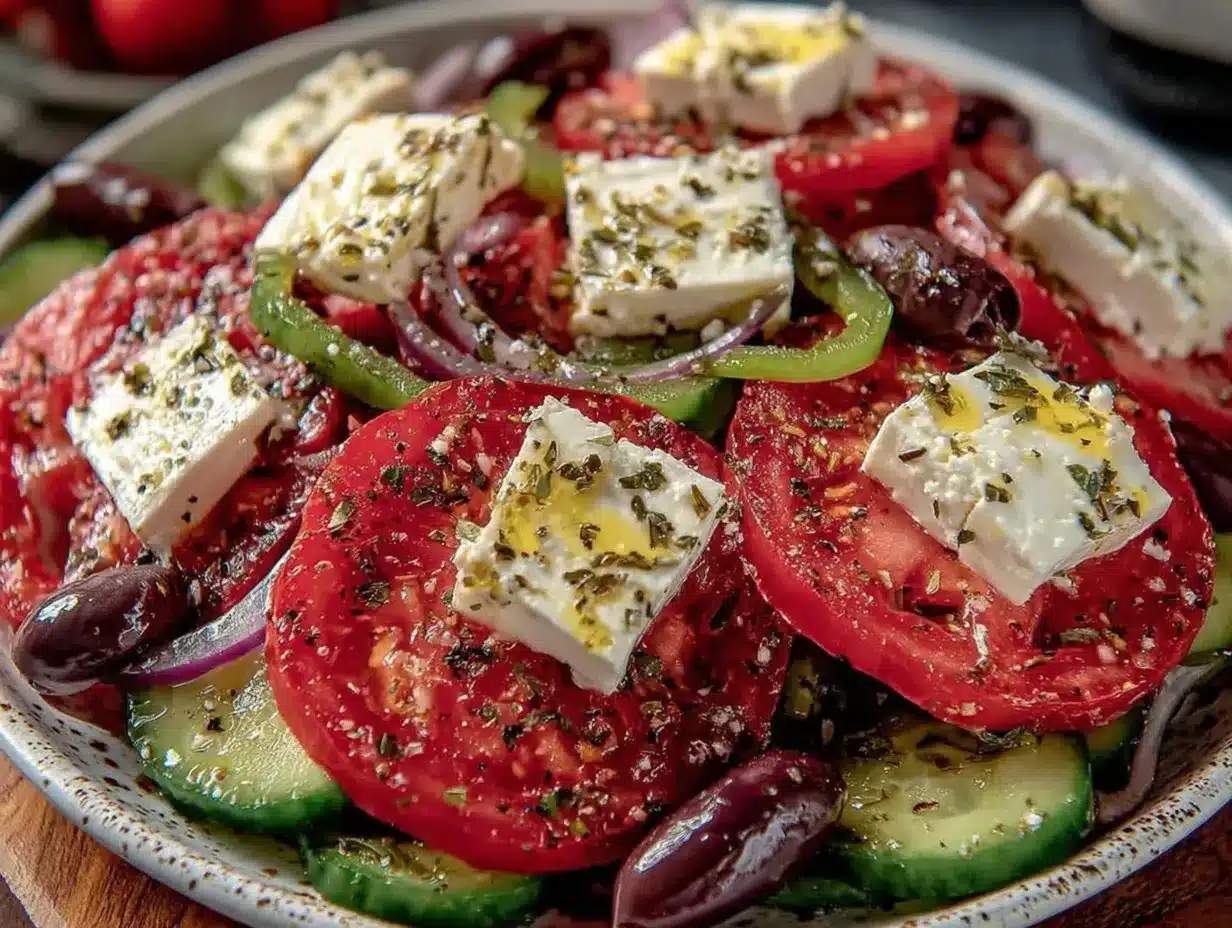
- Wash and Prep the Veggies (10 minutes): Rinse your tomatoes, cucumber, bell pepper, and onion under cold water. Chop the tomatoes into large chunks, about 1-inch pieces (2.5 cm). Peel the cucumber if you prefer, then slice into thick half-moons or rounds, about 1/2 inch (1.3 cm) thick. Thinly slice the red onion into rings. Slice the green bell pepper into rings or strips. Make sure all pieces are roughly uniform for even bites.
- Combine Ingredients (5 minutes): In your large mixing bowl, gently toss the chopped tomatoes, cucumber, bell pepper, red onion, and Kalamata olives. Use your hands or salad tongs for a gentle mix—don’t smash the tomatoes!
- Add the Dressing (2 minutes): Drizzle the extra virgin olive oil and red wine vinegar over the salad. Sprinkle the dried oregano, salt, and freshly ground black pepper. Toss lightly again to coat all veggies evenly. Remember, you want just enough dressing to coat, not drown.
- Add the Feta Cheese (1 minute): Place the chunks or crumbled feta on top of the salad. Resist the urge to mix the cheese in fully; it’s nicer to leave it as a creamy topping that guests can scoop up with their bites.
- Final Touches and Serve (2 minutes): Give the salad one last gentle drizzle of olive oil if you like, and a sprinkle of oregano. Serve immediately or chill for up to 30 minutes to let the flavors marry. It’s best fresh but still delightful after a little rest.
Quick note: if your tomatoes are a tad watery, drain off excess juice before tossing to avoid a soggy salad. And if you want to add a little extra zing, a squeeze of fresh lemon juice before serving works wonders.
Cooking Tips & Techniques
Here’s a bit of what I’ve learned making Fresh Greek Salad over the years:
- Use Ripe, Firm Tomatoes: Overripe ones can turn your salad watery, and underripe ones lack that juicy sweetness. Roma or vine-ripened tomatoes work beautifully.
- Don’t Overmix Your Salad: Tossing gently preserves the texture and prevents the feta and tomatoes from breaking down into mush.
- Salt Wisely: Since feta and olives are salty, add salt gradually and taste as you go.
- Chill Briefly: Letting the salad rest for 15-30 minutes in the fridge helps flavors meld, but don’t let it sit too long or the veggies lose their crunch.
- Olive Oil Matters: A good quality extra virgin olive oil makes a noticeable difference. It’s the heart of the dressing, so don’t skimp.
- Knife Skills Count: Clean, even cuts not only look better but also improve the eating experience.
One time, I accidentally used too much vinegar (oops!), and the salad was a bit too tangy. Lesson learned: always start with less and add more if needed. Also, when multitasking, prep the veggies first before mixing dressing so you’re not scrambling at the last minute.
Variations & Adaptations
This Fresh Greek Salad is wonderfully flexible, so here are some tasty ways to mix it up:
- Seasonal Twist: In summer, add fresh diced watermelon or peaches for a sweet contrast.
- Protein Boost: Toss in some grilled chicken, shrimp, or chickpeas to turn it into a fuller meal.
- Dairy-Free Version: Skip the feta or use a vegan cheese alternative to keep it dairy-free.
- Different Herbs: Fresh mint or basil leaves add a fragrant lift if you want to experiment beyond oregano.
- Cooking Method: Try roasting the bell peppers first for a smoky flavor or lightly grilling the cucumbers for a charred twist.
Personally, I’ve tried adding a handful of toasted pine nuts once, and it gave a lovely nutty crunch that surprised everyone. Feel free to tweak this salad to suit your mood or pantry!
Serving & Storage Suggestions
This Fresh Greek Salad is best served chilled or at room temperature. I like to plate it on a large, shallow dish and garnish with a few extra olives and a sprinkle of oregano for that rustic appeal. It pairs beautifully with grilled meats, crusty bread, or even as a vibrant side for your seafood dishes.
For storage, keep leftover salad in an airtight container in the refrigerator. It’s best eaten within 1-2 days as the veggies can get soggy over time. To reheat, just let it come to room temperature or enjoy cold—this salad really shines fresh. Flavors tend to deepen after a few hours, so making it a little ahead can be a smart move for entertaining.
Nutritional Information & Benefits
This Fresh Greek Salad packs a nutritional punch with fresh vegetables providing vitamins A and C, fiber, and antioxidants. The olives and olive oil offer heart-healthy monounsaturated fats, while the feta cheese adds a good source of calcium and protein. It’s naturally gluten-free and low-carb, making it suitable for many dietary preferences. Just a heads-up: the feta and olives do contain sodium, so balance your salt intake throughout the day accordingly.
From a wellness angle, this salad feels light but nourishing—perfect for those days you want to eat clean without sacrificing flavor or satisfaction. It’s a reminder that healthy food can be downright delicious and fun too!
Conclusion
So, why should you give this Fresh Greek Salad (Horiatiki) recipe a try? Because it’s simple, wholesome, and bursting with authentic Mediterranean flavors that bring sunshine to your table. You can customize it any way you like—add some protein, swap veggies, or keep it classic. I love this salad because it’s the kind of dish that feels like a little celebration every time you eat it, whether for a casual family dinner or a special occasion.
If you make this recipe, I’d love to hear how you tweak it or what memories it sparks for you—drop a comment below or share it with your friends. Trust me, once you try this salad, it’ll be one of those dishes you come back to again and again. Happy cooking and bon appétit!
Frequently Asked Questions
What type of feta cheese is best for Fresh Greek Salad?
I recommend a good quality block feta, preferably from Greece or a reputable brand with a firm texture and tangy flavor. Avoid pre-crumbled feta for better taste and texture.
Can I make this salad ahead of time?
You can prep the vegetables in advance, but I suggest assembling and dressing the salad just before serving to keep it fresh and crisp.
Is Fresh Greek Salad gluten-free?
Yes, all ingredients in this salad are naturally gluten-free, making it safe for those with gluten sensitivities.
Can I add other vegetables to this salad?
Absolutely! Feel free to add chopped radishes, cherry tomatoes, or even a handful of arugula for a peppery note.
What can I use instead of red wine vinegar?
Lemon juice is a great substitute that adds bright acidity and complements the Mediterranean flavors beautifully.
Pin This Recipe!
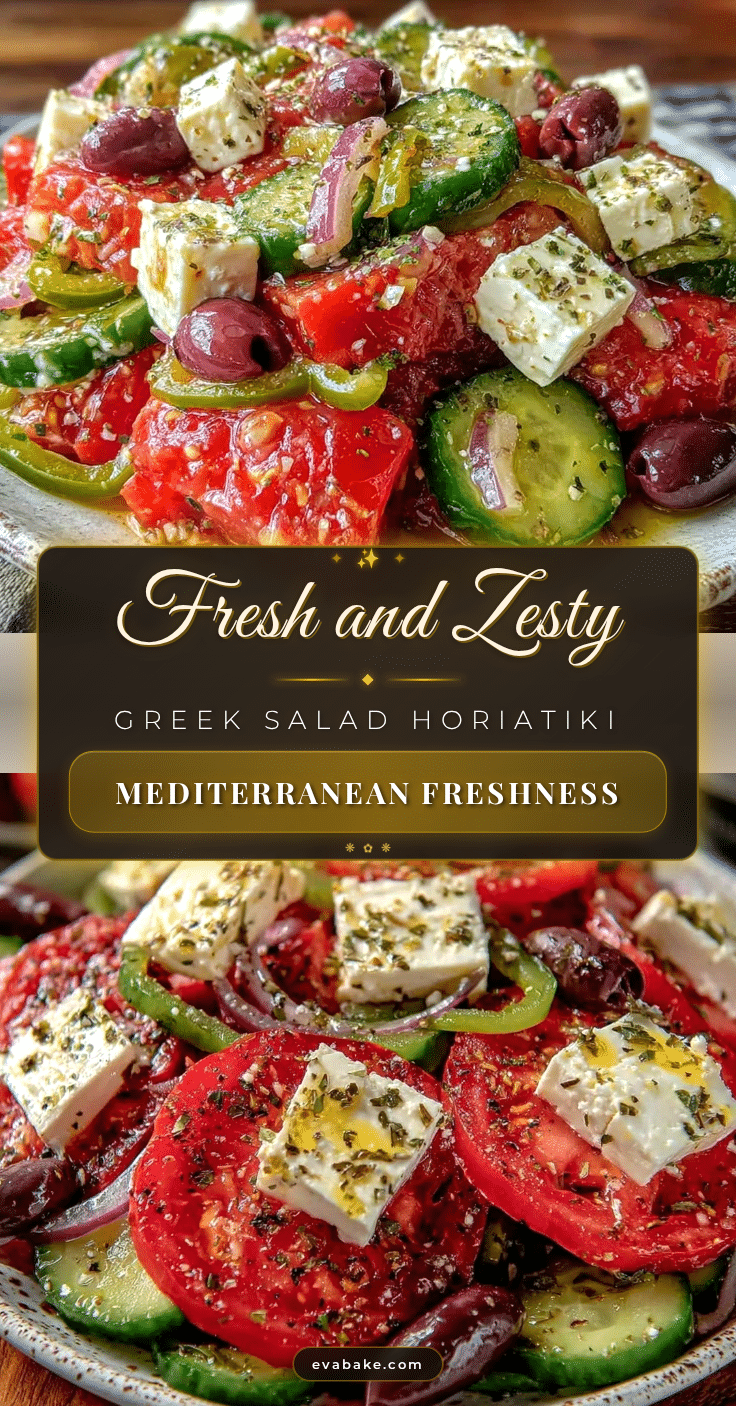
Fresh Greek Salad Horiatiki Recipe Easy Wholesome Mediterranean Delight
A vibrant and wholesome Greek salad featuring ripe tomatoes, cucumbers, Kalamata olives, and creamy feta cheese, dressed with extra virgin olive oil and red wine vinegar. Perfect for quick meals, potlucks, or a refreshing Mediterranean delight.
- Prep Time: 10 minutes
- Cook Time: 0 minutes
- Total Time: 15 minutes
- Yield: 4 servings 1x
- Category: Salad
- Cuisine: Mediterranean, Greek
Ingredients
- 3 medium ripe Roma tomatoes, roughly chopped
- 1 large cucumber, peeled and sliced thickly
- 1 small red onion, thinly sliced
- 1 medium green bell pepper, sliced into rings
- 1/2 cup Kalamata olives, pitted
- 7 oz (200g) block feta cheese, cut into large chunks or crumbled
- 3 tablespoons extra virgin olive oil
- 1 tablespoon red wine vinegar
- 1 teaspoon dried oregano
- Salt, to taste
- Freshly ground black pepper, to taste
Instructions
- Wash and prep the veggies: rinse tomatoes, cucumber, bell pepper, and onion under cold water. Chop tomatoes into 1-inch pieces. Peel cucumber if preferred, then slice into thick half-moons about 1/2 inch thick. Thinly slice red onion into rings. Slice green bell pepper into rings or strips, ensuring uniform pieces.
- Combine ingredients: in a large mixing bowl, gently toss tomatoes, cucumber, bell pepper, red onion, and Kalamata olives using hands or salad tongs to avoid smashing the tomatoes.
- Add the dressing: drizzle extra virgin olive oil and red wine vinegar over the salad. Sprinkle dried oregano, salt, and freshly ground black pepper. Toss lightly to coat evenly without overdressing.
- Add the feta cheese: place chunks or crumbled feta on top of the salad without mixing fully to keep it as a creamy topping.
- Final touches and serve: optionally drizzle a little more olive oil and sprinkle oregano. Serve immediately or chill up to 30 minutes to let flavors meld.
Notes
Use ripe, firm Roma or vine-ripened tomatoes to avoid watery salad. Toss gently to preserve texture and prevent feta and tomatoes from breaking down. Add salt gradually due to salty feta and olives. Chill salad for 15-30 minutes before serving for best flavor. Use high-quality extra virgin olive oil for best taste. Optionally substitute red wine vinegar with lemon juice for a brighter zing. For dairy-free version, omit feta or use plant-based cheese.
Nutrition
- Serving Size: 1 serving (about 1/4
- Calories: 220
- Sugar: 5
- Sodium: 520
- Fat: 18
- Saturated Fat: 5
- Carbohydrates: 8
- Fiber: 2
- Protein: 6
Keywords: Greek salad, Horiatiki, Mediterranean salad, fresh salad, feta cheese, Kalamata olives, easy salad recipe, healthy salad