Let me tell you, the first time I simmered a pot of sinigang soup, the tangy aroma of tamarind and fresh vegetables wafting through my kitchen was enough to make me stop everything and just breathe it all in. It’s the kind of scent that wraps you up like a warm blanket on a chilly day. Honestly, sinigang isn’t just any soup—it’s a Filipino treasure that feels like pure comfort in a bowl. I stumbled upon this cozy sinigang soup recipe years ago, when I was knee-high to a grasshopper, watching my lola stir her pot with a knowing smile. That moment, when the first spoonful hit my lips, was the kind where you pause, take a deep breath, and just smile because you know you’re onto something truly special.
My family couldn’t stop sneaking spoonfuls off the stove while I was cooking (and I can’t really blame them). It’s dangerously easy to make yet packs a punch of flavors that brighten up even the gloomiest days. This cozy sinigang soup recipe is perfect for those evenings when you need a little tangy pick-me-up or a sweet treat for your taste buds that’s both nostalgic and fresh. Whether you’re craving something light after a long day or want to impress guests with a soul-soothing dish, this recipe’s got you covered. I’ve tested it multiple times—because, you know, in the name of research—and it’s become a staple for family dinners, rainy weekends, and even quick lunches. Trust me, this recipe feels like a warm hug you’re going to want to bookmark.
Why You’ll Love This Recipe
This cozy sinigang soup recipe isn’t just any sour broth—it’s been tried, tested, and family-approved through countless meals. Here’s why you’re going to want to make it your go-to comfort dish:
- Quick & Easy: Ready in under 30 minutes, perfect for busy weeknights or last-minute cravings.
- Simple Ingredients: No complicated shopping; most are pantry staples or easy to find at your local market.
- Perfect for Any Occasion: Whether it’s a casual dinner or a cozy gathering, sinigang is always a hit.
- Crowd-Pleaser: Kids and adults alike love the tangy, savory balance that keeps them coming back for more.
- Unbelievably Delicious: The combination of tamarind, fresh veggies, and tender meat delivers a comforting, vibrant flavor.
What sets this cozy sinigang soup recipe apart is the perfect balance of sourness and heartiness. I blend fresh tamarind paste with a secret splash of fish sauce, giving it just the right zing without overpowering the natural sweetness of the vegetables. Plus, the trick of simmering the pork ribs low and slow means you get melt-in-your-mouth tenderness that’s nothing short of magic. Honestly, this recipe isn’t just soup; it’s a little bowl of joy that makes you close your eyes after the first bite. It’s comfort food with soul, ready in a flash but tasting like it simmered all day long. Whether you’re impressing guests or simply craving a hug in a bowl, this sinigang soup is your answer.
What Ingredients You Will Need
This cozy sinigang soup recipe uses simple, wholesome ingredients that come together to create a bold, tangy flavor and a satisfying texture without any fuss. Most ingredients are pantry staples or fresh produce you can find year-round.
- Pork Ribs (about 2 lbs / 900 g): The star protein that adds richness and depth; choose meaty ribs for best results.
- Tamarind Paste (3-4 tbsp): The essential souring agent; I recommend using a good-quality brand like Aling Tatang for authentic tang.
- Water (8 cups / 1.9 liters): Forms the flavorful broth base.
- Tomatoes (3 medium, quartered): Adds a subtle sweetness and balances the sourness.
- Onion (1 large, quartered): For aromatic depth.
- Radish (1 medium, sliced): Gives a crisp bite and mild peppery note.
- String Beans (about 1 cup / 100 g, trimmed): Adds texture and color.
- Water Spinach (Kangkong) or Spinach (2 cups / 60 g): For freshness and vibrant green color.
- Fish Sauce (3 tbsp): Adds umami and salty depth; I personally love Marca Piña brand for its clean flavor.
- Green Chili Peppers (2-3, whole): Optional, for a subtle kick.
- Salt and Pepper: To taste.
Substitution Tips: For a gluten-free version, use tamarind paste labeled gluten-free and ensure your fish sauce is free of gluten. You can swap pork ribs for chicken thighs if you prefer a lighter version (adjust cooking time accordingly). If you can’t find water spinach, fresh spinach or bok choy works beautifully. Fresh tamarind pods can replace paste, but you’ll need to boil and strain the pulp (adds a nice homemade touch!).
Equipment Needed
- Large Stockpot or Heavy-Bottomed Pot: Essential for simmering the soup evenly; a 6-quart (5.7 liters) pot works great.
- Sharp Knife: For chopping vegetables and trimming meat.
- Cutting Board: Make sure it’s sturdy and easy to clean.
- Slotted Spoon: Handy for removing scum or foam that rises to the top while simmering.
- Measuring Cups and Spoons: For accurate ingredient amounts.
- Wooden Spoon or Ladle: To stir gently without damaging your pot.
If you don’t have a stockpot, a large saucepan can work, though you might need to reduce ingredients or cook in batches. Investing in a good-quality pot with a thick base will prevent burning and help maintain a steady simmer. For budget-friendly options, thrift stores often have great pots that just need a little TLC. I find a slotted spoon invaluable for keeping the broth clear and clean—it’s those little things that make a big difference.
Preparation Method
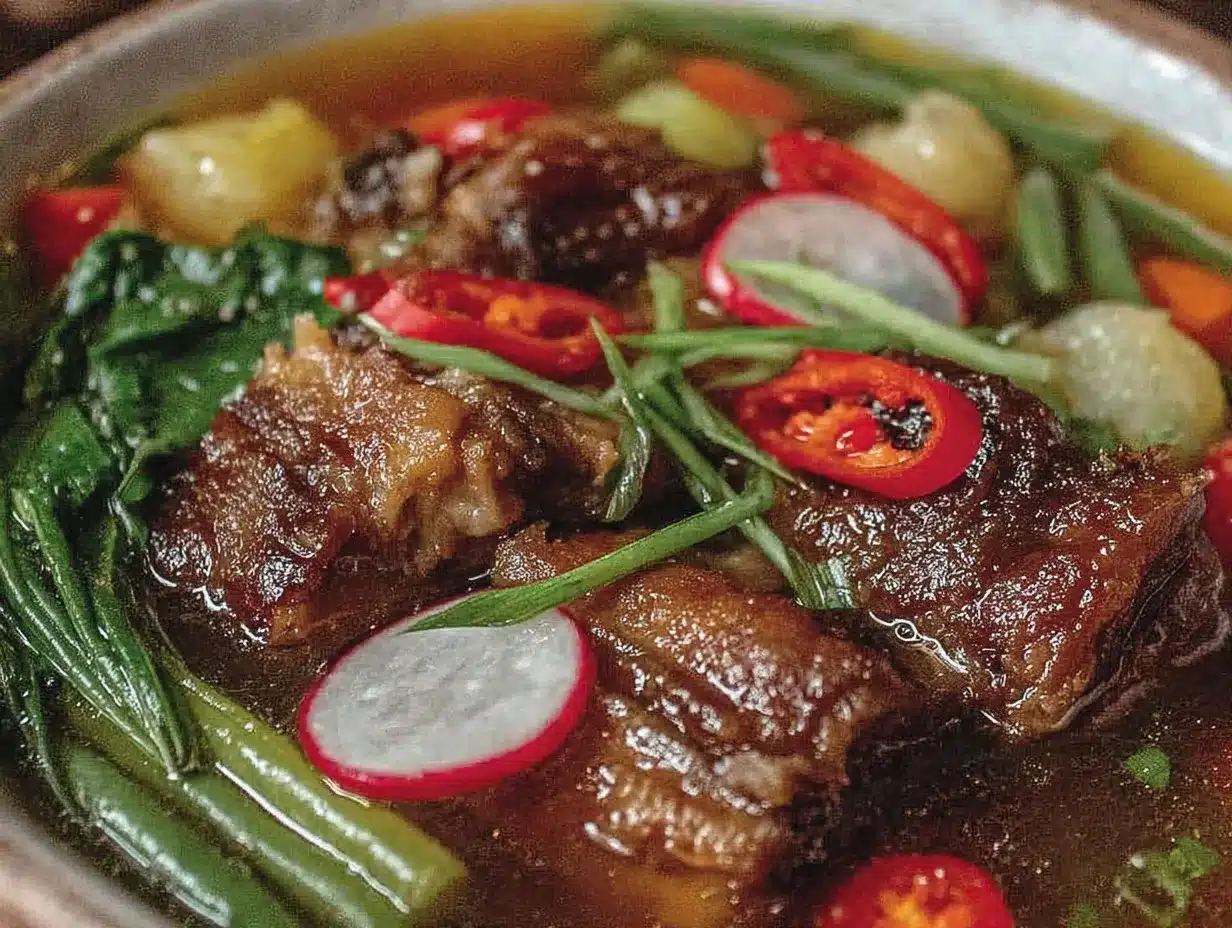
- Prepare the Pork Ribs: Rinse 2 lbs (900 g) pork ribs under cold water and trim excess fat. Cut into serving pieces. This takes about 5 minutes.
- Simmer the Meat: In your large stockpot, add pork ribs and 8 cups (1.9 liters) of water. Bring to a boil over medium-high heat, then reduce to a gentle simmer. Skim off any scum or foam that rises with a slotted spoon. This helps keep the broth clear. Simmer uncovered for 45 minutes or until the ribs are tender but not falling apart.
- Add Aromatics: Toss in 1 large quartered onion and 3 quartered medium tomatoes. Let them simmer with the meat for an additional 10 minutes. The kitchen will start smelling like home.
- Incorporate Tamarind Paste: Stir in 3-4 tablespoons tamarind paste (adjust to your sourness preference). Mix well and let it cook for 5 minutes. Taste the broth; the sourness should be bright but balanced.
- Season the Broth: Add 3 tablespoons fish sauce and season with salt and pepper to taste. Add 2-3 whole green chili peppers if you like a little heat. Let simmer for 3 minutes.
- Add Vegetables: Add sliced radish (1 medium), trimmed string beans (1 cup / 100 g), and continue simmering for 7 minutes or until veggies are tender but still have a little bite.
- Finish with Greens: Stir in 2 cups (60 g) water spinach or fresh spinach. Cook for just 2 minutes until wilted. Avoid overcooking to keep that fresh flavor and vibrant color.
- Final Taste Test: Give the soup a final taste and adjust seasoning if needed. Remove chili peppers if you prefer less heat.
- Serve Hot: Ladle into bowls and enjoy immediately with steamed rice on the side.
Tip: If you notice the broth is too sour, add a pinch of sugar to balance it out. If it’s too bland, a splash more fish sauce or a pinch of salt usually does the trick. I always recommend tasting as you go—no two tamarind pastes are created equal! And don’t rush the simmering; that slow cook is what brings the flavors home.
Cooking Tips & Techniques
Making sinigang can seem straightforward, but a few tricks can really take your cozy sinigang soup recipe from good to unforgettable. First off, always start with cold water when simmering pork ribs. This helps extract flavor and gives you a richer broth. Don’t rush the simmering; low and slow is your friend here. Skimming the scum is a step I used to skip, but trust me, it makes your broth clear and cleaner-tasting.
When adding tamarind paste, add a little at a time and taste frequently. I learned this the hard way after accidentally making a broth so sour it puckered my whole family’s faces! Also, fish sauce is the umami secret weapon but use it sparingly at first—it can be salty if you’re not careful.
For veggies, timing is everything. Overcooked string beans or spinach turn mushy and lose their charm. Add the greens last and cook just until wilted. If you want a little extra depth, try roasting the tomatoes beforehand; it adds a smoky nuance that’s surprisingly delicious.
Lastly, multitasking tip: While your sinigang simmers, prep your rice or a quick side dish. The smell of the broth will keep you motivated! And if you ever find your broth tasting flat, a squeeze of fresh calamansi or a splash of vinegar can brighten things up beautifully.
Variations & Adaptations
Sinigang is wonderfully versatile, so feel free to make it your own! Here are some tasty twists I’ve tried and loved:
- Seafood Sinigang: Swap pork ribs for shrimp, fish, or a mix of seafood. Reduce cooking time to 15-20 minutes to keep seafood tender and juicy.
- Beef Sinigang: Use beef shank or brisket instead of pork for a heartier, more robust broth. Just remember beef takes a bit longer to tenderize, so simmer for about 1.5 hours.
- Vegetarian Sinigang: Skip meat altogether and use vegetable broth with mushrooms, tofu, and hearty veggies like eggplant and okra. Use a vegan tamarind paste and soy sauce or coconut aminos instead of fish sauce.
For seasonal flair, I’ve swapped out radish and string beans for fresh green mango or pineapple chunks in the summer, which gives a sweet and tangy twist that’s just lovely. And if you’re watching carbs, skip the rice and serve the sinigang as a hearty stew with cauliflower rice or leafy greens on the side.
Serving & Storage Suggestions
This cozy sinigang soup is best served steaming hot, straight from the pot, with a side of fluffy steamed white rice to soak up all that tangy broth. I like to garnish mine with extra chili or a wedge of calamansi for an extra zing. It pairs beautifully with simple grilled fish or fried eggplant for a full meal.
If you have leftovers (which, honestly, rarely happens!), cool the soup to room temperature, then store in an airtight container in the refrigerator for up to 3 days. The flavors actually deepen overnight, making it taste even better the next day. To reheat, gently warm on the stove over low heat so you don’t overcook the greens or toughen the meat. You can also freeze sinigang for up to 2 months—just be sure to cool it thoroughly before freezing and thaw overnight in the fridge before reheating.
Pro tip: Don’t add the spinach if you plan to freeze the soup; add fresh greens when reheating to keep that vibrant color and fresh taste.
Nutritional Information & Benefits
This cozy sinigang soup recipe is a light yet satisfying dish, packed with nutrients from fresh vegetables and lean protein. A typical serving contains around 250-300 calories, making it a great option for a wholesome, low-calorie meal. The tamarind provides antioxidants and vitamin C, while the pork ribs supply collagen and protein essential for muscle repair.
The soup is naturally gluten-free and can be made dairy-free and low-carb depending on side choices. It’s also hydrating thanks to the broth and packed with fiber-rich veggies that aid digestion. Fish sauce adds umami without excess fat, keeping the soup flavorful but light. For anyone looking to enjoy comfort food without guilt, sinigang hits the spot beautifully.
Conclusion
So, there you have it—your new go-to cozy sinigang soup recipe that’s tangy, comforting, and ready in just 30 minutes. Whether you’re a long-time fan of Filipino flavors or trying sinigang for the first time, this recipe offers the perfect balance of sour, savory, and fresh that makes you want to eat it again and again. Customize the veggies, swap in your favorite protein, or add a little heat—it’s all up to your taste buds.
I absolutely love this recipe because it reminds me of home, family, and those simple moments that make life delicious. Now it’s your turn! Give it a try, share your tweaks, and let me know how it warms your heart. Don’t forget to leave a comment and share this cozy sinigang soup recipe with friends who need a little tangy comfort in their lives. Happy cooking!
FAQs About Cozy Sinigang Soup
What can I use if I can’t find tamarind paste?
You can use fresh tamarind pods boiled and strained, or substitute with a combination of lemon juice and a bit of vinegar for tanginess, though the flavor won’t be quite the same.
Can I make this sinigang soup vegetarian?
Absolutely! Use vegetable broth, skip the meat, and add hearty veggies like mushrooms, eggplant, and tofu. Use vegan tamarind paste and substitute fish sauce with soy sauce or coconut aminos.
How do I store leftover sinigang soup?
Store in an airtight container in the fridge for up to 3 days or freeze for up to 2 months. Add fresh greens when reheating to keep them vibrant.
Can I use other meats besides pork ribs?
Yes! Beef, chicken, or seafood all work well. Just adjust cooking times—seafood cooks faster, while beef needs longer to become tender.
Is sinigang soup spicy?
Traditionally, it’s mildly spicy if you add green chili peppers. You can leave them out for a milder soup or add more if you like heat.
Pin This Recipe!
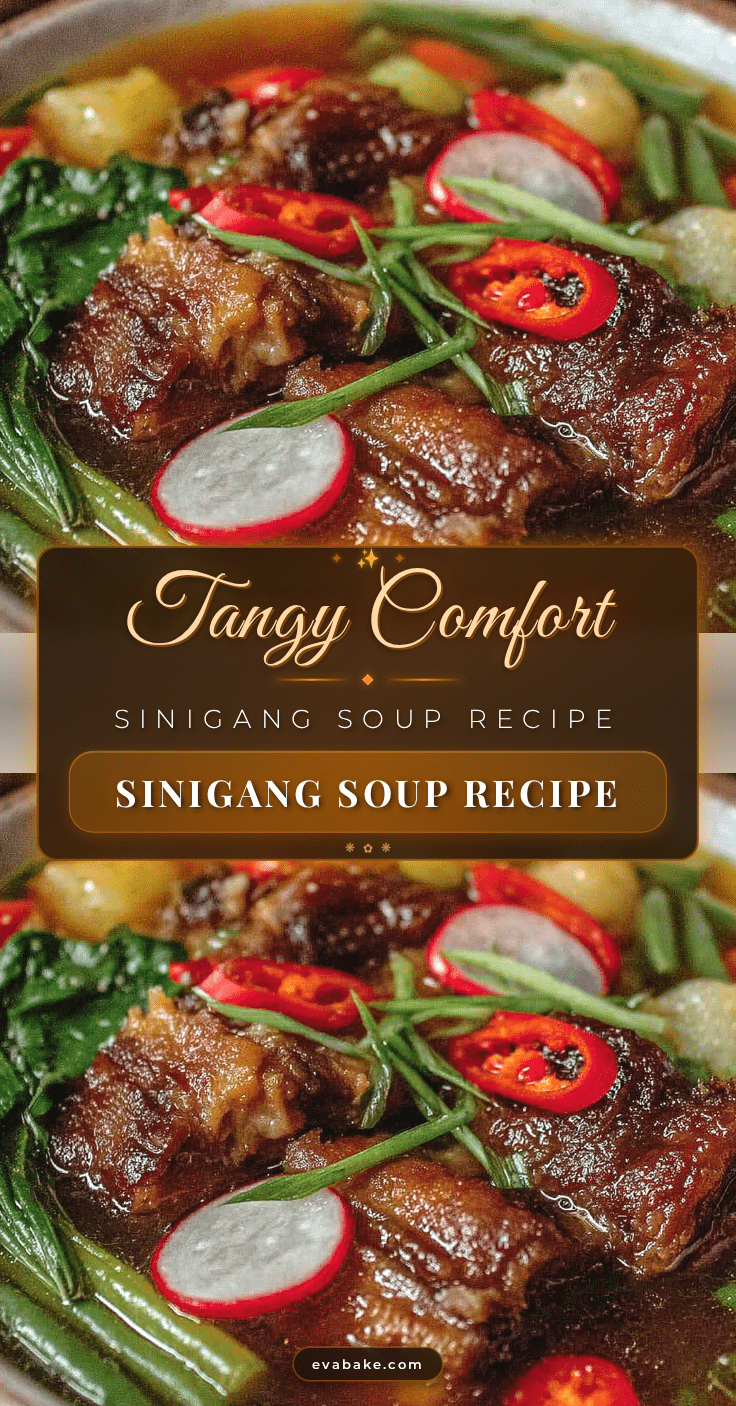
Cozy Sinigang Soup Recipe Easy Tangy Comfort in 30 Minutes

A quick and easy Filipino sinigang soup featuring tangy tamarind broth, tender pork ribs, and fresh vegetables, perfect for a comforting meal ready in just 30 minutes.
- Prep Time: 10 minutes
- Cook Time: 45 minutes
- Total Time: 55 minutes
- Yield: 6 servings 1x
- Category: Main Course
- Cuisine: Filipino
Ingredients
- 2 lbs (900 g) pork ribs, meaty and trimmed
- 3–4 tablespoons tamarind paste
- 8 cups (1.9 liters) water
- 3 medium tomatoes, quartered
- 1 large onion, quartered
- 1 medium radish, sliced
- 1 cup (100 g) string beans, trimmed
- 2 cups (60 g) water spinach (kangkong) or fresh spinach
- 3 tablespoons fish sauce
- 2–3 whole green chili peppers (optional)
- Salt and pepper to taste
Instructions
- Rinse 2 lbs pork ribs under cold water and trim excess fat. Cut into serving pieces (about 5 minutes).
- In a large stockpot, add pork ribs and 8 cups water. Bring to a boil over medium-high heat, then reduce to a gentle simmer. Skim off any scum or foam with a slotted spoon. Simmer uncovered for 45 minutes or until ribs are tender but not falling apart.
- Add 1 large quartered onion and 3 quartered medium tomatoes to the pot. Simmer with the meat for an additional 10 minutes.
- Stir in 3-4 tablespoons tamarind paste, adjusting to your sourness preference. Cook for 5 minutes and taste the broth for balance.
- Add 3 tablespoons fish sauce and season with salt and pepper to taste. Add 2-3 whole green chili peppers if desired. Let simmer for 3 minutes.
- Add sliced radish and trimmed string beans. Continue simmering for 7 minutes or until vegetables are tender but still slightly crisp.
- Stir in 2 cups water spinach or fresh spinach. Cook for 2 minutes until wilted, avoiding overcooking.
- Taste and adjust seasoning if needed. Remove chili peppers if less heat is preferred.
- Serve hot, ladled into bowls with steamed rice on the side.
Notes
Start simmering pork ribs in cold water to extract maximum flavor. Skim scum frequently for a clear broth. Add tamarind paste gradually and taste often to avoid overly sour broth. Add greens last to keep vibrant color and fresh flavor. If broth is too sour, add a pinch of sugar; if bland, add more fish sauce or salt. For freezing, omit spinach and add fresh greens when reheating.
Nutrition
- Serving Size: 1 bowl (approximatel
- Calories: 275
- Sugar: 4
- Sodium: 850
- Fat: 15
- Saturated Fat: 5
- Carbohydrates: 10
- Fiber: 3
- Protein: 22
Keywords: sinigang, Filipino soup, tamarind soup, pork ribs, comfort food, tangy soup, easy soup recipe