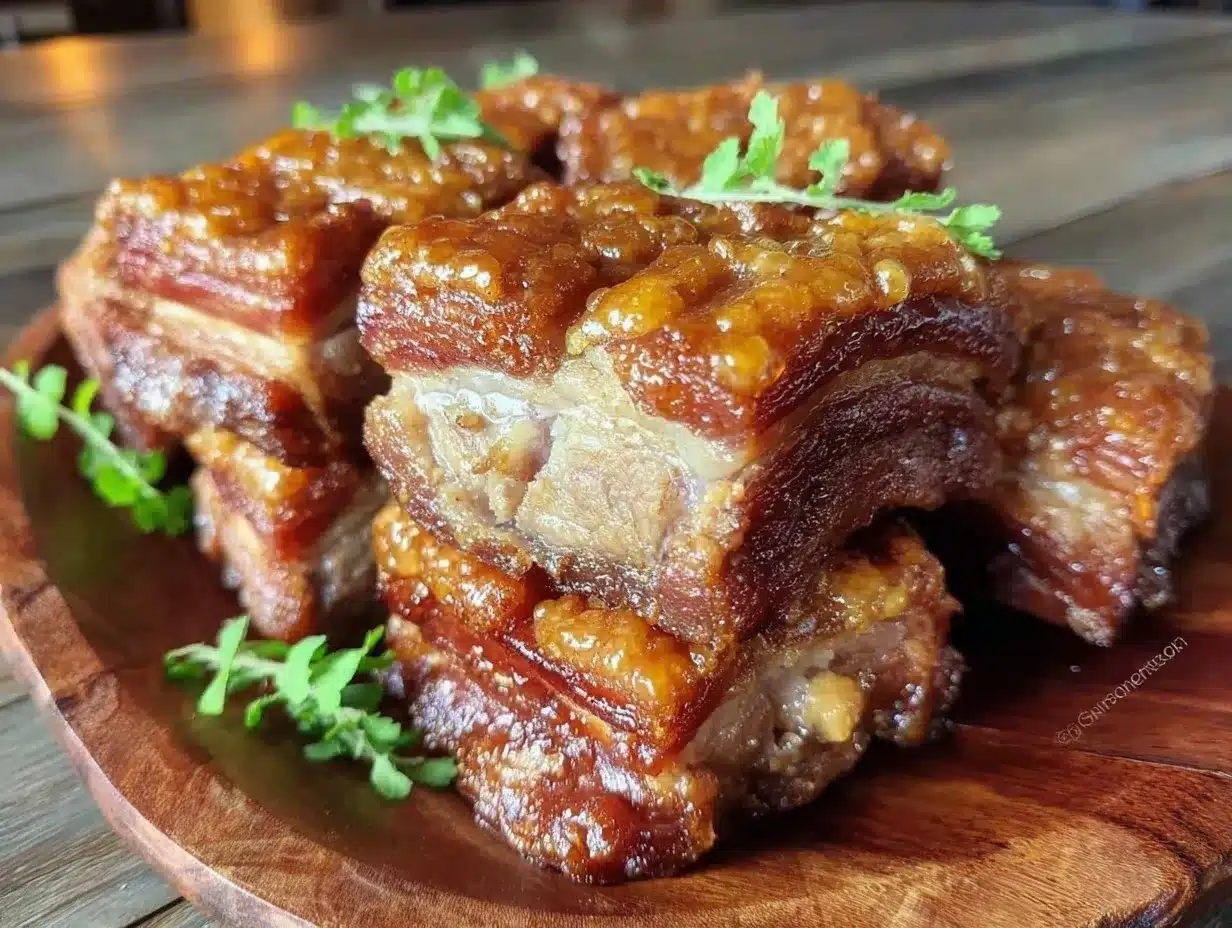
Let me tell you, the scent of sizzling pork belly bubbling in hot oil, the crackle of that golden skin breaking apart, is enough to make anyone’s mouth water. The first time I made crispy lechon kawali, I was instantly hooked—the kind of moment where you pause, take a deep breath, and just smile because you know you’re onto something truly special. I was knee-high to a grasshopper when my lola first introduced me to this classic Filipino dish, but it wasn’t until years ago, during a rainy weekend cooking experiment, that I finally nailed that perfect golden crackling I’d been chasing for so long.
Honestly, it feels like a warm hug every time I plate it up. My family couldn’t stop sneaking pieces off the cooling rack (and I can’t really blame them). Whether it’s a weekend feast, a potluck, or just a sweet treat to brighten up your Pinterest cookie board (okay, maybe not cookies, but you get what I mean), this crispy lechon kawali recipe is dangerously easy and packed with pure, nostalgic comfort. You know what makes it even better? Testing it multiple times—in the name of research, of course—until it became a staple for family gatherings and gifting. Trust me, once you try this, you’re going to want to bookmark this one.
Why You’ll Love This Recipe
After countless tries and a few crispy mishaps (I’m looking at you, overcooked edges), this crispy lechon kawali recipe stands out because it’s:
- Quick & Easy: Comes together in under 2 hours, perfect for busy weekends or last-minute dinner cravings.
- Simple Ingredients: No fancy or hard-to-find items—just pork belly, salt, and a few pantry staples you probably already have.
- Perfect for Celebrations: Whether it’s a family fiesta or casual get-together, it’s always the star of the table.
- Crowd-Pleaser: Kids, adults, even picky eaters love the irresistible crunch and juicy interior.
- Unbelievably Delicious: The contrast between the crackling skin and tender pork is pure magic.
This recipe isn’t just another version—honestly, what sets it apart is the technique I perfected to get the skin to pop like fireworks without drying out the meat. I like to call it the “double-boil and dry” method. It sounds fancy, but it’s straightforward and really does the trick. Plus, the seasoning balance hits that savory-salty-slightly garlicky note that keeps you coming back for more.
You’ll close your eyes after the first bite, feeling that deep connection to comfort food without the fuss. It’s perfect for impressing guests without breaking a sweat or turning a simple meal into something memorable. Let’s face it, crispy lechon kawali with perfect golden crackling is a game-changer.
What Ingredients You Will Need
This crispy lechon kawali recipe uses simple, wholesome ingredients to deliver bold flavor and satisfying texture without the fuss. Most of these are pantry staples, and you can easily find all of them at your local market or grocery store.
- Pork Belly (skin-on, about 2-3 pounds / 900-1350 g): The star of the show. Look for a thick layer of skin and a good fat-to-meat ratio for the best crackling.
- Salt (kosher or sea salt, 1 tablespoon): Essential for seasoning and drawing out moisture from the skin.
- Black Pepper (1 teaspoon, freshly ground): Adds a subtle heat and depth to the pork.
- Garlic (4 cloves, crushed): Gives that lovely aromatic flavor that’s classic in Filipino cooking.
- Bay Leaves (2-3 leaves): For that subtle herbal note during the boiling stage.
- Water (enough to cover the pork belly in a pot): For boiling the pork to tender perfection.
- Cooking Oil (about 4 cups / 1 liter, for deep frying): I recommend using peanut oil or vegetable oil for a high smoke point and neutral flavor.
Optional but recommended:
- Vinegar (2 tablespoons): A quick rinse after boiling helps tighten the skin for extra crispiness.
When picking your pork belly, I usually go for cuts from trusted local butchers or brands known for fresh meat (I’ve had great luck with [local brand] for consistency). If you want, you can swap regular salt with sea salt for a slightly different flavor burst. Also, in summer, you can add a few peppercorns during boiling for a little twist.
Equipment Needed
- Large Pot or Deep Pan: For boiling the pork belly. A wide pot helps the pork lay flat and cook evenly.
- Deep Fryer or Heavy-Bottomed Deep Skillet: You’ll need this for deep frying to get that perfect crackling. If you don’t have a deep fryer, a heavy skillet like a cast iron works great.
- Tongs: To safely turn and remove the pork from hot oil.
- Wire Rack and Tray: For drying the pork and draining excess oil after frying. It helps keep the skin crisp.
- Thermometer (optional but helpful): To check the oil temperature (ideal around 350°F or 175°C) and avoid over- or under-cooking.
- Sharp Knife: For scoring or slicing the pork belly before or after cooking.
If you’re on a budget, you can skip the thermometer and test oil temperature carefully with a wooden spoon’s handle (bubbles form around it when hot enough). Also, wire racks can be replaced with clean kitchen towels, though the drying won’t be as even. I’ve tried both, and the rack definitely helps crisp up the skin better.
Preparation Method
- Prepare the Pork Belly: Start by washing the pork belly thoroughly under cold running water. Pat it dry with paper towels. Score the skin lightly with a sharp knife in a crosshatch pattern—this helps fat render and the skin crisp up. (Be careful not to cut too deep into the meat.) Measure about 2-3 pounds (900-1350 g) of pork belly for this recipe.
-
Boil the Pork Belly: Place the pork belly skin-side up in a large pot. Add crushed garlic, bay leaves, 1 tablespoon of salt, and freshly ground black pepper (1 teaspoon). Pour enough water to cover the pork completely. Bring to a boil over medium-high heat (about 10 minutes), then reduce to a simmer. Cook for 45 minutes to 1 hour until the meat is tender but not falling apart.
Tip: Keep an eye on the water level and add more if needed during simmering. - Drain and Dry: Remove the pork belly from the pot and let it cool slightly. Drain any excess water, then pat the skin dry with paper towels. For extra crispiness, wipe the skin with 2 tablespoons of vinegar and let it dry uncovered in the fridge for at least 1 hour or overnight if time allows.
- Heat the Oil: Pour about 4 cups (1 liter) of cooking oil into a deep fryer or heavy-bottomed pan. Heat the oil to 350°F (175°C). Use a thermometer if possible to keep the temperature steady. Too hot and the skin burns; too low and it won’t crisp properly.
-
Deep Fry the Pork Belly: Carefully lower the pork belly into the hot oil, skin side down first. Be cautious—oil will splatter. Fry for 6-8 minutes or until the skin puffs up and turns golden brown and crispy. Flip and fry the meat side for another 3-4 minutes to brown the meat evenly.
Tip: If the skin hasn’t puffed up, gently prick with a fork to release trapped steam. - Drain and Rest: Use tongs to transfer the pork belly to a wire rack set over a tray to drain excess oil. Let it rest for 10 minutes before slicing. This allows the juices to settle and the skin to remain crisp.
- Slice and Serve: Slice into bite-sized pieces or strips, making sure each piece has a good layer of golden crackling. Serve with your favorite dipping sauces like spiced vinegar or soy sauce with chopped chilies.
Cooking Tips & Techniques
Getting that perfect crispy lechon kawali skin is all about patience and temperature control. I’ve learned the hard way that rushing the drying stage or frying at too high heat just leads to burnt or chewy skin. Here are some pro tips to keep in mind:
- Dry Skin is Key: Moisture is the enemy of crackling. Always pat dry thoroughly, and let the skin air dry in the fridge if you can. This step really makes a difference.
- Maintain Oil Temperature: Use a thermometer or keep an eye on the bubbles around a wooden spoon handle to monitor heat. Too hot oil can burn the skin before the fat renders; too cool oil won’t crisp the skin properly.
- Fry in Batches: Don’t overcrowd the pan; it drops the oil temperature and results in soggy skin.
- Double Frying: If you want extra crispy skin, fry the pork belly once at a lower temperature to cook through, let it rest, then fry again at higher heat to crisp the skin. I usually skip this unless I want to impress guests.
- Use a Wire Rack: Draining excess oil on a rack keeps the skin from getting soggy. Paper towels can work but tend to trap steam.
Honestly, I’ve burned the skin more times than I care to admit—each time learning a little more about balancing temperature and timing. Now, I can pretty much tell by smell and sight when it’s ready. You’ll get there too!
Variations & Adaptations
While traditional crispy lechon kawali is a classic, you can mix things up depending on your mood or dietary needs:
- Garlic-Infused Oil: Fry the pork in oil infused with garlic cloves for an extra punch of flavor.
- Oven-Finished Version: After boiling and drying, roast the pork belly skin side up at 425°F (220°C) for 30-40 minutes instead of deep frying. The skin crisps nicely with less oil, but it won’t be quite as puffy.
- Low-Sodium Option: Cut back on salt during boiling and serve with a flavorful vinegar dipping sauce to control sodium intake.
- Allergy-Friendly: Use coconut oil or avocado oil if you’re avoiding vegetable or peanut oils.
- Spicy Twist: Add a pinch of chili flakes to the seasoning mix or dip for those who like a little heat.
Personally, I once tried adding lemongrass during the boiling process for a subtle citrus note—it was surprisingly refreshing and worth experimenting with if you like herbal flavors.
Serving & Storage Suggestions
Crispy lechon kawali is best served hot and fresh to keep the skin crackly. Let it rest a few minutes after frying, then slice and plate it alongside steamed rice and a tangy dipping sauce made from vinegar, garlic, and chili. A side of atchara (pickled papaya) brings a nice balance to the richness.
If you have leftovers (and you might not), store them in an airtight container in the fridge for up to 3 days. To reheat, pop the slices on a wire rack in a 375°F (190°C) oven for 10-15 minutes to revive the crispiness. Avoid microwaving unless you want soggy skin (we’ve all been there).
Flavors tend to develop a little more overnight, but the crispiness does fade, so I recommend eating it fresh whenever possible. Pair with cold beer or a refreshing calamansi juice for a true Filipino feast vibe.
Nutritional Information & Benefits
This crispy lechon kawali recipe clocks in at approximately 450-550 calories per serving (about 150 grams), depending on fat content. It’s rich in protein and delivers ample energy from fat, making it a hearty choice for meat lovers.
Key ingredients like garlic and bay leaves offer antioxidant properties, and pork belly provides essential B vitamins and minerals like zinc and iron. Naturally gluten-free, this dish suits many dietary preferences but is high in fat and sodium, so moderation is key.
From my personal wellness perspective, I enjoy it as an occasional indulgence paired with plenty of veggies or a fresh salad to balance the richness. It’s comfort food with a side of tradition, and sometimes that’s exactly what you need.
Conclusion
If you’re after a crispy lechon kawali recipe that nails the perfect golden crackling, this one is definitely worth trying. It’s straightforward, uses simple ingredients, and delivers that crunchy, juicy goodness that makes you smile after every bite. Feel free to tweak the seasoning or cooking method to suit your tastes—cooking should always be fun and flexible!
Honestly, this recipe holds a special place in my heart, bringing back memories of family dinners and celebrations. I’d love to hear how yours turns out, any twists you try, or questions you have. Don’t be shy—drop a comment, share your photos, or pass it on to someone who’d appreciate some crispy goodness in their life.
Here’s to many happy meals and perfectly crackling lechon kawali!
FAQs About Crispy Lechon Kawali
How do I get the skin extra crispy?
Make sure the skin is completely dry before frying, and fry at the right temperature (around 350°F or 175°C). Air-drying the pork in the fridge after wiping with vinegar also helps tighten the skin for extra crunch.
Can I bake lechon kawali instead of frying?
Yes! After boiling and drying, roast the pork belly skin side up at 425°F (220°C) for 30-40 minutes. The skin crisps up but won’t be as puffy as deep-fried.
What dipping sauces go well with lechon kawali?
Classic spiced vinegar with garlic and chili is a favorite. You can also try soy sauce with calamansi or even a sweet liver sauce for a twist.
How long can leftover lechon kawali be stored?
Store leftovers in the fridge for up to 3 days in an airtight container. Reheat in the oven to bring back crispiness.
Is pork belly necessary, or can I use other cuts?
Pork belly is best for that perfect fat-to-skin ratio and crackling. Other cuts won’t give the same crispy skin experience.
Pin This Recipe!
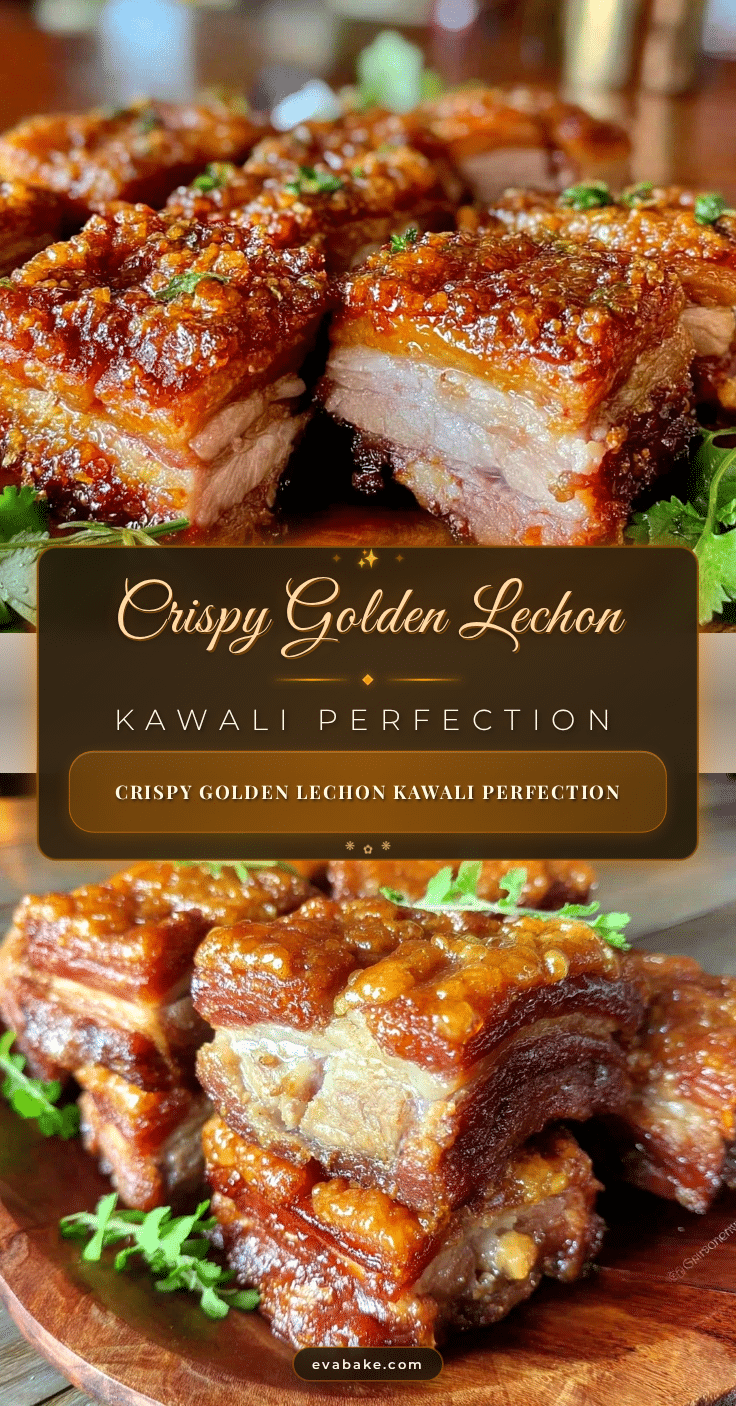
Crispy Lechon Kawali Recipe Easy Homemade with Perfect Golden Crackling

A classic Filipino dish featuring crispy pork belly with perfect golden crackling, achieved through a double-boil and dry method for tender meat and irresistible crunch.
- Prep Time: 20 minutes
- Cook Time: 1 hour 15 minutes
- Total Time: 1 hour 35 minutes
- Yield: 6 servings 1x
- Category: Main Course
- Cuisine: Filipino
Ingredients
- 2–3 pounds pork belly (skin-on, about 900–1350 g)
- 1 tablespoon kosher or sea salt
- 1 teaspoon freshly ground black pepper
- 4 cloves garlic, crushed
- 2–3 bay leaves
- Water (enough to cover pork belly in pot)
- 4 cups cooking oil (peanut or vegetable oil recommended for deep frying)
- Optional: 2 tablespoons vinegar (for rinsing after boiling)
Instructions
- Prepare the Pork Belly: Wash pork belly thoroughly under cold running water. Pat dry with paper towels. Score the skin lightly in a crosshatch pattern without cutting too deep into the meat.
- Boil the Pork Belly: Place pork belly skin-side up in a large pot. Add crushed garlic, bay leaves, salt, and black pepper. Pour enough water to cover the pork. Bring to a boil over medium-high heat (~10 minutes), then reduce to a simmer. Cook for 45 minutes to 1 hour until tender but not falling apart. Monitor water level and add more if needed.
- Drain and Dry: Remove pork belly from pot and let cool slightly. Drain excess water and pat skin dry with paper towels. Wipe skin with vinegar and let dry uncovered in the fridge for at least 1 hour or overnight for extra crispiness.
- Heat the Oil: Pour about 4 cups (1 liter) of cooking oil into a deep fryer or heavy-bottomed pan. Heat oil to 350°F (175°C). Use a thermometer if possible to maintain temperature.
- Deep Fry the Pork Belly: Carefully lower pork belly into hot oil, skin side down first. Fry for 6-8 minutes until skin puffs up and turns golden brown and crispy. Flip and fry meat side for another 3-4 minutes to brown evenly. If skin hasn’t puffed, prick with a fork to release steam.
- Drain and Rest: Transfer pork belly to a wire rack over a tray to drain excess oil. Let rest for 10 minutes to allow juices to settle and skin to remain crisp.
- Slice and Serve: Slice into bite-sized pieces or strips ensuring each piece has golden crackling. Serve with dipping sauces like spiced vinegar or soy sauce with chopped chilies.
Notes
Dry skin thoroughly and air dry in fridge after wiping with vinegar for best crackling. Maintain oil temperature around 350°F (175°C) to avoid burnt or chewy skin. Fry in batches to keep oil temperature steady. Use a wire rack to drain excess oil and keep skin crisp. Optional double frying can enhance crispiness. Oven roasting at 425°F (220°C) for 30-40 minutes is a healthier alternative but skin won’t be as puffy.
Nutrition
- Serving Size: About 150 grams (5.3
- Calories: 500
- Sodium: 700
- Fat: 40
- Saturated Fat: 14
- Carbohydrates: 1
- Protein: 30
Keywords: lechon kawali, crispy pork belly, Filipino recipe, pork belly crackling, deep fried pork, comfort food, easy pork recipe