Introduction
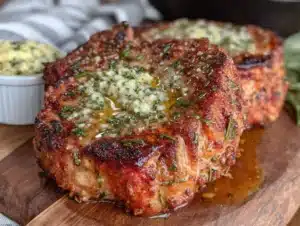
There’s this one chilly evening I can’t forget—when the wind howled like it was trying to tell me something, and I was staring down a fridge nearly empty except for a humble pork shoulder and a half bottle of apple cider. Honestly, I wasn’t planning anything fancy; I just wanted something warm and comforting after a day that felt like a marathon. I tossed the pork into a pot, added the cider on a whim, and let it simmer low and slow while I settled in with a book and a cup of tea. The house filled with this rich, sweet-spiced aroma that felt like a warm hug. That first bite was surprising—so tender, the flavors melding perfectly with a sticky-sweet glaze that lingered just right. Since then, this cozy braised pork shoulder with apple cider glaze has become my go-to whenever the days shorten and I crave something that feels like home, no fuss required.
Why You’ll Love This Recipe
- Quick & Easy: Although it’s a slow braise, the hands-on time is minimal—just prep and let it do its thing.
- Simple Ingredients: You don’t need fancy or hard-to-find items—basic pantry staples and that seasonal apple cider do all the heavy lifting.
- Perfect for Fall: The cozy warmth of pork paired with apple cider’s crisp sweetness screams autumn comfort food.
- Crowd-Pleaser: Whether it’s family dinner or casual guests, this recipe always gets a thumbs up, sometimes even requests for seconds!
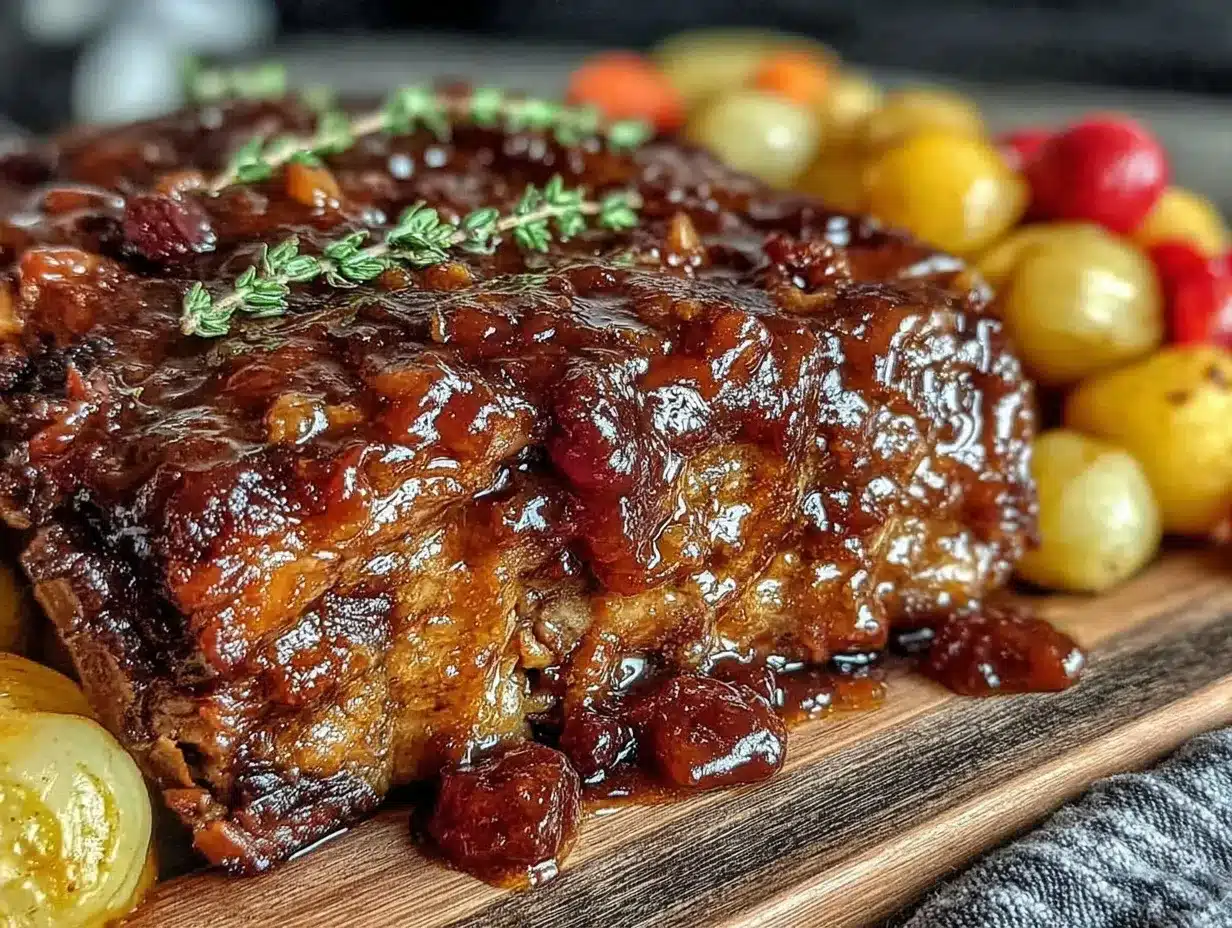
- Unbelievably Delicious: The slow cooking breaks down the pork shoulder into melt-in-your-mouth goodness, while the apple cider glaze adds a gorgeous sticky finish that’s just the right balance of sweet and tangy.
What makes this recipe stand out isn’t just the ingredients—it’s the technique. Braising the pork low and slow lets the meat soak up the cider’s subtle fruitiness, and finishing with the glaze caramelizes the edges for that perfect bite. I’ve tweaked it a few times to get just the right balance, and honestly, it’s become the only pork shoulder recipe I trust when I want that soul-satisfying feeling on a plate. It’s comfort food with a little twist, and once you try it, you might find yourself making it on repeat too.
What Ingredients You Will Need
This recipe uses simple, wholesome ingredients to deliver bold flavor and satisfying texture without the fuss. Most items are pantry staples, and the star here is the apple cider—fresh, seasonal, and full of flavor.
- Pork Shoulder: 3 to 4 pounds (1.4 to 1.8 kg), bone-in or boneless, trimmed of excess fat (the fat renders down to keep the meat juicy).
- Salt and Pepper: For seasoning the pork generously before browning.
- Olive Oil or Vegetable Oil: 2 tablespoons for searing.
- Yellow Onion: 1 large, sliced thin (adds sweetness and depth).
- Garlic: 4 cloves, minced (a must for savory base notes).
- Apple Cider: 2 cups (480 ml), preferably unfiltered for richer flavor.
- Chicken or Vegetable Broth: 1 cup (240 ml), to keep the pork moist during braising.
- Brown Sugar: 2 tablespoons, for balancing the tartness of the cider.
- Dijon Mustard: 1 tablespoon (adds a subtle tang).
- Dried Thyme: 1 teaspoon (pairs beautifully with pork).
- Bay Leaves: 2 leaves, for aromatic warmth.
- Apple Cider Vinegar: 1 tablespoon, to brighten the glaze.
- Butter: 1 tablespoon, optional, for finishing the glaze with shine and richness.
For the best results, I recommend using a good-quality unfiltered apple cider like Martinelli’s or a local farm-pressed variety if you can find it. The pork shoulder should be well-marbled but not overly fatty; this ensures tenderness without greasiness. If you need a gluten-free option, just double-check your broth and mustard labels—both are often safe, but it’s worth a glance. And if you can’t find apple cider vinegar, a mild white vinegar will do in a pinch.
Equipment Needed
- Heavy-Bottomed Dutch Oven or Large Oven-Safe Pot: Essential for even heat distribution and braising.
- Sharp Chef’s Knife: For slicing onions and trimming the pork.
- Wooden Spoon or Silicone Spatula: For stirring the glaze and deglazing the pot.
- Tongs: Handy for turning the pork during searing and braising.
- Meat Thermometer: Optional but useful to check doneness (aim for about 190°F / 88°C for fall-apart pork).
- Oven Mitts: Because that Dutch oven gets hot—trust me on this one!
If you don’t have a Dutch oven, a heavy skillet with a tight-fitting lid can work, but you might need to finish the braising on the stovetop with occasional lid checks. I personally prefer the Dutch oven for its ability to hold heat and moisture consistently. For budget-friendly options, enameled cast iron pots from brands like Lodge offer great value and durability. Remember to season your cast iron regularly if you’re using one without enamel for the best non-stick experience.
Preparation Method
- Preheat your oven to 300°F (150°C). This low temperature allows the pork to braise gently, tenderizing thoroughly without drying out.
- Season the pork shoulder generously with salt and pepper on all sides. Don’t be shy—this is the base flavor for the whole dish.
- Heat the oil in your Dutch oven over medium-high heat until shimmering but not smoking—about 2 minutes.
- Sear the pork shoulder on all sides until deeply browned, about 4-5 minutes per side. This step locks in juices and builds flavor. If your pork is large, you might want to cut it into two pieces for easier handling and browning.
- Remove the pork and set aside. Lower the heat to medium and add the sliced onion to the pot, stirring occasionally until softened and golden, about 6-8 minutes.
- Add the minced garlic and cook for another minute until fragrant—don’t let it burn!
- Pour in the apple cider and use your wooden spoon to scrape up all those tasty browned bits stuck to the bottom. This deglazing step adds so much depth.
- Add the broth, brown sugar, Dijon mustard, thyme, and bay leaves. Stir well to combine and bring the liquid to a gentle simmer.
- Return the pork shoulder to the pot, nestling it into the liquid. The liquid should come about halfway up the sides of the pork; if not, add a splash more broth or cider.
- Cover the pot with its lid and transfer it to the preheated oven. Let it braise for 3 to 3.5 hours, or until the pork is fork-tender and pulls apart easily.
- Remove the pork from the pot and transfer it to a serving dish, tent with foil to keep warm.
- Strain the cooking liquid into a saucepan (discard bay leaves), then simmer over medium heat until reduced by about half and slightly syrupy, about 10-15 minutes.
- Add apple cider vinegar and butter to the glaze, stirring until glossy and smooth. Taste and adjust seasoning with salt and pepper as needed.
- Brush the glaze generously over the pork shoulder before serving. The sticky, tangy finish makes all the difference.
Pro tip: If you find the pork isn’t as tender as you want after 3 hours, no worries—just cover and keep braising, checking every 15 minutes. Low and slow is the key. Also, don’t rush the searing; that caramelization is the flavor jackpot.
Cooking Tips & Techniques
Braising pork shoulder is forgiving, but a few tips can make your dish shine every time. First, always pat your pork dry before seasoning and searing—moisture is the enemy of a good crust. Use medium-high heat for that deep brown sear, but watch closely so it doesn’t burn. If your pan smokes, lower the heat slightly.
While braising, resist the urge to lift the lid too often. Each peek lets out steam and slows the cooking process. If you do need to check, be quick and cover it back right away. I learned this the hard way when my first attempt took nearly twice as long because I kept stirring and checking.
Another trick is to let the meat rest for 10-15 minutes after braising before slicing or shredding. This helps the juices redistribute, so every bite stays moist. And when reducing the glaze, keep an eye on texture—it should coat the back of a spoon without being too thick or syrupy.
Lastly, multitasking works well here: while the pork braises, you can prepare sides like roasted vegetables or a simple apple slaw. This timing keeps your kitchen humming without stress.
Variations & Adaptations
- Dietary Adaptation: For a gluten-free version, be sure your broth and mustard are certified gluten-free. You can also swap brown sugar for coconut sugar or maple syrup for a different sweetness profile.
- Seasonal Twist: In winter, add a few cinnamon sticks or star anise to the braising liquid for warming spice notes. In summer, fresh herbs like rosemary or sage can replace thyme for a brighter flavor.
- Flavor Variation: Try substituting apple cider with pear cider or dry white wine for a different tang and complexity. You might find you like the slightly fruitier twist it brings.
- Cooking Method: This recipe translates well to a slow cooker. After searing, transfer everything to the slow cooker and cook on low for 6-8 hours. Finish glaze on the stovetop as directed.
- Personal Favorite: I once added sliced smoked apples on top of the pork during the last hour of braising—it gave a subtle smoky sweetness that was unforgettable.
Serving & Storage Suggestions
This cozy braised pork shoulder shines best served warm, spooned with extra glaze and accompanied by creamy mashed potatoes or buttery noodles. A crisp apple slaw or roasted root vegetables complement the rich flavors wonderfully. For beverages, a tart hard cider or a light red wine like Pinot Noir pairs beautifully.
Store leftovers in an airtight container in the refrigerator for up to 4 days. The pork actually tastes better the next day after the flavors have settled. Reheat gently on the stovetop or in the oven, adding a splash of broth or water to keep it moist. You can also freeze portions for up to 3 months—just thaw overnight in the fridge before reheating.
When reheated, the glaze will thicken slightly; if it feels too sticky, a quick whisk with a little warm water refreshes it perfectly. Flavors meld over time, so leftovers become an even richer treat—ideal for busy weeknights when you want something satisfying with minimal effort.
Nutritional Information & Benefits
Each serving of this braised pork shoulder provides a hearty dose of protein, essential for muscle repair and energy. The apple cider adds a touch of natural sweetness and antioxidants, while thyme contributes vitamins and minerals that support immune health.
This recipe is naturally low in carbs and can be adapted to gluten-free or dairy-free diets with simple substitutions. Being rich in iron and B vitamins, pork shoulder supports healthy blood and metabolism. Plus, the slow cooking process preserves nutrients better than high-heat methods.
From a wellness perspective, this dish balances indulgence and nourishment, offering a satisfying meal without overloading on processed ingredients. It’s a great choice when you want something soul-soothing yet mindful of your health goals.
Conclusion
Cozy braised pork shoulder with apple cider glaze isn’t just another fall recipe—it’s a dish that turns simple ingredients into a comforting experience. Its rich, tender meat and sticky-sweet finish make it a standout in my kitchen, especially on cool evenings when I want a meal that feels like a warm embrace.
Feel free to tweak the herbs, swap the cider, or add your own spin—this recipe invites personalization without losing its heart. I hope it finds a place on your table as it has on mine, bringing a little extra comfort and joy to your meals.
When you give this one a try, I’d love to hear how you make it your own. Share your stories, tips, or questions—let’s keep the cozy vibes going!
FAQs
Can I use boneless pork shoulder for this recipe?
Yes, boneless pork shoulder works well and may even be easier to handle. Just adjust your cooking time slightly if the piece is smaller.
What if I don’t have apple cider—can I substitute something else?
You can use pear cider, dry white wine, or a mix of apple juice and vinegar as a substitute. The key is balancing sweetness and acidity.
How do I know when the pork is done braising?
The pork is ready when it’s fork-tender and pulls apart easily, usually after 3 to 3.5 hours at 300°F (150°C). A meat thermometer reading around 190°F (88°C) confirms it.
Can I prepare this recipe in a slow cooker?
Absolutely! After searing, transfer everything to the slow cooker and cook on low for 6-8 hours. Finish by reducing the glaze on the stovetop as directed.
How should I store leftovers for best flavor?
Keep leftovers in an airtight container in the fridge for up to 4 days or freeze for up to 3 months. Reheat gently with a splash of broth to maintain moisture and flavor.
Pin This Recipe!
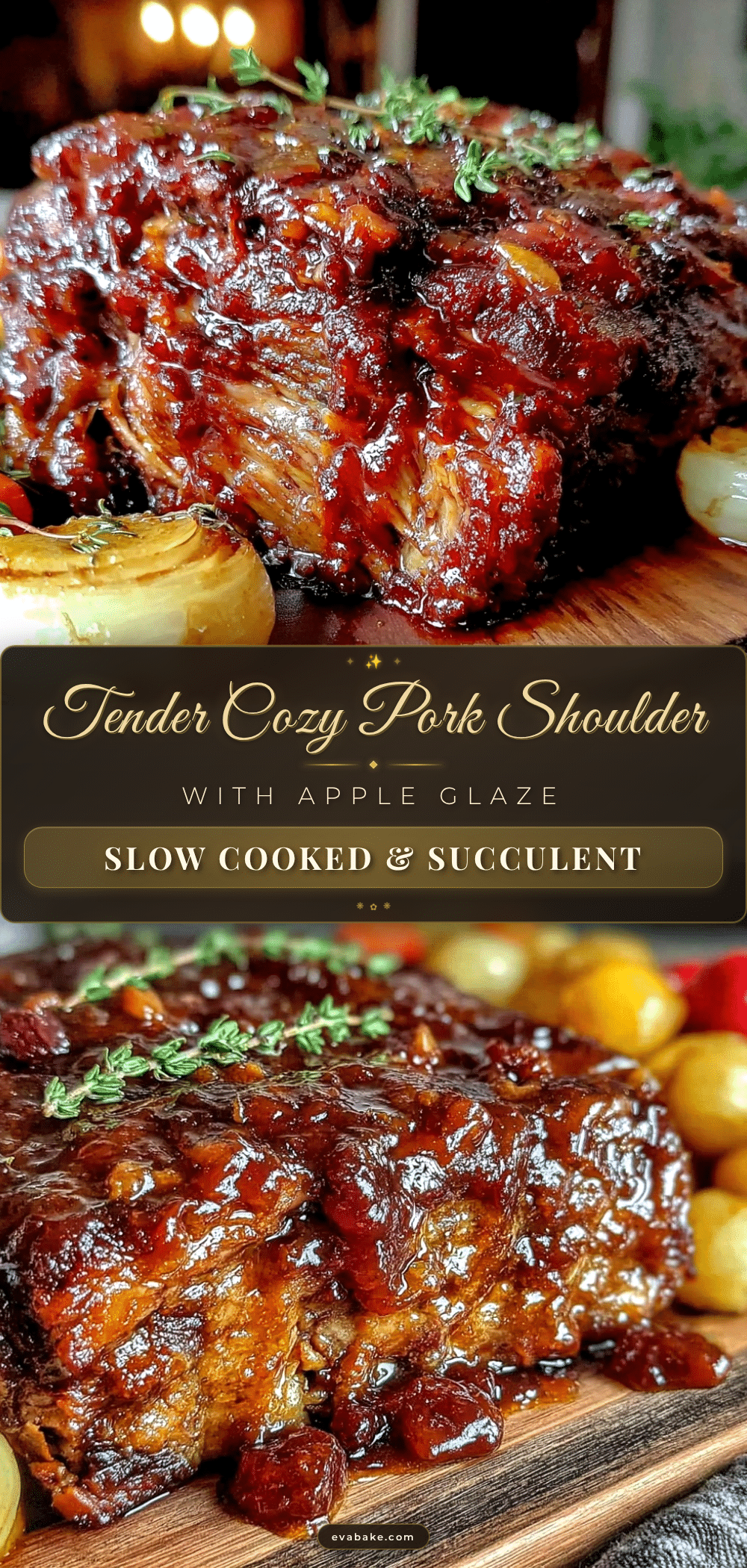
Cozy Braised Pork Shoulder with Apple Cider Glaze
A warm and comforting fall recipe featuring tender pork shoulder braised low and slow in apple cider, finished with a sticky-sweet glaze.
- Prep Time: 15 minutes
- Cook Time: 3 hours 30 minutes
- Total Time: 3 hours 45 minutes
- Yield: 6 servings 1x
- Category: Main Course
- Cuisine: American
Ingredients
- 3 to 4 pounds pork shoulder, bone-in or boneless, trimmed of excess fat
- Salt and pepper, to taste
- 2 tablespoons olive oil or vegetable oil
- 1 large yellow onion, sliced thin
- 4 cloves garlic, minced
- 2 cups apple cider (preferably unfiltered)
- 1 cup chicken or vegetable broth
- 2 tablespoons brown sugar
- 1 tablespoon Dijon mustard
- 1 teaspoon dried thyme
- 2 bay leaves
- 1 tablespoon apple cider vinegar
- 1 tablespoon butter (optional)
Instructions
- Preheat your oven to 300°F (150°C).
- Season the pork shoulder generously with salt and pepper on all sides.
- Heat the oil in your Dutch oven over medium-high heat until shimmering but not smoking, about 2 minutes.
- Sear the pork shoulder on all sides until deeply browned, about 4-5 minutes per side. Cut into two pieces if needed for easier handling.
- Remove the pork and set aside. Lower heat to medium and add the sliced onion to the pot, stirring occasionally until softened and golden, about 6-8 minutes.
- Add the minced garlic and cook for another minute until fragrant.
- Pour in the apple cider and scrape up browned bits from the bottom of the pot.
- Add the broth, brown sugar, Dijon mustard, thyme, and bay leaves. Stir well and bring to a gentle simmer.
- Return the pork shoulder to the pot, nestling it into the liquid so it comes about halfway up the sides. Add more broth or cider if needed.
- Cover the pot with its lid and transfer to the preheated oven. Braise for 3 to 3.5 hours, or until pork is fork-tender and pulls apart easily.
- Remove the pork from the pot and transfer to a serving dish, tent with foil to keep warm.
- Strain the cooking liquid into a saucepan, discarding bay leaves, and simmer over medium heat until reduced by half and slightly syrupy, about 10-15 minutes.
- Add apple cider vinegar and butter to the glaze, stirring until glossy and smooth. Adjust seasoning with salt and pepper as needed.
- Brush the glaze generously over the pork shoulder before serving.
Notes
Pat pork dry before seasoning and searing for a better crust. Avoid lifting the lid frequently during braising to retain moisture. Let meat rest 10-15 minutes before slicing. Reduce glaze until it coats the back of a spoon. For gluten-free, verify broth and mustard labels. Slow cooker adaptation: after searing, cook on low 6-8 hours and finish glaze on stovetop.
Nutrition
- Serving Size: 1 serving (approxima
- Calories: 450
- Sugar: 9
- Sodium: 450
- Fat: 28
- Saturated Fat: 9
- Carbohydrates: 12
- Fiber: 1
- Protein: 38
Keywords: braised pork shoulder, apple cider glaze, fall recipe, comfort food, slow braise, pork recipe