That night, I was scrambling to throw together dinner after a marathon day at work. Honestly, I wasn’t planning anything fancy—just something quick, filling, and, well, not another boring pasta dish. I had some shrimp thawing in the fridge and a pack of rice noodles staring at me from the pantry, so Pad Thai popped into my head. But here’s the thing: I wasn’t sure if I could pull off a truly flavorful, authentic shrimp Pad Thai with peanuts without a long list of complicated ingredients or a ton of prep time. Spoiler alert: I did. And it turned out better than I expected.
That first attempt was a bit of a happy accident, really. I improvised with what I had, tweaking the sauce a little, tossing in crunchy peanuts for that satisfying bite, and cooking the shrimp just right so they stayed tender and juicy. The balance of tangy, sweet, salty, and nutty flavors hit all the right notes. It wasn’t just dinner; it felt like a little escape to a street food stall in Bangkok, right in my own kitchen.
Since then, I’ve made this shrimp Pad Thai with peanuts recipe more times than I can count—sometimes for a quick solo meal, other times to impress friends who keep asking for the recipe. It’s become my go-to when I want something that’s both easy and genuinely flavorful, without the fuss. If you’ve ever hesitated trying homemade Pad Thai because it seemed intimidating, this recipe might just change your mind. It’s simple, authentic, and yes, packed with bold, satisfying flavor.
What I love most? How the peanuts add that perfect crunch and depth without needing a million extras. This dish has quietly become a kitchen staple for me, and I think you’ll find it just as comforting and addictive.
Why You’ll Love This Recipe
- Quick & Easy: Comes together in about 30 minutes, making it perfect for busy weeknights or unexpected dinner guests.
- Simple Ingredients: Uses common pantry staples and fresh shrimp—no need for hard-to-find sauces or spices.
- Perfect for Any Occasion: Whether it’s a cozy dinner for one or a lively weekend gathering, this shrimp Pad Thai hits the spot.
- Crowd-Pleaser: The combination of tender shrimp, chewy noodles, and crunchy peanuts always gets rave reviews, even from picky eaters.
- Unbelievably Delicious: The authentic balance of sweet, sour, salty, and nutty flavors tastes like you spent hours cooking, but honestly, it’s a breeze.
- Unique Touch: The homemade sauce blends tamarind paste, fish sauce, and palm sugar for that classic Thai flavor, while lightly toasted peanuts add a fresh, crunchy contrast you won’t forget.
- Emotional Connection: This recipe is more than just food; it’s a little moment of joy—comfort food that feels like a warm hug after a long day.
What Ingredients You Will Need
This shrimp Pad Thai with peanuts recipe uses simple, wholesome ingredients to deliver bold flavor and satisfying texture without the fuss. Most of these are pantry basics, and the fresh shrimp gives it that seafood kick.
- Rice noodles: 8 oz (225g) flat rice noodles, soaked or boiled until tender (I prefer Thai Kitchen brand for consistent texture).
- Shrimp: 12 oz (340g) raw shrimp, peeled and deveined (medium size works best for even cooking).
- Vegetable oil: 2 tablespoons, for stir-frying (can swap with peanut oil for more flavor).
- Garlic: 3 cloves, minced (fresh is key for that punch).
- Eggs: 2 large, lightly beaten (adds richness and texture).
- Green onions: 3 stalks, sliced thin (for freshness and mild onion flavor).
- Bean sprouts: 1 cup, rinsed (adds crunch and lightness).
- Peanuts: ½ cup, roasted and chopped (the star crunch—use unsalted to control salt).
- Tamarind paste: 2 tablespoons (look for a good-quality brand like Mae Ploy, it makes a huge difference).
- Fish sauce: 3 tablespoons (don’t skip this—it’s essential for authentic salty depth).
- Palm sugar: 2 tablespoons, grated or chopped (you can substitute light brown sugar if necessary).
- Fresh lime juice: 1 tablespoon (brightens the whole dish).
- Red chili flakes: ½ teaspoon or to taste (optional, for a subtle kick).
- Cilantro (optional): A handful, chopped, for garnish.
Substitution tips: For a gluten-free option, double-check your fish sauce and tamarind paste labels. Swap shrimp for chicken or tofu if preferred. Coconut sugar can replace palm sugar for a slightly different sweetness.
Equipment Needed
- Large skillet or wok: A wok is ideal because it distributes heat evenly, but a large non-stick skillet works just fine. I’ve used both—wok gives the best stir-fry results, but don’t stress if you only have a skillet.
- Mixing bowls: For soaking noodles and mixing sauces.
- Measuring spoons and cups: Precise measurements help balance flavors, especially with the sauce components.
- Spatula or wooden spoon: For stirring and tossing ingredients.
- Knife and cutting board: To prep garlic, green onions, and peanuts.
- Colander or strainer: To drain soaked noodles and rinse bean sprouts.
If you don’t have a wok, no worries. Just make sure your skillet is large enough so you can toss ingredients without overcrowding—that’s key to even cooking. Also, I keep a dedicated small bowl nearby for mixing the sauce—it saves time and keeps everything tidy. For peanuts, buying them roasted saves a step, but if raw, toast them lightly in a dry pan until fragrant.
Preparation Method
- Soak or cook the rice noodles: Place 8 oz (225g) flat rice noodles in warm water for 20-30 minutes until pliable but still a bit firm (al dente). Drain and set aside. If your noodles need boiling, cook according to package instructions—usually 4-5 minutes—then rinse under cold water and drain well. Note: Avoid overcooking; soggy noodles kill the texture.
- Prepare the sauce: In a small bowl, combine 2 tablespoons tamarind paste, 3 tablespoons fish sauce, 2 tablespoons palm sugar, 1 tablespoon fresh lime juice, and ½ teaspoon red chili flakes (optional). Stir until sugar dissolves. Taste and adjust balance if needed—should be tangy, salty, with a hint of sweetness.
- Cook the shrimp: Heat 2 tablespoons vegetable oil in a wok or large skillet over medium-high heat. Add minced garlic and sauté 30 seconds until fragrant. Add 12 oz (340g) shrimp and stir-fry until pink and just cooked through, about 2-3 minutes. Remove shrimp from pan and set aside.
- Scramble the eggs: In the same pan, pour in beaten eggs (2 large), swirling to create a thin layer. Let them set for 30 seconds, then scramble gently until cooked but still soft. Push eggs to one side.
- Combine noodles and sauce: Add drained noodles to the pan and pour sauce over them. Toss everything together carefully but thoroughly, using tongs or two spatulas. The noodles should get evenly coated and start to soften more, about 2-3 minutes.
- Add shrimp and veggies: Return shrimp to the pan along with 3 sliced green onions and 1 cup rinsed bean sprouts. Toss gently to combine and heat through.
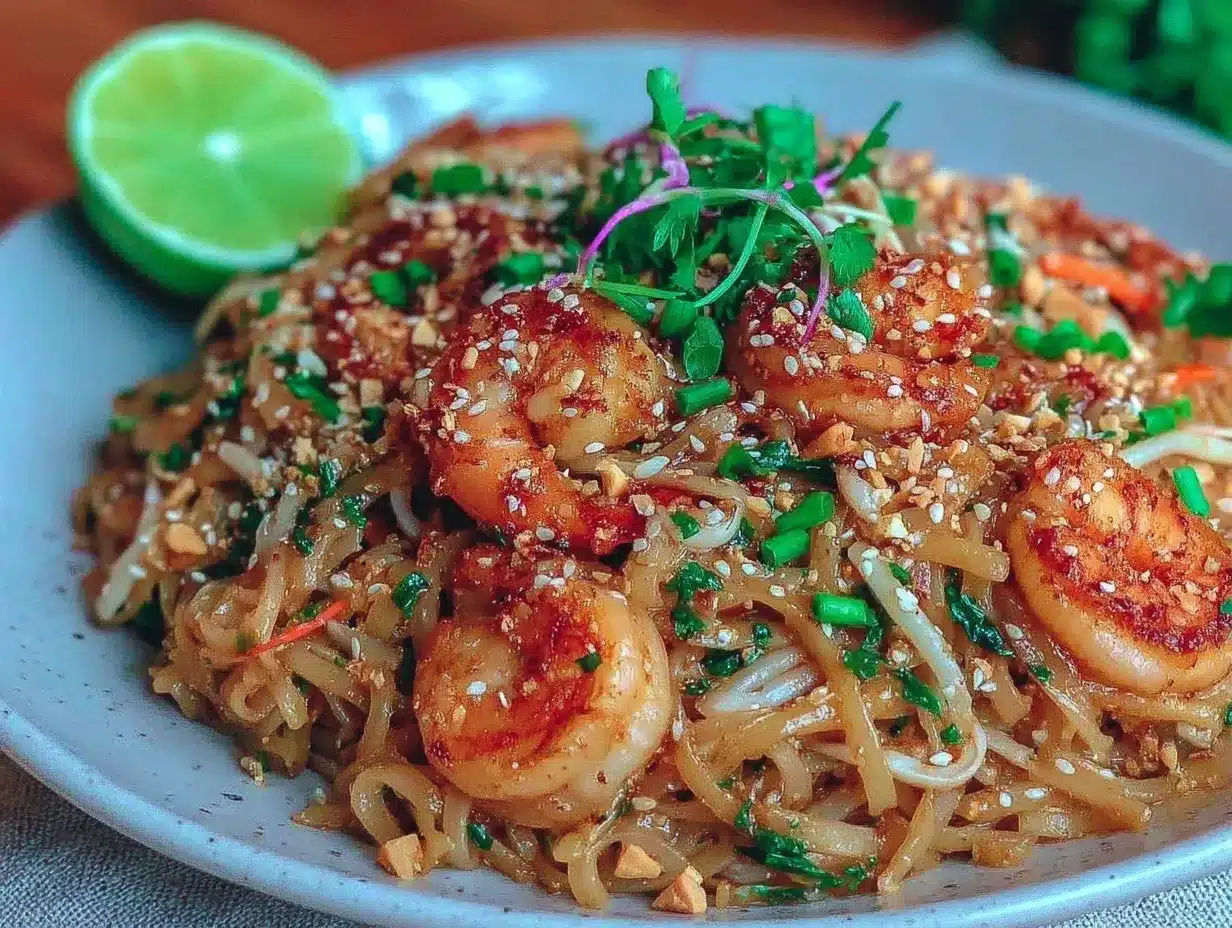
- Serve: Plate the shrimp Pad Thai and sprinkle generously with ½ cup chopped roasted peanuts and optional chopped cilantro. A wedge of lime on the side never hurts.
Pro tip: Keep your ingredients prepped and nearby before cooking; the stir-fry process moves quickly. If noodles stick, a splash of water helps loosen them. Watch the heat—it should be high enough for a quick sauté but not so hot that garlic burns.
Cooking Tips & Techniques
First off, controlling the heat is key. You want your pan hot enough to sear the shrimp quickly without overcooking, but not so hot that the garlic chars—that bitterness ruins the dish. I learned this the hard way after one smoky kitchen incident.
Another tip: soaking rice noodles rather than boiling can save you from mushy noodles. Soaking gives you more control over texture, and you can toss them directly into the pan once tender.
When mixing the sauce, taste as you go. Tamarind paste brands vary, so adjust lime juice or sugar to keep the classic sweet-sour-salty harmony. I usually tweak it a bit depending on the batch.
Don’t overcrowd the pan during stir-frying; give ingredients room to cook evenly. If you have a smaller pan, cook shrimp and eggs separately and combine later.
And one last thing—toast your peanuts lightly before chopping. This step wakes up their flavor and adds that irresistible crunch that makes this shrimp Pad Thai stand out from the rest.
Variations & Adaptations
- Protein swaps: Use chicken breast, tofu, or even thinly sliced beef instead of shrimp for different tastes.
- Vegetarian version: Replace fish sauce with soy sauce or tamari and skip shrimp. Add extra veggies like bell peppers or snap peas for color and crunch.
- Spice level: Increase red chili flakes or add fresh sliced Thai chilies for a hotter kick, or omit them entirely for a milder dish.
- Gluten-free: Double-check that your fish sauce and tamarind paste are gluten-free. Use tamari instead of soy sauce if needed.
- Peanut-free: Swap peanuts for toasted cashews or pumpkin seeds for crunch without allergens.
Personally, I once made this with spiralized zucchini noodles when I was craving something lighter. It worked surprisingly well, especially with extra bean sprouts and a splash of lime. It’s a nice twist if you’re watching carbs but still want those classic Pad Thai vibes.
Serving & Storage Suggestions
Serve your shrimp Pad Thai hot, straight from the pan, with extra lime wedges on the side for squeezing. It pairs beautifully with a crisp, cold Thai iced tea or a simple cucumber salad to balance the bold flavors.
If you have leftovers, store them in an airtight container in the fridge for up to 2 days. The noodles tend to soak up the sauce over time, so before reheating, sprinkle a little water over the dish and warm gently in a skillet or microwave to loosen the noodles.
Freezing isn’t recommended since the noodles can get mushy, but if you must, freeze in a single layer and thaw slowly in the fridge. Flavors actually deepen after resting a bit, so if you make it ahead for a party, it might taste even better a few hours later.
Nutritional Information & Benefits
Per serving, this shrimp Pad Thai with peanuts offers approximately 450 calories, 30 grams of protein, 45 grams of carbohydrates, and 15 grams of fat, making it a balanced meal. Shrimp provides lean protein and essential omega-3 fatty acids, while peanuts add healthy fats and a satisfying crunch.
The sauce’s tamarind paste is a good source of antioxidants and vitamin C, and the dish includes fresh veggies like bean sprouts and green onions that contribute fiber and micronutrients.
This recipe is naturally gluten-free when you use the right ingredients, and it’s moderate in carbs thanks to rice noodles. For those with nut allergies, easy substitutions keep it safe and still tasty.
Conclusion
This shrimp Pad Thai with peanuts recipe has quietly become one of my favorite quick dinners that never feels rushed or bland. It strikes that rare balance—easy enough for a weeknight but authentic enough to impress anyone who tastes it. I love how it brings together fresh and pantry ingredients into one satisfying, flavorful dish that feels like a little treat every time.
Feel free to make it your own with different proteins or spice levels. Honestly, once you nail the sauce, the rest just falls into place. If you try it, I’d love to hear how you customize it or what your favorite add-ins are. Cooking should be fun, and this recipe makes it simple and delicious.
Here’s to many cozy dinners filled with the bright, nutty, tangy taste of homemade shrimp Pad Thai.
FAQs
What can I use if I can’t find tamarind paste?
You can substitute tamarind paste with a mix of lime juice and a bit of brown sugar or vinegar, but the flavor won’t be exactly the same. Some stores sell tamarind concentrate or tamarind pulp that can work too.
Can I make this recipe ahead of time?
Yes, you can prep the sauce and chop veggies ahead. I recommend cooking the noodles and shrimp fresh to keep the best texture, but leftovers keep well for a day or two in the fridge.
Is this recipe spicy?
The base recipe has a mild heat level, but you can easily adjust the red chili flakes or add fresh chilies to increase spiciness according to your preference.
How do I prevent the noodles from sticking together?
Soaking noodles properly and rinsing them with cold water helps. While cooking, tossing gently and adding a splash of oil or water if needed prevents clumping.
Can I use frozen shrimp?
Absolutely. Just thaw them completely and pat dry before cooking to avoid excess moisture in the pan, which can affect texture.
Pin This Recipe!
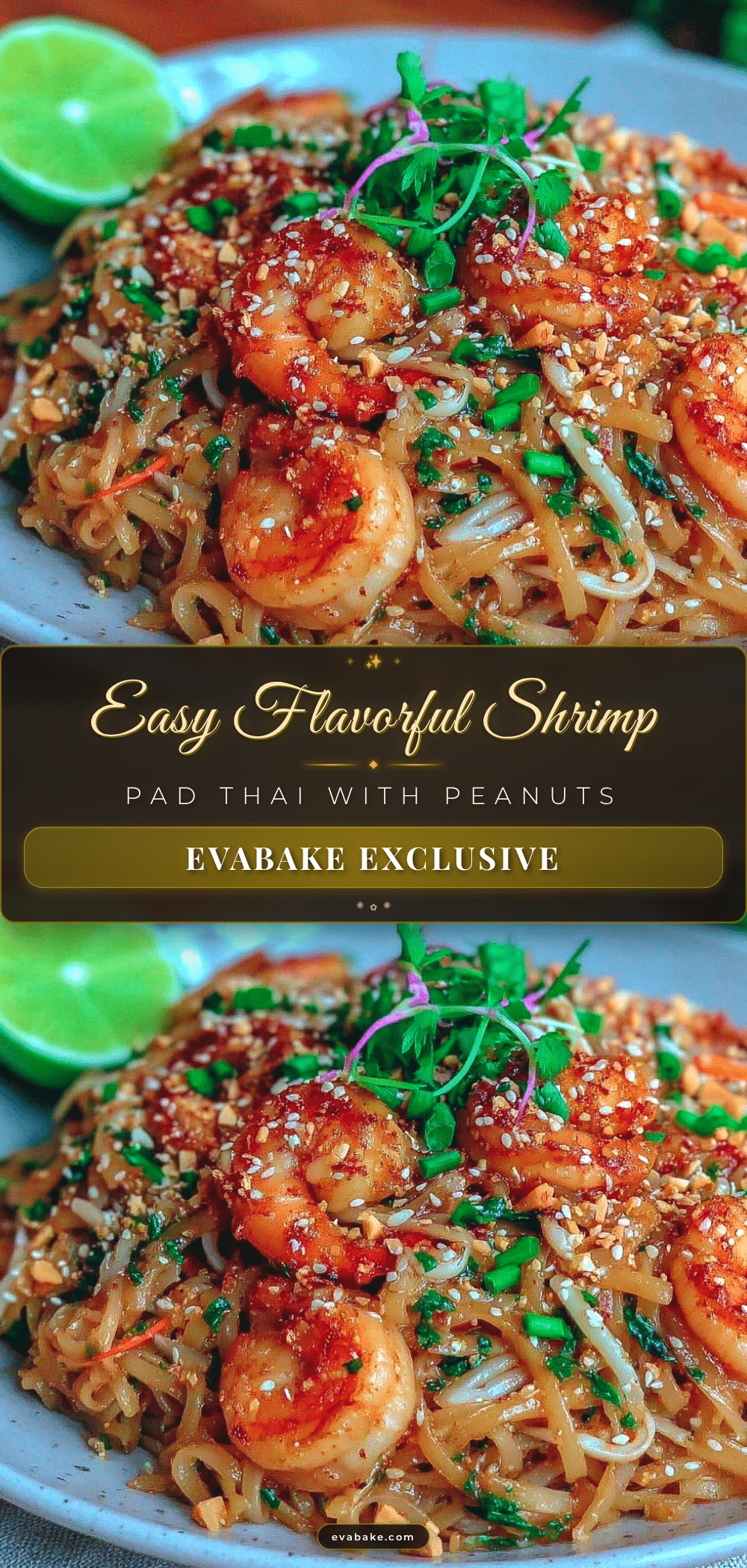
Shrimp Pad Thai Recipe Easy Authentic Flavorful with Peanuts
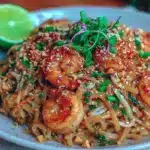
A quick and easy shrimp Pad Thai recipe that delivers authentic, flavorful, and satisfying Thai street food taste with crunchy peanuts and a balanced sweet, sour, salty, and nutty sauce.
- Prep Time: 15 minutes
- Cook Time: 15 minutes
- Total Time: 30 minutes
- Yield: 3-4 servings 1x
- Category: Main Course
- Cuisine: Thai
Ingredients
- 8 oz (225g) flat rice noodles, soaked or boiled until tender
- 12 oz (340g) raw shrimp, peeled and deveined
- 2 tablespoons vegetable oil (can substitute with peanut oil)
- 3 cloves garlic, minced
- 2 large eggs, lightly beaten
- 3 stalks green onions, sliced thin
- 1 cup bean sprouts, rinsed
- ½ cup roasted and chopped peanuts (unsalted preferred)
- 2 tablespoons tamarind paste
- 3 tablespoons fish sauce
- 2 tablespoons palm sugar (or light brown sugar)
- 1 tablespoon fresh lime juice
- ½ teaspoon red chili flakes (optional)
- A handful of chopped cilantro (optional, for garnish)
Instructions
- Soak or cook the rice noodles: Place 8 oz flat rice noodles in warm water for 20-30 minutes until pliable but still a bit firm (al dente). Drain and set aside. Alternatively, boil according to package instructions (4-5 minutes), rinse under cold water, and drain well. Avoid overcooking.
- Prepare the sauce: In a small bowl, combine 2 tablespoons tamarind paste, 3 tablespoons fish sauce, 2 tablespoons palm sugar, 1 tablespoon fresh lime juice, and ½ teaspoon red chili flakes (optional). Stir until sugar dissolves. Taste and adjust balance if needed.
- Cook the shrimp: Heat 2 tablespoons vegetable oil in a wok or large skillet over medium-high heat. Add minced garlic and sauté for 30 seconds until fragrant. Add shrimp and stir-fry until pink and just cooked through, about 2-3 minutes. Remove shrimp from pan and set aside.
- Scramble the eggs: In the same pan, pour in beaten eggs, swirling to create a thin layer. Let set for 30 seconds, then scramble gently until cooked but still soft. Push eggs to one side.
- Combine noodles and sauce: Add drained noodles to the pan and pour sauce over them. Toss everything together carefully but thoroughly using tongs or two spatulas. Cook for about 2-3 minutes until noodles are evenly coated and softened.
- Add shrimp and veggies: Return shrimp to the pan along with sliced green onions and rinsed bean sprouts. Toss gently to combine and heat through.
- Serve: Plate the shrimp Pad Thai and sprinkle generously with chopped roasted peanuts and optional chopped cilantro. Serve with lime wedges on the side.
Notes
Control heat to avoid burning garlic and overcooking shrimp. Soak noodles instead of boiling to prevent mushiness. Toast peanuts lightly if raw for better flavor. Keep ingredients prepped and nearby as stir-frying moves quickly. Add a splash of water if noodles stick during cooking.
Nutrition
- Serving Size: About 1 cup per serv
- Calories: 450
- Fat: 15
- Carbohydrates: 45
- Protein: 30
Keywords: Shrimp Pad Thai, Pad Thai recipe, easy Pad Thai, authentic Thai food, shrimp recipe, peanuts, quick dinner, Thai noodles