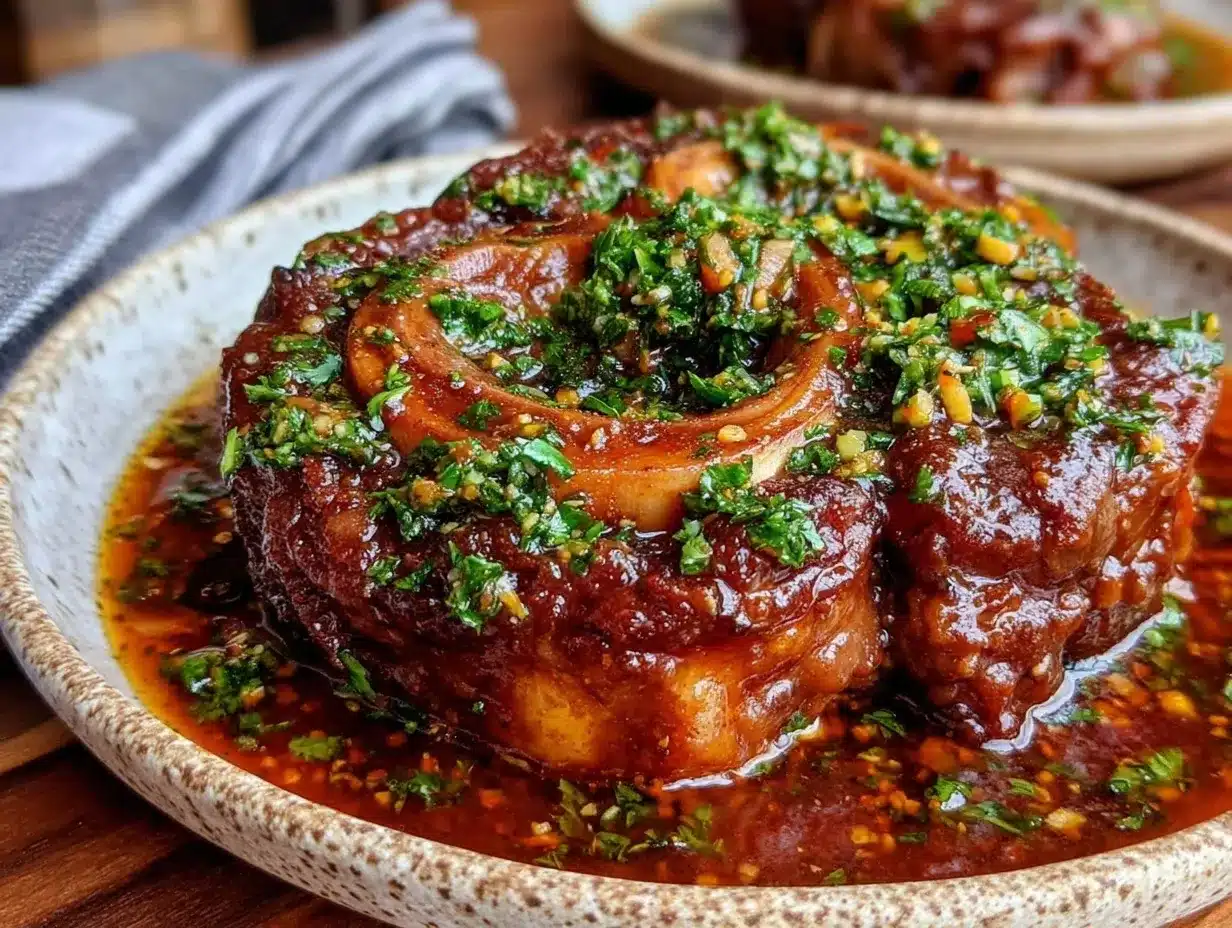
It was one of those chilly Sunday afternoons when the kitchen felt like the only warm spot in the house. I had just come back from the market with a hefty piece of veal shanks, and honestly, I wasn’t sure what to do with them at first. Osso Buco seemed intimidating—a slow-cooked Italian classic that friends often raved about but I’d never dared try. The smell of garlic, onions, and tomatoes simmering in the pan brought back a memory of a trip to Milan years ago, sitting in a tiny trattoria where the waiter promised the “best Osso Buco you’ll ever taste.” Skeptical but hopeful, I decided to give it a shot, figuring if I messed it up, at least the kitchen would smell amazing.
Turns out, the recipe was surprisingly straightforward, and that gremolata topping? The zingy brightness from lemon zest and fresh parsley made the whole thing sing. It quickly became a dish I made over and over—sometimes twice in a week—especially when I needed that kind of deep, slow-cooked comfort without fussing over complicated steps. Now, it’s the dish I bring out when friends drop by unannounced or when I just want to feel like I’m dining in Italy without leaving my kitchen. There’s something quietly satisfying about watching those veal shanks fall apart and knowing the gremolata will cut through the richness just right. This recipe stuck with me not for flashiness but for honest flavor and a little bit of soul.
Why You’ll Love This Recipe
- Slow-Cooked Perfection: Tender veal shanks simmered for hours until melt-in-your-mouth soft, offering a rich and hearty meal that feels like a warm hug.
- Simple Ingredients: Made with pantry staples and fresh herbs, no need for hard-to-find Italian specialty items.
- Impressive Yet Manageable: It looks and tastes like a restaurant dish but comes together with approachable steps—perfect for weekend cooking or special dinners.
- Bright Gremolata Finish: The fresh lemon zest, garlic, and parsley topping adds a pop of color and flavor, balancing the savory stew beautifully.
- Versatile Serving: Pairs well with creamy polenta, risotto, or simply crusty bread to soak up every bit of the sauce.
- Authentically Inspired: This recipe honors the traditional Italian approach with a few personal tweaks I’ve learned over time, like browning the meat thoroughly for that caramelized depth.
- Comfort Food with Soul: It’s that kind of dish that makes you pause, savor, and feel a little closer to Italy—even on the busiest days.
What Ingredients You Will Need
This recipe uses simple, wholesome ingredients to deliver bold flavor and satisfying texture without the fuss. Most items are pantry staples, and the fresh gremolata topping brings brightness to the dish.
- Veal shanks: 4 pieces, about 1 ½ inches thick each (ask your butcher for cross-cut veal shanks for the best marrow).
- All-purpose flour: For dredging the meat (helps with browning and thickening the sauce).
- Olive oil: 3 tablespoons (I like using extra virgin from California for a fruity note).
- Unsalted butter: 2 tablespoons (adds richness to the braise).
- Yellow onion: 1 large, finely chopped.
- Carrots: 2 medium, diced.
- Celery stalks: 2, diced (classic soffritto base).
- Garlic cloves: 3, minced (fresh is best to bring out that spicy aroma).
- Dry white wine: 1 cup (I recommend a crisp Pinot Grigio or Sauvignon Blanc).
- Beef or veal stock: 3 cups (homemade or low-sodium store-bought).
- Canned crushed tomatoes: 1 cup (San Marzano if you can get them—adds a natural sweetness).
- Fresh thyme: 3 sprigs.
- Bay leaves: 2 leaves.
- Salt and freshly ground black pepper: To taste.
For the gremolata topping:
- Fresh flat-leaf parsley: ½ cup, finely chopped.
- Lemon zest: From 1 large lemon (avoid the white pith to keep it bright).
- Garlic clove: 1 small, minced very finely.
Substitution tip: If veal isn’t available, you can use cross-cut beef shanks, though cooking time may need to be a bit longer. For a gluten-free option, swap all-purpose flour with almond flour or a gluten-free blend.
Equipment Needed
- Heavy-bottomed Dutch oven or large oven-safe pot: Ideal for slow braising and even heat distribution. I’ve found Le Creuset to be worth the investment, but any sturdy pot works.
- Sharp chef’s knife: For prepping vegetables and zesting lemon.
- Cutting board: A stable surface for chopping.
- Wooden spoon or heat-resistant spatula: For stirring the braise without scratching cookware.
- Zester or microplane: To finely grate lemon zest for gremolata.
- Tongs: Helpful for turning the meat during browning.
- Measuring cups and spoons: For precise ingredient amounts.
Alternative: If you don’t have a Dutch oven, a heavy skillet with a tight-fitting lid can work for stovetop braising. Just watch the liquid levels closely. For zesting, a fine grater works well if you don’t own a microplane.
Preparation Method
- Prepare the veal shanks: Pat the veal shanks dry with paper towels. This step is crucial—you want the surface dry to get a good sear. Season each piece generously with salt and freshly ground black pepper. Then, dredge them lightly in all-purpose flour, shaking off any excess. This helps create a lovely crust and thickens the sauce later. (About 10 minutes)
- Brown the meat: Heat olive oil and butter in your Dutch oven over medium-high heat until shimmering. Add the shanks, working in batches if needed to avoid overcrowding. Brown each side until golden and caramelized, about 4-5 minutes per side. This step builds deep flavor—don’t rush it. Remove the browned shanks and set aside. (15 minutes)
- Sauté the soffritto: Lower the heat to medium. In the same pot, add onions, carrots, celery, and a pinch of salt. Stir occasionally until softened and lightly golden, about 7-8 minutes. Add the minced garlic and cook for another 1-2 minutes until fragrant. (10 minutes)
- Deglaze with wine: Pour in the dry white wine, scraping the bottom of the pot with a wooden spoon to lift all those tasty browned bits. Let the wine reduce by half—it should smell bright and slightly sweet. (5 minutes)
- Add liquids and herbs: Return the veal shanks to the pot, nestling them into the vegetable base. Pour in the stock and crushed tomatoes. Toss in the thyme sprigs and bay leaves. The liquid should almost cover the meat; add a little water if necessary. Bring to a gentle simmer. (5 minutes)
- Braise low and slow: Cover the pot with a lid and transfer to a preheated oven at 325°F (160°C). Let it cook undisturbed for about 2 to 2 ½ hours, or until the meat is tender and falling off the bone. Check once halfway through to make sure there’s enough liquid—add more stock or water if it looks dry. (2.5 hours)
- Prepare the gremolata: While the Osso Buco cooks, combine chopped parsley, lemon zest, and minced garlic in a small bowl. Mix well and set aside. This fresh topping will brighten the rich stew just before serving. (5 minutes)
- Finish and serve: When the meat is tender, remove the pot from the oven. Taste and adjust seasoning with salt and pepper. Discard the bay leaves and thyme stems. Spoon the gremolata over each serving right before plating to add that vibrant zing. (5 minutes)
Preparation notes: If your sauce seems thin at the end, place the pot back on the stove over medium heat and simmer uncovered for a few minutes to thicken. The rich aroma and sight of the marrow melting into the sauce is a sure sign it’s ready.
Cooking Tips & Techniques
One thing I learned the hard way is that browning the veal shanks properly makes all the difference. Rushing this step results in a pale stew that lacks depth. Patience is key—think of it as building layers of flavor with every golden crust.
Also, don’t skip dredging in flour. It might seem like an extra step, but it helps thicken the sauce naturally without needing cornstarch or other thickeners later on.
When braising, maintaining a gentle simmer is crucial. Too high heat can toughen the meat and cause the sauce to evaporate too quickly. Low and slow wins here every time.
Timing-wise, the gremolata is best made fresh just before serving. It can lose its bright flavor if made too early. Keep it covered in the fridge if you prep ahead.
Finally, feel free to multitask while the Osso Buco cooks. It’s a hands-off dish that lets you prep a side or set the table without worrying about constant stirring.
Variations & Adaptations
- Beef Shank Swap: If veal is tough to find or pricey, beef shanks are a great alternative. Just increase cooking time by 30-45 minutes.
- Vegetarian Gremolata Twist: For a non-meat version, try braising hearty mushrooms or eggplant with the same aromatic base, topped with gremolata for freshness.
- Spicy Kick: Add a pinch of red pepper flakes to the soffritto for some warmth without overpowering the dish.
- Herb Variations: Swap flat-leaf parsley in gremolata with cilantro or basil for a different herbaceous note.
- Cooking Method: Use a slow cooker by browning meat and sautéing vegetables on the stovetop, then transferring everything to the slow cooker for 4-6 hours on low.
- Personal Favorite: I once added a splash of balsamic vinegar in the last 15 minutes—it gave a subtle sweet tang that I found surprisingly delightful.
Serving & Storage Suggestions
Serve the Osso Buco hot, straight from the pot, with a generous spoonful of gremolata on top. It pairs beautifully with creamy polenta, saffron risotto, or simple buttered noodles. A glass of dry white wine complements the meal perfectly, echoing the cooking liquid’s brightness.
Leftovers keep well in an airtight container in the fridge for up to 3 days. The flavors deepen overnight, making it even better the next day. Reheat gently on the stove over low heat, stirring occasionally to keep the sauce luscious.
For longer storage, freeze the Osso Buco without gremolata for up to 2 months. Thaw overnight in the fridge and reheat slowly before adding fresh gremolata.
The gremolata is best added fresh at serving, as its brightness fades with time.
Nutritional Information & Benefits
Osso Buco is a hearty dish rich in protein and minerals, especially iron and zinc from the veal shanks. The marrow adds collagen and healthy fats, which support joint and skin health. The fresh gremolata brings vitamin C and antioxidants from lemon zest and parsley.
This recipe is naturally gluten-free if you swap the all-purpose flour for a gluten-free alternative. It’s a balanced meal offering complex flavors without heavy carbs, especially when paired with vegetable sides or light grains.
For those mindful of sodium, use low-sodium stock and adjust salt at the end to your taste.
Conclusion
Making this Perfect Classic Italian Osso Buco with Gremolata has become a little ritual for me—a way to slow down and savor something meaningful. It’s not just a recipe; it’s a celebration of simple ingredients transformed through patience and care. Whether you’re cooking for a quiet night or a small gathering, it carries that comforting warmth and a touch of Italian charm that never fails to impress.
Feel free to tweak the gremolata or sides to suit your style. Cooking this dish is as much about the experience as the meal itself. I hope it finds a special spot in your kitchen and your heart too.
If you try it, I’d love to hear how you make it your own!
Frequently Asked Questions
What can I substitute if I can’t find veal shanks?
You can use cross-cut beef shanks as a substitute. They require a bit longer cooking time but yield similar tenderness and flavor.
Can I make Osso Buco ahead of time?
Yes! Osso Buco tastes even better the next day. Store it in the fridge and reheat gently on the stove. Just add fresh gremolata before serving.
Is gremolata necessary?
While not mandatory, gremolata adds a fresh, zesty contrast to the rich braised meat. It brightens the dish and balances the flavors beautifully.
Can I cook Osso Buco in a slow cooker?
Absolutely. Brown the meat and sauté the vegetables first, then transfer everything to the slow cooker and cook on low for 4-6 hours until tender.
What should I serve with Osso Buco?
Traditional sides include creamy polenta, risotto alla Milanese, or crusty bread to soak up the sauce. Light vegetable sides work well too.
Pin This Recipe!
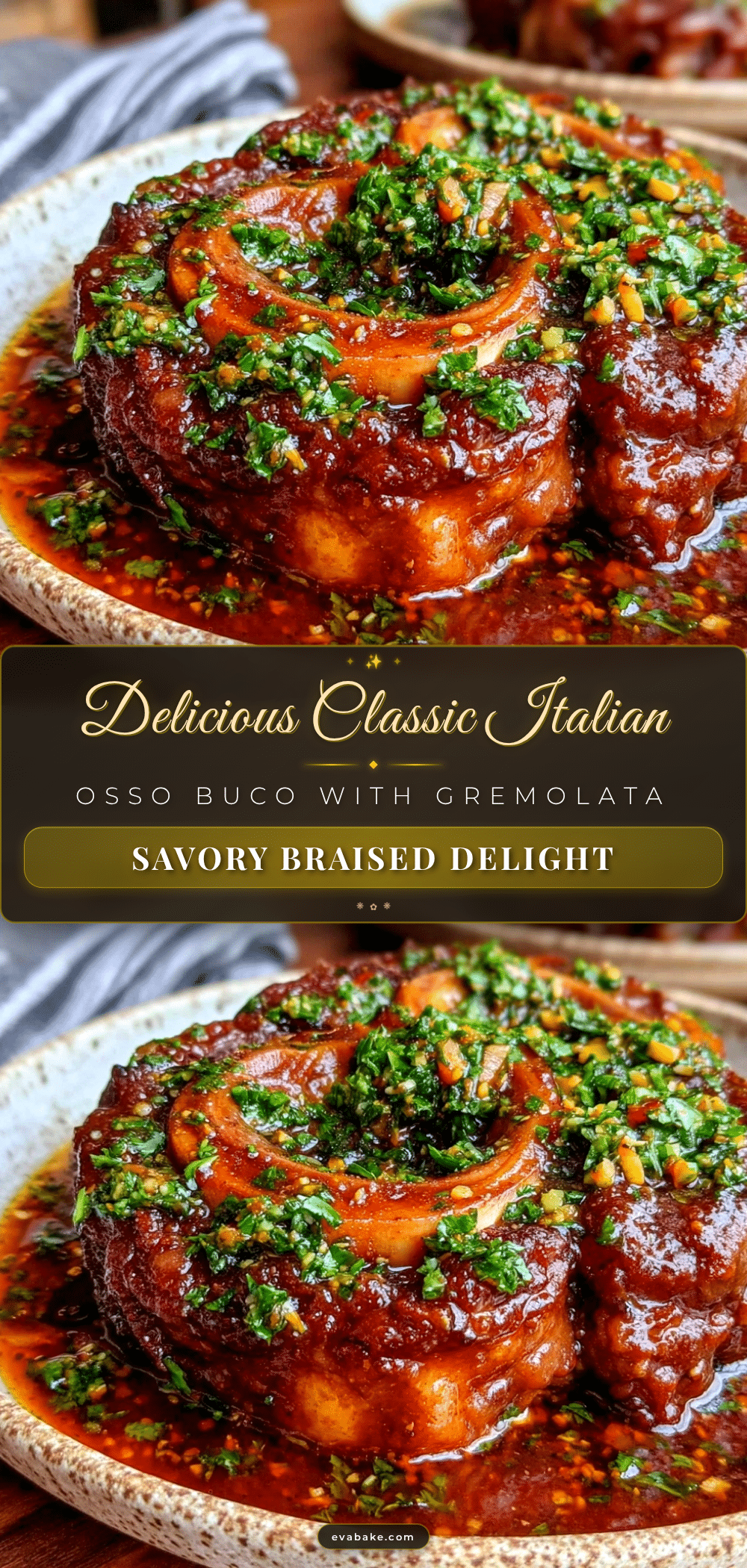
Perfect Classic Italian Osso Buco Recipe with Easy Gremolata Topping

A slow-cooked Italian classic featuring tender veal shanks braised to melt-in-your-mouth perfection, topped with a bright and fresh gremolata made from lemon zest, garlic, and parsley.
- Prep Time: 25 minutes
- Cook Time: 2 hours 45 minutes
- Total Time: 3 hours 10 minutes
- Yield: 4 servings 1x
- Category: Main Course
- Cuisine: Italian
Ingredients
- 4 veal shanks, about 1 ½ inches thick each
- All-purpose flour, for dredging
- 3 tablespoons olive oil
- 2 tablespoons unsalted butter
- 1 large yellow onion, finely chopped
- 2 medium carrots, diced
- 2 celery stalks, diced
- 3 garlic cloves, minced
- 1 cup dry white wine (Pinot Grigio or Sauvignon Blanc recommended)
- 3 cups beef or veal stock (homemade or low-sodium store-bought)
- 1 cup canned crushed tomatoes (San Marzano preferred)
- 3 sprigs fresh thyme
- 2 bay leaves
- Salt and freshly ground black pepper, to taste
- For the gremolata topping:
- ½ cup fresh flat-leaf parsley, finely chopped
- Zest of 1 large lemon
- 1 small garlic clove, minced very finely
Instructions
- Pat the veal shanks dry with paper towels. Season generously with salt and freshly ground black pepper. Dredge lightly in all-purpose flour, shaking off excess. (About 10 minutes)
- Heat olive oil and butter in a Dutch oven over medium-high heat until shimmering. Brown the shanks in batches, about 4-5 minutes per side, until golden and caramelized. Remove and set aside. (15 minutes)
- Lower heat to medium. In the same pot, add onions, carrots, celery, and a pinch of salt. Stir occasionally until softened and lightly golden, about 7-8 minutes. Add minced garlic and cook 1-2 minutes until fragrant. (10 minutes)
- Pour in dry white wine, scraping the bottom of the pot to lift browned bits. Let wine reduce by half, about 5 minutes.
- Return veal shanks to the pot, nestling into the vegetables. Add stock, crushed tomatoes, thyme sprigs, and bay leaves. Add water if needed to almost cover the meat. Bring to a gentle simmer. (5 minutes)
- Cover pot and transfer to a preheated oven at 325°F (160°C). Braise for 2 to 2 ½ hours until meat is tender and falling off the bone. Check halfway and add more liquid if needed. (2.5 hours)
- While cooking, combine parsley, lemon zest, and minced garlic in a small bowl to make gremolata. Set aside. (5 minutes)
- Remove pot from oven when meat is tender. Adjust seasoning with salt and pepper. Discard bay leaves and thyme stems. Spoon gremolata over each serving before plating. (5 minutes)
- If sauce is thin, simmer uncovered on stove over medium heat for a few minutes to thicken.
Notes
Brown the veal shanks thoroughly for deep flavor and a golden crust. Dredging in flour helps thicken the sauce naturally. Maintain a gentle simmer during braising to keep meat tender. Prepare gremolata fresh just before serving to preserve brightness. Sauce can be thickened by simmering uncovered if too thin. Substitute beef shanks if veal is unavailable, increasing cooking time by 30-45 minutes. For gluten-free, use almond flour or gluten-free flour blend instead of all-purpose flour.
Nutrition
- Serving Size: 1 veal shank with gr
- Calories: 550
- Sugar: 6
- Sodium: 600
- Fat: 30
- Saturated Fat: 10
- Carbohydrates: 15
- Fiber: 3
- Protein: 45
Keywords: Osso Buco, Italian recipe, veal shanks, gremolata, slow-cooked, braised meat, classic Italian, comfort food