“You’re not actually going to drink that, are you?” my friend asked with a skeptical grin as I poured what looked like a colorful fruit salad into a big glass pitcher. Honestly, I wasn’t sure either at first. It was one of those spontaneous summer evenings when I grabbed a bottle of red wine, some leftover fruit from the market, and threw it all together, figuring it couldn’t be worse than the usual soda or bottled cocktails. But as the sun dipped lower and we all took that first sip, the skepticism melted away along with the ice. This classic homemade sangria with summer fruits turned out to be the kind of drink that makes you pause, smile, and promise yourself to make it again soon.
I remember the juicy burst of oranges and berries mingling with the wine’s deep notes—the kind of moment that sticks with you when a simple recipe surprises you. Sangria isn’t just a drink; it’s a slow unwind, a shared experience, and honestly, a little celebration in a pitcher. It’s refreshing but also full-bodied, sweet but balanced, and best of all, it’s ridiculously easy to throw together without fancy ingredients or long prep.
What really made this sangria recipe stick with me was its effortless charm. It’s the kind of recipe you can whip up in the afternoon, let sit on the counter, and have ready just as friends start to gather. No fuss, just good vibes and a glass full of summer’s best flavors. And if you’re anything like me, sometimes the best recipes come from those casual, unplanned moments when you’re just trying to make something work. This one’s a keeper, no doubt about it.
Why You’ll Love This Recipe
This classic homemade sangria with summer fruits has become my go-to for everything from backyard barbecues to lazy weekend afternoons. I’ve tested it multiple times (okay, more than a few times in a week), tweaking the fruit combos and wine ratios until it hit just the right note. Here’s why it’s such a win:
- Quick & Easy: Takes less than 15 minutes to prepare, perfect for those last-minute get-togethers or when you want a refreshing drink without the fuss.
- Simple Ingredients: No need for specialty stores—just fresh summer fruits, a good bottle of wine, and a few pantry staples.
- Perfect for Summer Occasions: Whether you’re hosting a casual brunch or a sunset dinner, this sangria fits right in, offering a cool, fruity sip that everyone loves.
- Crowd-Pleaser: Kids might not get the wine part, but the fruity flavors always get rave reviews from guests of all ages.
- Unbelievably Delicious: The balance of citrus, berries, and wine creates a refreshing yet comforting flavor profile that feels like summer in a glass.
What sets this recipe apart is the little twist with the fresh summer fruits—juicy peaches, ripe berries, and a splash of citrus—that infuse the sangria naturally, no artificial sweetness needed. Plus, I like to add just a touch of brandy for depth, but that’s totally optional. This isn’t just another sangria; it’s the classic recipe that’s been perfected after more than a few summer afternoons spent testing.
For a full meal pairing, I often serve it alongside something savory and easy like the crispy lemon herb chicken sheet pan dinner—both dishes scream simple, fresh, and satisfying.
What Ingredients You Will Need
This recipe uses straightforward, wholesome ingredients to deliver a bold, refreshing flavor with minimal effort. Most of these are pantry staples with a fresh summer twist, so you don’t have to run all over town hunting for exotic stuff.
- Red Wine (1 bottle, 750 ml) – Choose a dry, fruity wine like a Spanish Tempranillo or Garnacha. I usually pick Campo Viejo for its balance and price.
- Brandy (1/4 cup / 60 ml) – Adds warmth and depth. Optional but highly recommended.
- Orange Juice (1/2 cup / 120 ml) – Freshly squeezed if possible, to add brightness.
- Summer Fruits:
- Oranges (1 large), thinly sliced
- Lemons (1 medium), thinly sliced
- Peaches (2 medium), pitted and sliced (in summer, use fresh ripe peaches for sweetness)
- Mixed berries (1 cup / 150 g), such as strawberries, blueberries, and raspberries
- Simple Syrup (1/4 cup / 60 ml) – To taste; homemade or store-bought. Adjust depending on fruit sweetness.
- Sparkling Water or club soda (1 cup / 240 ml) – Added just before serving for fizz.
- Fresh Mint Leaves (a handful) – For garnish and a refreshing aroma.
Substitutions:
- Use white wine like Sauvignon Blanc for a lighter sangria version.
- Swap brandy with orange liqueur (Triple Sec or Cointreau) for a citrusy twist.
- If you want a non-alcoholic option, replace the wine with grape juice and skip the brandy.
Equipment Needed
- Large Pitcher or Bowl: At least 2-quart size to hold all ingredients and allow fruit to infuse well.
- Sharp Knife and Cutting Board: For slicing fruits thinly and preparing the peaches and citrus.
- Measuring Cups and Spoons: For accurate liquid measurements.
- Wooden Spoon or Stirrer: To mix the sangria gently without bruising the fruit too much.
- Citrus Juicer (optional): Makes squeezing fresh orange juice easier.
For budget-friendly options, a simple glass pitcher and a serrated knife work just fine. I once used a large Mason jar in a pinch, and it held up well for chilling and serving. Just make sure your pitcher has enough room for ice and fizzing soda when you serve.
Preparation Method
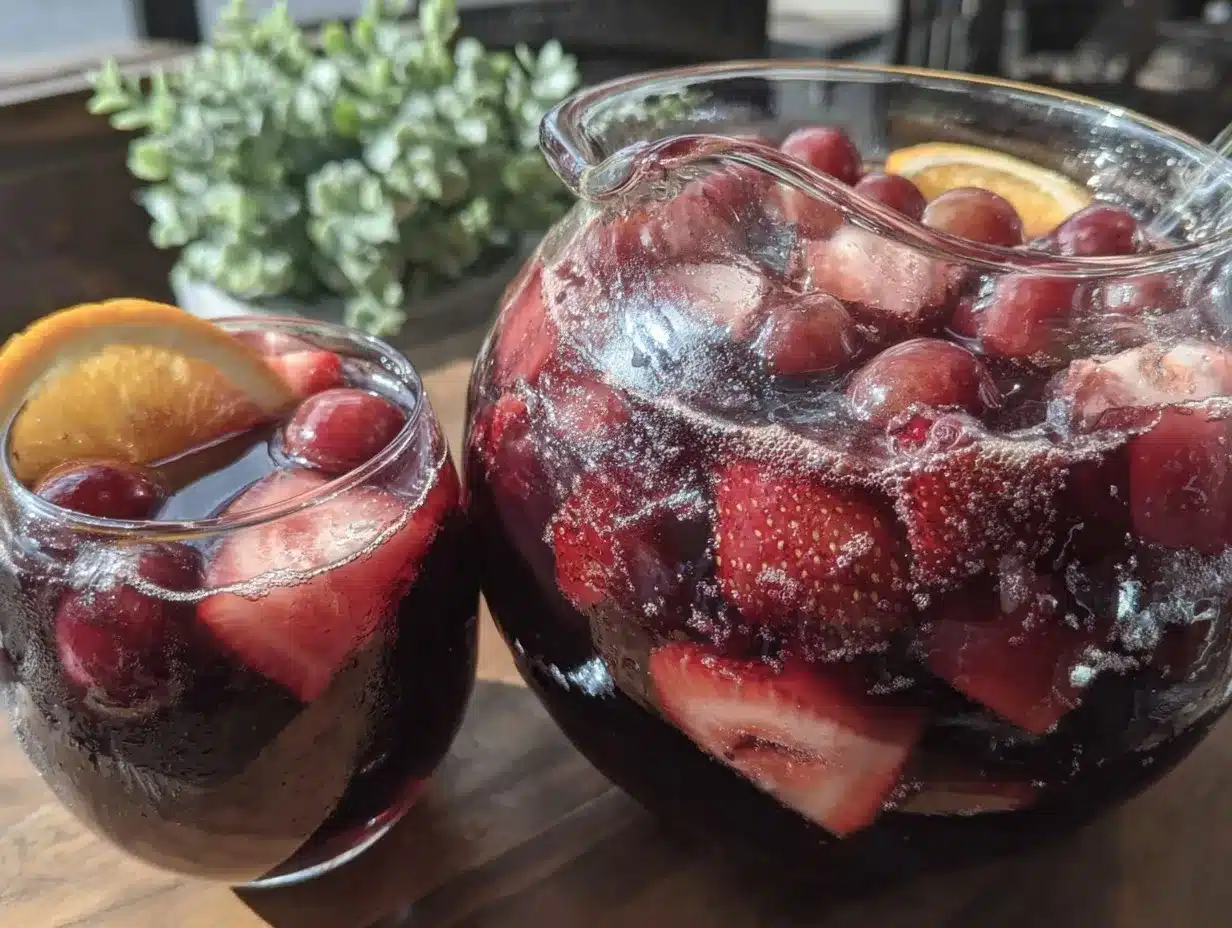
- Prepare the Fruit (10 minutes): Rinse all fruits well. Thinly slice the orange and lemon into rounds, removing seeds when possible. Pit and slice the peaches into thin wedges. Halve or quarter larger berries if needed for easier eating.
- Mix the Base (5 minutes): In your large pitcher, pour the entire bottle of red wine (750 ml), brandy (60 ml), and freshly squeezed orange juice (120 ml). Stir gently to combine.
- Add the Fruit (5 minutes): Drop in the sliced oranges, lemons, peaches, and mixed berries. Give the mixture a gentle stir to distribute the fruit evenly.
- Add Sweetness (to taste): Stir in simple syrup 1 tablespoon at a time. Depending on the sweetness of your fruit and wine, you might need more or less. Taste as you go—remember, the fruit will add more natural sweetness as it sits.
- Chill (at least 2 hours, up to overnight): Cover the pitcher and refrigerate. This resting time lets the fruit infuse deeply into the wine, softening the citrus’s edge and blending the flavors. If you’re pressed for time, even 30 minutes helps.
- Just Before Serving: Add 1 cup (240 ml) of chilled sparkling water or club soda for a light fizz. Stir gently to combine without flattening the bubbles.
- Garnish and Serve: Add fresh mint leaves on top for aroma and a pop of color. Serve over ice in glasses, making sure each pour gets a healthy scoop of fruit.
Note: If you want to prepare sangria ahead for a party, don’t add the sparkling water until the last moment—it keeps the fizz fresh. Also, avoid stirring too vigorously after adding soda to keep those bubbles alive.
Cooking Tips & Techniques
Making sangria honestly feels more like an art than a strict science, but a few tips help keep it foolproof every time. First, don’t rush the chilling step. The longer the fruit steeps in the wine, the more the flavors meld and soften. I learned this the hard way the first time I tried serving it immediately—tasted a bit flat and one-dimensional.
Choosing the right wine is key. A fruity but dry red wine works best because it balances the sweetness of the fruit and syrup. Avoid anything too tannic or heavy—it tends to overpower the fresh fruit flavors. My favorite budget-friendly option is a Spanish Garnacha, which you can find easily at most stores.
When slicing fruit, thinner is better. Thin slices release more juice and flavor into the sangria without making it too chunky. Also, removing seeds helps avoid bitterness. For peaches, ripe but firm is ideal—too soft and they’ll mush up quickly.
Avoid adding ice directly to the pitcher as it dilutes the sangria over time. Instead, serve the sangria over ice in individual glasses. That way, everyone gets a cold refreshing sip without watering down the whole batch.
Finally, if you want to amp up the aroma, a strip of orange or lemon peel twisted and dropped into the pitcher adds a subtle citrus oil boost that’s surprisingly noticeable.
Variations & Adaptations
This classic homemade sangria recipe is a great base for all sorts of creative spins. Here are some ways I’ve tweaked it depending on mood or what was in the fridge:
- White Sangria: Swap red wine for a crisp white like Sauvignon Blanc or Pinot Grigio. Add green apple slices and white peaches for a fresh, lighter version.
- Rosé Sangria: Use a dry rosé for a pretty pink hue and pair with strawberries, raspberries, and watermelon cubes.
- Frozen Sangria: Blend the sangria with ice and frozen fruit to make a slushy, party-friendly drink. Perfect for warm afternoons!
- Herbal Twist: Add fresh herbs like basil or rosemary along with mint for a savory edge. I personally love rosemary’s piney note balancing the fruit sweetness.
- Low-Sugar Version: Skip the simple syrup and use naturally sweeter fruits like mango or pineapple. You can also swap brandy for a splash of flavored sparkling water.
For those with allergies or dietary needs, you can easily adapt by using organic or unsweetened juices and checking labels on your wine choice. I once made a batch with coconut water instead of orange juice for a tropical vibe that got lots of compliments!
Serving & Storage Suggestions
Serve your sangria chilled over ice with a spoonful of the soaked fruit. A clear glass shows off the colorful mix of summer fruits and fresh mint, making it as much a feast for the eyes as the palate. For a light brunch, pair it with dishes like the creamy loaded baked potato soup or fresh salads to keep things bright and easy.
Leftover sangria can be stored covered in the refrigerator for up to 3 days. The flavors continue to develop, so it tastes even better the next day. Just remember to add fresh sparkling water or soda right before serving again to keep it bubbly.
Reheat? Nope, sangria is best served cold and fresh. If you want a warm fruit punch, that’s a different recipe but equally tasty!
Nutritional Information & Benefits
Each serving of this classic homemade sangria (about 8 oz / 240 ml) contains roughly 120-150 calories, mostly from the wine and natural fruit sugars. It’s a moderate alcohol drink with antioxidants from the red wine and vitamin C from the fresh citrus fruits.
Choosing fresh, seasonal fruits adds fiber and nutrients, and using natural sweeteners like simple syrup means you can control how sweet your drink gets. It’s gluten-free by default and can be made vegan and low-sugar by adjusting the alcohol and sweeteners.
Personally, I appreciate that this sangria feels indulgent without being heavy or overly processed—perfect for summer refreshment that’s both satisfying and somewhat nourishing.
Conclusion
This classic homemade sangria with summer fruits is more than just a drink; it’s a little ritual of refreshment and relaxation that’s easy to make and hard to forget. Whether you’re unwinding after a long day or entertaining friends, it offers that perfect balance of sweet, tart, and boozy that feels like a hug in a glass. I love how flexible it is—you can tweak it endlessly to fit your taste or the season.
Give it a try, play around with your favorite fruits, and make it your own. And if you’re looking for a simple, crowd-pleasing meal to go alongside, you might want to try the easy sheet pan teriyaki salmon—it’s an effortless match for this sangria’s bright flavors.
Thanks for reading, and I’d love to hear how you customize your sangria. It’s always fun to swap stories and tips!
FAQs About Classic Homemade Sangria
Can I make sangria ahead of time?
Yes! Sangria actually tastes better after sitting in the fridge for at least 2 hours or overnight. Just add sparkling water right before serving.
What kind of wine is best for sangria?
A fruity, dry red wine like Garnacha, Tempranillo, or Merlot works great. Avoid very tannic or oaky wines that can overpower the fruit flavors.
Can I use frozen fruit instead of fresh?
Frozen fruit works well, especially berries. Just thaw slightly before adding and reduce the ice when serving to avoid dilution.
Is sangria gluten-free?
Yes, sangria is naturally gluten-free as long as the wine and other ingredients do not contain gluten additives.
How do I make sangria less sweet?
Use less simple syrup or skip it altogether if your fruits are very ripe. You can also choose a dryer wine and add more citrus for tartness.
Pin This Recipe!
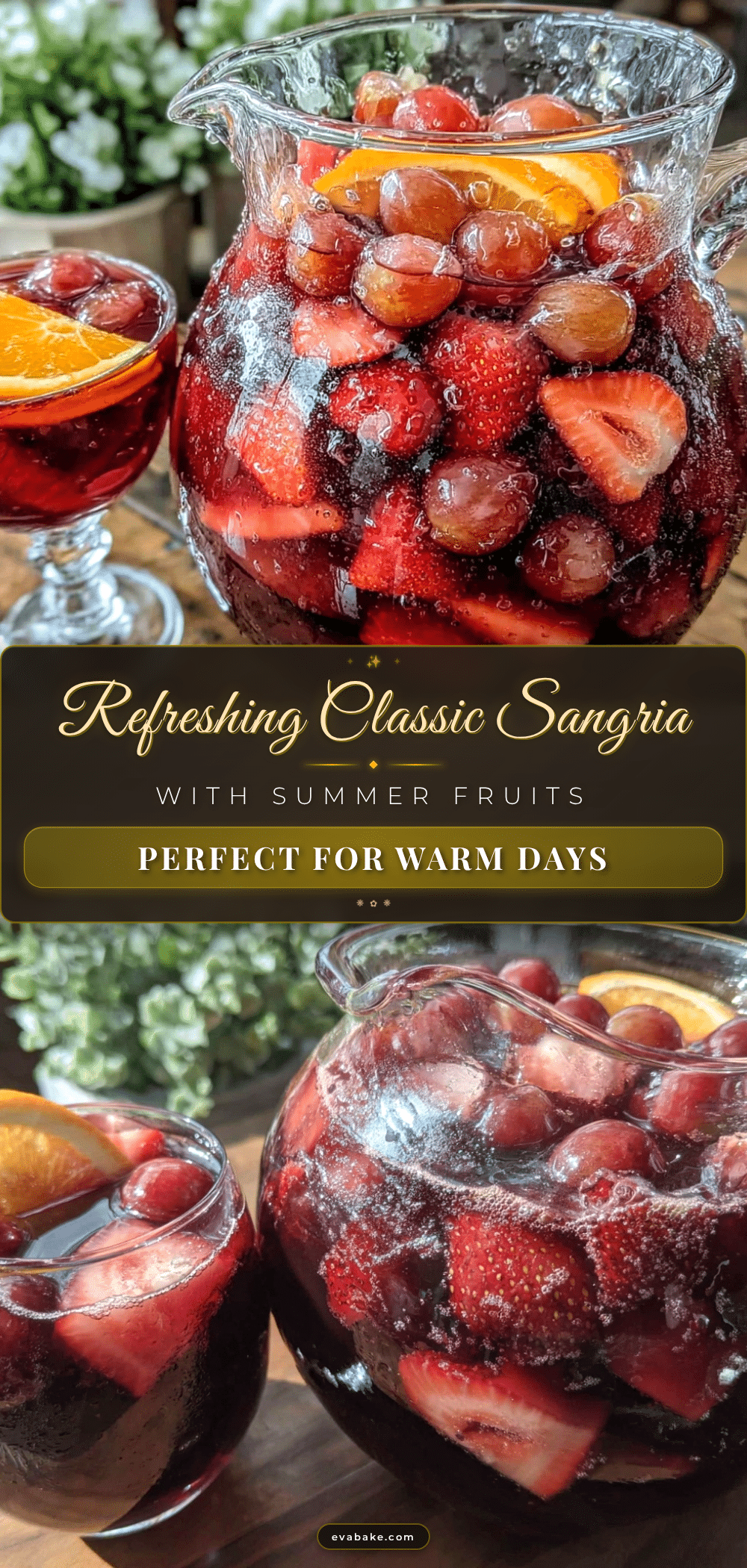
Classic Homemade Sangria Recipe Easy Refreshing Summer Fruits Drink
A quick and easy classic homemade sangria featuring fresh summer fruits, red wine, and a touch of brandy for a refreshing and balanced summer drink.
- Prep Time: 15 minutes
- Cook Time: 0 minutes
- Total Time: 2 hours 15 minutes
- Yield: 6 servings 1x
- Category: Beverage
- Cuisine: Spanish
Ingredients
- 1 bottle (750 ml) dry red wine (e.g., Spanish Tempranillo or Garnacha)
- 1/4 cup (60 ml) brandy (optional but recommended)
- 1/2 cup (120 ml) freshly squeezed orange juice
- 1 large orange, thinly sliced
- 1 medium lemon, thinly sliced
- 2 medium peaches, pitted and sliced
- 1 cup (150 g) mixed berries (strawberries, blueberries, raspberries)
- 1/4 cup (60 ml) simple syrup, to taste
- 1 cup (240 ml) sparkling water or club soda, chilled
- A handful of fresh mint leaves for garnish
Instructions
- Rinse all fruits well. Thinly slice the orange and lemon into rounds, removing seeds when possible. Pit and slice the peaches into thin wedges. Halve or quarter larger berries if needed.
- In a large pitcher, pour the entire bottle of red wine, brandy, and freshly squeezed orange juice. Stir gently to combine.
- Add the sliced oranges, lemons, peaches, and mixed berries to the pitcher. Stir gently to distribute the fruit evenly.
- Stir in simple syrup 1 tablespoon at a time, tasting as you go to adjust sweetness.
- Cover the pitcher and refrigerate for at least 2 hours or up to overnight to allow flavors to meld.
- Just before serving, add chilled sparkling water or club soda and stir gently to combine without flattening the bubbles.
- Garnish with fresh mint leaves and serve over ice, ensuring each glass gets a scoop of soaked fruit.
Notes
Do not add sparkling water until just before serving to keep fizz fresh. Avoid stirring vigorously after adding soda to preserve bubbles. Serve sangria over ice in individual glasses to prevent dilution. Use thin fruit slices to release more flavor without making the drink chunky. Chilling for longer than 2 hours improves flavor infusion. For a non-alcoholic version, replace wine with grape juice and omit brandy.
Nutrition
- Serving Size: 8 oz (240 ml) per se
- Calories: 135
- Sugar: 12
- Sodium: 5
- Carbohydrates: 14
- Fiber: 1
Keywords: classic sangria, homemade sangria, summer drink, refreshing cocktail, red wine sangria, fruit sangria, easy sangria recipe