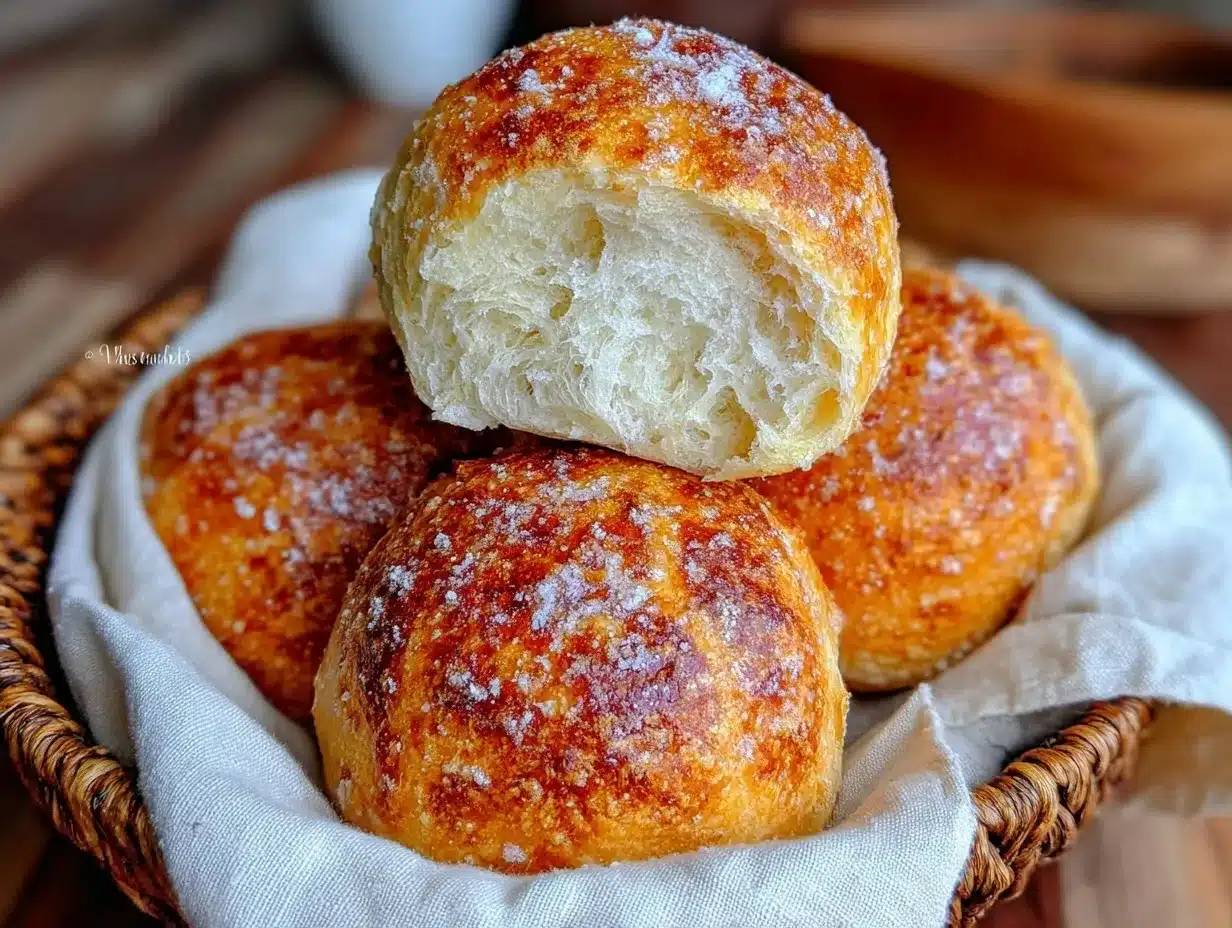
“Can you believe I made pandesal from scratch? No fancy equipment, just a messy kitchen and a craving that wouldn’t quit.” That’s how my weekend started one slow morning, with the sun sneaking through the window and the smell of yeast in the air. Honestly, I wasn’t sure if it was going to work—pandesal has this legendary fluffiness and that perfect golden crust I’d only ever tasted from the neighborhood bakery. But after a few tries (and a few flour-covered counters), I finally nailed this soft fluffy Filipino pandesal bread rolls recipe from scratch that’s just as good, if not better.
What makes it special? It’s the kind of bread that’s warm and comforting, the kind you want to break apart with your fingers and dunk into your morning coffee. I remember texting a friend halfway through baking, “This smells like home,” and she got it immediately. It’s wild how a simple bread roll can feel so grounding, you know? This recipe has stuck with me because it turned a quiet moment in the kitchen into something a little magical—and I’m sure it’ll do the same for you.
Why You’ll Love This Recipe
Making soft fluffy Filipino pandesal bread rolls from scratch isn’t just about baking; it’s about creating a little daily joy. Here’s why this recipe has become a staple in my kitchen:
- Quick & Easy: From mixing to baking, this recipe comes together in about 2 hours, including rising time. Perfect for a weekend morning or a cozy afternoon treat.
- Simple Ingredients: No need for obscure flours or fancy additives. You likely have everything in your pantry — flour, yeast, sugar, and a bit of salt.
- Perfect for Breakfast or Snack: Whether you’re hosting a brunch or just craving a warm roll with butter, pandesal fits the bill every time.
- Crowd-Pleaser: Kids, adults, and even those who usually prefer store-bought bread can’t get enough of this soft texture and slightly sweet taste.
- Unbelievably Delicious: The secret is a light dusting of fine breadcrumbs on top that give pandesal its signature texture—crispy outside, pillowy inside.
What sets this recipe apart? It’s the way the dough is gently kneaded and given the right rise, making the crumb tender but still structured enough to hold fillings. Plus, I swapped in a little whole milk for extra softness and richness, a trick I picked up after making a creamy golden milk latte that taught me the magic of dairy in baking. This isn’t just pandesal—it’s my best homemade version, one that brings that familiar bakery charm right into your kitchen.
What Ingredients You Will Need
This recipe uses simple, wholesome ingredients to deliver that bold, comforting flavor and soft texture without fuss. Most of these are pantry staples, and substitutions are easy if you need them.
- All-purpose flour (4 cups / 480g) – The base for soft, fluffy bread. I recommend King Arthur flour for consistent results.
- Active dry yeast (2 ¼ teaspoons / 7g) – The magic that makes the dough rise. Fresh yeast works too if you have it.
- Granulated sugar (½ cup / 100g) – Adds just enough sweetness to balance the bread’s savory notes.
- Salt (1 teaspoon) – Enhances flavor. Use fine sea salt for best blending.
- Warm milk (1 cup / 240ml) – Helps activate the yeast and adds richness. Whole milk gives the best softness, but 2% works fine.
- Unsalted butter (4 tablespoons / 57g), softened – Adds tenderness and flavor.
- Fine breadcrumbs (1 cup / 100g) – For coating the rolls, giving them that classic pandesal crust. You can make your own by pulsing day-old bread in a food processor.
- Egg (1 large) – For the dough, adds structure and richness.
- Optional: A pinch of baking powder (¼ teaspoon) – For extra fluffiness if you like.
If you want a gluten-free take, swap the all-purpose flour for a gluten-free blend designed for bread. For a dairy-free version, try almond or oat milk and coconut oil instead of butter. The gentle crumb might shift a bit, but the flavor stays comforting and satisfying.
Equipment Needed
- Mixing bowls: A large bowl for mixing dough and a smaller one for proofing yeast.
- Measuring cups and spoons: Precision matters here, especially for yeast and flour.
- Stand mixer with dough hook (optional): Makes kneading easier, but you can knead by hand—it just takes some elbow grease.
- Baking sheet: A rimmed sheet works best to keep rolls from sliding off during baking.
- Parchment paper: Prevents sticking and makes cleanup a breeze.
- Kitchen towel or plastic wrap: For covering dough while it rises.
- Cooling rack: To let your pandesal cool evenly after baking.
If you don’t have a stand mixer, no worries. I’ve kneaded this dough many times by hand—just be patient and flour your surface. For the fine breadcrumbs, a simple food processor or even a clean coffee grinder can do the trick, but store-bought fine breadcrumbs also work nicely.
Preparation Method
- Proof the yeast: In a small bowl, combine 1 cup (240ml) warm milk (around 105°F / 40°C) with 2 ¼ teaspoons (7g) active dry yeast and 1 tablespoon sugar. Stir gently and let sit for 5–10 minutes until bubbly and foamy. If it doesn’t foam, your yeast might be dead—start over with fresh yeast.
- Mix dry ingredients: In a large bowl, whisk together 4 cups (480g) all-purpose flour, ½ cup (100g) sugar, and 1 teaspoon salt.
- Add wet ingredients: Once the yeast mixture is bubbly, add it to the dry ingredients along with 1 large egg and 4 tablespoons (57g) softened unsalted butter. Stir with a wooden spoon or your stand mixer fitted with a dough hook until the dough begins to come together.
- Knead the dough: Turn the dough onto a lightly floured surface and knead for 8–10 minutes (or 5 minutes in a stand mixer) until smooth and elastic. The dough will be slightly sticky but should hold together well. If too sticky, sprinkle a bit more flour—don’t overdo it or the bread will turn dense.
- First proof: Place the dough in a lightly greased bowl, cover it with a damp kitchen towel or plastic wrap, and let it rise in a warm spot for about 1 hour or until it doubles in size. I like to preheat my oven to 100°F (38°C), then turn it off and place the dough inside for a cozy rise.
- Shape the rolls: Punch down the dough gently to release air. Divide it into 15 equal pieces (about 50g / 1.75 oz each). Roll each piece into a smooth ball, then roll lightly in fine breadcrumbs to coat completely. This breadcrumb coating is key to the classic pandesal texture.
- Second proof: Arrange the rolls on a parchment-lined baking sheet, spacing them about 1 inch apart. Cover loosely with a towel and let rise again for 30–40 minutes until puffy.
- Bake: Preheat your oven to 375°F (190°C). Bake the rolls for 15–18 minutes or until golden brown on top. The kitchen will fill with a wonderful, warm aroma—classic pandesal heaven.
- Cool and enjoy: Transfer the rolls to a wire rack to cool slightly before serving. They’re best warm, but leftovers keep well in an airtight container and can be reheated in a toaster oven for that fresh-baked feeling.
Cooking Tips & Techniques
Getting that perfect soft fluffy Filipino pandesal bread rolls texture is a bit of an art, but here are some tips I’ve learned from trial and error:
- Don’t rush the rise: Patience is everything. The dough needs that first rise to get light and airy, so if your kitchen is cold, find a warm spot or use your oven as a proofing box.
- Handle dough gently: When shaping, avoid overworking the dough, which can make the rolls tough. Smooth, gentle rolls preserve the fluffiness.
- Breadcrumb coating: Use fine, fresh breadcrumbs for the best crust. Coarser crumbs can make the surface too crunchy or dry.
- Watch baking time: Don’t overbake. The rolls should be golden but still soft inside. If you’re unsure, tap the bottom of a roll—it should sound hollow.
- Use room temperature ingredients: Eggs and butter at room temp blend better, making the dough easier to knead and yielding a tender crumb.
I once tried skipping the second rise because I was in a rush, and the rolls turned out dense and sad. Lesson learned: that second proof makes all the difference. Also, if you’re juggling multiple recipes, like pairing these freshly baked rolls with a comforting soup such as the ham and bean soup, you can let the dough rise while the soup simmers—multitasking at its tastiest.
Variations & Adaptations
While classic pandesal is wonderful on its own, here are some ways to switch things up or make the recipe fit your needs:
- Cheesy Pandesal: Stuff each roll with a small cube of cheddar or processed cheese before rolling in breadcrumbs. The melted surprise inside is irresistible.
- Whole Wheat Twist: Substitute half the all-purpose flour with whole wheat flour for a nuttier flavor and added fiber. The rolls will be a bit denser but still soft.
- Sweet Pandesal: Add a teaspoon of vanilla extract or cinnamon to the dough for a subtly sweet, aromatic variation.
- Gluten-Free Option: Use a gluten-free bread flour blend and add a teaspoon of xanthan gum to help with structure. The crumb will be different but still enjoyable.
- Overnight Rise: For deeper flavor, do the first rise overnight in the fridge. Just bring dough back to room temp before shaping.
Personally, I love the cheesy version on lazy Sunday mornings paired with a cup of hot, creamy golden milk latte. It’s comfort food with a little extra indulgence.
Serving & Storage Suggestions
Soft fluffy Filipino pandesal bread rolls are best enjoyed warm. Serve them fresh from the oven with a pat of butter, a smear of cheese, or your favorite jam. They also make excellent sandwich rolls for ham, egg, or tuna salad.
If you want to store leftovers, keep them in an airtight container at room temperature for up to 2 days. For longer storage, freeze cooled rolls in a zip-lock bag for up to a month. Reheat frozen pandesal in a toaster oven at 350°F (175°C) for about 5–7 minutes to restore that soft, fresh-baked texture.
Flavors tend to develop with a little resting time, so the next day’s pandesal might be even tastier, especially with a bit of melted cheese inside. For a complete meal, pair your pandesal with hearty dishes like the chicken tortilla soup to balance the meal with bold spices and textures.
Nutritional Information & Benefits
Each soft fluffy Filipino pandesal bread roll (about 50g) contains roughly 150 calories, with 5g of fat, 25g of carbohydrates, and 4g of protein. The milk and butter add richness and calcium, while the yeast aids digestion.
Using whole milk and butter contributes vitamin A and essential fatty acids, supporting a balanced diet. If you choose whole wheat flour for part of the dough, you’ll add fiber, which is great for digestive health. This recipe is naturally free of nuts and can be dairy-free with simple swaps, making it versatile for many diets.
In my experience, having a batch of homemade pandesal on hand encourages healthier breakfasts at home and reduces reliance on processed snacks. It’s comfort food that feels nourishing, which is the best combo.
Conclusion
Soft fluffy Filipino pandesal bread rolls from scratch bring a little warmth and joy to any day. This recipe’s simplicity and approachable ingredients mean you can make bakery-quality rolls without leaving your kitchen or breaking the bank. Whether you keep it classic or get creative with fillings and flours, pandesal is a bread that welcomes personalization.
For me, it’s the smell of fresh bread mingling with morning light—a small moment of calm and comfort. I hope you find the same sense of satisfaction in making and sharing these rolls. If you try this recipe, I’d love to hear how you made it yours, any tweaks or fillings you experimented with, or even your first baking successes and flops!
Happy baking and here’s to many warm mornings filled with the simple pleasure of soft fluffy pandesal.
Frequently Asked Questions (FAQs)
What makes pandesal soft and fluffy?
The key is the yeast fermentation and proper kneading, which develops gluten for structure while keeping the crumb tender. Also, using milk and butter adds richness that keeps the bread soft.
Can I make pandesal without a stand mixer?
Absolutely! Kneading by hand works perfectly fine. Just be prepared to spend a bit more time working the dough until it’s smooth and elastic.
How do I store pandesal to keep it fresh?
Store pandesal in an airtight container at room temperature for up to 2 days. For longer storage, freeze the rolls and reheat in a toaster oven when ready to eat.
Can I freeze the dough instead of the baked rolls?
Yes, after the first rise, you can portion and freeze the raw dough balls. Thaw them in the fridge overnight before doing the second rise and baking.
What can I serve with pandesal?
Pandesal pairs wonderfully with butter, cheese, jam, or savory fillings like ham and eggs. It also goes well alongside soups such as the ham and bean soup or chicken tortilla soup.
Pin This Recipe!
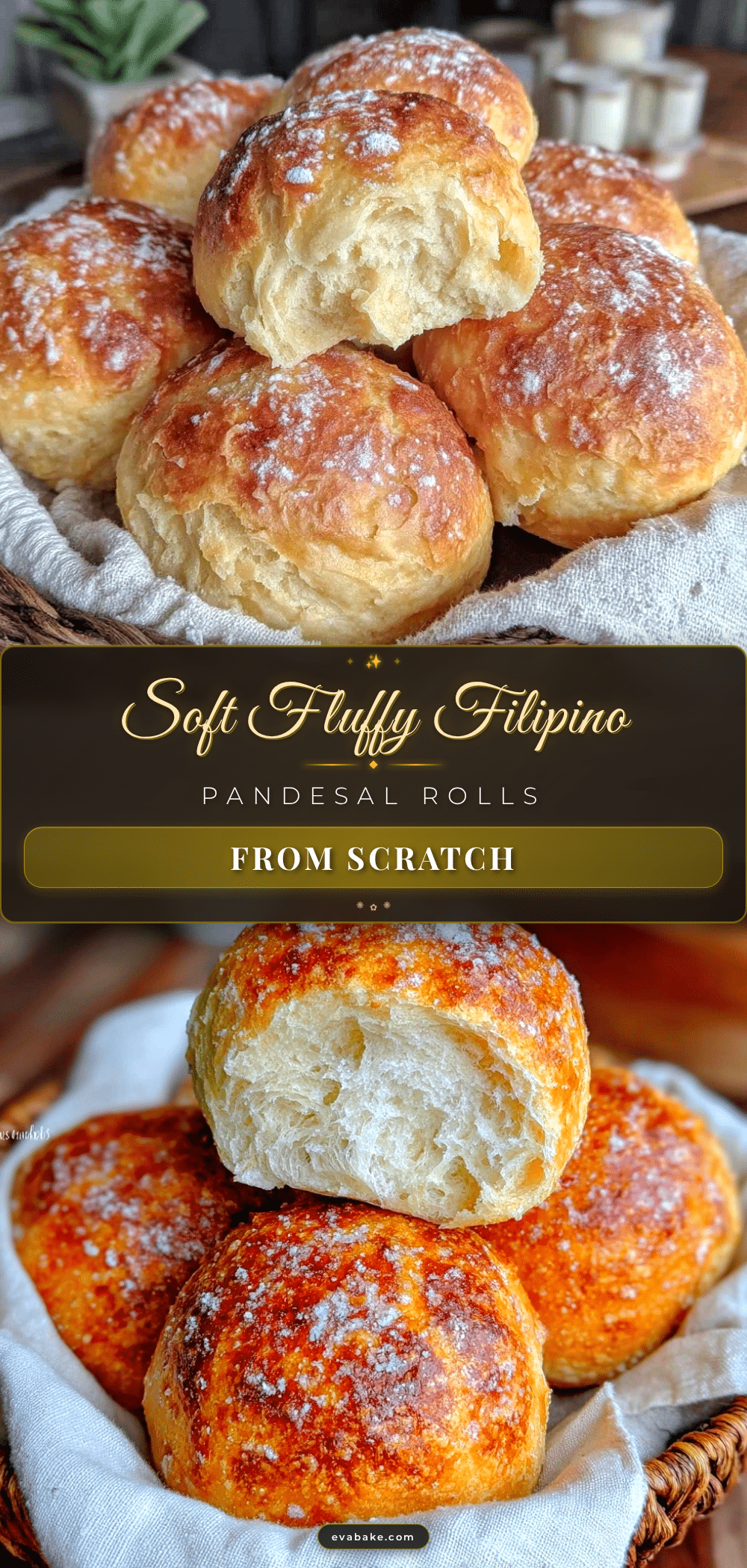
Soft Fluffy Filipino Pandesal Bread Rolls Recipe Easy Homemade from Scratch

This recipe delivers soft, fluffy Filipino pandesal bread rolls made from scratch with simple ingredients and no fancy equipment. Perfect for breakfast or a snack, these rolls have a slightly sweet taste and a crispy breadcrumb coating.
- Prep Time: 20 minutes
- Cook Time: 15-18 minutes
- Total Time: 2 hours
- Yield: 15 rolls 1x
- Category: Bread
- Cuisine: Filipino
Ingredients
- 4 cups (480g) all-purpose flour
- 2 ¼ teaspoons (7g) active dry yeast
- ½ cup (100g) granulated sugar
- 1 teaspoon salt
- 1 cup (240ml) warm milk (whole milk preferred)
- 4 tablespoons (57g) unsalted butter, softened
- 1 cup (100g) fine breadcrumbs
- 1 large egg
- Optional: ¼ teaspoon baking powder
Instructions
- Proof the yeast: In a small bowl, combine 1 cup warm milk (around 105°F / 40°C) with 2 ¼ teaspoons active dry yeast and 1 tablespoon sugar. Stir gently and let sit for 5–10 minutes until bubbly and foamy.
- Mix dry ingredients: In a large bowl, whisk together 4 cups all-purpose flour, ½ cup sugar, and 1 teaspoon salt.
- Add wet ingredients: Once the yeast mixture is bubbly, add it to the dry ingredients along with 1 large egg and 4 tablespoons softened unsalted butter. Stir until dough begins to come together.
- Knead the dough: Turn dough onto a lightly floured surface and knead for 8–10 minutes (or 5 minutes in a stand mixer) until smooth and elastic. If too sticky, sprinkle a bit more flour.
- First proof: Place dough in a lightly greased bowl, cover with damp kitchen towel or plastic wrap, and let rise in a warm spot for about 1 hour or until doubled in size.
- Shape the rolls: Punch down dough gently. Divide into 15 equal pieces (about 50g / 1.75 oz each). Roll each piece into a smooth ball, then roll lightly in fine breadcrumbs to coat.
- Second proof: Arrange rolls on parchment-lined baking sheet, spacing about 1 inch apart. Cover loosely and let rise again for 30–40 minutes until puffy.
- Bake: Preheat oven to 375°F (190°C). Bake rolls for 15–18 minutes or until golden brown on top.
- Cool and enjoy: Transfer rolls to a wire rack to cool slightly before serving. Best served warm.
Notes
Use fine, fresh breadcrumbs for the best crust. Do not rush the rising process to ensure soft, fluffy rolls. Knead dough gently and avoid overworking. Room temperature eggs and butter blend better. If you don’t have a stand mixer, kneading by hand works fine but takes more time. For gluten-free or dairy-free versions, substitute ingredients accordingly.
Nutrition
- Serving Size: 1 roll (about 50g)
- Calories: 150
- Fat: 5
- Carbohydrates: 25
- Protein: 4
Keywords: pandesal, Filipino bread rolls, soft bread, homemade bread, breakfast rolls, easy bread recipe, fluffy bread