“You know, I never thought a salad could feel like a little slice of Greece until that afternoon on a sun-drenched patio, where the scent of oregano and freshly sliced cucumbers mingled with the salty breeze. My friend Kostas, with a grin, slid this bowl of Fresh Horiatiki salad across the table and said, ‘Try it like we do back home.’ Skeptical at first—because, really, how special could a salad be?—I took a bite, and honestly, it was like tasting summer itself.
The beauty of this traditional Greek village salad isn’t just in the vibrant colors or the rustic chunks of feta—it’s in the ease and freshness that makes you pause and savor the moment. It was one of those unexpected wins that I kept making again and again during that trip, even sharing it at a casual backyard dinner party. The way the juicy tomatoes and crisp bell peppers paired with briny olives and creamy feta just worked felt so simple, yet perfectly balanced.
Now, every time I toss together this Fresh Horiatiki salad recipe, I’m reminded of that quiet afternoon with friends, warm laughter, and the unmistakable taste of authentic Greek hospitality. It’s a salad that’s stuck with me not because it’s flashy, but because it’s honest and pure—just like the Greek villages it’s named after.
Why You’ll Love This Recipe
After making this Fresh Horiatiki salad recipe countless times, I can say it’s my go-to for any meal that needs a fresh, vibrant kick. It’s honestly hard to find a salad that’s both so simple and so packed with flavor. Here’s why this recipe stands out:
- Quick & Easy: Ready in under 15 minutes, it’s perfect for those “I need something fresh now” moments or last-minute gatherings.
- Simple Ingredients: No need to hunt for exotic items—most of these are pantry staples or easy-to-find fresh produce.
- Perfect for Any Occasion: Whether it’s a cozy dinner or a lively potluck, this salad fits right in.
- Crowd-Pleaser: Kids, adults, everyone loves the crisp textures and tangy flavors.
- Unbelievably Delicious: The mix of juicy tomatoes, crunchy cucumbers, and salty feta makes every bite a little celebration.
What makes this Fresh Horiatiki salad different is the authentic method—no lettuce, just chunky, rustic cuts and a drizzle of quality olive oil that brings all the flavors together. Plus, the use of dried oregano straight from Greece (or a good substitute) adds that unmistakable herbal note. Honestly, it’s not just another salad; it’s the best village salad I’ve tasted, and it’s easy enough to whip up anytime.
This recipe isn’t just food—it’s that moment when you close your eyes and savor a taste of tradition, sun, and simplicity all at once.
What Ingredients You Will Need
This Fresh Horiatiki salad recipe uses simple, wholesome ingredients to deliver bold flavor and satisfying texture without the fuss. Most of these ingredients are pantry staples or fresh produce that you can find year-round, and there are easy swaps if needed.
- Ripe Tomatoes – Use large, vine-ripened tomatoes, cut into chunky wedges. (I love heirloom if available for extra color.)
- English Cucumbers – Crisp and refreshing, sliced into thick half-moons to keep the salad hearty.
- Green Bell Pepper – Thinly sliced for crunch and a slight bitterness that balances the sweetness of tomatoes.
- Red Onion – Thinly sliced rings, soaked briefly in cold water to mellow the sharpness.
- Kalamata Olives – Pitted, for that classic salty brine punch. (I recommend Greek origin for authenticity.)
- Feta Cheese – A thick slab or large crumbled chunks, preferably Greek PDO feta for the best creamy, tangy flavor.
- Extra Virgin Olive Oil – High-quality, cold-pressed olive oil is key; it’s the dressing’s backbone.
- Red Wine Vinegar – Just a splash for brightness and acidity.
- Dried Oregano – The herb that ties it all together; use Greek oregano if possible, or a good Mediterranean blend.
- Sea Salt and Freshly Ground Black Pepper – To taste, enhancing the natural flavors.
If you want to try a seasonal twist, adding a handful of fresh basil or swapping red wine vinegar for lemon juice can bring a nice zing. For a dairy-free option, omit the feta and toss in some toasted pine nuts for texture and richness.
Equipment Needed
- A large salad bowl – I prefer glass or ceramic for presentation and easy tossing.
- A sharp chef’s knife – For clean, rustic cuts of vegetables.
- A cutting board – Preferably a sturdy wood or plastic one.
- A small bowl – To whisk together the olive oil, vinegar, oregano, salt, and pepper.
- Measuring spoons – To keep the dressing balanced.
- Optional: Salad tongs or two large spoons for serving.
If you don’t have a salad bowl handy, a deep plate works fine. I’ve also tossed this salad straight in a large mixing bowl and transferred it to a serving dish for a cleaner look. For the dressing, whisking by hand is just fine—no fancy gadgets needed. When it comes to knives, keeping them sharp makes prep a breeze and safer.
Preparation Method
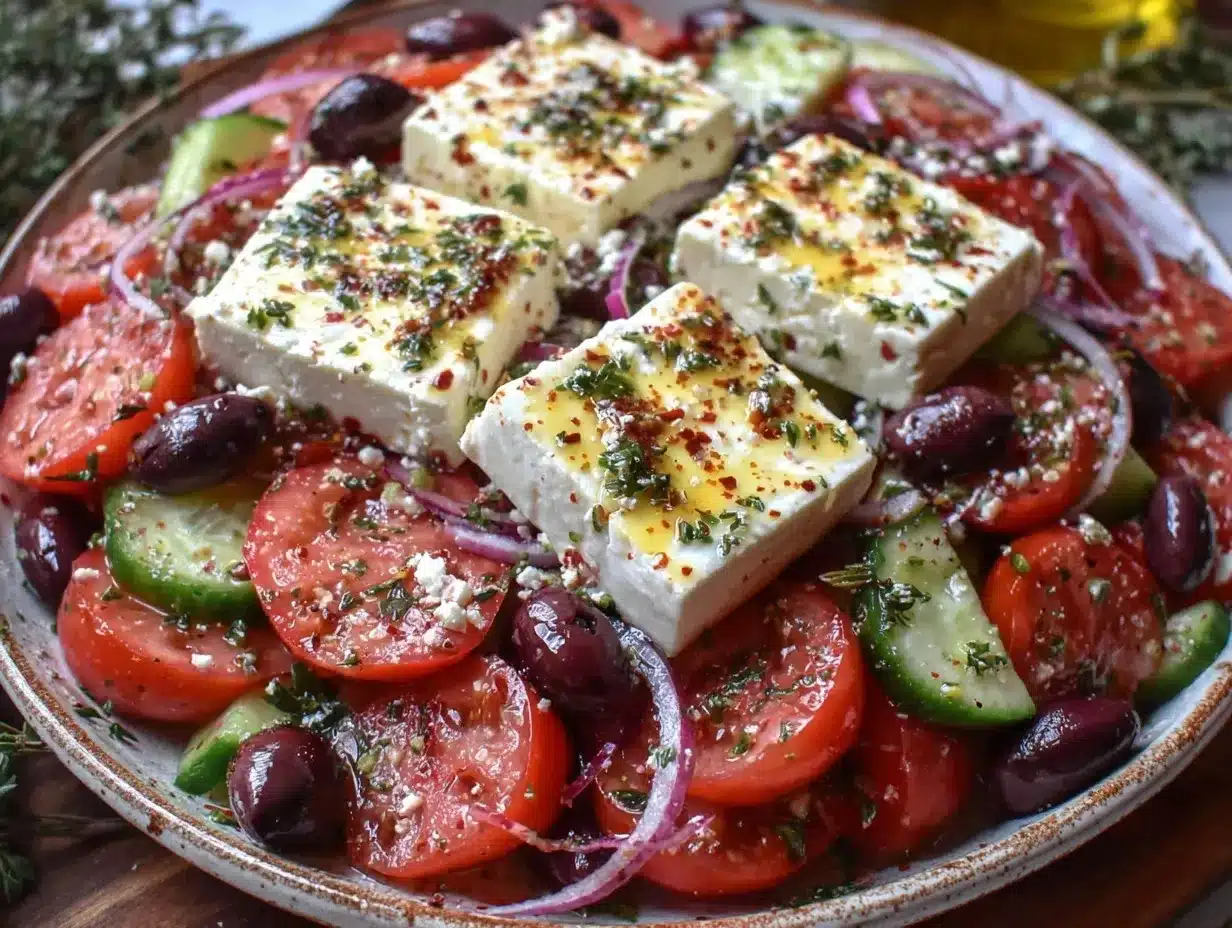
- Prepare the Vegetables (10 minutes): Start by washing all your fresh produce thoroughly. Cut the tomatoes into chunky wedges—about 1 to 1.5 inches (2.5 to 4 cm) pieces work best to keep texture. Slice the English cucumber into thick half-moons (about 1/4 inch or 0.6 cm thick). Thinly slice the green bell pepper into rings or strips, and cut the red onion into thin rings. To soften the onion’s bite, soak the slices in cold water for 5 minutes, then drain and pat dry.
- Assemble the Salad (5 minutes): Add the tomatoes, cucumbers, bell pepper, red onion, and Kalamata olives into your salad bowl. Toss gently to combine—don’t break up the tomatoes too much; we want those rustic chunks.
- Dress the Salad (2 minutes): In a small bowl, whisk together 1/4 cup (60 ml) of extra virgin olive oil, 1 tablespoon (15 ml) red wine vinegar, 1 teaspoon (1 g) dried oregano, sea salt, and freshly ground black pepper to taste. Pour this dressing evenly over the salad and toss gently again, letting the oil coat every piece.
- Add the Feta (1 minute): Place a large slab of feta cheese on top of the salad. Don’t crumble it just yet—part of the charm is to let guests break it up themselves or enjoy the big chunks.
- Final Touch and Serve: Sprinkle just a pinch more oregano on the feta and drizzle a little more olive oil if desired. Serve immediately for the freshest flavor, or let it rest at room temperature for 10 minutes to let the flavors marry.
Pro tip: If your tomatoes aren’t as juicy, adding a splash of water or a little extra vinegar can brighten things up. Also, don’t be shy with salt here; it brings out the best in all these fresh ingredients.
Cooking Tips & Techniques
While this Fresh Horiatiki salad recipe might seem straightforward, a few tips can make your salad truly shine. First, pick the ripest tomatoes you can find—this makes a world of difference. I’ve learned that slicing the cucumbers thick rather than thin keeps them from turning mushy too fast.
Another thing: never rinse your olives before adding them; their brine is pure flavor gold. When you soak the red onions, it cuts the sharpness but keeps the crunch, so don’t skip that step if raw onions make you wince.
When dressing the salad, add the oil and vinegar gradually—sometimes you might want a bit more acidity or richness depending on the veggies’ juiciness. And, honestly, don’t toss the salad too vigorously; the ingredients are delicate, and you want to keep their texture intact.
If you’re making this ahead, keep the feta separate and add it last minute to avoid it dissolving into the salad. This also keeps the salad visually stunning.
Variations & Adaptations
- Seasonal Twist: In summer, swap bell peppers for freshly picked sweet cherry tomatoes or add a handful of fresh basil for an herbal kick.
- Dietary Adaptation: For a vegan version, skip the feta and toss in some toasted walnuts or pine nuts for richness and crunch.
- Cooking Method Variation: Grill the bell pepper lightly before adding for a smoky depth that contrasts nicely with the fresh veggies.
- Flavor Customization: Add a pinch of crushed red pepper flakes for a subtle heat, or sprinkle some capers to boost the briny notes.
- Personal Favorite: I once tried adding a touch of minced garlic to the dressing for a punchy twist that my friends surprisingly loved.
Serving & Storage Suggestions
This Fresh Horiatiki salad is best served chilled or at room temperature. I like to plate it simply on a flat dish so the colors pop. Pair it with grilled lamb or seafood for a classic Mediterranean meal, or alongside a hearty soup like this hearty chicken tortilla soup to balance something warm and spicy.
Store leftovers in an airtight container in the fridge for up to two days. The salad will soften over time, and the flavors deepen, but the cucumbers might lose their crunch. I recommend keeping the feta separate if you plan to store it for longer.
When reheating or serving again, just give everything a quick toss and add a splash of fresh olive oil or vinegar if it tastes a bit flat.
Nutritional Information & Benefits
Per serving, this Fresh Horiatiki salad is light yet nourishing, packed with vitamins and antioxidants. Tomatoes provide vitamin C and lycopene, cucumbers add hydration and fiber, while olives offer heart-healthy fats. The feta cheese brings calcium and protein, making this salad a balanced side or light meal.
This recipe is naturally gluten-free, low-carb, and vegetarian-friendly. Just watch the salt if you’re mindful of sodium intake, as olives and feta can be briny.
Personally, I appreciate how this salad feels like a fresh, wholesome option when I want something satisfying without the heaviness—perfect for warm days or when I’m craving something green and bright.
Conclusion
This Fresh Horiatiki salad recipe is a celebration of simple, fresh ingredients coming together in a way that feels both rustic and refreshing. It’s a dish that’s easy to make, hard to forget, and flexible enough to suit any meal or mood. I love how it always reminds me of sunlit afternoons and the joy of sharing food with friends.
Feel free to adjust the ingredients to suit your taste or what’s in season. Whether you keep it classic or add your own twist, this salad is sure to become a staple in your kitchen. I’d love to hear how you make it your own or what dishes you serve it with—drop a comment below and share your experience!
Remember, sometimes the simplest recipes bring the most joy.
FAQs About Fresh Horiatiki Traditional Greek Village Salad
What makes a salad a true Horiatiki salad?
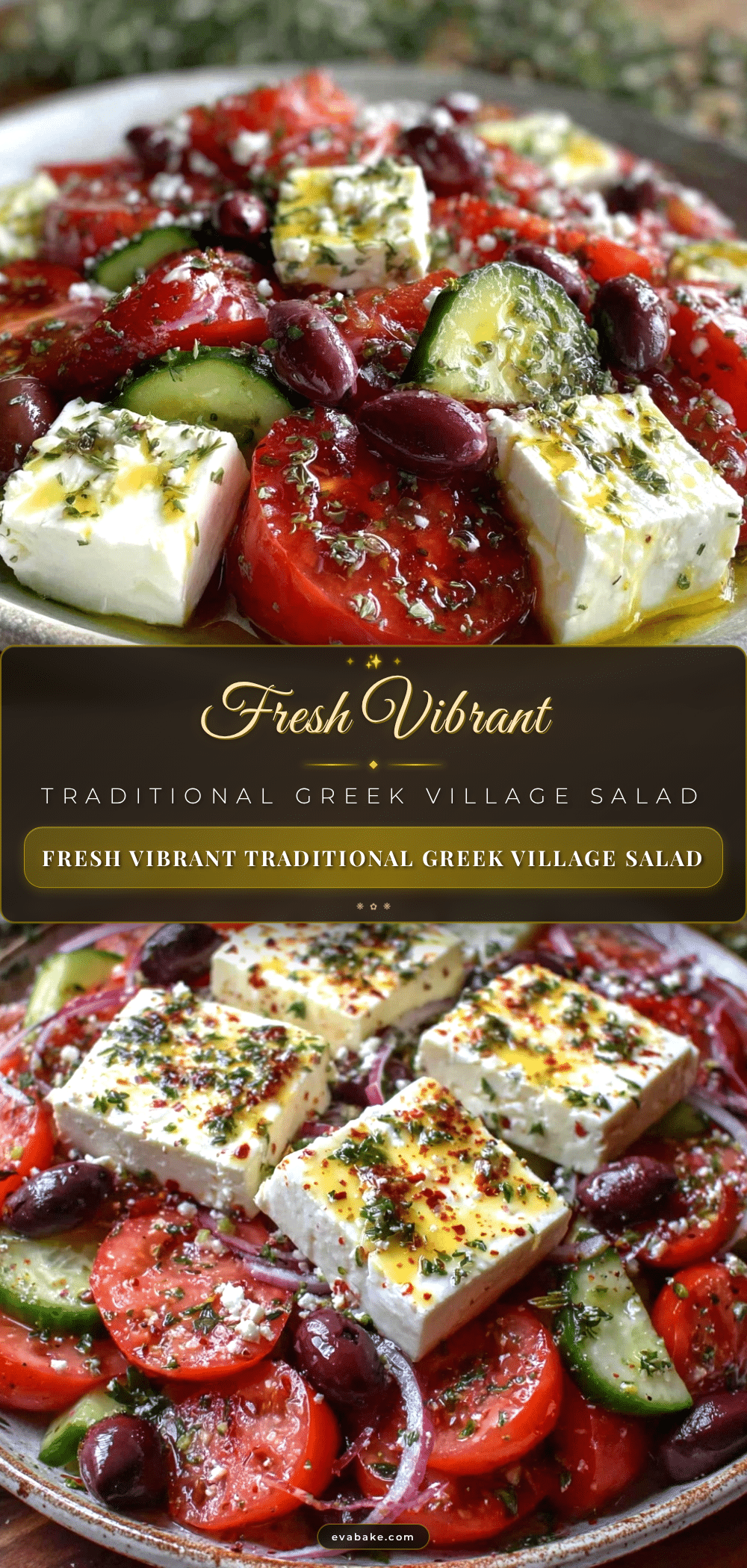
Horiatiki is a traditional Greek village salad made without lettuce, featuring chunky tomatoes, cucumbers, green peppers, red onions, Kalamata olives, and a slab of feta cheese, dressed simply with olive oil, vinegar, oregano, salt, and pepper.
Can I make Horiatiki salad ahead of time?
It’s best fresh, but you can prepare the veggies ahead and store them separately. Add the feta and dressing just before serving to keep textures and flavors vibrant.
Is this salad suitable for vegans?
To make it vegan, skip the feta cheese and try adding nuts like pine nuts or walnuts for texture and richness.
What’s the best olive oil to use?
Use a good quality extra virgin olive oil, preferably cold-pressed, as it adds a fruity and peppery flavor that’s essential to authentic Horiatiki salad.
Can I add lettuce or other greens to this salad?
Traditionally, no. Horiatiki salad is known for being “without lettuce.” However, you can experiment by adding greens if you prefer a lighter, leafy texture, but it won’t be the classic village salad.
For a refreshing drink to accompany this salad, you might enjoy a classic old fashioned cocktail, or if you want something comforting to round out your meal, a bowl of hearty ham and bean soup pairs surprisingly well!
Pin This Recipe!
Fresh Horiatiki Salad
A traditional Greek village salad featuring chunky tomatoes, cucumbers, green peppers, red onions, Kalamata olives, and a slab of feta cheese, dressed simply with olive oil, vinegar, oregano, salt, and pepper. This fresh and vibrant salad is quick to prepare and perfect for any occasion.
- Prep Time: 10 minutes
- Cook Time: 0 minutes
- Total Time: 15 minutes
- Yield: 4 servings 1x
- Category: Salad
- Cuisine: Greek
Ingredients
- 4 large ripe vine-ripened tomatoes, cut into chunky wedges
- 1 English cucumber, sliced into thick half-moons
- 1 green bell pepper, thinly sliced
- 1 small red onion, thinly sliced rings, soaked in cold water for 5 minutes
- 1/2 cup Kalamata olives, pitted
- 6 ounces Greek PDO feta cheese, thick slab or large crumbled chunks
- 1/4 cup extra virgin olive oil
- 1 tablespoon red wine vinegar
- 1 teaspoon dried oregano
- Sea salt, to taste
- Freshly ground black pepper, to taste
Instructions
- Wash all fresh produce thoroughly.
- Cut the tomatoes into chunky wedges about 1 to 1.5 inches in size.
- Slice the English cucumber into thick half-moons about 1/4 inch thick.
- Thinly slice the green bell pepper into rings or strips.
- Cut the red onion into thin rings and soak in cold water for 5 minutes, then drain and pat dry.
- In a large salad bowl, combine the tomatoes, cucumbers, bell pepper, red onion, and Kalamata olives. Toss gently to combine without breaking up the tomatoes.
- In a small bowl, whisk together the olive oil, red wine vinegar, dried oregano, sea salt, and freshly ground black pepper.
- Pour the dressing evenly over the salad and toss gently to coat all ingredients.
- Place a large slab of feta cheese on top of the salad without crumbling it.
- Sprinkle a pinch more oregano on the feta and drizzle a little more olive oil if desired.
- Serve immediately for the freshest flavor or let rest at room temperature for 10 minutes to allow flavors to marry.
Notes
Use ripe, juicy tomatoes for best flavor. Soak red onion slices in cold water to mellow sharpness. Do not rinse olives to preserve their briny flavor. Add oil and vinegar gradually to adjust acidity and richness. Avoid tossing salad too vigorously to keep texture intact. For dairy-free option, omit feta and add toasted pine nuts or walnuts. Store feta separately if preparing ahead.
Nutrition
- Serving Size: 1 serving (approxima
- Calories: 210
- Sugar: 5
- Sodium: 520
- Fat: 18
- Saturated Fat: 5
- Carbohydrates: 8
- Fiber: 2
- Protein: 5
Keywords: Horiatiki salad, Greek salad, village salad, feta cheese, Kalamata olives, fresh salad, traditional Greek recipe