“You can’t possibly call that dinner,” my friend teased over the phone last Thursday, her voice a mix of amusement and disbelief. I was halfway through tossing this colorful japchae glass noodle stir fry in my wok, a dish I’d whipped up on a whim after a long, draining day. Honestly, I wasn’t expecting much—just needed something quick, tasty, and a bit different from my usual go-to meals. But as I took that first bite, the medley of chewy sweet potato noodles, tender veggies, and savory sauce hit me like a surprise party in my mouth.
That night, what began as a low-effort throw-together turned into an unexpected favorite. It wasn’t just the vibrant colors or the satisfying textures but how the flavors blended so effortlessly. The combination of sesame oil, soy, and a touch of sweetness gave it that comforting edge without dragging me into the kitchen for hours. I found myself making japchae several times that week, tweaking the veggies or protein depending on what was leftover or on hand. It became my quiet little reset after busy days — a dish that felt both nourishing and unfussy.
What’s stuck with me most is how approachable japchae really is. You don’t need a pantry full of exotic ingredients, and it’s forgiving if you’re not a perfectly precise cook. The glass noodles soak up flavors without turning mushy, making it an ideal stir fry base for weeknight dinners when time’s tight but you still want a dish that feels special. It’s the kind of meal that draws people in without fuss, the kind that quietly earns its place in your dinner rotation. And yeah, that friend? She ended up asking for the recipe.
Why You’ll Love This Recipe
After cooking and testing this japchae glass noodle stir fry multiple times, I can tell you it’s a winner for several reasons. It’s honestly become one of my most reliable weeknight dishes — easy to pull together yet full of flavor and texture. Here’s what you’ll appreciate:
- Quick & Easy: Ready in under 30 minutes, perfect for when you’re juggling a million things and need dinner fast.
- Simple Ingredients: Uses mostly pantry staples like sweet potato glass noodles, soy sauce, and sesame oil — no need for a special grocery run.
- Perfect for Weeknight Dinners: Light but filling enough to satisfy, and it keeps well if you want leftovers.
- Crowd-Pleaser: My family and friends always ask for seconds — it’s a great dish to share for casual gatherings or when you want something a little different.
- Unbelievably Delicious: The harmony of sweet, salty, and nutty flavors with that lovely slippery texture makes it stand out from your usual stir fry.
Unlike some japchae recipes that can be heavy or overly complicated, this one balances the seasoning so the noodles stay glossy and the veggies crisp-tender, thanks to a quick stir-fry technique. I also like adding a bit of toasted sesame seeds at the end (trust me, don’t skip this) for that little nutty pop that makes the dish sing. It’s not just a recipe; it’s become a little ritual on busy nights that feels both comforting and a tiny celebration of simple ingredients. If you’re curious about other fuss-free, cozy meals, you might enjoy my hearty ham and bean soup or the classic chicken tortilla soup I often turn to when I want something soothing and quick.
What Ingredients You Will Need
This flavorful japchae recipe relies on a handful of ingredients that work together to create something vibrant and satisfying. Most are pantry staples or easy to find at your local grocery store, making it a stress-free choice for weeknight cooking. Here’s a breakdown of what you’ll need:
- Sweet Potato Glass Noodles (Dangmyeon): These chewy, translucent noodles are the star. I recommend brands like Jin Jang or Bibigo for best texture. If unavailable, you can substitute with cellophane noodles, but the chew won’t be quite the same.
- Vegetables:
- Carrots, julienned (adds sweetness and crunch)
- Spinach or bok choy, roughly chopped (for that fresh green bite)
- Red bell pepper, thinly sliced (for color and subtle sweetness)
- Yellow or white onion, thinly sliced (adds a mild savory base)
- Shiitake or cremini mushrooms, sliced (earthy depth)
- Proteins (Optional): Thinly sliced beef or chicken breast marinated briefly in soy sauce and garlic, or tofu cubes for a vegetarian option.
- Sauce:
- Soy sauce (I prefer low-sodium to keep saltiness balanced)
- Sesame oil (toasted, for that signature nutty aroma)
- Brown sugar or honey (just a touch for sweetness)
- Minced garlic (for savory depth)
- Grated ginger (adds warmth and slight zing)
- Garnishes:
- Toasted sesame seeds (essential for that finishing crunch and flavor)
- Thinly sliced green onions (optional, for freshness)
Feel free to swap in seasonal vegetables or adjust the protein based on what you have. For instance, using kale instead of spinach or adding snap peas can give a nice twist. If you’re keeping it vegetarian, the tofu option works beautifully without overpowering the noodles. Just remember to press the tofu well before cooking to avoid sogginess. I’ve seen other recipes call for oyster sauce, but I usually skip it to keep the flavors clean and let the soy and sesame shine through.
Equipment Needed
Making japchae isn’t complicated gear-wise, which is part of its charm for weeknight cooking. Here’s what you’ll want on hand:
- Large pot: For boiling the glass noodles. A wide pot helps prevent sticking.
- Large skillet or wok: Ideal for stir-frying the veggies and noodles. I prefer a wok because it heats quickly and allows tossing, but a large non-stick skillet works just fine.
- Colander or strainer: To drain and rinse noodles quickly after boiling.
- Wooden spoon or silicone spatula: For stirring without scratching your pan.
- Sharp knife and cutting board: Essential for prepping veggies thinly and evenly to ensure quick cooking.
If you don’t have a wok, no worries—just use the largest skillet you own. A non-stick surface helps keep the noodles from sticking and makes cleanup easier. I also recommend keeping a small bowl handy for mixing the sauce before adding it to the pan; it keeps things streamlined. For those who love multitasking, prepping veggies ahead or using a mandoline slicer can shave off some chopping time.
Preparation Method
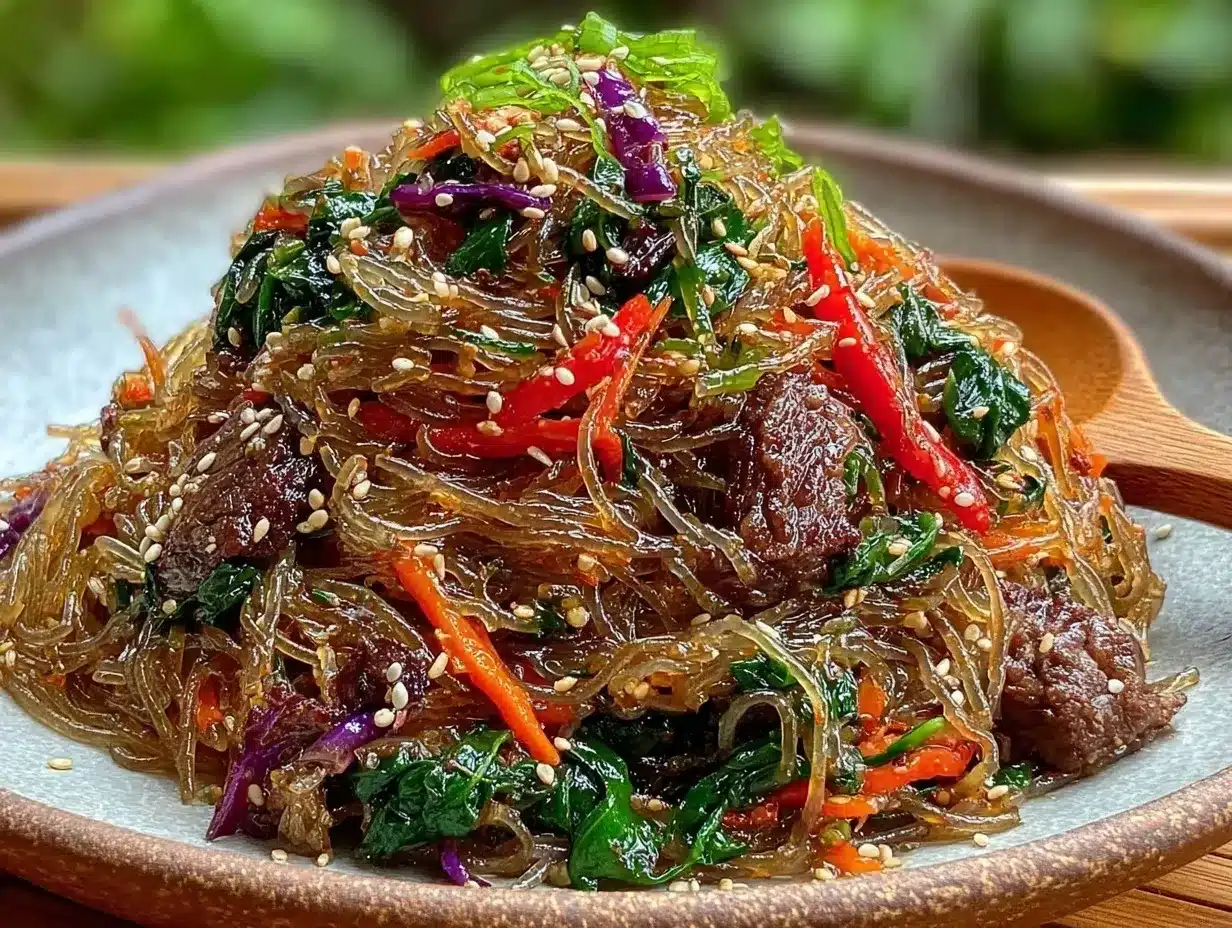
- Cook the glass noodles: Bring a large pot of water to a boil. Add 8 ounces (about 225 grams) of sweet potato glass noodles and cook for 6-7 minutes until tender but still slightly chewy. Drain and rinse under cold water to stop cooking. Set aside.
- Prepare the sauce: In a small bowl, whisk together 3 tablespoons soy sauce, 1 tablespoon toasted sesame oil, 1 tablespoon brown sugar, 1 teaspoon minced garlic, and 1 teaspoon grated ginger. Set aside.
- Cook protein (optional): If using beef or chicken, heat 1 tablespoon vegetable oil in a wok or large skillet over medium-high heat. Add thinly sliced meat (about 6 ounces/170 grams) and stir-fry until cooked through, about 3-4 minutes. Remove from pan and set aside.
- Stir-fry vegetables: Add another tablespoon of oil if needed. Toss in onions and carrots first, stir-frying for about 2 minutes until slightly softened. Add mushrooms and bell peppers, cooking for another 2 minutes until tender-crisp. Finally, stir in spinach or bok choy and cook just until wilted, about 1 minute.
- Combine noodles and sauce: Return cooked protein to the pan. Add the drained noodles and pour the sauce over everything. Toss quickly and thoroughly to coat all ingredients evenly. Cook for 1-2 minutes to let the flavors meld and the noodles to warm through.
- Finish and serve: Remove from heat and sprinkle generously with toasted sesame seeds and sliced green onions if using. Give it one last gentle toss and transfer to a serving dish.
Pro tip: When tossing the noodles with sauce, use tongs or chopsticks if you have them for better control and to avoid breaking the noodles. If the noodles seem dry, add a splash of water or a bit more sesame oil to keep things glossy and slippery. Watch your heat—too high and the sauce can burn, too low and the stir fry might turn soggy. This balance took me a few tries to nail down, but once you get it, it’s smooth sailing.
Cooking Tips & Techniques
Getting great japchae comes down to a few subtle tricks I’ve picked up along the way. First, don’t overcook your glass noodles. They should be tender but chewy; mushy noodles ruin the whole vibe. Rinsing them under cold water immediately after boiling halts the cooking process and loosens them up so they don’t clump.
Next, prep everything before you start cooking. Stir-fry moves fast, so having veggies sliced thin and sauce ready makes all the difference. I learned this the hard way after burning onions while chopping carrots once — not fun!
Use toasted sesame oil for that authentic nutty aroma, but add it near the end of cooking or in the sauce rather than during stir-frying to preserve its flavor. And don’t skimp on the garlic and ginger—they bring brightness and warmth that lifts the dish.
Another lesson: stir-fry in batches if your pan feels crowded. Overcrowding traps steam and turns crisp veggies soggy, which nobody wants. Lastly, the garnish of toasted sesame seeds and green onions is more than just decoration — it adds texture and a fresh note that completes the dish.
Variations & Adaptations
Japchae is versatile, so feel free to make it your own! Here are some variations I’ve enjoyed or recommend trying:
- Vegetarian/Vegan: Skip the meat and toss in extra mushrooms, tofu, or even tempeh. Swap honey or brown sugar with maple syrup or agave for vegan-friendly sweetness.
- Protein swaps: Shrimp or thinly sliced pork work beautifully if you want a different protein. Marinate briefly in soy and garlic before cooking for better flavor.
- Seasonal veggies: In summer, zucchini and snap peas add a fresh crunch. In winter, kale or cabbage can bulk it up nicely.
- Spicy twist: Add a teaspoon of gochujang or a splash of chili oil to the sauce for a subtle heat kick—makes it a bit more exciting!
Personally, I once tried swapping sweet potato noodles for shirataki noodles to make a lower-carb version. It turned out fine but lacked that signature chewiness that makes japchae special. So I’d recommend sticking close to glass noodles if you want the classic experience.
Serving & Storage Suggestions
Japchae is best served warm or at room temperature, making it flexible for dinner or even packed for lunch. I like to plate it with a sprinkle of toasted sesame seeds and a few extra green onion slices for that fresh pop. It pairs wonderfully with simple sides like steamed rice or a light kimchi salad to balance the richness.
Leftovers keep well in an airtight container in the refrigerator for up to 3 days. The noodles might soak up a bit of sauce and thicken, so before reheating, sprinkle a little water or broth and gently warm in a skillet to loosen things up without drying out. Avoid microwaving directly as it can make the noodles rubbery.
Flavors actually deepen overnight, so if you have time to let it rest before serving, you’ll notice a richer, more integrated taste. This makes japchae a great make-ahead option when you want a fuss-free meal waiting for you after a busy day. For longer storage, it freezes okay but loses some texture, so I usually recommend enjoying it fresh or refrigerated.
Nutritional Information & Benefits
Japchae is a relatively light but nutrient-rich dish. One serving (about 1 ½ cups) contains approximately 250-300 calories depending on protein choice and oil used. It’s a good source of complex carbs from the sweet potato noodles, plus fiber and vitamins from the mix of veggies like spinach, carrots, and mushrooms.
The sesame oil adds heart-healthy fats and antioxidants, while garlic and ginger contribute anti-inflammatory benefits. Using lean protein like chicken or tofu keeps it balanced without excess fat. For those watching sodium, opting for low-sodium soy sauce helps keep salt levels reasonable.
This recipe fits well into gluten-free diets when you choose gluten-free soy sauce, and it can be adapted for vegetarian or vegan needs as mentioned earlier. It’s a nourishing, wholesome meal that doesn’t feel heavy but leaves you satisfied and energized.
Conclusion
Japchae glass noodle stir fry is one of those recipes that’s both simple and memorable — a perfect fit for busy weeknights when you want something flavorful without fuss. Its blend of tender noodles, crisp veggies, and savory-sweet sauce makes it a standout comfort meal you’ll find yourself making again and again. I love how flexible it is, letting me tailor it to whatever ingredients I have or mood I’m in.
If you’re looking to try something a little different from the usual weeknight lineup, this japchae recipe might just become your new favorite. Don’t hesitate to tweak the veggies or protein to match your pantry or cravings — it’s forgiving and always satisfying. And if you enjoy dishes with rich, comforting flavors, you might also appreciate my one-pot garlic parmesan chicken and rice or the creamy roasted tomato bisque that pairs wonderfully on cooler nights.
Give this japchae a try and let me know how it fits into your dinner routine. There’s a quiet joy in mastering a dish that feels both nourishing and effortless — this is one of those.
FAQs About Japchae Glass Noodle Stir Fry
Can I make japchae ahead of time?
Yes! Japchae keeps well refrigerated for 2-3 days. Reheat gently in a skillet with a splash of water to restore moisture and avoid drying out the noodles.
Are sweet potato glass noodles gluten-free?
Most sweet potato glass noodles are naturally gluten-free, but always check packaging to be sure, especially if you have celiac disease or gluten sensitivity.
What can I substitute if I can’t find sweet potato noodles?
You can use cellophane noodles or mung bean noodles as alternatives, but they may have a different texture. Shirataki noodles are a low-carb option but don’t offer the same chewiness.
Can japchae be made vegan?
Absolutely! Just skip the meat and use tofu or extra mushrooms. Make sure to use vegan soy sauce and replace any honey with maple syrup or agave.
How do I prevent the noodles from sticking together?
Rinse the cooked noodles under cold water after boiling to stop cooking and separate them. Tossing lightly with a bit of sesame oil before stir-frying also helps keep them slippery and separate.
Pin This Recipe!
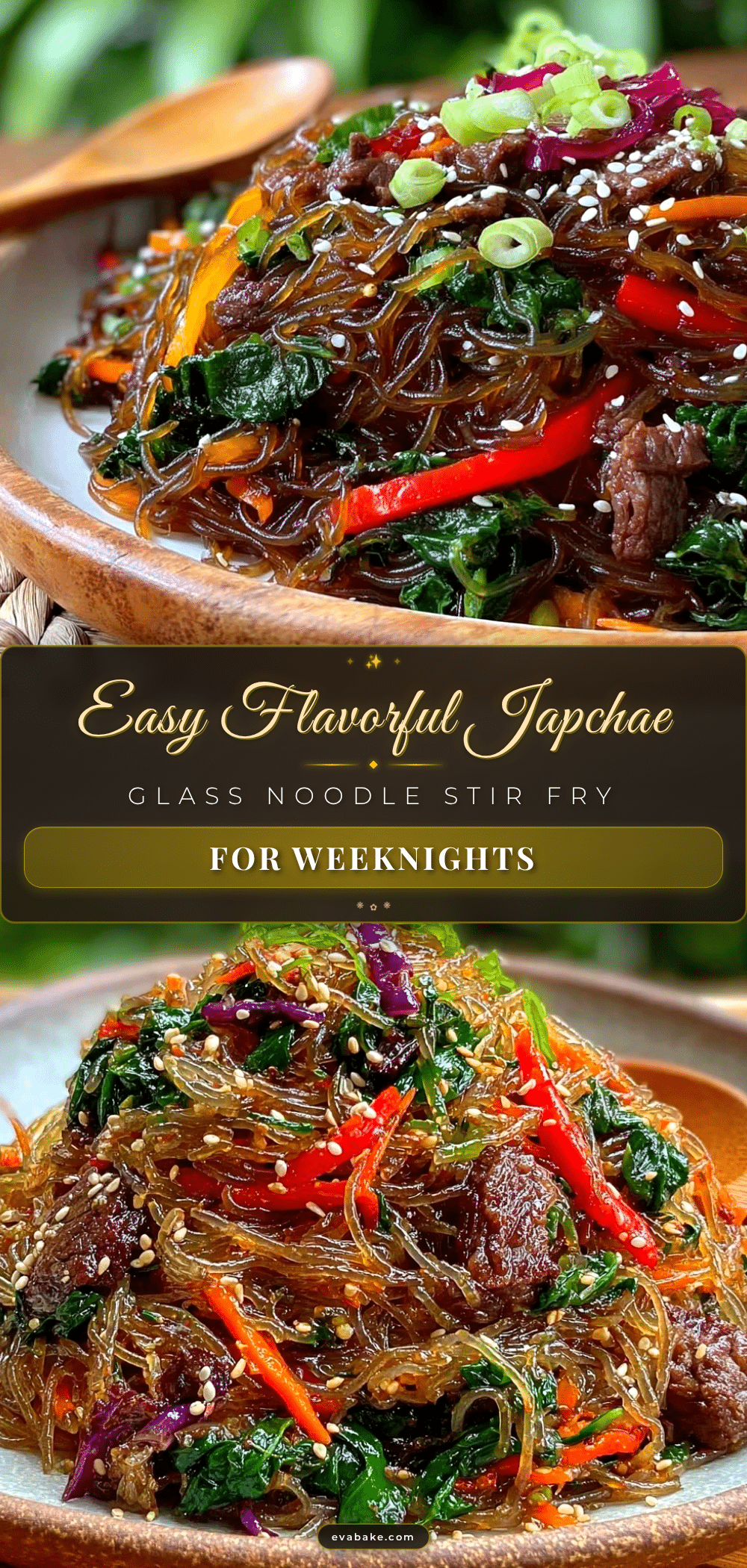
Flavorful Japchae Glass Noodle Stir Fry Recipe Easy Weeknight Dinner Idea
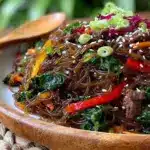
A quick and easy japchae glass noodle stir fry featuring chewy sweet potato noodles, tender veggies, and a savory-sweet sauce, perfect for weeknight dinners.
- Prep Time: 10 minutes
- Cook Time: 15 minutes
- Total Time: 25 minutes
- Yield: 4 servings 1x
- Category: Main Course
- Cuisine: Korean
Ingredients
- 8 ounces sweet potato glass noodles (dangmyeon)
- 2 medium carrots, julienned
- 2 cups spinach or bok choy, roughly chopped
- 1 red bell pepper, thinly sliced
- 1 small yellow or white onion, thinly sliced
- 4 ounces shiitake or cremini mushrooms, sliced
- 6 ounces thinly sliced beef or chicken breast (optional)
- 3 tablespoons soy sauce (low-sodium preferred)
- 1 tablespoon toasted sesame oil
- 1 tablespoon brown sugar or honey
- 1 teaspoon minced garlic
- 1 teaspoon grated ginger
- 1 tablespoon vegetable oil (for stir-frying)
- Toasted sesame seeds (for garnish)
- Thinly sliced green onions (optional, for garnish)
Instructions
- Bring a large pot of water to a boil. Add 8 ounces of sweet potato glass noodles and cook for 6-7 minutes until tender but still slightly chewy. Drain and rinse under cold water to stop cooking. Set aside.
- In a small bowl, whisk together 3 tablespoons soy sauce, 1 tablespoon toasted sesame oil, 1 tablespoon brown sugar, 1 teaspoon minced garlic, and 1 teaspoon grated ginger. Set aside.
- If using beef or chicken, heat 1 tablespoon vegetable oil in a wok or large skillet over medium-high heat. Add thinly sliced meat and stir-fry until cooked through, about 3-4 minutes. Remove from pan and set aside.
- Add another tablespoon of oil if needed. Stir-fry onions and carrots for about 2 minutes until slightly softened. Add mushrooms and bell peppers, cooking for another 2 minutes until tender-crisp. Finally, stir in spinach or bok choy and cook just until wilted, about 1 minute.
- Return cooked protein to the pan. Add the drained noodles and pour the sauce over everything. Toss quickly and thoroughly to coat all ingredients evenly. Cook for 1-2 minutes to let the flavors meld and the noodles to warm through.
- Remove from heat and sprinkle generously with toasted sesame seeds and sliced green onions if using. Give it one last gentle toss and transfer to a serving dish.
Notes
Do not overcook the noodles; rinse under cold water immediately after boiling to prevent sticking. Use toasted sesame oil in the sauce or near the end of cooking to preserve its nutty flavor. Stir-fry in batches if pan is crowded to keep veggies crisp. Add a splash of water or more sesame oil if noodles seem dry when tossing with sauce. Leftovers keep well refrigerated for up to 3 days; reheat gently in a skillet with a splash of water to avoid drying out.
Nutrition
- Serving Size: About 1 ½ cups per s
- Calories: 275
- Sugar: 6
- Sodium: 600
- Fat: 8
- Saturated Fat: 1
- Carbohydrates: 40
- Fiber: 3
- Protein: 10
Keywords: japchae, glass noodle stir fry, sweet potato noodles, Korean recipe, easy weeknight dinner, vegetarian option, gluten-free