It was one of those damp, grey afternoons when the craving for something warm and comforting hits you like a wave. I’d been wandering the streets of my neighborhood, the scent of fried batter and salty sea air teasing from a nearby food truck. Honestly, I wasn’t sure if I was chasing a genuine craving or just the smell itself, but that’s how this crispy fish and chips recipe with malt vinegar found its way into my kitchen. The first attempt was honestly a bit of an accident—I overestimated the oil temperature and ended up with a darker, crunchier-than-intended crust. But instead of tossing it, I gave it a try, and wow, it was exactly what I didn’t realize I needed that day.
What made this recipe stick wasn’t just the golden crunch or the juicy fish inside; it was the way the malt vinegar cut through the richness, adding that unmistakable tang that wakes up your taste buds. I’ve made it a dozen times since then—sometimes tweaking the batter, sometimes switching up the potato cut—and every time, it brings back that cozy, rainy afternoon vibe. If you ask me, the perfect fish and chips is never just about frying; it’s about capturing a moment, a feeling, a little crispy comfort wrapped in nostalgia.
Why You’ll Love This Recipe
This crispy fish and chips recipe with malt vinegar is more than just a meal; it’s a little celebration of simple, satisfying flavors that come together effortlessly. I’ve tested this recipe repeatedly, making sure it fits into busy weeknights without sacrificing that authentic crunch and tang that makes fish and chips so beloved.
- Quick & Easy: Ready in under 40 minutes, it’s perfect when you want something hearty without hours in the kitchen.
- Simple Ingredients: No fancy or hard-to-find items—just fresh fish, basic pantry staples, and malt vinegar for that classic zing.
- Perfect for Casual Gatherings: Whether it’s a family dinner or an impromptu get-together, this recipe always earns compliments.
- Crowd-Pleaser: Kids, adults, picky eaters, everyone seems to love the crispy batter and tender fish combo.
- Unbelievably Delicious: The batter comes out super light yet crunchy, and the malt vinegar drizzle ties everything together beautifully.
This recipe’s secret lies in the batter’s balance and the vinegar’s punch. It’s not just another fried fish dish; it’s a texture and flavor party that feels homemade but looks like you spent hours perfecting it. Honestly, once you try it, you’ll see why it’s become my go-to comfort food—and why it might just become yours.
What Ingredients You Will Need
This recipe uses simple, wholesome ingredients to deliver bold flavor and that satisfying golden crunch without any fuss. Most of these are pantry staples, and you can easily swap a few for dietary preferences or what you have on hand.
- For the Fish:
- White fish fillets (cod, haddock, or pollock) – about 1.5 pounds (700g), skinless and boneless
- Salt and freshly ground black pepper – to taste
- All-purpose flour – ½ cup (60g) for dredging
- For the Batter:
- All-purpose flour – 1 cup (120g)
- Cornstarch – 2 tablespoons (15g) (helps with extra crispiness)
- Baking powder – 1 teaspoon (adds lightness)
- Cold sparkling water or beer – 1 cup (240ml) (sparkling water keeps batter light; beer adds flavor)
- Pinch of salt
- For the Chips:
- Russet potatoes – 4 large (about 2 pounds / 900g), peeled and cut into thick fries
- Vegetable or peanut oil – for frying (enough to fill your pan or fryer 2-3 inches deep)
- Salt – for seasoning
- To Serve:
- Malt vinegar – traditional British style, for drizzling (I recommend Sarson’s for authentic flavor)
- Optional: lemon wedges, tartar sauce, or mushy peas
Feel free to substitute gluten-free flour blends for a gluten-free version or use coconut beer or sparkling water for a dairy-free batter. When choosing your fish, fresh is best, but good quality frozen fillets work fine too. For the best chips, russets or other starchy potatoes are ideal—they fry up crisp outside and fluffy inside.
Equipment Needed
- Large heavy-bottomed pot or deep fryer – for frying fish and chips safely
- Slotted spoon or spider strainer – to lift food out of hot oil without excess dripping
- Mixing bowls – for batter and dredging flour
- Sharp knife and cutting board – to prep the potatoes and fish
- Paper towels or a wire rack – to drain excess oil and keep crispiness
- Thermometer (optional but helpful) – to monitor oil temperature (ideal 350-375°F / 175-190°C)
If you don’t have a deep fryer, a heavy saucepan works just fine—just be careful with oil depth and temperature. I find a spider strainer invaluable for safely removing the fish without breaking the crust. When it comes to maintenance, always filter and store your frying oil if you plan to reuse it; it keeps your oil cleaner and your food tasting fresh.
Preparation Method
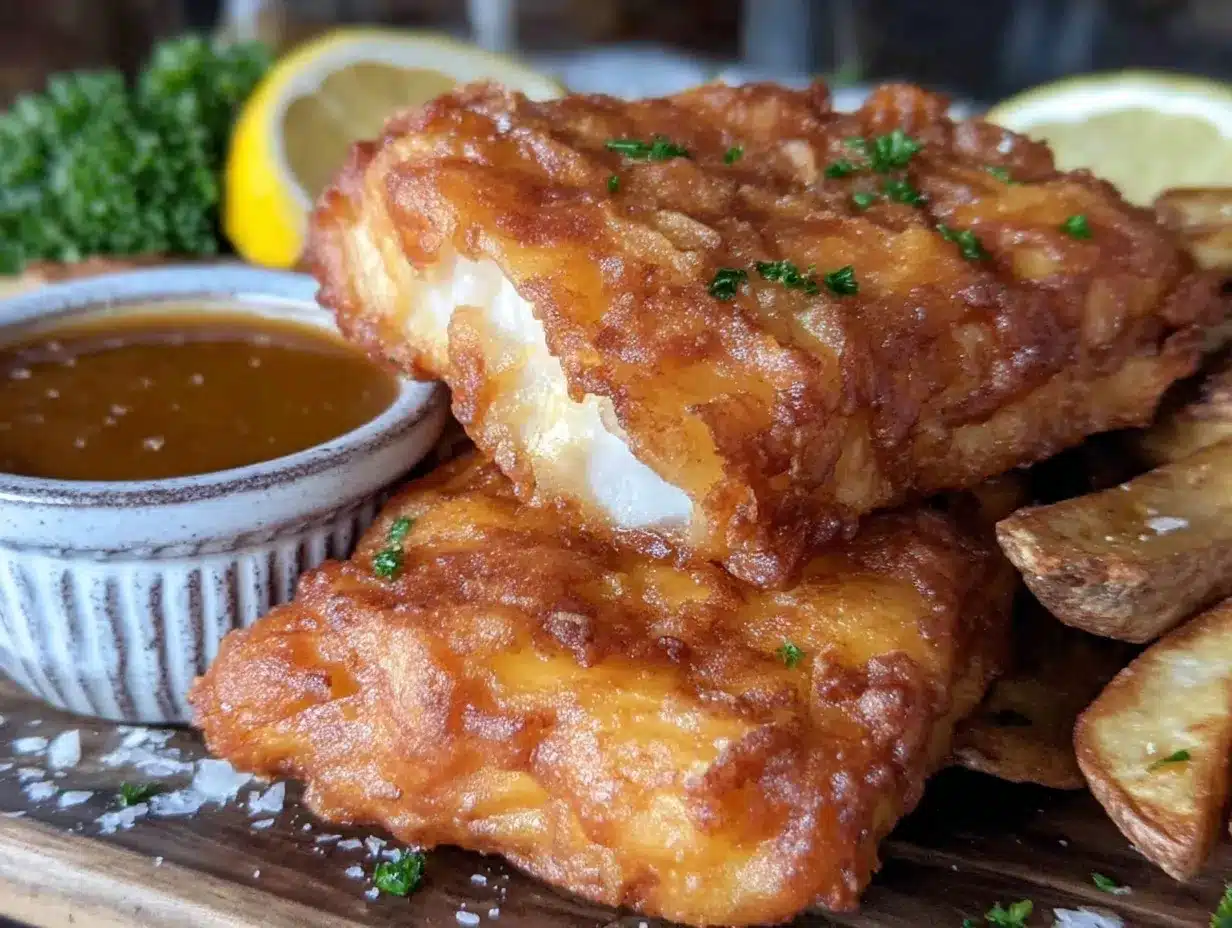
- Prep the Chips: Peel and cut potatoes into thick fries, about ½ inch (1.3 cm) wide. Soak them in cold water for 30 minutes to remove excess starch—this helps them crisp up better. Drain and pat completely dry with a kitchen towel.
- Par-Fry the Chips: Heat oil in your pot or fryer to 325°F (165°C). Fry the potatoes in batches for about 4-5 minutes until they’re soft but not browned. Remove and drain on paper towels. This step ensures they cook through without burning during the final fry.
- Make the Batter: In a bowl, whisk together 1 cup (120g) flour, cornstarch, baking powder, and a pinch of salt. Slowly add cold sparkling water or beer, whisking to a smooth batter. It should be thick enough to coat the back of a spoon—if too thick, add a splash more liquid.
- Prepare the Fish: Pat fish dry with paper towels. Season both sides with salt and pepper. Lightly dredge each fillet in ½ cup (60g) flour, shaking off excess. This helps the batter stick better.
- Heat Oil for Frying: Increase oil temperature to 375°F (190°C). Use a thermometer if you can—it makes a huge difference in frying success.
- Fry the Fish: Dip each fish fillet into the batter, ensuring it’s fully coated, then carefully lower into the hot oil. Fry in batches to avoid overcrowding, about 4-5 minutes per batch until golden and crisp. The fish should be opaque and flaky inside.
- Final Fry for Chips: Return par-fried chips to the hot oil at 375°F (190°C). Fry for another 2-3 minutes until golden and crispy. Drain on paper towels and season immediately with salt.
- Serve: Plate the fish and chips, and drizzle malt vinegar over the top or serve it on the side for dipping. Add lemon wedges or tartar sauce if you like.
Remember, the key to perfect fish and chips is controlling your oil temperature—too low and the batter soaks up oil, too high and it burns before cooking through. Patience is your friend here, and don’t overcrowd the fryer! I always keep a watchful eye and trust my nose for that irresistible fried aroma.
Cooking Tips & Techniques
Achieving that perfect golden crunch can be tricky, but a few tips make all the difference. First, always use cold liquid in your batter—this slows gluten development, resulting in a lighter, crispier crust. I swear by sparkling water for a neutral, bubbly texture, but a good-quality beer adds a lovely depth.
Another thing I learned the hard way is to never skip the double fry on the chips. It’s what gives them that fluffy inside and crisp outside combo. Trust me, soaking the potatoes and drying them thoroughly before frying is non-negotiable.
Oil temperature control is crucial. I recommend a candy or deep-fry thermometer, but if you don’t have one, test the oil by dropping a small spoonful of batter—it should sizzle and rise immediately, not burn.
One classic mistake is overcrowding the pan. It drops the oil temperature and makes the food greasy instead of crisp. Fry in small batches and keep cooked pieces warm in a low oven (around 200°F/90°C) while you finish.
Lastly, don’t rush the batter mixing. Whisk it until smooth but don’t overmix—it should be a little lumpy. This keeps the batter light. And always season your fish well—sometimes the simplest seasoning is what brings everything home.
Variations & Adaptations
Here are a few ways I’ve adjusted this crispy fish and chips recipe to suit different tastes and occasions:
- Gluten-Free Version: Swap the all-purpose flour with a gluten-free blend like rice flour or chickpea flour. Use gluten-free beer or sparkling water for the batter. The texture is slightly different but still delightfully crisp.
- Spiced Batter: Add a pinch of smoked paprika, cayenne pepper, or black pepper to the batter for a subtle kick that pairs wonderfully with the malt vinegar.
- Sweet Potato Chips: Substitute regular potatoes with sweet potatoes for a sweeter, more colorful twist. Just be mindful they cook a bit faster, so keep an eye on frying time.
- Baked Version: For a lighter option, coat fish fillets in the batter, place on a greased baking sheet, and bake at 425°F (220°C) until golden and cooked through. The chips can also be oven-roasted with olive oil and salt.
- Personal Favorite: I once added a spoonful of cornmeal to the batter for extra crunch, and honestly, it made the texture even more addictive.
Serving & Storage Suggestions
Serve your crispy fish and chips immediately while they’re at peak crunchiness—warm and golden is the way to go. Drizzle malt vinegar just before eating or leave it on the side so everyone can add their preferred amount. I like to pair this with classic tartar sauce, a squeeze of fresh lemon, and some mushy peas or a simple green salad to lighten things up.
If you have leftovers (though, honestly, they rarely last), store them in an airtight container in the fridge for up to two days. To reheat, use a hot oven or air fryer at 375°F (190°C) for 8-10 minutes to help crisp up the batter and chips again. Avoid microwaving if you want to keep the texture intact.
Flavors actually deepen the next day—the malt vinegar mingles nicely with the fish’s richness, making leftovers quite tempting. Just be prepared to re-crisp for the best experience.
Nutritional Information & Benefits
This crispy fish and chips recipe is a satisfying comfort meal that can also fit into a balanced diet when enjoyed in moderation. A typical serving (about 1 fillet and a generous portion of chips) provides approximately 600-700 calories, depending on oil absorption and portion size.
Using white fish like cod or haddock offers a lean source of high-quality protein rich in omega-3 fatty acids, which are great for heart health. Potatoes are a good source of potassium and fiber, especially with the skin on if you prefer.
The malt vinegar adds flavor without extra calories and has trace antioxidants. For those watching carbs, swapping chips for a green salad or roasted veggies is an easy adaptation. Be mindful, though, that deep-frying increases fat content, so balance this meal with lighter choices throughout the day.
Allergens include gluten and fish, so be cautious if cooking for guests with sensitivities. For gluten-free options, use appropriate flour blends and beer substitutes as noted earlier.
Conclusion
Making crispy fish and chips with malt vinegar at home is a rewarding and surprisingly straightforward experience that brings a bit of that seaside magic right to your table. This recipe balances a perfectly crunchy batter with tender, flaky fish and classic malt vinegar tang, giving you that golden crunch you crave without the takeout price or mystery ingredients.
Feel free to make it your own—experiment with spices, potato types, or serving styles. I know this recipe has become a little ritual for me when I want comfort food that feels special yet familiar. If you try it, I’d love to hear how you tweaked it or what moments it ends up accompanying in your kitchen.
Happy cooking, and may your fish always be crispy and your chips perfectly golden!
FAQs
What type of fish is best for crispy fish and chips?
White, flaky fish like cod, haddock, or pollock work best. They hold up well during frying and have a mild flavor that pairs perfectly with the batter.
Can I make the batter ahead of time?
It’s best to mix the batter just before frying to keep it light and bubbly. If left to sit, the batter can lose its fizz and thickness, resulting in a heavier crust.
Why is malt vinegar used with fish and chips?
Malt vinegar adds a tangy, slightly sweet acidity that cuts through the richness of the fried batter and fish, balancing flavors and enhancing the overall experience.
How do I keep my fish crispy after frying?
Drain fried fish on a wire rack rather than paper towels to avoid sogginess. Keep them warm in a low oven if frying in batches and serve promptly.
Is it possible to bake fish and chips instead of frying?
Yes, baking is a lighter alternative. Coat the fish in batter or breadcrumbs and bake at a high temperature. Chips can be oven-roasted with oil and seasoning. The texture differs but still tasty!
Pin This Recipe!
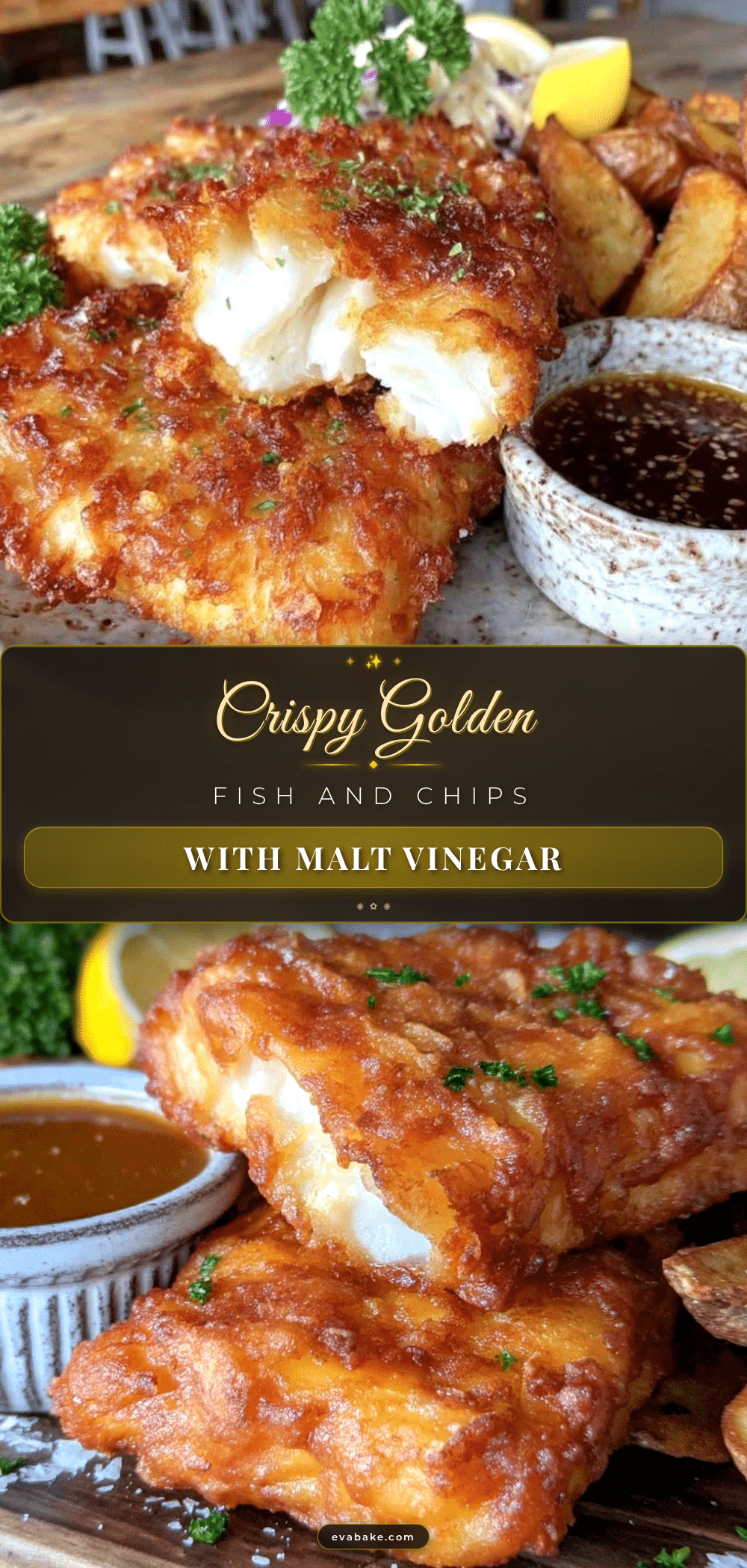
Crispy Fish and Chips Recipe with Malt Vinegar Easy Perfect Golden Crunch
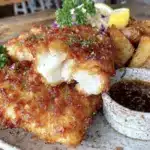
A comforting and crispy fish and chips recipe featuring a light, crunchy batter and a tangy malt vinegar drizzle, perfect for quick weeknight meals or casual gatherings.
- Prep Time: 40 minutes
- Cook Time: 15 minutes
- Total Time: 55 minutes
- Yield: 4 servings 1x
- Category: Main Course
- Cuisine: British
Ingredients
- 1.5 pounds (700g) white fish fillets (cod, haddock, or pollock), skinless and boneless
- Salt and freshly ground black pepper, to taste
- ½ cup (60g) all-purpose flour for dredging
- 1 cup (120g) all-purpose flour for batter
- 2 tablespoons (15g) cornstarch
- 1 teaspoon baking powder
- 1 cup (240ml) cold sparkling water or beer
- Pinch of salt
- 4 large russet potatoes (about 2 pounds / 900g), peeled and cut into thick fries
- Vegetable or peanut oil, for frying (enough to fill pan 2-3 inches deep)
- Salt, for seasoning
- Malt vinegar, for drizzling (traditional British style, e.g., Sarson’s)
- Optional: lemon wedges, tartar sauce, or mushy peas
Instructions
- Peel and cut potatoes into thick fries about ½ inch (1.3 cm) wide. Soak in cold water for 30 minutes to remove excess starch. Drain and pat dry.
- Heat oil to 325°F (165°C). Fry potatoes in batches for 4-5 minutes until soft but not browned. Remove and drain on paper towels.
- In a bowl, whisk together 1 cup flour, cornstarch, baking powder, and a pinch of salt. Slowly add cold sparkling water or beer, whisking to a smooth batter thick enough to coat the back of a spoon.
- Pat fish dry and season with salt and pepper. Lightly dredge each fillet in ½ cup flour, shaking off excess.
- Increase oil temperature to 375°F (190°C). Dip fish fillets into batter, coat fully, and fry in batches for 4-5 minutes until golden and crisp. Fish should be opaque and flaky inside.
- Return par-fried chips to hot oil at 375°F (190°C). Fry for 2-3 minutes until golden and crispy. Drain and season immediately with salt.
- Serve fish and chips with malt vinegar drizzled on top or on the side. Add lemon wedges, tartar sauce, or mushy peas if desired.
Notes
Use cold liquid in batter to keep it light and crispy. Control oil temperature carefully (325°F for par-frying chips, 375°F for final frying). Avoid overcrowding the fryer to maintain oil temperature and crispiness. Double frying chips is key for fluffy inside and crispy outside. For gluten-free, substitute flours and beer accordingly. Reheat leftovers in oven or air fryer to maintain crispiness.
Nutrition
- Serving Size: About 1 fish fillet
- Calories: 650
- Sugar: 2
- Sodium: 600
- Fat: 35
- Saturated Fat: 5
- Carbohydrates: 60
- Fiber: 5
- Protein: 30
Keywords: fish and chips, crispy fish, malt vinegar, fried fish, homemade fish and chips, easy fish recipe, British classic, battered fish, comfort food