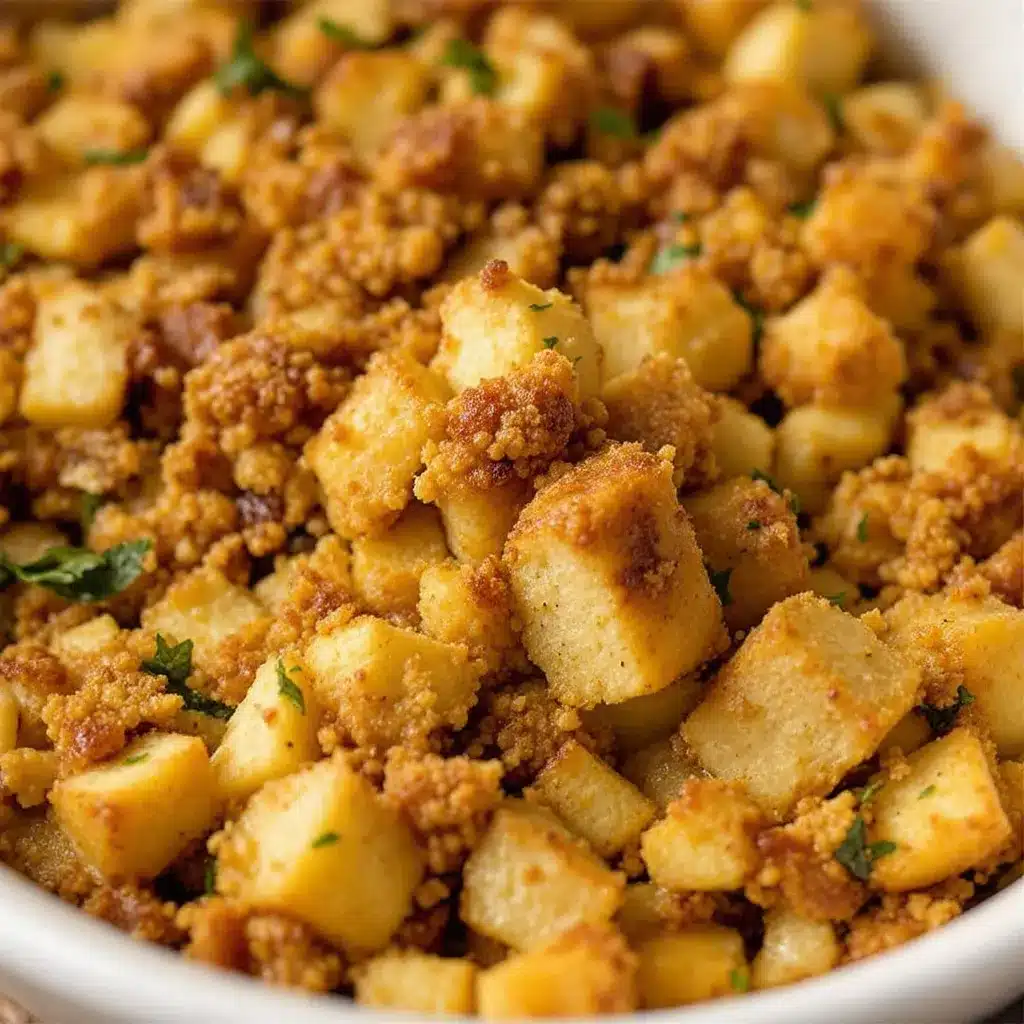
I stood there, oven door open, spatula in hand, staring at a pan of stuffing that looked—honestly—a little too brown. The sage had crisped into dark freckles across the sourdough cubes, and the whole kitchen smelled like browned butter and Thanksgiving, but I was nervous. My family has Opinions about stuffing. My aunt brings the cornbread version with sausage that she guards like a family heirloom. My mom makes a classic herbed one that she claims is “the original.” I was the younger sibling showing up with something different, and I could already hear the comments.
The brown butter sage stuffing with sourdough wasn’t planned for a holiday. It was a random Tuesday in November, and I had a loaf of day-old sourdough going stale on the counter. I’d browned butter for a batch of brown butter chocolate chip cookies the night before and had that nutty, golden smell stuck in my head. So I grabbed the sage from the garden, tore up the bread, and just went for it. No recipe. No safety net. Just a craving and a prayer.
That first bite stopped me mid-chew. The edges were crispy, the inside soft but not mushy, and that brown butter—it wrapped around every single crumb like it belonged there. I texted my sister: “I think I accidentally made the best stuffing ever.” She laughed. Then I brought it to Friendsgiving. And then I brought it again. And again. By the third time, my aunt asked for the recipe. That’s when I knew this brown butter sage stuffing with sourdough was something special—not just for holidays, but for any night you want a side dish that steals the whole show.
Why You’ll Love This Recipe
Let me be real with you. I’ve tested this brown butter sage stuffing with sourdough at least a dozen times across two different ovens, three different bread brands, and one very questionable bag of stale sourdough from the discount bin. Here’s why it keeps winning:
- Deep, Nutty Flavor Without Extra Work : Browning butter takes five minutes and transforms the entire dish. You get that toasty, caramelized richness without adding cream or cheese.
- Perfect Texture Every Time : Sourdough holds its shape better than soft sandwich bread. The cubes stay chewy on the inside and get beautifully crisp on top—no sad, soggy bottom layer.
- Make-Ahead Friendly : Assemble it the day before, refrigerate, and bake when ready. Your future self will thank you during the holiday chaos.
- Simple Pantry Ingredients : Nothing weird here. Butter, onion, celery, sage, broth, and bread. You probably have most of it right now.
- Crowd-Pleaser Status : I’ve served this at Thanksgiving, Christmas, Easter brunch, and random Sunday dinners. It disappears every single time. Even the cornbread-stuffing loyalists come back for seconds.
What makes this version different from every other stuffing recipe out there? It’s the brown butter. That one extra step takes the flavor from “good” to “what did you put in this?” territory. Plus, sourdough brings a subtle tang that cuts through the richness, so the stuffing feels balanced instead of heavy. It’s comfort food that doesn’t weigh you down—just makes you close your eyes after the first bite.
What Ingredients You Will Need
This brown butter sage stuffing with sourdough uses simple, everyday ingredients that come together to create something way bigger than the sum of its parts. Here’s what you’ll need:
For the Bread Base
- 1 large loaf sourdough bread (about 12-14 ounces, day-old or slightly stale works best) — Look for a rustic loaf with a sturdy crust. Avoid the soft, pre-sliced sourdough from the grocery store bread aisle; it won’t hold up.
- 4 tablespoons unsalted butter — This gets browned, so skip the salted butter here unless you want to adjust the added salt later.
For the Aromatics
- 1 large yellow onion, diced (about 1½ cups) — Sweet onion works too, but yellow gives the best savory depth.
- 3 celery stalks, diced (about 1 cup) — Include the leaves if they’re attached; they add extra flavor.
- 4 cloves garlic, minced — Fresh only, please. Pre-minced jarred garlic gets bitter during baking.
For the Herbs & Seasoning
- 3 tablespoons fresh sage leaves, chopped — This is non-negotiable for that earthy, slightly peppery flavor. Dried sage won’t give you the same brightness.
- 2 teaspoons fresh thyme leaves (or 1 teaspoon dried) — Adds a subtle woodsy note that rounds out the sage.
- 1 teaspoon kosher salt — Start here and adjust after tasting the broth mixture.
- ½ teaspoon black pepper, freshly ground — Don’t skip this; it wakes up all the other flavors.
For the Liquid
- 2 cups low-sodium chicken or vegetable broth — I prefer low-sodium so I can control the salt level. Homemade broth takes this over the top, but boxed works great.
- 1 large egg, lightly beaten — This helps bind the stuffing together so it holds its shape when sliced.
Optional Add-Ins
- ½ cup dried cranberries — Adds little pops of sweetness that play beautifully against the brown butter and sage.
- ½ cup chopped pecans or walnuts — Toasted, for extra crunch. I add these when I’m feeling fancy.
- ½ cup cooked and crumbled Italian sausage — For the meat lovers at your table. Brown it in the same pan after the aromatics.
Ingredient Note: If you can’t find fresh sage, you can use 1 tablespoon dried rubbed sage instead. Just know the flavor will be a bit more muted and slightly more medicinal. Fresh really does make a difference here. For the bread, I’ve had great results with sourdough from a local bakery, but even the store-bought loaves from the bakery section work well—just avoid the pre-sliced sandwich bread.
Equipment Needed
You don’t need a fancy kitchen to pull off this brown butter sage stuffing with sourdough. Here’s what you’ll actually use:
- Large skillet or sauté pan — For browning the butter and cooking the aromatics. A light-colored pan helps you see when the butter turns golden.
- Large mixing bowl — Big enough to toss the bread cubes with everything without spilling over the sides.
- 9×13-inch baking dish — Glass or ceramic works best. Metal can cause the edges to brown too quickly.
- Baking sheet — For toasting the bread cubes before mixing. This step makes a huge difference in texture.
- Chef’s knife and cutting board — For dicing the onion, celery, and herbs.
- Whisk — For beating the egg and mixing the broth.
- Wooden spoon or spatula — For stirring the butter and aromatics.
- Aluminum foil — For covering the dish during the first half of baking.
Budget-Friendly Tip: No baking sheet? You can toast the bread cubes directly in the oven on a piece of parchment paper placed on the oven rack. Just keep an eye on them—they burn fast. And if you don’t have a 9×13 dish, a 10-inch cast iron skillet works beautifully for a more rustic presentation.
Preparation Method
This brown butter sage stuffing with sourdough comes together in stages, but none of them are complicated. Here’s exactly how to do it:
Step 1: Toast the Bread Cubes
Preheat your oven to 375°F. Cut the sourdough into ¾-inch cubes—don’t stress about perfection, but try to keep them relatively uniform so they cook evenly. Spread the cubes on a large baking sheet in a single layer. Bake for 10-12 minutes, stirring halfway through, until the edges are lightly golden and the cubes feel dry to the touch. They should not be fully crunchy like croutons—just slightly toasted. Set aside to cool. This step prevents soggy stuffing. Trust me on this.
Step 2: Brown the Butter
While the bread toasts, melt the butter in a large skillet over medium heat. Swirl the pan occasionally as the butter melts. It will foam up, then settle down, and you’ll start to see little brown specks forming at the bottom. This is the milk solids toasting—exactly what you want. Keep swirling until the butter smells nutty and turns a warm amber color, about 4-5 minutes. Remove from heat immediately and pour into a heat-safe bowl to stop the cooking process. Do not walk away from browning butter. It goes from perfect to burnt in about 15 seconds. I learned this the hard way during a pre-Thanksgiving panic.
Step 3: Cook the Aromatics
Return the skillet to medium heat. Add the diced onion and celery, and cook for 6-8 minutes, stirring occasionally, until softened and translucent. Add the minced garlic and cook for 1 more minute until fragrant. The kitchen should smell incredible at this point. Remove from heat and let cool slightly.
Step 4: Combine the Broth Mixture
In a small bowl or liquid measuring cup, whisk together the chicken broth, beaten egg, kosher salt, black pepper, chopped sage, and thyme. Set aside. This is your flavor-packed liquid that will soak into every bread cube.
Step 5: Assemble the Stuffing
Place the toasted sourdough cubes in your large mixing bowl. Pour the browned butter over the cubes and toss gently to coat. Add the cooked onion, celery, and garlic mixture, and toss again. Slowly pour the broth mixture over everything while folding with a spatula. You want every cube to get some moisture, but not so much that the bread turns into a paste. If you’re adding dried cranberries, nuts, or cooked sausage, fold them in now.
Step 6: Rest and Transfer
Let the mixture sit for 10 minutes. This gives the bread time to absorb the liquid. After resting, transfer the stuffing to your greased 9×13 baking dish and spread it into an even layer. Don’t press it down too firmly—you want some air pockets for texture.
Step 7: Bake
Cover the dish with aluminum foil and bake at 375°F for 25 minutes. Then remove the foil and bake for another 15-20 minutes, until the top is golden brown and crispy. The edges should look slightly darker and the center should be set but still soft. Let it rest for 5 minutes before serving. This is the hardest part—your kitchen will smell like heaven.
Cooking Tips & Techniques
After making this brown butter sage stuffing with sourdough more times than I care to count, here are the things I wish someone had told me:
Dry bread is your friend. The single biggest mistake people make with stuffing is using fresh bread. Fresh bread turns to mush. Day-old bread that’s slightly stale is ideal, but if all you have is fresh bread, cube it and leave it out on the counter for a few hours, or pop it in a 300°F oven for 5-7 minutes to dry it out. You want the cubes to feel like stale croutons—dry on the outside, still a little give in the center.
Watch the butter like a hawk. I cannot stress this enough. Brown butter happens fast. The moment you see amber specks and smell that nutty aroma, pull it off the heat. If you’re nervous, use a light-colored pan so you can actually see the color change. Dark nonstick pans make it nearly impossible to tell when the butter is ready.
Don’t oversoak the bread. When you add the broth mixture, you’re not making bread pudding. The cubes should feel moist but not wet. If liquid pools at the bottom of the bowl, you’ve added too much. Next time, hold back about ¼ cup of broth and add it only if needed.
Let it rest before baking. That 10-minute rest isn’t just for show. It allows the bread to fully absorb the liquid, which means the stuffing will bake up tender instead of watery. I once skipped this step because I was in a rush, and the stuffing came out soupy in the center. Never again.
Double the recipe for a crowd. This recipe fits perfectly in a 9×13 dish, but if you’re feeding a Thanksgiving crowd, double everything and use a 9×13 plus an 8×8, or a large roasting pan. Just increase the bake time by about 10 minutes with the foil on.
Variations & Adaptations
This brown butter sage stuffing with sourdough is incredibly flexible. Here are my favorite ways to change it up:
Gluten-Free Version
Swap the sourdough for a good-quality gluten-free bread. Look for one with a sturdy texture—avoid the soft, squishy gluten-free loaves that fall apart. Toast the cubes a little longer to help them hold their shape. Everything else stays the same.
Vegetarian/Vegan Adaptation
Use vegetable broth instead of chicken broth, and substitute the butter with a high-quality vegan butter or olive oil. For the egg, mix 1 tablespoon ground flaxseed with 3 tablespoons water and let it sit for 5 minutes until gel-like. The texture will be slightly less fluffy, but the flavor is still amazing.
Herb Variation
Not a sage fan? Swap in fresh rosemary and thyme instead. Use 2 tablespoons chopped fresh rosemary and 2 teaspoons fresh thyme. The rosemary adds a piney, aromatic quality that pairs beautifully with the brown butter.
Add Some Heat
For a spicy kick, add ½ teaspoon red pepper flakes along with the garlic. The heat cuts through the richness of the brown butter and keeps things interesting. I did this for a Friendsgiving once and it was the first dish to run out.
Southern-Style Addition
Fold in ½ cup cooked and crumbled bacon or andouille sausage. The smoky, spicy flavors play off the nutty brown butter and earthy sage in a way that feels deeply comforting. This is my go-to version when I’m serving this alongside brown sugar glazed meatloaf for a cozy dinner.
Serving & Storage Suggestions
This brown butter sage stuffing with sourdough is best served warm, straight from the oven, when the top is still crispy and the inside is soft and fragrant. Let it rest for 5 minutes after baking, then scoop it onto plates with a wide spatula to keep those crispy edges intact.
What to Serve With It: This stuffing is a natural side for roasted turkey or chicken, but don’t limit yourself to holidays. It’s fantastic alongside pan-seared pork chops with apple cider butter sauce, or even as a bed for a simple roasted vegetable medley. For a full Thanksgiving-style plate, pair it with mashed potatoes, green bean casserole, and cranberry sauce.
Storage: Leftover stuffing keeps in an airtight container in the refrigerator for up to 4 days. The flavors actually meld together and get even better on day two—if you can resist eating it all the first night.
Reheating: The best way to reheat is in the oven at 350°F for 10-15 minutes, covered with foil to prevent drying out. For a quicker option, microwave individual portions for 60-90 seconds, but know that the crispy top will soften. To revive that crunch, pop it under the broiler for 1-2 minutes after microwaving.
Freezing: This stuffing freezes beautifully. Assemble the dish completely but don’t bake it. Cover tightly with plastic wrap and then foil, and freeze for up to 3 months. To bake from frozen, remove the plastic wrap, cover with foil, and bake at 375°F for 45 minutes. Remove the foil and bake another 15-20 minutes until golden and heated through.
Nutritional Information & Benefits
This brown butter sage stuffing with sourdough is comfort food, so I’m not going to pretend it’s a health food. But it does have some redeeming qualities. Per serving (about 1 cup), here’s the estimated breakdown:
- Calories: Approximately 280-320
- Protein: 8-10 grams
- Carbohydrates: 35-40 grams
- Fat: 12-15 grams
- Fiber: 3-4 grams
- Sodium: 450-550 mg (varies with broth and salt)
Health Highlights: Sourdough bread is naturally fermented, which means it’s easier to digest than regular bread and has a lower glycemic index. Sage is packed with antioxidants and has anti-inflammatory properties. Celery and onion add fiber and vitamins. And while butter gets a bad rap, it does contain butyrate, a fatty acid that supports gut health. So yes, you can feel a little bit good about eating this—especially if you use low-sodium broth and go easy on the added salt.
Dietary Considerations: This recipe contains gluten, dairy, and eggs. For allergen-friendly versions, check the variations section above. It’s naturally nut-free unless you add the optional pecans or walnuts.
Conclusion
Here’s the thing about this brown butter sage stuffing with sourdough—it’s not trying to reinvent the wheel. It’s just doing the classics really, really well. That nutty brown butter, the earthy sage, the chewy sourdough with its crispy edges and tender center. It’s the kind of side dish that makes you forget about the main course entirely. And honestly? That’s exactly what you want at a holiday table.
I’ve made this for Thanksgivings, Friendsgivings, random Sunday dinners, and even a brunch once (don’t knock it until you try it). Every single time, someone asks for the recipe. And I love watching their faces when I tell them it starts with browning butter—that one simple step that makes all the difference.
So go ahead. Grab that loaf of sourdough, pick some sage from the garden or the grocery store, and give this a try. Make it your own—add cranberries, toss in some sausage, double the sage if you’re feeling bold. And when you take that first bite and the brown butter hits your tongue, come back and tell me about it. I’d love to hear how it turned out. Leave a comment below or tag me in your photos—I’m serious, I actually read every single one.
Frequently Asked Questions
Can I make this brown butter sage stuffing ahead of time?
Absolutely. Assemble the stuffing completely, cover it, and refrigerate for up to 24 hours before baking. Add about 10 minutes to the covered bake time since you’re starting from cold.
Can I use dried sage instead of fresh?
You can, but the flavor won’t be as bright. Use 1 tablespoon dried rubbed sage instead of 3 tablespoons fresh. I recommend sticking with fresh if possible—it really makes a difference in this recipe.
Why is my stuffing soggy?
This usually happens when the bread isn’t dried out enough before mixing, or when too much liquid is added. Make sure your bread cubes are toasted until dry, and don’t pour all the broth in at once. The bread should feel moist, not wet.
Can I use a different type of bread?
Sure. French bread, ciabatta, or a rustic Italian loaf all work well. Just avoid soft sandwich bread—it turns into mush. Whatever bread you choose, make sure it’s day-old or toasted until dry.
How do I make this stuffing dairy-free?
Use vegan butter or olive oil instead of regular butter. The olive oil version won’t have that nutty brown butter flavor, but it’ll still be delicious. Just sauté the aromatics in olive oil and skip the browning step.
Pin This Recipe!
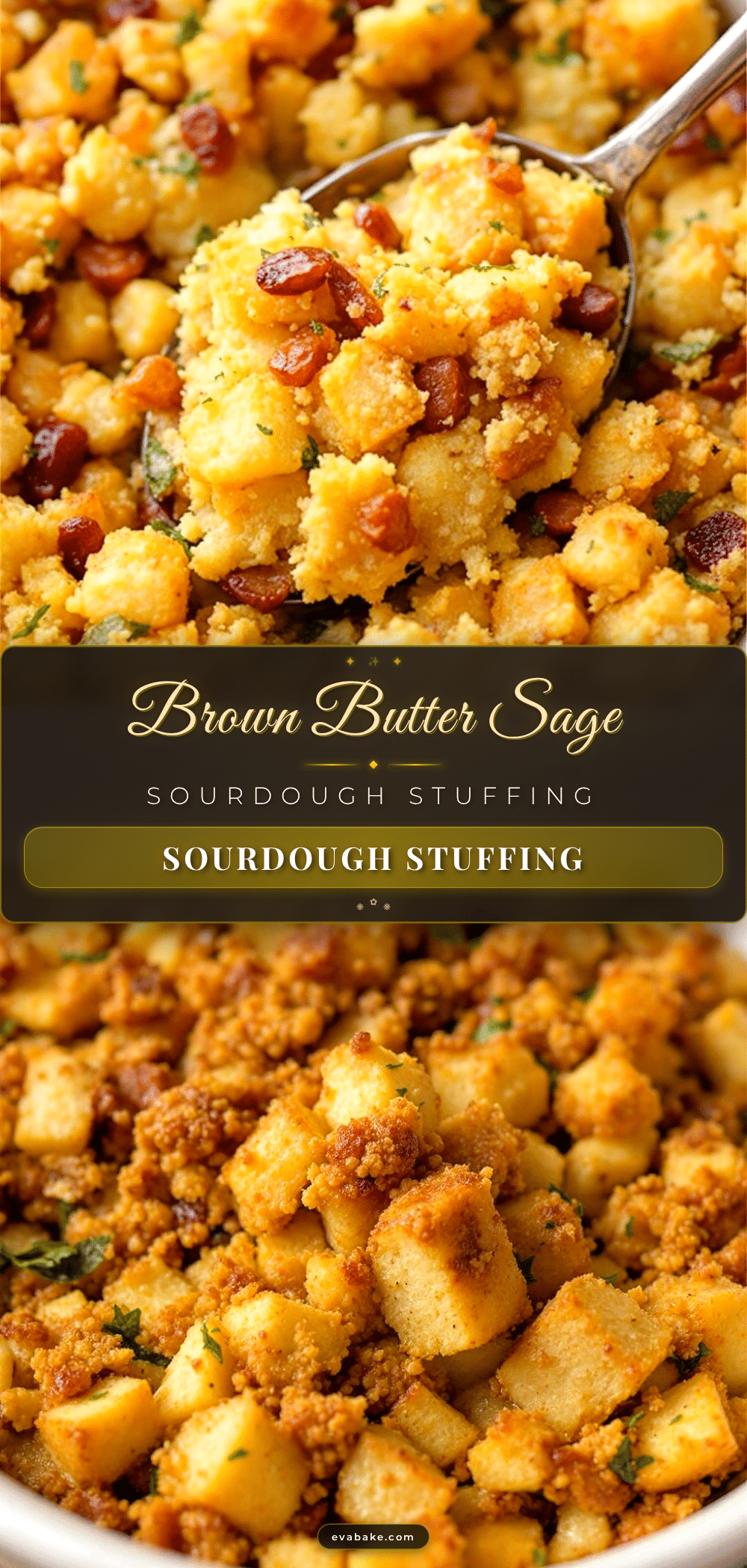
Best Brown Butter Sage Stuffing with Sourdough Recipe

This brown butter sage stuffing with sourdough is a crowd-pleasing side dish with deep, nutty flavor and perfect texture. Made with simple pantry ingredients, it’s make-ahead friendly and guaranteed to steal the show at any holiday table or cozy dinner.
- Prep Time: 20 minutes
- Cook Time: 50 minutes
- Total Time: 1 hour 10 minutes
- Yield: 8 servings 1x
- Category: Side Dish
- Cuisine: American
Ingredients
- 1 large loaf sourdough bread (about 12–14 ounces, day-old or slightly stale)
- 4 tablespoons unsalted butter
- 1 large yellow onion, diced (about 1½ cups)
- 3 celery stalks, diced (about 1 cup)
- 4 cloves garlic, minced
- 3 tablespoons fresh sage leaves, chopped
- 2 teaspoons fresh thyme leaves (or 1 teaspoon dried)
- 1 teaspoon kosher salt
- ½ teaspoon black pepper, freshly ground
- 2 cups low-sodium chicken or vegetable broth
- 1 large egg, lightly beaten
- ½ cup dried cranberries (optional)
- ½ cup chopped pecans or walnuts (optional)
- ½ cup cooked and crumbled Italian sausage (optional)
Instructions
- Preheat oven to 375°F. Cut sourdough into ¾-inch cubes. Spread on a baking sheet in a single layer and bake for 10-12 minutes, stirring halfway, until edges are lightly golden and cubes feel dry. Set aside to cool.
- While bread toasts, melt butter in a large skillet over medium heat. Swirl pan occasionally until butter foams, then settles, and brown specks form at the bottom. Cook until nutty and amber, about 4-5 minutes. Remove from heat immediately and pour into a heat-safe bowl.
- Return skillet to medium heat. Add diced onion and celery; cook 6-8 minutes until softened. Add minced garlic and cook 1 minute more until fragrant. Remove from heat and let cool slightly.
- In a small bowl, whisk together broth, beaten egg, salt, pepper, chopped sage, and thyme. Set aside.
- Place toasted sourdough cubes in a large mixing bowl. Pour browned butter over cubes and toss gently to coat. Add cooked onion, celery, and garlic mixture; toss again. Slowly pour broth mixture over everything while folding with a spatula until every cube is moistened but not wet. Fold in optional add-ins if using.
- Let mixture rest for 10 minutes to allow bread to absorb liquid. Transfer to a greased 9×13-inch baking dish and spread into an even layer without pressing down firmly.
- Cover dish with aluminum foil and bake at 375°F for 25 minutes. Remove foil and bake another 15-20 minutes until top is golden brown and crispy. Let rest 5 minutes before serving.
Notes
Dry bread is essential to avoid soggy stuffing. Watch the butter closely when browning—it goes from perfect to burnt in seconds. Don’t oversoak the bread; cubes should feel moist but not wet. Let the mixture rest 10 minutes before baking to allow absorption. For make-ahead, assemble completely, cover, and refrigerate up to 24 hours; add 10 minutes to covered bake time. Freezes well unbaked for up to 3 months.
Nutrition
- Serving Size: 1 cup
- Calories: 300
- Sugar: 4
- Sodium: 500
- Fat: 13
- Saturated Fat: 6
- Carbohydrates: 38
- Fiber: 3
- Protein: 9
Keywords: brown butter sage stuffing, sourdough stuffing, Thanksgiving stuffing, holiday side dish, brown butter stuffing, sage stuffing, sourdough bread stuffing