My friend Jenna asked why I couldn’t just stir the orange juice straight into the batter instead of zesting and juicing separately. I started to explain why that wouldn’t work—something about acidity messing with the baking soda, the importance of fresh zest for oil release. Then I stopped. Honestly, I had no good reason except that I’d never done it that way. So I shrugged, handed her the measuring cup, and said, “Fine, you pour.”
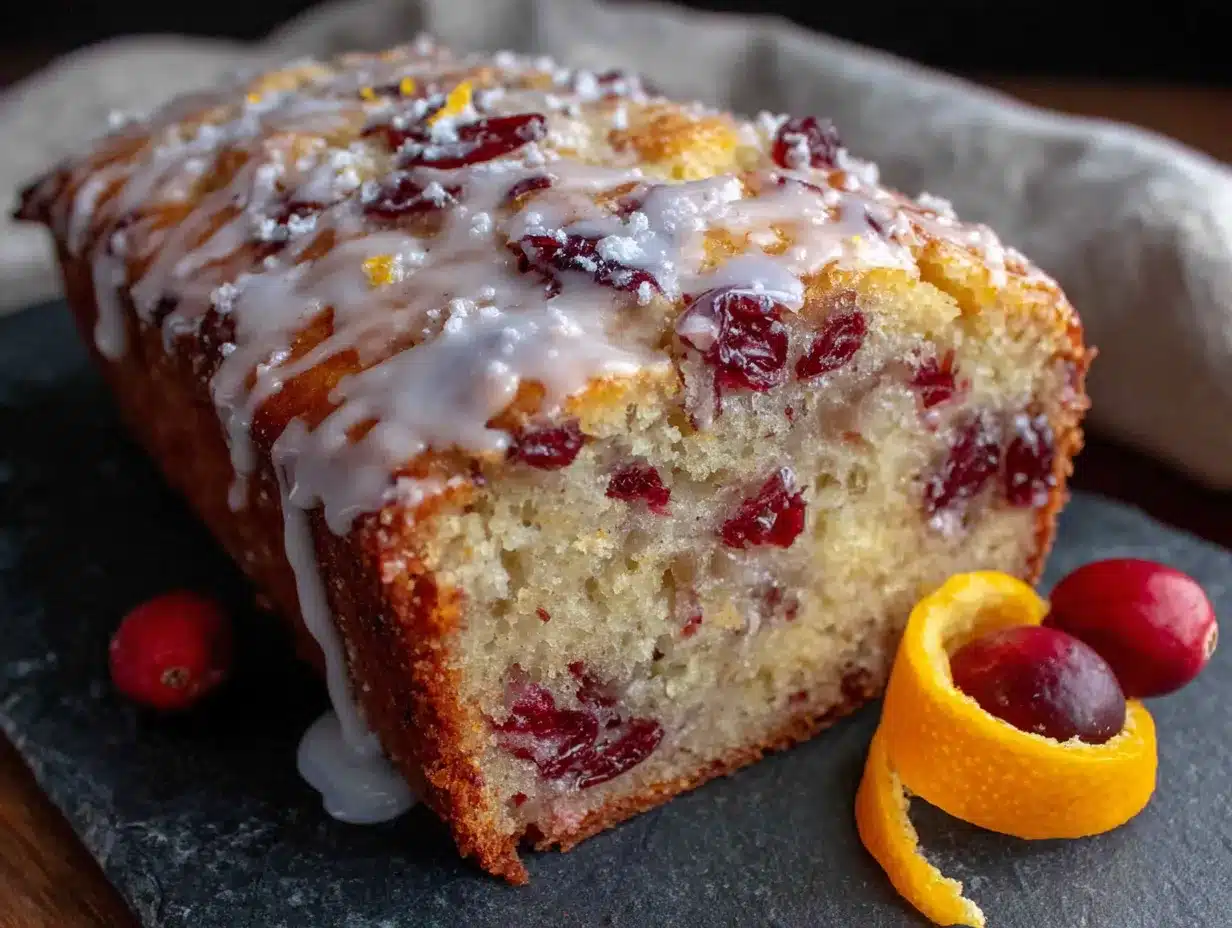
That loaf came out of the oven looking a little lopsided—Jenna had overfilled the pan by a quarter inch—and the glaze slid off one side in a way that made me wince. But when I cut into it, the crumb was the most tender I’d ever gotten from this recipe. The orange flavor was everywhere, not just in the glaze but woven through every single bite. I stood there holding a warm slice, butter melting into the cracks, feeling like a complete fool for all the years I’d been doing it the hard way.
You know that feeling when you realize you’ve been overcomplicating something simple? That was this moment. The Best Orange Cranberry Quick Bread with Glaze came together because I finally shut up and listened to someone who didn’t know any better. Maybe you’ve been there too—stubbornly sticking to a method just because it’s what you’ve always done. This bread is my reminder that sometimes the best recipes come from letting go of control. It’s become my go-to for hosting, the loaf I bring to brunches and holiday mornings, the one that makes people close their eyes on the first bite. And honestly? I owe it all to Jenna pouring orange juice like she owned the place.
Why You’ll Love This Recipe
This isn’t just another quick bread recipe. After testing this version at least a dozen times—adjusting the moisture level, balancing the tartness of cranberries with the sweetness of the glaze—I can tell you this is the one. It’s the kind of recipe that makes you look like a hero with almost no effort.
- Simple Ingredients : You likely have most of these in your kitchen right now. No specialty flours, no obscure extracts. Just real, recognizable ingredients that work together beautifully.
- Quick & Easy : From mixing bowl to oven in under 15 minutes. The hardest part is waiting for it to cool before adding the glaze. Trust me on that.
- Perfect for Hosting : This bread is made for sharing. It slices cleanly, travels well, and looks stunning on a cake stand. Bring it to a potluck or serve it at a brunch—it always disappears first.
- Crowd-Pleaser : Kids love the sweet glaze. Adults appreciate the tart pop of cranberries. Everyone wins.
- Unbelievably Delicious : The texture is tender and moist, not dense or dry. The orange flavor is bright without being overpowering. And that glaze? It seeps into the warm bread just enough to make every bite special.
What makes this version different from every other orange cranberry bread out there? It’s the technique. By adding the orange juice directly to the batter—yes, just like Jenna showed me—you get a more even citrus flavor throughout. Plus, I use a combination of melted butter and oil for the perfect crumb structure. It’s not dry, it’s not greasy. It’s just right.
This recipe is the one I turn to when I want to impress without stress. It’s comfort food that feels a little fancy, but comes together with the ease of a weekday breakfast. That first bite, with the glaze sticking to your lips and the cranberries bursting against your teeth—it’s the kind of moment that makes you glad you took the time.
What Ingredients You Will Need
Every ingredient here has a job to do. I’ve tested substitutions and tweaks, so I’ll share what works and what doesn’t. This recipe uses simple, wholesome ingredients to deliver bright flavor and tender texture without any fuss.
For the Bread
- 2 cups (250g) all-purpose flour – Spoon and level for accuracy. Too much flour makes the bread dense.
- 1 cup (200g) granulated sugar – Adds sweetness and helps create a tender crumb.
- 1 teaspoon baking powder – The main leavener. Make sure it’s fresh.
- 1/2 teaspoon baking soda – Helps neutralize acidity from the orange juice and cranberries.
- 1/2 teaspoon salt – Balances sweetness and enhances flavor.
- 1/2 cup (120ml) vegetable oil – Keeps the bread moist for days. I use canola or avocado oil.
- 1/4 cup (60g) unsalted butter, melted and cooled – Adds richness and flavor that oil alone can’t provide.
- 2 large eggs, room temperature – Room temperature eggs blend more evenly into the batter.
- 1/2 cup (120ml) fresh orange juice – From about 2 medium oranges. Bottled juice works in a pinch, but fresh is noticeably better.
- 1 tablespoon orange zest – The zest holds the essential oils that give this bread its signature aroma.
- 1 teaspoon vanilla extract – Rounds out the citrus notes.
- 1 1/2 cups (180g) fresh or frozen cranberries – If using frozen, do not thaw. They’ll bake perfectly from frozen.
For the Glaze
- 1 cup (120g) powdered sugar – Sifted if clumpy.
- 2 tablespoons fresh orange juice – Adjust for consistency. Add more juice for a thinner glaze, more sugar for thicker.
- 1/2 teaspoon orange zest – Optional but recommended for extra citrus punch.
Ingredient Tips: I prefer using fresh cranberries when they’re in season—they hold their shape better and have a brighter tartness. In winter, I stock up and freeze them. For the orange juice, I recommend using navel oranges for their sweetness and high juice yield. If you’re gluten-sensitive, a 1:1 gluten-free baking flour blend works well here. I’ve tested this with Bob’s Red Mill and King Arthur brands with great results.
Equipment Needed
You don’t need a fancy kitchen to make this bread. Here’s what you’ll actually use:
- 9×5-inch loaf pan – The standard size. Glass, metal, or ceramic all work. Avoid dark non-stick pans unless you reduce the temperature by 25°F—they brown the crust too quickly.
- Mixing bowls – One large, one medium.
- Whisk and rubber spatula – A wooden spoon works too, but a spatula helps scrape every bit of batter.
- Microplane or zester – For the orange zest. A box grater’s fine side works in a pinch.
- Citrus juicer – Not essential, but makes juicing less messy.
- Parchment paper – Lining the pan makes removal effortless. I learned this after destroying a loaf with aggressive greasing.
- Cooling rack – Lets air circulate so the bottom doesn’t get soggy.
- Small whisk or fork – For the glaze.
Budget-Friendly Tip: If you don’t have a loaf pan, you can bake this in an 8×8 square pan. Just reduce the baking time by about 10 minutes and check for doneness earlier.
Preparation Method
Preheat your oven to 350°F (175°C). Line a 9×5-inch loaf pan with parchment paper, leaving some overhang on the long sides. This makes lifting the bread out a total breeze. Lightly grease the exposed ends of the pan.
Step 1: Combine Dry Ingredients
In a large bowl, whisk together the flour, sugar, baking powder, baking soda, and salt. Make sure the baking powder and soda are evenly distributed—clumps of leavener will cause uneven rising. This takes about 30 seconds of thorough whisking.
Step 2: Mix Wet Ingredients
In a separate medium bowl, whisk together the oil, melted butter, eggs, orange juice, orange zest, and vanilla extract. Whisk until the eggs are fully incorporated and the mixture looks smooth and slightly emulsified. The butter might seize slightly if the juice is cold—that’s fine. Keep whisking.
Step 3: Combine Wet and Dry
Pour the wet ingredients into the dry ingredients. Use a rubber spatula to fold them together gently. Stop mixing as soon as you no longer see streaks of flour. A few small lumps are perfectly fine—overmixing will develop gluten and make the bread tough. This is the most important step in the whole recipe.
Step 4: Fold in Cranberries
Add the cranberries to the batter and fold them in with just a few strokes. If using frozen cranberries, work quickly so they don’t bleed too much color into the batter. A little pink streaking is pretty, but too much can make the bread look muddy.
Step 5: Transfer to Pan
Scrape the batter into the prepared loaf pan and spread it into an even layer. The batter will be thick—that’s normal. Smooth the top gently with the spatula.
Step 6: Bake
Bake for 55 to 65 minutes, or until a toothpick inserted into the center comes out clean or with just a few moist crumbs. The top should be golden brown and cracked in a few places. If the top is browning too quickly after 40 minutes, tent loosely with foil.
Step 7: Cool
Let the bread cool in the pan for 15 minutes. Then lift it out using the parchment overhang and transfer to a wire rack. Cool completely before glazing—about 1 hour. I know it’s tempting, but warm glaze will just slide right off and soak into the bread, making it sticky rather than glossy.
Step 8: Make the Glaze
In a small bowl, whisk together the powdered sugar and orange juice until smooth. Add the orange zest if using. The glaze should be thick but pourable—like heavy cream. If it’s too thick, add more juice a teaspoon at a time. Too thin? Add more powdered sugar.
Step 9: Glaze and Serve
Pour the glaze over the cooled bread, letting it drip down the sides. Let it set for about 10 minutes before slicing. Use a serrated knife for clean cuts—press gently rather than sawing.
Sensory Cues: When the bread is done, the kitchen will smell like a citrus grove. The top should spring back when lightly pressed. A toothpick test is your best friend—if it comes out with wet batter, give it another 5 minutes.
Cooking Tips & Techniques
I’ve made this bread more times than I can count, and I’ve messed up plenty along the way. Here’s what I’ve learned:
Don’t Overmix the Batter. This is the number one mistake. Mix until just combined—lumps are okay. Overmixing develops gluten, which makes quick breads tough and rubbery instead of tender. I once kept mixing to get a perfectly smooth batter and ended up with a loaf that could double as a doorstop.
Room Temperature Eggs Matter. Cold eggs can cause the butter to seize and create a lumpy batter. If you forgot to take them out ahead of time, place them in a bowl of warm water for 5 minutes. It works every time.
Check Your Oven Temperature. Ovens run hot or cold more often than you’d think. An oven thermometer is a cheap investment that saves a lot of disappointment. If your bread is browning too fast on the outside but still raw inside, your oven is too hot.
Let It Cool Completely. I cannot stress this enough. Glazing a warm loaf is like watching your hard work disappear into a puddle. The glaze will absorb into the bread, leaving you with a sticky top instead of that beautiful white drip effect. Patience pays off.
Multitasking Strategy: While the bread bakes, clean up your dishes and make the glaze. That way, once it’s cool, you’re ready to go. I also like to prep any accompaniments—whipped cream, extra orange slices, or a pot of coffee—so everything is ready when the bread hits the table.
For Consistent Results: Weigh your flour if you have a kitchen scale. A cup of flour can vary by as much as 30 grams depending on how you scoop it. That difference affects the texture significantly. If you don’t have a scale, spoon the flour into the measuring cup and level it off with a knife.
Variations & Adaptations
This recipe is forgiving and adaptable. Here are some of my favorite twists:
Gluten-Free Version: Substitute the all-purpose flour with a 1:1 gluten-free baking blend that contains xanthan gum. I’ve tested this with King Arthur Measure for Measure and it works beautifully. The texture is slightly more delicate, so let it cool completely before slicing.
Dairy-Free Adaptation: Replace the butter with an equal amount of coconut oil or a plant-based butter stick. Use a dairy-free yogurt or applesauce in place of the butter if you want to reduce fat. The bread will be a touch denser but still delicious.
Seasonal Swaps: In summer, swap the cranberries for fresh blueberries or chopped strawberries. Reduce the sugar slightly if using very sweet berries. In fall, add 1/2 teaspoon of cinnamon and 1/4 teaspoon of nutmeg to the dry ingredients for a warm spice version.
Extra Citrus Punch: Add 1 tablespoon of lemon zest along with the orange zest. The combination is bright and complex. You can also replace half the orange juice with lemon juice for a more tart glaze.
Nutty Addition: Fold in 1/2 cup of toasted chopped pecans or walnuts along with the cranberries. The crunch adds texture and pairs beautifully with the citrus and tart berries. Toast the nuts first at 350°F for 5-7 minutes to deepen their flavor.
Personal Variation: I once made this with blood oranges when I found them at the farmers market. The glaze turned a stunning pinkish-red, and the flavor was slightly more floral. It felt fancy without any extra effort. If you see blood oranges, grab them.
Serving & Storage Suggestions
This bread is versatile. Here’s how to serve it and keep it fresh:
Serving Temperature: Serve at room temperature or slightly warm. If you want to warm individual slices, pop them in a toaster or microwave for 10-15 seconds. The glaze will soften but stay intact.
Presentation Tips for Hosting: Place the whole glazed loaf on a wooden board or cake stand. Garnish with fresh orange slices, a few whole cranberries, and a sprig of rosemary for color. Slice it at the table for a dramatic reveal. It’s simple but looks intentional.
What to Serve Alongside: This bread pairs beautifully with a hot cup of coffee or tea. For brunch, serve it with scrambled eggs and fresh fruit. For dessert, add a dollop of whipped cream or a scoop of vanilla ice cream. The tart cranberries cut through the richness beautifully.
Storage Instructions: Store the bread tightly wrapped in plastic wrap or in an airtight container at room temperature for up to 3 days. The glaze will stay glossy if you wait to wrap it until the glaze is fully set. Do not refrigerate—it dries out the bread.
Freezing Instructions: Freeze the unglazed bread for up to 3 months. Wrap it tightly in plastic wrap, then a layer of aluminum foil. Thaw overnight in the refrigerator, then bring to room temperature before glazing and serving. The texture remains remarkably fresh.
Flavor Development: This bread actually tastes better the day after baking. The flavors meld together, and the texture becomes more moist. If you can resist eating it all on day one, you’re in for a treat on day two.
Nutritional Information & Benefits
Here’s a rough estimate per slice (based on 10 slices):
- Calories: 320
- Fat: 14g
- Carbohydrates: 46g
- Fiber: 2g
- Sugar: 28g
- Protein: 4g
Health Benefits: Cranberries are packed with antioxidants and vitamin C. Oranges provide immune-boosting vitamin C and fiber. While this is a treat, the whole-food ingredients offer more nutritional value than a store-bought muffin or pastry.
Dietary Considerations: This recipe contains gluten, dairy, and eggs. See the variations section for substitutions. It is nut-free as written, making it safe for school events or gatherings where allergies are a concern.
Personal Wellness Perspective: I believe in balance. This bread is a celebration food—the kind you make for holidays, brunches, or when you just need something beautiful. It’s not everyday fare, and that’s okay. Enjoy a slice, savor it, and don’t feel guilty. Food is meant to bring joy.
Conclusion
This Best Orange Cranberry Quick Bread with Glaze has become a staple in my kitchen for good reason. It’s forgiving enough for beginners, impressive enough for guests, and delicious enough to make you want to bake it again immediately. The bright citrus, the tart burst of cranberries, the sweet glaze that cracks just slightly when you bite into it—every element works together.
I hope you make this bread your own. Adjust the citrus, swap the fruit, add nuts or spices. The recipe is a starting point, not a rulebook. And if someone in your kitchen suggests a change, maybe listen. They might be onto something.
I’d love to hear how it turns out for you. Leave a comment below with your tweaks and variations, or tag me in your photos. Nothing makes me happier than seeing this bread on your tables. Happy baking, friends.
Frequently Asked Questions
Can I use dried cranberries instead of fresh?
Yes, but the texture will be different. Dried cranberries are sweeter and chewier. Reduce the sugar in the recipe by 2 tablespoons to balance the sweetness. Rehydrate them in warm water or orange juice for 10 minutes before adding to the batter for a plumper result.
Why did my bread sink in the middle?
This usually happens if the batter is overmixed or if the oven temperature is too low. Overmixing develops gluten and creates air pockets that collapse. Check your oven temperature with a thermometer—it should be a steady 350°F. Also, avoid opening the oven door during the first 30 minutes of baking.
Can I make this into muffins instead of a loaf?
Absolutely. Grease a 12-cup muffin tin or line with paper liners. Fill each cup about 2/3 full. Bake at 350°F for 18-22 minutes, until a toothpick comes out clean. The glaze can be drizzled over the cooled muffins. This is perfect for portion control or feeding a crowd.
How do I prevent the cranberries from sinking to the bottom?
Toss the cranberries in 1 tablespoon of flour before folding them into the batter. The flour coating creates friction that helps suspend the berries in the batter. This works for any add-in—chocolate chips, nuts, or dried fruit.
Can I skip the glaze?
You can, but the bread will be less sweet and the top won’t have that beautiful crackled look. If you prefer a less sweet version, dust the cooled bread with powdered sugar instead. The bread itself is not overly sweet, so the glaze adds a nice contrast to the tart cranberries.
Pin This Recipe!

Best Orange Cranberry Quick Bread: Easy Glazed Recipe

This tender, moist quick bread is bursting with bright orange flavor and tart cranberries, topped with a sweet citrus glaze. It’s an easy, crowd-pleasing recipe perfect for brunches, holidays, or any time you want a beautiful homemade treat.
- Prep Time: 15 minutes
- Cook Time: 55 minutes
- Total Time: 1 hour 10 minutes
- Yield: 10 servings 1x
- Category: Bread
- Cuisine: American
Ingredients
- 2 cups (250g) all-purpose flour
- 1 cup (200g) granulated sugar
- 1 teaspoon baking powder
- 1/2 teaspoon baking soda
- 1/2 teaspoon salt
- 1/2 cup (120ml) vegetable oil
- 1/4 cup (60g) unsalted butter, melted and cooled
- 2 large eggs, room temperature
- 1/2 cup (120ml) fresh orange juice
- 1 tablespoon orange zest
- 1 teaspoon vanilla extract
- 1 1/2 cups (180g) fresh or frozen cranberries
- 1 cup (120g) powdered sugar
- 2 tablespoons fresh orange juice
- 1/2 teaspoon orange zest (optional)
Instructions
- Preheat oven to 350°F (175°C). Line a 9×5-inch loaf pan with parchment paper, leaving overhang on the long sides. Lightly grease exposed ends.
- In a large bowl, whisk together flour, sugar, baking powder, baking soda, and salt until evenly distributed.
- In a separate medium bowl, whisk together oil, melted butter, eggs, orange juice, orange zest, and vanilla extract until smooth and slightly emulsified.
- Pour wet ingredients into dry ingredients. Fold gently with a rubber spatula until just combined—a few lumps are fine. Do not overmix.
- Add cranberries and fold in with a few strokes. If using frozen cranberries, work quickly to avoid excess color bleeding.
- Scrape batter into prepared pan and spread evenly. Batter will be thick.
- Bake for 55 to 65 minutes, until a toothpick inserted in the center comes out clean or with a few moist crumbs. If top browns too quickly after 40 minutes, tent loosely with foil.
- Cool in pan for 15 minutes, then lift out using parchment and transfer to a wire rack. Cool completely before glazing (about 1 hour).
- For the glaze: In a small bowl, whisk together powdered sugar and 2 tablespoons orange juice until smooth. Add orange zest if using. Adjust consistency—add more juice for thinner glaze, more sugar for thicker.
- Pour glaze over cooled bread, letting it drip down sides. Let set for about 10 minutes before slicing with a serrated knife.
Notes
Do not overmix the batter—lumps are okay. Room temperature eggs help create a smooth batter. Let the bread cool completely before glazing to prevent the glaze from absorbing. For best results, weigh the flour using a kitchen scale. The bread tastes even better the day after baking.
Nutrition
- Serving Size: 1 slice
- Calories: 320
- Sugar: 28
- Sodium: 220
- Fat: 14
- Saturated Fat: 4
- Carbohydrates: 46
- Fiber: 2
- Protein: 4
Keywords: orange cranberry bread, quick bread, glazed bread, cranberry orange loaf, holiday bread, brunch recipe