A neighbor asked me why I couldn’t just pour the whole bottle of wine into the slow cooker instead of bothering with that fancy deglazing step. I started to explain why that wouldn’t work — then stopped. Honestly, I had no good reason. I had just always done it that way because some chef on TV told me to twenty years ago. So I tried it her way. I dumped everything in raw, including a frankly questionable amount of red wine, and walked away for six hours. The result was so ridiculously tender and flavorful that I felt a little embarrassed for all the years I spent standing over a hot stove.
That afternoon changed how I make stew forever. The wine doesn’t need to be cooked down separately — the slow cooker handles all that magic on its own. The alcohol cooks off, the tannins soften, and you’re left with this deeply savory broth that tastes like you fussed for hours. Which, let me tell you, feels pretty great when you actually spent those hours folding laundry. Maybe you’ve been there, standing in your kitchen wondering if cutting corners means cutting flavor. I’m here to tell you: sometimes the shortcut is actually the better path.
This Wholesome Slow Cooker Beef Stew with Red Wine has become my go-to for those days when I want something that feels special but requires almost zero effort. It’s the kind of meal that fills your house with that rich, comforting smell that makes everyone wander into the kitchen asking what’s for dinner. I keep coming back to it because it proves that wholesome eating doesn’t have to mean complicated eating.
Why You’ll Love This Recipe
I’ve tested this recipe more times than I care to count, tweaking the wine ratio, adjusting the vegetable sizes, and even trying it with different cuts of beef. What I landed on is the version that delivers maximum flavor with minimum fuss. Here’s why this stew stands out from the crowd:
- Set It and Forget It: Fifteen minutes of prep in the morning, and dinner is ready when you are. No stirring, no checking, no stress.
- Simple Ingredients: Everything on the list is something you can find at any grocery store. No specialty items, no obscure spices.
- Perfect for Meal Prep: This stew actually tastes better the next day, making it ideal for Sunday meal prep or feeding a crowd.
- Crowd-Pleaser: I’ve served this to picky kids, vegetarian skeptics, and my dad who “doesn’t like stew” — everyone goes back for seconds.
- Unbelievably Tender: The slow cooker transforms tough chuck roast into meat that falls apart with the slightest pressure from your fork.
What makes this recipe different from every other beef stew out there is the wine. Not as a pretentious addition, but as a workhorse ingredient that builds layers of flavor without any extra effort. The acidity tenderizes the meat, the fruitiness balances the savory vegetables, and the depth it adds makes you wonder why you ever made stew without it. This isn’t just another version — it’s the version that makes you close your eyes after the first bite and forget you’re eating something that’s actually pretty good for you.
What Ingredients You Will Need
This recipe uses simple, wholesome ingredients that work together to create something greater than the sum of their parts. Most of these are pantry staples, and the ones that aren’t are worth the small investment.
- Beef chuck roast, 2 pounds (cut into 1.5-inch chunks) — This is the cut you want for stew. It has enough marbling to stay moist during long cooking. I’ve tried sirloin and round, and they just don’t compare. Look for meat with nice white streaks of fat running through it.
- Red wine, 1 cup (a dry red like Merlot, Cabernet Sauvignon, or Côtes du Rhône) — Don’t use cooking wine. Use something you’d actually drink. The flavor concentrates as it cooks, so quality matters. That said, a $10 bottle works perfectly.
- Beef broth, 2 cups (low-sodium preferred) — I like Kitchen Basics or Pacific Foods brands. Homemade is lovely if you have it, but boxed works great here.
- Tomato paste, 3 tablespoons — This adds richness and helps thicken the broth. Double-concentrated tomato paste in a tube is my secret weapon here.
- Yellow onions, 2 medium (diced) — Sweet onions work too, but yellow onions give the best savory backbone.
- Carrots, 4 large (peeled and cut into 1-inch chunks) — Go for bigger chunks so they don’t disappear into the stew. Baby carrots work in a pinch but lack sweetness.
- Celery, 3 stalks (cut into 1/2-inch slices) — Don’t skip this. Celery adds that subtle savory note that makes stew taste complete.
- Russet potatoes, 1.5 pounds (peeled and cut into 1.5-inch chunks) — Yukon Golds work too, but russets break down slightly and help thicken the broth naturally.
- Garlic, 4 cloves (minced) — Fresh garlic only. The jarred stuff gets bitter during long cooking.
- Dried thyme, 1 teaspoon — Fresh thyme is lovely, but dried holds up better in the slow cooker. Use 1 tablespoon fresh if you have it.
- Dried rosemary, 1/2 teaspoon (crushed between your fingers) — Go easy here. Rosemary can overpower if you use too much.
- Bay leaves, 2 — These add an almost floral note that you don’t notice until it’s missing.
- Worcestershire sauce, 1 tablespoon — This adds umami depth. Lea & Perrins is my go-to brand.
- All-purpose flour, 3 tablespoons — For thickening at the end. Cornstarch works as a gluten-free option.
- Olive oil, 2 tablespoons — Just enough for browning the meat. Extra virgin is fine, but regular works too.
- Salt and black pepper — To taste. I use about 1 teaspoon salt and 1/2 teaspoon pepper, but adjust based on your broth.
- Frozen peas, 1 cup — Added at the very end for color and sweetness. Fresh peas work too, but frozen are more consistent.
- Fresh parsley, 2 tablespoons (chopped, for garnish) — Optional but nice for color.
Equipment Needed
You don’t need a fancy kitchen to make this stew, but a few specific tools make the process smoother. Here’s what you’ll need:
- Slow cooker (5 to 6-quart capacity) — This is non-negotiable. I use a Cuisinart model I found on sale, and it’s been going strong for five years. A 4-quart works if you halve the recipe.
- Large skillet or Dutch oven — For browning the meat. Cast iron is ideal, but any heavy-bottomed pan works. Don’t skip this step even though it adds time.
- Cutting board and sharp knife — A good chef’s knife makes the vegetable prep feel like five minutes instead of twenty.
- Measuring cups and spoons — For the wine and seasonings. Eyeballing the wine is risky.
- Wooden spoon or spatula — For scraping up the browned bits from the skillet. Those bits are pure flavor.
- Small bowl — For making the flour slurry at the end.
- Tongs — For flipping the meat while browning. Much easier than a fork.
If you don’t have a slow cooker, a Dutch oven in a 300°F oven for 3 to 4 hours works beautifully. I’ve done it both ways, and honestly, the oven version gives you slightly better browning on the vegetables.
Preparation Method
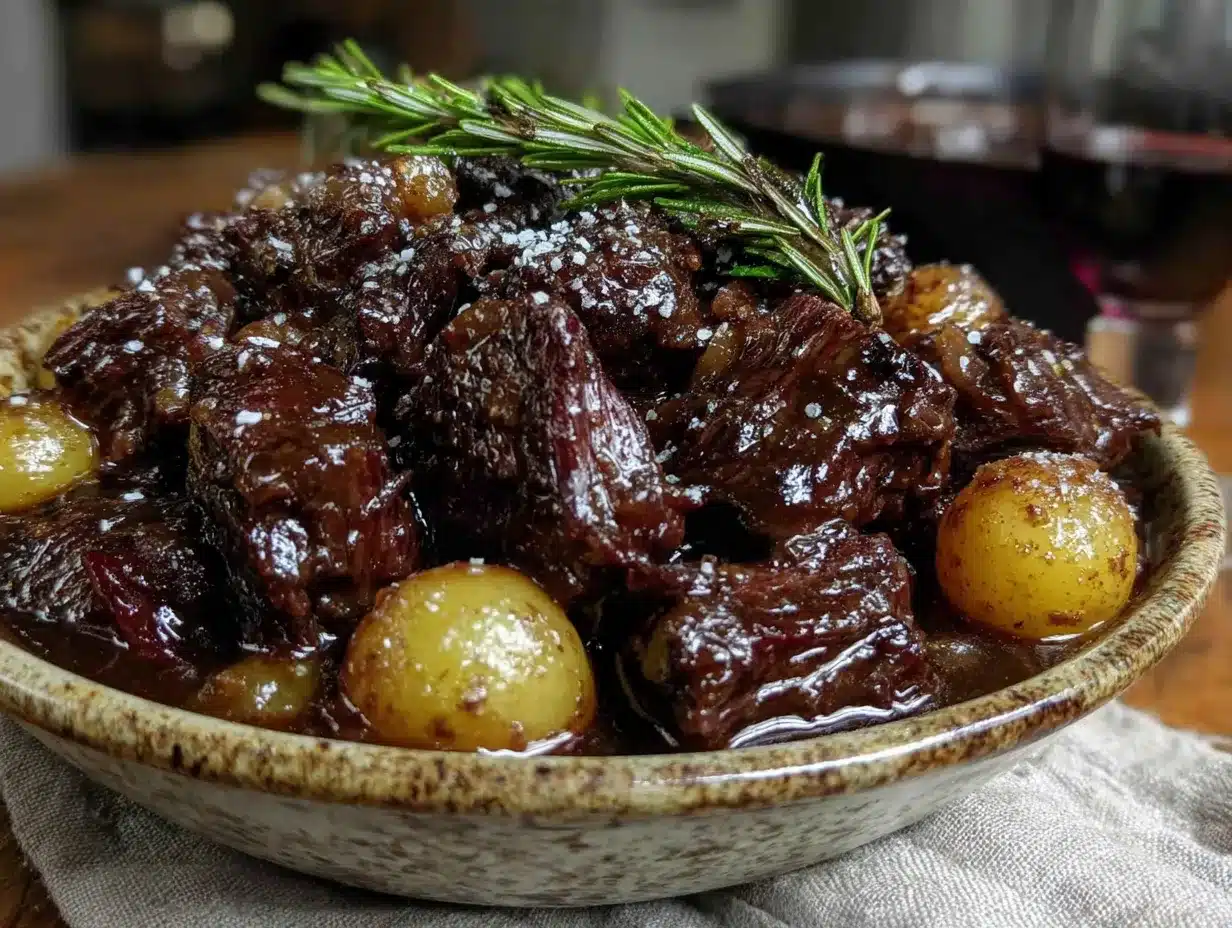
This method looks like a lot of steps, but I promise it’s mostly waiting. The active time is about 20 minutes, and then your slow cooker does the rest.
- Pat the beef chunks dry with paper towels. This is important. Wet meat won’t brown properly, and browning is where the flavor lives. Season generously with salt and pepper on all sides.
- Heat the olive oil in a large skillet over medium-high heat. You want the oil shimmering but not smoking. Working in batches so you don’t crowd the pan, add the beef chunks in a single layer. Let them sit undisturbed for 3 to 4 minutes until a deep brown crust forms. Flip and brown the other sides. Transfer the browned meat to the slow cooker. Don’t worry if some pieces are still raw inside — that’s what the long cooking is for.
- Reduce the heat to medium and add the diced onions to the same skillet. Cook for 3 to 4 minutes, scraping up the browned bits from the bottom of the pan. Those bits, called fond, are concentrated beef flavor. The onions will soften and release some moisture, which helps loosen everything.
- Add the minced garlic and cook for 30 seconds until fragrant. Stir constantly so it doesn’t burn. Burnt garlic turns bitter.
- Pour in about 1/4 cup of the beef broth and stir vigorously, scraping up any remaining browned bits. Pour this entire mixture into the slow cooker over the beef.
- Add the carrots, celery, potatoes, tomato paste, dried thyme, crushed rosemary, bay leaves, Worcestershire sauce, remaining beef broth, and red wine to the slow cooker. Stir everything together gently. The liquid should come about halfway up the ingredients — if it looks low, add a splash more broth or water.
- Cover and cook on low for 7 to 8 hours or on high for 4 to 5 hours. Low and slow gives you the most tender meat. I know it’s tempting to crank it to high, but resist. The connective tissue in the chuck needs time to break down properly.
- About 20 minutes before serving, make the thickening slurry. In a small bowl, whisk the flour with 3 tablespoons of cold water until smooth. Ladle about 1/2 cup of hot broth from the slow cooker into the flour mixture and whisk. Pour this back into the slow cooker and stir gently. This prevents lumps.
- Cover and cook on high for 15 to 20 minutes until the broth thickens slightly. It won’t be super thick like canned stew — it should be rich and glossy, coating the back of a spoon.
- Stir in the frozen peas and let them warm through for about 5 minutes. They don’t need to cook, just thaw. Taste and adjust salt and pepper. Remove the bay leaves before serving.
- Ladle into bowls and garnish with fresh parsley. Serve with crusty bread for sopping up every last drop of that wine-infused broth.
One thing I learned the hard way: don’t lift the lid during cooking. Every time you open that slow cooker, you lose heat and add 20 to 30 minutes of cooking time. Trust the process.
Cooking Tips & Techniques
After making this stew more times than I can count, I’ve collected a few lessons worth sharing. Some came from happy accidents, others from complete failures.
Brown the meat in batches. I know it’s tempting to dump all the beef in the pan at once, but that lowers the pan temperature and steams the meat instead of browning it. You want that deep mahogany crust. Give each piece room to breathe. I usually do three batches for 2 pounds of meat.
Don’t skip the deglazing. That step where you add broth to the hot pan and scrape up the bits? That’s not optional. Those browned bits are concentrated umami that your stew would miss. I once skipped this step because I was in a hurry, and the stew tasted flat no matter how much salt I added.
Cut vegetables uniformly. This sounds fussy, but it matters for even cooking. If your potato chunks are twice the size of your carrot chunks, you’ll end up with mushy carrots and undercooked potatoes. Aim for 1 to 1.5-inch pieces across the board.
Watch the wine ratio. I mentioned that my neighbor inspired me to add more wine, but there is a limit. More than 1.5 cups of wine can make the stew taste harsh and acidic. Stick to 1 cup for the perfect balance of richness without bitterness.
Thicken at the end, not the beginning. If you add flour at the start, it can clump or burn on the sides of the slow cooker. Waiting until the last 20 minutes gives you control over the final texture. If you want it thicker, mix another tablespoon of flour with water and add it.
One of my biggest failures with this recipe happened when I used cheap cooking wine. The stew came out tasting like grape juice mixed with salt. Use something you’d actually drink, even if it’s a $8 bottle from Trader Joe’s. The flavor difference is night and day.
Variations & Adaptations
This stew is forgiving, and I’ve tried several variations over the years. Here are my favorites:
Gluten-Free Version: Skip the flour and use 2 tablespoons cornstarch mixed with 2 tablespoons cold water instead. Add it the same way at the end. Arrowroot powder works too, but cornstarch gives the glossiest finish.
Dairy-Free Adaptation: This recipe is naturally dairy-free as written, so no changes needed. If you’re used to adding butter at the end, try a drizzle of olive oil instead.
Low-Carb Option: Swap the potatoes for 2 cups of chopped turnips or rutabaga. They absorb the broth beautifully without the carbs. Cauliflower works too, but add it in the last hour so it doesn’t turn to mush.
Mushroom Lover’s Version: Add 8 ounces of cremini mushrooms, halved, along with the vegetables. They soak up the wine broth and become little flavor bombs. I tried this on a whim and now I add mushrooms half the time.
Herb Variations: Try adding a sprig of fresh sage or a strip of orange zest along with the thyme and rosemary. The orange zest brightens the wine flavor in a surprising way. Remove it before serving.
Winter Squash Addition: In fall, I sometimes swap half the potatoes for cubed butternut squash. It breaks down slightly and adds natural sweetness that pairs perfectly with the red wine.
Serving & Storage Suggestions
This stew is at its best served piping hot in wide, shallow bowls. The broth should pool around the meat and vegetables, not drown them. I like to serve it with a chunk of crusty sourdough or a warm baguette for dipping. A simple green salad with a lemony vinaigrette on the side cuts through the richness nicely.
For beverages, the same red wine you used in the stew is a natural pairing. A full-bodied Merlot or Zinfandel works beautifully. If you prefer beer, a dark stout or brown ale complements the savory notes without competing.
Storage: Let the stew cool completely before transferring to airtight containers. It keeps in the refrigerator for up to 5 days. The flavors actually deepen overnight, so day-old stew is even better. I often make this on Sunday specifically for Monday’s lunch.
Freezing: This stew freezes like a dream. Portion it into freezer-safe containers, leaving about an inch of headspace for expansion. It keeps for up to 3 months. Thaw overnight in the refrigerator before reheating.
Reheating: Reheat gently on the stovetop over medium-low heat, stirring occasionally. Add a splash of beef broth or water if it’s too thick. You can also microwave individual portions in 1-minute intervals, stirring between each. Avoid boiling, which can make the meat tough.
One note: the potatoes can get a bit grainy after freezing and thawing. If you’re planning to freeze the whole batch, consider adding the potatoes fresh when you reheat instead of cooking them in the stew.
Nutritional Information & Benefits
This stew is wholesome comfort food at its finest. Each serving (about 1.5 cups) contains approximately:
- Calories: 420
- Protein: 35g
- Fat: 14g
- Carbohydrates: 32g
- Fiber: 5g
- Sugar: 8g
- Sodium: 680mg
The beef provides high-quality protein and essential minerals like iron and zinc, which support energy and immune function. Carrots deliver a healthy dose of beta-carotene, while the potatoes offer potassium and vitamin C. The red wine contributes antioxidants called polyphenols, particularly resveratrol, which has been linked to heart health benefits when consumed in moderation.
This recipe is naturally dairy-free and can be made gluten-free with a simple swap. It’s also relatively low in added sugars — the sweetness comes entirely from the vegetables and wine. For a lower-sodium version, use unsalted broth and adjust the salt at the end.
What I love most about this stew from a wellness perspective is how satisfying it is. One bowl keeps me full for hours, which means I’m not reaching for snacks an hour later. That’s the kind of wholesome eating that actually works in real life.
Conclusion
This Wholesome Slow Cooker Beef Stew with Red Wine is proof that you don’t need complicated techniques or fancy ingredients to make something truly memorable. It’s the kind of meal that fills your home with warmth, feeds your people without stress, and leaves everyone asking when you’re making it again. The wine does the heavy lifting, the slow cooker does the work, and you get to take all the credit.
I hope you make this stew your own. Add more vegetables if that’s your thing, dial up the herbs, or experiment with different wine varieties. The beauty of this recipe is that it’s forgiving enough to handle your creativity. Leave a comment below and tell me how it turned out — I genuinely love hearing about your kitchen victories. And if you share a photo on Pinterest, tag me so I can see that beautiful, wine-dark broth in all its glory.
Here’s to slow cooking, second helpings, and the joy of a meal that tastes like love. Happy cooking!
Frequently Asked Questions
Can I use a different cut of beef for this stew?
Yes, but chuck roast is ideal because of its marbling. Bottom round or brisket work too, but they can be leaner and slightly drier. Avoid sirloin or tenderloin — they’re too lean and will become tough during long cooking.
Do I have to brown the meat first?
Technically no, but I strongly recommend it. Browning creates deep, savory flavor through the Maillard reaction that you can’t get any other way. If you’re truly short on time, you can skip it, but the stew won’t be as rich.
Can I make this in an Instant Pot or pressure cooker?
Absolutely. Use the sauté function to brown the meat, then pressure cook on high for 35 minutes with a natural release. Thicken the broth on the sauté setting after cooking. The texture is slightly different — the meat is tender but the vegetables hold their shape more.
What if my stew is too thin at the end?
Make a slurry with 1 tablespoon cornstarch and 1 tablespoon cold water, stir it in, and cook on high for 10 minutes. You can also mash a few of the potato chunks against the side of the slow cooker to release their starch, which naturally thickens the broth.
Can I add other vegetables like parsnips or sweet potatoes?
Definitely. Parsnips, sweet potatoes, and even celery root work beautifully. Just cut them into similar-sized chunks so they cook evenly. Add delicate vegetables like zucchini or bell peppers in the last hour so they don’t turn to mush.
Pin This Recipe!
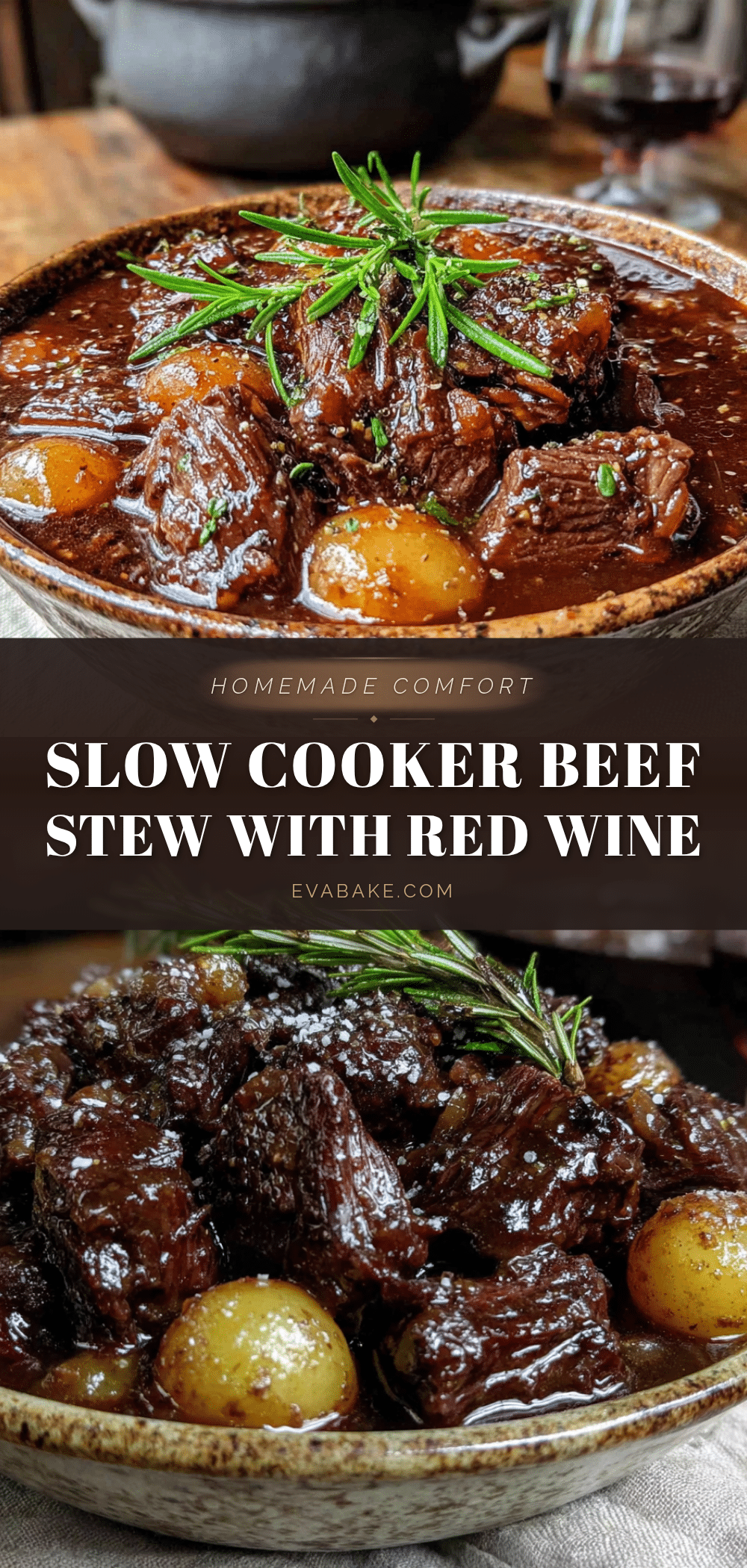
Wholesome Slow Cooker Beef Stew with Red Wine: Easy & Hearty
This Wholesome Slow Cooker Beef Stew with Red Wine is proof that you don’t need complicated techniques or fancy ingredients to make something truly memorable. It’s the kind of meal that fills your home with warmth, feeds your people without stress, and leaves everyone asking when you’re making it again.
- Prep Time: 15 minutes
- Cook Time: 7-8 hours on low or 4-5 hours on high
- Total Time: 7 hours 15 minutes to 8 hours 15 minutes
- Yield: 6 servings
- Category: Main Course
- Cuisine: American
Ingredients
- Beef chuck roast, 2 pounds (cut into 1.5-inch chunks)
- Red wine, 1 cup (a dry red like Merlot, Cabernet Sauvignon, or Côtes du Rhône)
- Beef broth, 2 cups (low-sodium preferred)
- Tomato paste, 3 tablespoons
- Yellow onions, 2 medium (diced)
- Carrots, 4 large (peeled and cut into 1-inch chunks)
- Celery, 3 stalks (cut into 1/2-inch slices)
- Russet potatoes, 1.5 pounds (peeled and cut into 1.5-inch chunks)
- Garlic, 4 cloves (minced)
- Dried thyme, 1 teaspoon
- Dried rosemary, 1/2 teaspoon (crushed between your fingers)
- Bay leaves, 2
- Worcestershire sauce, 1 tablespoon
- All-purpose flour, 3 tablespoons
- Olive oil, 2 tablespoons
- Salt and black pepper (to taste; about 1 teaspoon salt and 1/2 teaspoon pepper)
- Frozen peas, 1 cup
- Fresh parsley, 2 tablespoons (chopped, for garnish)
Instructions
- Pat the beef chunks dry with paper towels. Season generously with salt and pepper on all sides.
- Heat the olive oil in a large skillet over medium-high heat. Working in batches, add the beef chunks in a single layer. Let them sit undisturbed for 3 to 4 minutes until a deep brown crust forms. Flip and brown the other sides. Transfer the browned meat to the slow cooker.
- Reduce the heat to medium and add the diced onions to the same skillet. Cook for 3 to 4 minutes, scraping up the browned bits from the bottom of the pan.
- Add the minced garlic and cook for 30 seconds until fragrant. Stir constantly.
- Pour in about 1/4 cup of the beef broth and stir vigorously, scraping up any remaining browned bits. Pour this entire mixture into the slow cooker over the beef.
- Add the carrots, celery, potatoes, tomato paste, dried thyme, crushed rosemary, bay leaves, Worcestershire sauce, remaining beef broth, and red wine to the slow cooker. Stir everything together gently.
- Cover and cook on low for 7 to 8 hours or on high for 4 to 5 hours.
- About 20 minutes before serving, make the thickening slurry. In a small bowl, whisk the flour with 3 tablespoons of cold water until smooth. Ladle about 1/2 cup of hot broth from the slow cooker into the flour mixture and whisk. Pour this back into the slow cooker and stir gently.
- Cover and cook on high for 15 to 20 minutes until the broth thickens slightly.
- Stir in the frozen peas and let them warm through for about 5 minutes. Taste and adjust salt and pepper. Remove the bay leaves before serving.
- Ladle into bowls and garnish with fresh parsley. Serve with crusty bread.
Notes
Brown the meat in batches to ensure a deep crust. Don’t skip deglazing the pan. Cut vegetables uniformly for even cooking. Thicken at the end, not the beginning. Use a wine you would drink, not cooking wine. The stew tastes even better the next day.
Nutrition
- Serving Size: 1.5 cups
- Calories: 420
- Sugar: 8
- Sodium: 680
- Fat: 14
- Saturated Fat: 4
- Carbohydrates: 32
- Fiber: 5
- Protein: 35
Keywords: slow cooker beef stew, red wine beef stew, hearty beef stew, easy beef stew, wholesome beef stew, comfort food, winter stew