“You’ve got to try this,” my friend whispered over the phone, barely audible over the bustling city noise. I was drained after a marathon workday, staring at an empty fridge and wondering if I’d just settle for a sad sandwich. Instead, her voice sparked a little hope — something about this pasta carbonara with crispy guanciale that was quick, comforting, and surprisingly easy. Honestly, I was skeptical. Carbonara always felt a bit intimidating—raw eggs, delicate timing, and that elusive creamy sauce without cream. But that night, with the clock ticking past midnight and hunger gnawing at me, I gave it a shot.
As I tossed the noodles and crisped the guanciale, that smoky, salty aroma filled the kitchen and cut through the fatigue like magic. The sauce came together silky and rich, perfectly coating every strand of pasta without a hint of clumping or scrambling. I remember sitting down with my plate, fork twirling, and realizing this was exactly the kind of simple, soul-soothing meal that could turn a bad day around. It stuck with me because it’s more than just a recipe—it’s a tiny rescue mission in your own kitchen, no fancy ingredients, no fuss, just honest comfort.
That’s why I’m sharing this creamy classic pasta carbonara with crispy guanciale recipe. It’s not some fancy restaurant dish; it’s the one you crave when you want something satisfying, authentic, and just a little bit indulgent. Plus, you don’t have to be a pro to pull it off—trust me, I’m no chef, just someone who loves good food that makes you feel at home.
Why You’ll Love This Creamy Classic Pasta Carbonara Recipe
This pasta carbonara recipe is a go-to for anyone craving a quick, comforting dish that feels special but doesn’t require hours in the kitchen. I’ve made this recipe countless times (honestly, almost every week at one point), tweaking it just enough to get that perfect balance of creamy sauce and crispy guanciale. Here’s why this one stands out:
- Quick & Easy: Ready in under 30 minutes, making it ideal for busy weeknights or last-minute cravings when you don’t want to sacrifice flavor.
- Simple Ingredients: No rare finds here—just pantry staples and a bit of quality guanciale, which you can often find at specialty stores or substitute with pancetta for a similar effect.
- Perfect for Cozy Dinners: Whether it’s a solo night in or a casual dinner with friends, the creamy texture paired with crispy bits hits the comfort food spot every time.
- Crowd-Pleaser: I’ve brought this over to potlucks and family dinners, and it’s always a hit—even folks who usually stick to safer pasta choices ask for seconds.
- Unbelievably Delicious: The sauce is rich and silky without any cream, thanks to the classic egg and cheese combo, making it feel indulgent but still true to its Italian roots.
What sets this recipe apart? It’s the crispy guanciale that adds an irresistible crunch and depth of flavor, plus a straightforward method that avoids the dreaded scrambled egg mishap. The pasta cooks just right, not mushy or dry, and the seasoning is spot-on—no need for heavy-handed salt because the guanciale and Pecorino Romano do the work. Honestly, it’s the kind of dish that makes you close your eyes after the first bite, savoring each mouthful with a quiet smile.
What Ingredients You Will Need
This recipe uses simple, wholesome ingredients to deliver bold flavor and satisfying texture without the fuss. Most are pantry staples or easy to find at your local market, and the guanciale is the star that brings authentic Italian flair. Here’s the breakdown:
- Spaghetti: 12 ounces (340 grams) of good-quality dried spaghetti works best. I prefer De Cecco for its firm texture that holds up well.
- Guanciale: 4 ounces (115 grams), diced. This cured pork cheek delivers the perfect salty, fatty crunch. If you can’t find guanciale, pancetta is a decent substitute, but the flavor won’t be quite the same.
- Eggs: 3 large, room temperature. The yolks are key for that creamy sauce; you can use 2 whole eggs plus 1 yolk if you want it extra rich.
- Pecorino Romano Cheese: 1 cup (about 100 grams), finely grated. This sharp, salty sheep’s milk cheese balances the richness beautifully.
- Freshly Ground Black Pepper: 1 to 2 teaspoons, to taste. Don’t skimp here—black pepper is essential to the authentic flavor profile.
- Salt: Just a pinch for the pasta water, since the guanciale and cheese are already salty.
- Optional: A small clove of garlic, lightly crushed and removed before serving (adds subtle aroma without overpowering).
For a gluten-free twist, you can swap spaghetti for a gluten-free pasta of similar thickness. If dairy is a concern, nutritional yeast can replace some Pecorino but expect a flavor shift. I once experimented with almond flour pasta, which was interesting but not quite the same indulgence. Fresh eggs and quality cheese really make the difference here.
Equipment Needed
- Large Pot: For boiling the pasta. A heavy-bottomed pot helps keep water at a steady boil.
- Large Skillet or Frying Pan: To crisp the guanciale and toss the pasta with sauce. A non-stick pan makes cleanup easier but a well-seasoned cast iron works beautifully too.
- Mixing Bowl: For whisking eggs and cheese together.
- Tongs or Pasta Fork: Helpful for transferring and mixing pasta without breaking it.
- Fine Grater: For shredding Pecorino Romano. A microplane grater gives the best texture.
- Colander: To drain pasta, reserving some cooking water.
If you don’t have a microplane, a box grater works fine, though the cheese won’t be as fine. I once used a small whisk to mix the egg and cheese — it helped break up the cheese clumps for a smoother sauce. For a budget-friendly alternative, just make sure your skillet is big enough to toss the pasta comfortably without spilling.
Preparation Method
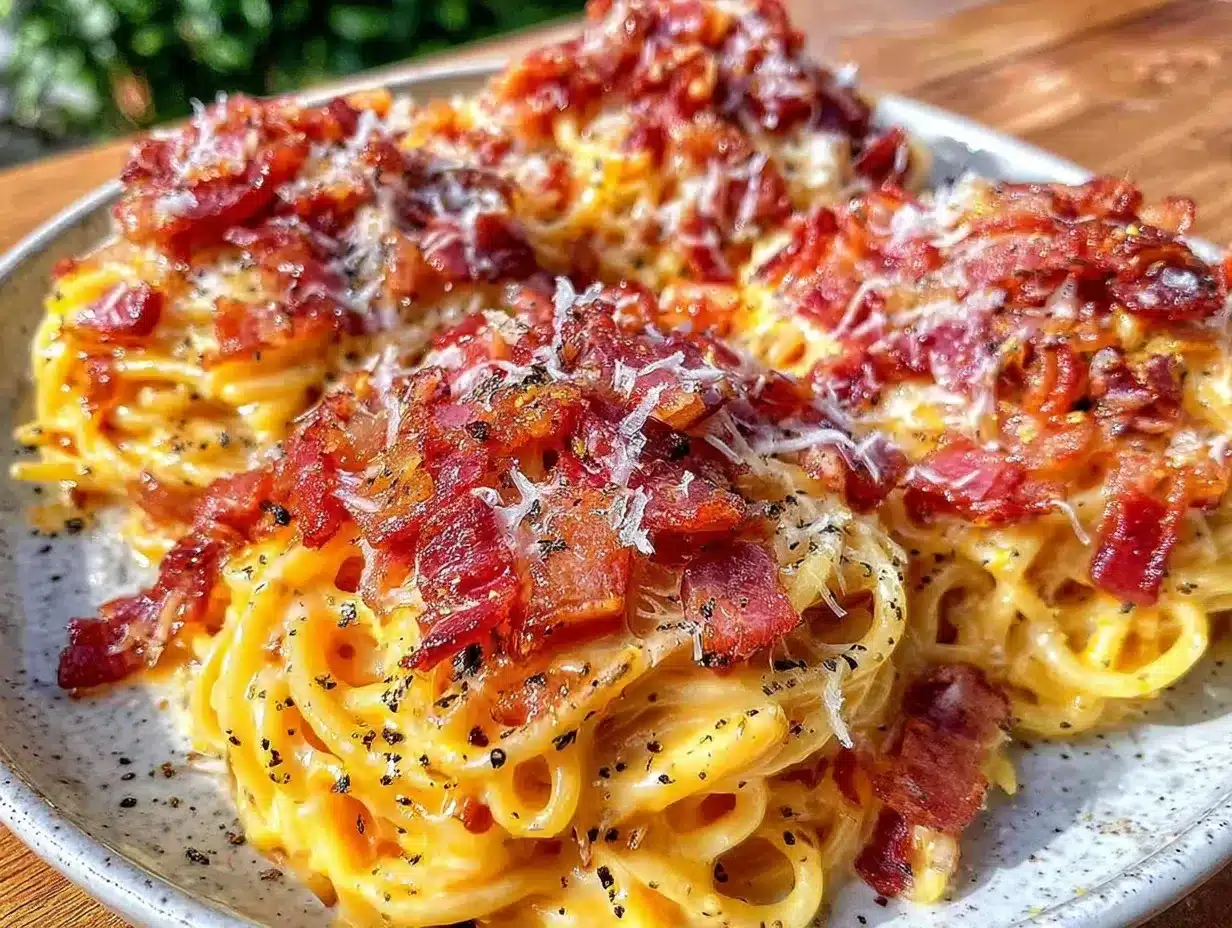
- Prep the Ingredients: Dice the guanciale into small cubes, grate the Pecorino Romano cheese finely, and whisk the eggs in a bowl with the cheese and a generous amount of freshly ground black pepper until smooth. Set aside. (About 5 minutes)
- Cook the Pasta: Bring a large pot of salted water to a boil. Add 12 ounces (340 grams) of spaghetti and cook according to package instructions until al dente (usually 8-10 minutes). Reserve 1 cup (240 ml) of pasta cooking water before draining. (8-10 minutes)
- Crisp the Guanciale: While pasta cooks, heat a large skillet over medium heat. Add the diced guanciale and cook until golden brown and crispy, about 5-7 minutes. The fat will render out, which you’ll use to flavor the pasta. If using garlic, add it in the last 2 minutes and then remove before tossing the pasta. (5-7 minutes)
- Combine Pasta and Guanciale: Add the drained spaghetti directly into the skillet with the guanciale and its rendered fat. Toss well over low heat to coat the pasta evenly. Remove from heat to avoid scrambling the eggs. (2 minutes)
- Add Egg and Cheese Mixture: Pour the egg and cheese mixture over the pasta, quickly tossing or stirring vigorously to create a creamy sauce. Use reserved pasta water a little at a time to loosen the sauce if needed. The sauce should cling smoothly to the noodles, not look curdled or dry. (2-3 minutes)
- Final Seasoning: Taste and add more black pepper if desired. Avoid adding extra salt unless really needed because the guanciale and cheese provide plenty. (1 minute)
- Serve Immediately: Plate the carbonara and sprinkle extra Pecorino Romano and black pepper on top if you like. Best enjoyed hot and fresh! (Serve right away)
Pro tip: Timing is everything here. The key is to combine the pasta and egg mixture off the heat or on very low to avoid scrambled eggs. I remember the first time I made carbonara, I got impatient and tossed it on high heat—hello, scrambled mess! Now I always remind myself: slow and steady wins the creamy sauce.
Cooking Tips & Techniques for Perfect Carbonara
Making classic pasta carbonara may sound fancy, but a few simple tricks can help you nail it every time:
- Use Room Temperature Eggs: Cold eggs can seize up when mixed with hot pasta, causing lumps. Let your eggs sit out for 10-15 minutes before cooking.
- Reserve Pasta Water: This starchy liquid is your secret weapon for adjusting sauce consistency. Add it gradually until you reach a silky texture.
- Avoid High Heat When Adding Eggs: The residual heat from the pasta and pan is enough to cook the eggs gently. High heat risks scrambling.
- Don’t Overcook Pasta: Al dente is key; mushy pasta won’t hold the sauce well and will feel heavy.
- Be Generous with Black Pepper: It’s classic and adds a spicy kick that balances the richness perfectly.
- Cook Guanciale Slowly: Rendering the fat slowly helps achieve crispiness without burning.
From my experience, one common mistake is rushing the sauce step. I once tried mixing the eggs with hot pasta straight out of the boiling water, and it scrambled instantly. Patience is key. Also, prepping all ingredients before cooking makes the process smoother and less stressful.
Variations & Adaptations to Try
This creamy classic pasta carbonara is wonderfully adaptable depending on your mood or dietary needs. Here are a few variations I’ve enjoyed and recommend:
- Vegetarian Version: Skip the guanciale and add sautéed mushrooms or smoked tofu for that umami punch. Use smoked paprika for a subtle smoky flavor.
- Low-Carb Adaptation: Swap spaghetti for zucchini noodles or shirataki noodles. Toss them quickly in the guanciale fat, then proceed with the egg and cheese sauce.
- Seasonal Twist: In spring, add fresh peas or asparagus tips for a bright pop of freshness. They pair beautifully with the creamy sauce.
- Cheese Swap: Try mixing Pecorino Romano with Parmigiano-Reggiano for a milder, nutty flavor.
- Spicy Kick: Add a pinch of red pepper flakes when cooking the guanciale for a subtle heat boost.
Once, I made a version with smoked salmon instead of guanciale for a brunch twist that was surprisingly good—just add it at the end to warm through gently. For a richer feel, stirring in a splash of cream changes the texture but moves away from the classic style. Adapt as you like, but the crispy guanciale is truly the heart of traditional carbonara.
Serving & Storage Suggestions
Carbonara tastes best fresh and hot—the creamy sauce can thicken quickly as it cools, so serve immediately after mixing. I like plating it with an extra sprinkle of Pecorino and more black pepper on top for that final touch. A simple green salad or lightly dressed arugula balances the richness nicely.
If you have leftovers (which can happen, but rarely!), store them in an airtight container in the refrigerator for up to 2 days. Reheat gently in a skillet with a splash of water or broth to loosen the sauce—microwaving can make it dry or unevenly cooked.
Flavors actually deepen a bit after resting overnight, so some folks prefer the taste the next day, but the texture is definitely best fresh. This recipe pairs well with crisp white wines or sparkling water with lemon for a refreshing contrast.
For a complete meal, consider serving alongside a cozy soup like the creamy loaded baked potato soup or a vibrant salad to lighten things up.
Nutritional Information & Benefits
This pasta carbonara offers a hearty balance of protein, fat, and carbohydrates, making it a satisfying meal that’ll keep you fueled. Per serving (based on 4 servings):
| Calories | 550-600 kcal |
|---|---|
| Protein | 25g |
| Fat | 30g (mostly from guanciale and egg yolks) |
| Carbohydrates | 50g |
| Fiber | 2g |
Guanciale provides flavorful fats and protein, while eggs add essential nutrients like vitamins B12 and D. Pecorino Romano contributes calcium and a sharp taste without excess sodium when used moderately. For those avoiding gluten, switching to a gluten-free pasta keeps this dish accessible. Note that this recipe contains eggs and dairy, common allergens to keep in mind.
From a wellness perspective, this dish offers a comforting balance of macronutrients that can fit into a balanced diet when enjoyed in moderation. The high-quality fats and protein help keep you satisfied longer, making it a great choice for a meal that doesn’t leave you hungry an hour later.
Conclusion
If you’re looking for a creamy classic pasta carbonara with crispy guanciale that’s straightforward and genuinely delicious, this recipe is a winner. It’s the kind of dish that feels like a hug on a plate—rich, satisfying, and just a bit indulgent without being complicated. I love how it brings together a handful of simple ingredients into something that feels special yet perfectly doable any night of the week.
Feel free to tweak the pepper level, try different cheeses, or add veggies to make it your own. Just remember, the magic lies in the crispy guanciale and that silky egg-cheese sauce. If you’ve enjoyed creamy pasta dishes, you might appreciate the comforting flavors in my creamy sun-dried tomato chicken pasta or the indulgent notes in the creamy one-pot Cajun chicken Alfredo pasta.
Give this recipe a go and let me know how your kitchen rescue turns out. I’m always curious about your favorite tweaks and how you make it yours!
Frequently Asked Questions about Pasta Carbonara
What is the difference between guanciale and pancetta?
Guanciale is cured pork cheek, richer and fattier with a unique depth of flavor, while pancetta comes from pork belly and is milder. Guanciale crisps up beautifully, making it traditional for carbonara, but pancetta is a good substitute if guanciale isn’t available.
Can I use cream in carbonara?
Traditional carbonara doesn’t use cream—the creamy texture comes from eggs and cheese. Adding cream changes the flavor and texture, making it more like an Alfredo sauce. For an authentic experience, stick to eggs and Pecorino Romano.
How do I prevent scrambled eggs when making carbonara?
The key is to add the egg mixture off the direct heat, using the residual heat of the pasta and pan to gently cook the eggs. Toss quickly and add reserved pasta water to loosen the sauce, avoiding high heat that cooks eggs too fast.
Is it okay to prepare carbonara ahead of time?
Carbonara is best enjoyed immediately after making. The sauce thickens and can become clumpy if stored. If you need to save leftovers, reheat gently with a splash of water, but fresh is definitely best.
What pasta shape works best for carbonara?
Spaghetti is classic and ideal for coating with the sauce, but other long pastas like fettuccine or bucatini also work well. Avoid short pasta shapes that don’t hold the sauce as nicely.
Pin This Recipe!
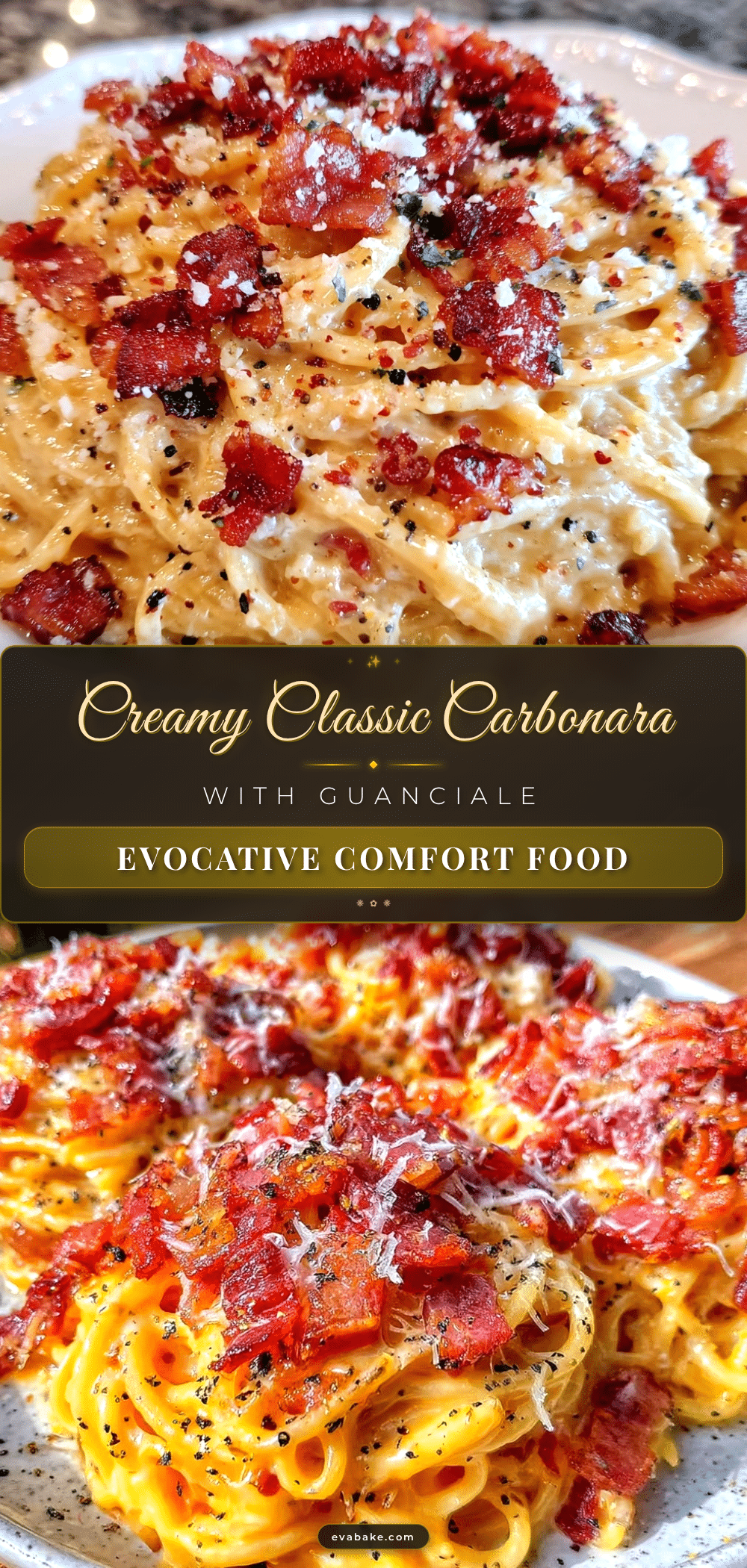
Creamy Classic Pasta Carbonara Recipe with Crispy Guanciale
A quick and comforting pasta carbonara recipe featuring crispy guanciale and a creamy egg-cheese sauce without cream. Perfect for cozy dinners and easy enough for any home cook.
- Prep Time: 10 minutes
- Cook Time: 15 minutes
- Total Time: 25 minutes
- Yield: 4 servings 1x
- Category: Main Course
- Cuisine: Italian
Ingredients
- 12 ounces (340 grams) dried spaghetti
- 4 ounces (115 grams) guanciale, diced
- 3 large eggs, room temperature (or 2 whole eggs plus 1 yolk for extra richness)
- 1 cup (about 100 grams) Pecorino Romano cheese, finely grated
- 1 to 2 teaspoons freshly ground black pepper, to taste
- Pinch of salt for pasta water
- Optional: 1 small clove garlic, lightly crushed and removed before serving
Instructions
- Dice the guanciale into small cubes, grate the Pecorino Romano cheese finely, and whisk the eggs in a bowl with the cheese and a generous amount of freshly ground black pepper until smooth. Set aside.
- Bring a large pot of salted water to a boil. Add spaghetti and cook according to package instructions until al dente (8-10 minutes). Reserve 1 cup (240 ml) of pasta cooking water before draining.
- While pasta cooks, heat a large skillet over medium heat. Add diced guanciale and cook until golden brown and crispy, about 5-7 minutes. If using garlic, add it in the last 2 minutes and then remove before tossing the pasta.
- Add the drained spaghetti directly into the skillet with the guanciale and its rendered fat. Toss well over low heat to coat the pasta evenly. Remove from heat to avoid scrambling the eggs.
- Pour the egg and cheese mixture over the pasta, quickly tossing or stirring vigorously to create a creamy sauce. Use reserved pasta water a little at a time to loosen the sauce if needed. The sauce should cling smoothly to the noodles.
- Taste and add more black pepper if desired. Avoid adding extra salt unless really needed because the guanciale and cheese provide plenty.
- Serve immediately, plating the carbonara and sprinkling extra Pecorino Romano and black pepper on top if desired.
Notes
Use room temperature eggs to avoid lumps. Reserve pasta water to adjust sauce consistency. Add egg mixture off the heat to prevent scrambling. Serve immediately for best texture. Leftovers can be stored up to 2 days and reheated gently with a splash of water or broth.
Nutrition
- Serving Size: 1 serving (about 1/4
- Calories: 575
- Sugar: 2
- Sodium: 700
- Fat: 30
- Saturated Fat: 10
- Carbohydrates: 50
- Fiber: 2
- Protein: 25
Keywords: pasta carbonara, creamy carbonara, guanciale, classic Italian pasta, easy carbonara recipe, crispy guanciale, authentic carbonara