“You sure that rhubarb belongs in a sweet pie?” my friend half-joked while eyeing the pink stalks I’d just pulled from the farmer’s market bag. Honestly, I wasn’t convinced at first either. Rhubarb always felt like that oddball ingredient—tart, a little fierce, and usually saved for jams or sauces. But then I baked this classic rhubarb custard pie with buttery lattice crust for a casual weekend dinner, and the whole table suddenly went quiet. Like, the kind of quiet where everyone’s too busy savoring to say a word. It was a sort of delicious surprise that crept in slowly, starting with the first buttery bite of lattice pastry and finishing with that smooth, custard filling balancing the rhubarb’s tang.
What stuck with me was how this pie quietly steals the show during those easy, no-fuss moments. I wasn’t aiming for perfection that day—just something to use those rhubarb stalks before they went limp. The lattice crust, flaky and golden, came together while the custard set gently in the oven. It was simple, comforting, and honestly, kind of addictive. Since then, I’ve found myself making this pie a few times a month, especially when spring rolls around and rhubarb is everywhere.
There’s something intimate about the process—rolling the dough out just right, weaving the lattice, and smelling that sweet-tart aroma fill the kitchen—that feels like a cozy ritual. It’s not flashy, but it’s a recipe that quietly earns its place on the dessert table, whether it’s a casual family meal or a spontaneous gathering of friends. And I promise, even if you’re a bit skeptical about rhubarb’s place in a pie, this recipe just might change your mind in the most delicious way.
Why You’ll Love This Recipe
This classic rhubarb custard pie with buttery lattice crust isn’t just another dessert idea tossed around. I’ve baked it countless times—tweaking, testing, and tasting—to get that balance just right. The result? A pie that feels both timeless and surprisingly fresh every single time.
- Quick & Easy: From start to finish, you can have this pie ready in about 1 hour and 15 minutes, making it perfect for when you want something homemade but don’t have hours to spare.
- Simple Ingredients: No need for obscure pantry items. Most of these ingredients are staples—flour, butter, eggs, rhubarb—nothing fancy or intimidating.
- Perfect for Spring & Summer: Fresh rhubarb is seasonal, so this pie is a spring ritual for me, ideal for potlucks or casual brunches that call for a little sweet tang.
- Crowd-Pleaser: Whether you’re serving family or friends, this pie gets rave reviews—especially from those who don’t usually dig custard pies.
- Unbelievably Delicious: The magic is in the custard’s silky texture paired with rhubarb’s tartness and that flaky, rich lattice crust that just melts in your mouth.
This recipe isn’t just a basic custard pie with rhubarb tossed in. The buttery lattice crust is made with a touch of vinegar (trust me on this) that keeps it tender and flaky, while the custard is perfectly balanced—not too sweet, allowing rhubarb’s sharpness to shine. Plus, weaving the lattice is surprisingly satisfying, adding a rustic charm that makes this pie as pretty as it is tasty. I keep coming back to this recipe because it feels like a reliable friend—comforting, flavorful, and always ready when I need it.
What Ingredients You Will Need
This recipe uses straightforward ingredients that come together to create a comforting yet sophisticated dessert. You probably have most of these in your kitchen already, which makes baking this pie less of a chore and more of a treat.
- For the crust:
- All-purpose flour – 2 ½ cups (320g), for that classic flaky texture
- Unsalted butter – 1 cup (227g), cold and cubed (I love using Plugrá for its rich flavor)
- Granulated sugar – 1 tablespoon (optional, adds a hint of sweetness)
- Salt – ½ teaspoon
- Ice water – 6 to 8 tablespoons (chilled, to bring the dough together)
- Apple cider vinegar – 1 teaspoon (this little secret keeps the crust tender and flaky)
- For the filling:
- Fresh rhubarb – 4 cups chopped (about 1-inch pieces; if fresh isn’t available, frozen can work but drain well)
- Granulated sugar – ¾ cup (150g), to counterbalance rhubarb’s tartness
- Large eggs – 3, room temperature (for smooth custard)
- Whole milk – 1 cup (240ml), for creaminess (you can swap with half-and-half for richer custard)
- Vanilla extract – 1 teaspoon (adds warmth)
- All-purpose flour – 2 tablespoons (16g), to help thicken the custard slightly
- Salt – ¼ teaspoon
When picking rhubarb, look for firm, crisp stalks with a vibrant color. Smaller stalks tend to be more tender, which is perfect for pie. If you want a gluten-free crust, feel free to swap all-purpose flour with a 1-to-1 gluten-free baking blend. For a dairy-free custard, coconut milk or almond milk can be substituted, but the texture will be a bit lighter.
Equipment Needed
- 9-inch (23 cm) pie dish – classic ceramic or glass works great
- Mixing bowls – at least two, for crust and filling preparation
- Pastry cutter or food processor – for cutting butter into flour (if you don’t have one, two knives or your fingers will do)
- Rolling pin – essential for rolling out the dough evenly
- Whisk – for beating eggs and mixing custard
- Measuring cups and spoons – accurate measurements make all the difference
- Baking sheet – to place under the pie and catch any drips
- Cooling rack – to let your pie rest after baking
If you don’t own a pastry cutter, a food processor can speed up dough preparation, but don’t over-process or the crust will get tough. Rolling pins vary—mine is a vintage wooden one that’s just the right weight. For budget-friendly options, silicone rolling pins work well and are easy to clean. Keeping your butter and water cold is key, so having a bowl of ice water nearby helps if you don’t want to keep running to the fridge.
Preparation Method
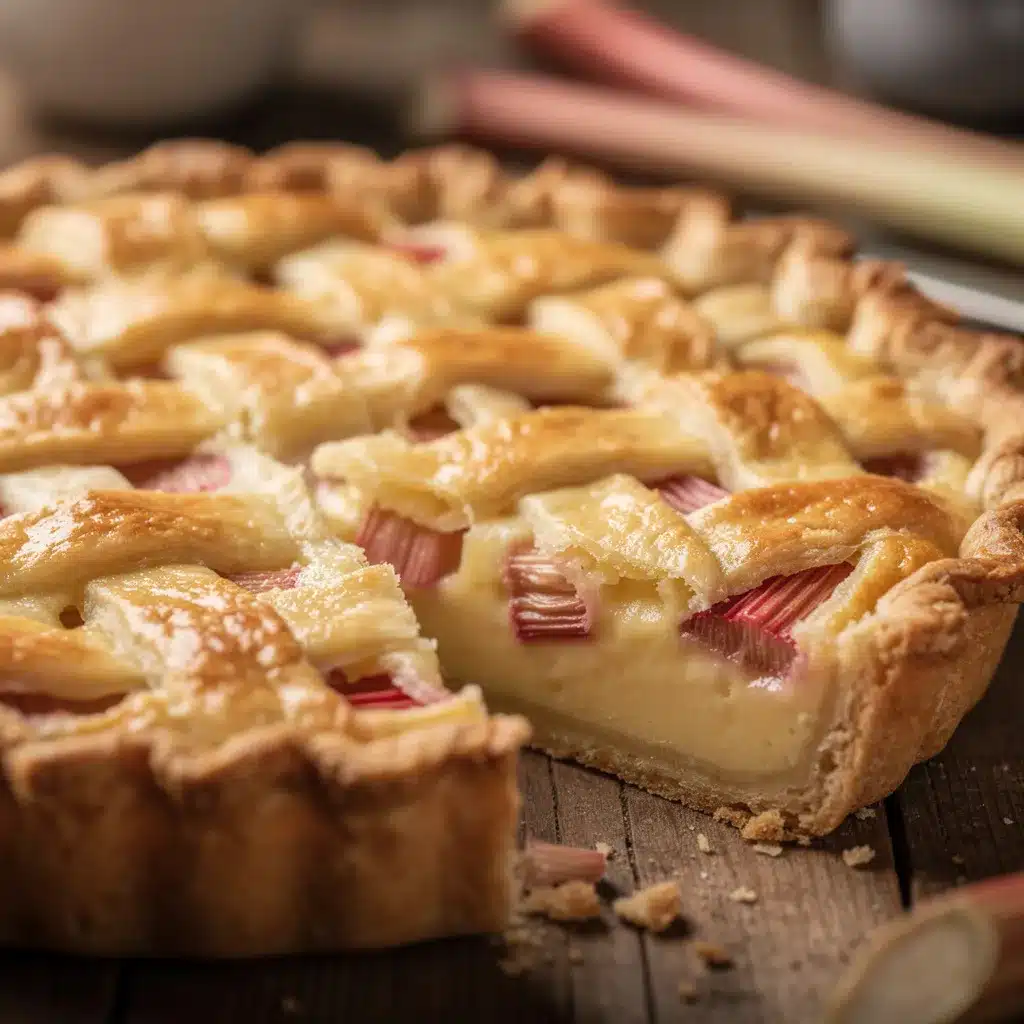
- Prepare the crust dough: In a large bowl, combine 2 ½ cups (320g) all-purpose flour, 1 tablespoon sugar, and ½ teaspoon salt. Add 1 cup (227g) cold, cubed unsalted butter. Use a pastry cutter or your fingers to cut the butter into the flour until the mixture resembles coarse crumbs with some pea-sized butter pieces remaining. This uneven texture helps create flakiness.
- Add ice water and vinegar: Drizzle 6 tablespoons of ice water and 1 teaspoon apple cider vinegar over the flour mixture. Gently mix with a fork, adding up to 2 more tablespoons water if needed, until the dough just starts to come together. Avoid overmixing. Divide the dough into two discs, wrap with plastic, and chill for at least 30 minutes.
- Prepare the filling: While dough chills, chop 4 cups rhubarb into 1-inch pieces. In a bowl, whisk together ¾ cup sugar, 3 large eggs, 1 cup whole milk, 2 tablespoons flour, 1 teaspoon vanilla extract, and ¼ teaspoon salt until smooth. Fold in rhubarb pieces and set aside.
- Roll out the bottom crust: On a lightly floured surface, roll one dough disc into a 12-inch circle. Transfer to a 9-inch pie dish, gently pressing it into the edges. Trim excess dough leaving about a ½-inch overhang.
- Pour filling: Pour the rhubarb custard mixture into the crust, spreading evenly.
- Create the lattice top: Roll out the second dough disc to about 12 inches. Cut into ½-inch wide strips. Lay half the strips parallel across the pie, spaced about ½ inch apart. Fold back every other strip and lay one strip perpendicular, then unfold the folded strips over it. Continue weaving until lattice is complete. Trim and crimp edges with the bottom crust.
- Bake: Preheat oven to 375°F (190°C). Place pie on a baking sheet and bake for 50-60 minutes or until crust is golden and custard is set (slight jiggle in center is okay). If crust edges brown too quickly, tent with foil.
- Cool: Let the pie cool on a rack for at least 2 hours before slicing. This allows the custard to fully set and flavors to meld.
Watch the custard carefully towards the end of baking. Sometimes the rhubarb can release extra moisture, so the pie might need a few extra minutes. If you’re new to lattice crusts, it’s okay if it’s not perfect—rustic charm is part of this pie’s personality. I’ve learned that chilling the dough well makes the rolling and weaving much easier, so don’t skip that step.
Cooking Tips & Techniques
Mastering the balance of tart rhubarb and sweet custard is key, and there are a few tricks I’ve picked up along the way to keep this pie reliably delicious.
- Keep ingredients cold: Especially the butter and water in the crust. Warm butter melts too soon and ruins flakiness.
- Don’t overmix the dough: Handling it gently keeps that tender, crumbly texture instead of tough crust.
- Use fresh rhubarb when possible: It offers the best flavor and texture. If frozen, thaw and drain well to avoid watery filling.
- Weave your lattice loosely: The custard will bubble up a bit during baking, so leaving small gaps prevents overflow and soggy crust.
- Watch crust edges: They brown faster than the center. Use foil or a pie shield halfway through baking to prevent burning.
- Let the pie cool completely: Cutting into it too soon means a runny custard, no matter how perfect the bake otherwise.
One time, I didn’t chill the dough long enough and ended up with a crust that shrank during baking—lesson learned! Also, whisking the eggs and milk thoroughly before adding rhubarb helps prevent lumps and gives a silky custard. Multitasking is your friend here—start the dough chilling while prepping filling, and your kitchen rhythm will flow much easier.
Variations & Adaptations
This classic rhubarb custard pie is a great canvas for creativity. Here are a few ways I’ve personalized it or adapted it for different needs:
- Berry Rhubarb Twist: Add 1 cup fresh strawberries or raspberries to the filling for a sweeter, more colorful pie perfect for summer gatherings.
- Gluten-Free Crust: Swap the all-purpose flour with a 1:1 gluten-free baking blend. I recommend brands like Bob’s Red Mill for reliable results.
- Dairy-Free Version: Use coconut milk or almond milk instead of whole milk and a vegan butter substitute for the crust. The custard will be lighter but still tasty.
- Spiced Custard: Add a pinch of ground cinnamon or cardamom to the custard mix for a warm, aromatic twist that changes the pie’s character subtly but deliciously.
- Less Sweet Option: Reduce sugar in the filling to ½ cup if you prefer a tarter pie, especially if your rhubarb is on the sweeter side.
One variation I often make is adding a sprinkle of finely chopped toasted almonds on top of the lattice before baking—it adds a lovely crunch and nutty depth. If you want to check out other comforting homemade classics, I sometimes pair this with Nonna’s Sunday Bolognese Sauce for a cozy meal that feels like a hug.
Serving & Storage Suggestions
This pie is best served at room temperature or slightly chilled. The custard sets beautifully after cooling, making clean slices possible.
- For a simple presentation, dust the lattice with powdered sugar just before serving.
- If you want a little extra indulgence, a dollop of freshly whipped cream or a scoop of vanilla ice cream pairs wonderfully with the tart rhubarb.
- Leftovers keep well in the refrigerator, covered tightly, for up to 3 days. The flavors deepen over time, making it even better the next day.
- To reheat, warm slices gently in a 300°F (150°C) oven for about 10 minutes—microwaves can make the crust soggy.
I’ve found that this pie holds up nicely for potlucks or family gatherings because it travels well and tastes great even after sitting out for a bit. It’s a bit like the potato cheese pierogi I adore—simple, comforting, and better than expected.
Nutritional Information & Benefits
Per slice (based on 8 servings), this classic rhubarb custard pie provides approximately:
| Calories | 320 |
|---|---|
| Fat | 18g |
| Carbohydrates | 36g |
| Protein | 5g |
| Fiber | 2g |
| Sugar | 20g |
Rhubarb is a great source of vitamin K and fiber, with antioxidants that support overall health. The eggs and milk contribute protein and calcium, making this pie a bit more than just a sweet treat. While it’s not low-carb or sugar-free, you can adjust the sugar content or try almond flour crusts for special diets. Keep in mind this pie contains gluten, dairy, and eggs, so consider substitutions if needed for allergies.
Conclusion
This classic rhubarb custard pie with a buttery lattice crust feels like a little spring celebration in every slice. It’s a recipe I keep returning to because it’s both approachable and deeply satisfying. Whether you’re new to rhubarb or a longtime fan, this pie offers a delightful balance of tart and creamy that’s hard to resist.
Feel free to make it your own by tweaking the sweetness or adding seasonal fruits, but don’t skip the lattice crust—it’s part of what makes this recipe stand out. I love how this pie brings a bit of old-fashioned charm to any table without fuss or fancy ingredients.
If you try this recipe, I’d love to hear how it turns out or any personal twists you add. Baking is always better when shared, don’t you think? So go on, give this pie a shot and enjoy the little moments of buttery, custardy bliss it brings.
Frequently Asked Questions
Can I make the pie crust ahead of time?
Yes! You can prepare the dough up to 2 days in advance and keep it tightly wrapped in the refrigerator. Just bring it to room temperature before rolling out.
What if I don’t have fresh rhubarb?
Frozen rhubarb can be used but make sure to thaw and drain excess liquid to prevent a soggy pie.
How do I know when the custard is fully cooked?
The custard should be mostly set with a slight jiggle in the center when you gently shake the pie. It will firm up as it cools.
Can I freeze this pie?
Yes, you can freeze the baked pie wrapped tightly in plastic and foil for up to 2 months. Thaw overnight in the fridge before serving.
What’s the best way to reheat leftover pie?
Warm slices in a 300°F (150°C) oven for about 10 minutes to keep the crust crisp. Avoid microwaving if you want to maintain texture.
Pin This Recipe!
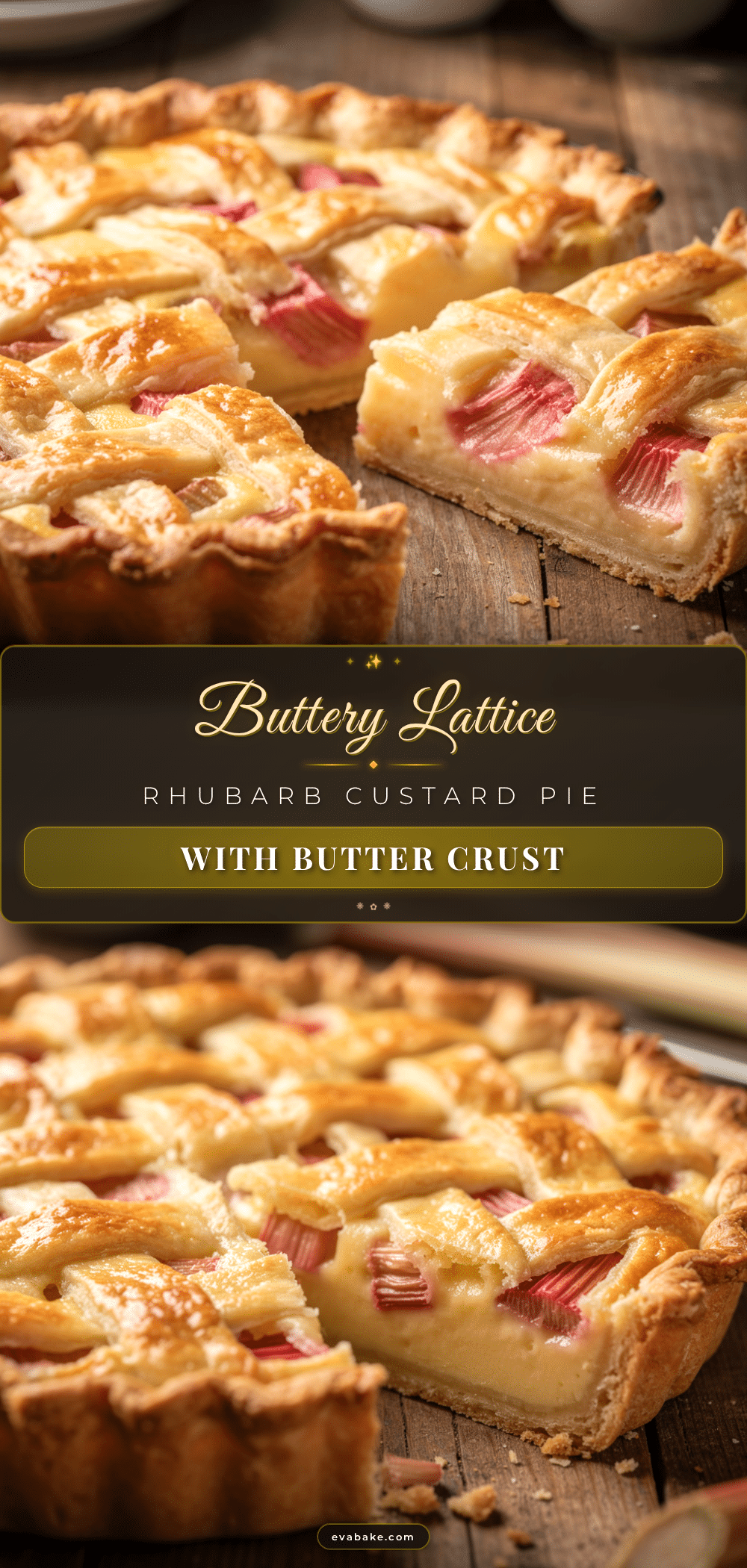
Classic Rhubarb Custard Pie Recipe Easy Homemade Buttery Lattice Crust

A classic rhubarb custard pie featuring a flaky buttery lattice crust that balances tart rhubarb with smooth custard, perfect for spring and summer gatherings.
- Prep Time: 15 minutes
- Cook Time: 55 minutes
- Total Time: 1 hour 10 minutes
- Yield: 8 servings 1x
- Category: Dessert
- Cuisine: American
Ingredients
- 2 ½ cups (320g) all-purpose flour
- 1 cup (227g) unsalted butter, cold and cubed
- 1 tablespoon granulated sugar (optional)
- ½ teaspoon salt
- 6 to 8 tablespoons ice water, chilled
- 1 teaspoon apple cider vinegar
- 4 cups fresh rhubarb, chopped into 1-inch pieces
- ¾ cup (150g) granulated sugar
- 3 large eggs, room temperature
- 1 cup (240ml) whole milk
- 1 teaspoon vanilla extract
- 2 tablespoons (16g) all-purpose flour
- ¼ teaspoon salt
Instructions
- In a large bowl, combine 2 ½ cups (320g) all-purpose flour, 1 tablespoon sugar, and ½ teaspoon salt. Add 1 cup (227g) cold, cubed unsalted butter. Use a pastry cutter or your fingers to cut the butter into the flour until the mixture resembles coarse crumbs with some pea-sized butter pieces remaining.
- Drizzle 6 tablespoons of ice water and 1 teaspoon apple cider vinegar over the flour mixture. Gently mix with a fork, adding up to 2 more tablespoons water if needed, until the dough just starts to come together. Avoid overmixing. Divide the dough into two discs, wrap with plastic, and chill for at least 30 minutes.
- While dough chills, chop 4 cups rhubarb into 1-inch pieces. In a bowl, whisk together ¾ cup sugar, 3 large eggs, 1 cup whole milk, 2 tablespoons flour, 1 teaspoon vanilla extract, and ¼ teaspoon salt until smooth. Fold in rhubarb pieces and set aside.
- On a lightly floured surface, roll one dough disc into a 12-inch circle. Transfer to a 9-inch pie dish, gently pressing it into the edges. Trim excess dough leaving about a ½-inch overhang.
- Pour the rhubarb custard mixture into the crust, spreading evenly.
- Roll out the second dough disc to about 12 inches. Cut into ½-inch wide strips. Lay half the strips parallel across the pie, spaced about ½ inch apart. Fold back every other strip and lay one strip perpendicular, then unfold the folded strips over it. Continue weaving until lattice is complete. Trim and crimp edges with the bottom crust.
- Preheat oven to 375°F (190°C). Place pie on a baking sheet and bake for 50-60 minutes or until crust is golden and custard is set (slight jiggle in center is okay). If crust edges brown too quickly, tent with foil.
- Let the pie cool on a rack for at least 2 hours before slicing to allow the custard to fully set and flavors to meld.
Notes
Keep butter and water cold to ensure a flaky crust. Chill dough for at least 30 minutes before rolling. Watch crust edges during baking and tent with foil if browning too fast. Let pie cool completely before slicing for best custard set. Use fresh rhubarb if possible; if using frozen, thaw and drain well. Lattice weaving can be rustic; perfection is not required.
Nutrition
- Serving Size: 1 slice (1/8 of pie)
- Calories: 320
- Sugar: 20
- Fat: 18
- Carbohydrates: 36
- Fiber: 2
- Protein: 5
Keywords: rhubarb pie, custard pie, lattice crust, spring dessert, homemade pie, buttery crust, easy pie recipe