“You ever have one of those evenings where everything just feels a bit off? That night, I was staring at a lonely bag of potatoes and a block of cheese, wondering what on earth to do with them. Honestly, making homemade potato cheese pierogi was the last thing on my mind—mostly because I thought it’d be some complicated Eastern European magic that only grandmas could pull off. But, you know, sometimes you just get curious and decide to wing it.
So there I was, rolling out dough on my cluttered kitchen counter, the smell of boiling potatoes filling the air. I wasn’t expecting much, but the first bite surprised me—a comforting, pillowy pocket of cheesy, creamy goodness. It was like discovering a secret family recipe that just happened by accident, no fancy ingredients or techniques, just simple stuff coming together in the best way.
This easy homemade potato cheese pierogi recipe quickly became a staple when I needed something soothing but not too fussy. It’s funny how a bad day’s randomness turned into a small kitchen victory (and let me tell you, it’s better than any takeout). If you thought pierogi were intimidating, stick with me—you’ll see how approachable these little dumplings can be.
Why You’ll Love This Recipe
Honestly, I didn’t expect to become obsessed with this recipe, but it kept pulling me back in. After testing and tweaking a bunch of versions, this one felt just right—comforting, satisfying, and surprisingly simple. If you’re new to making pierogi, this recipe is your best friend.
- Quick & Easy: From start to finish, you’re looking at about an hour, which is perfect for a weekend project or a cozy night in.
- Simple Ingredients: No need to hunt down fancy stuff—potatoes, cheese, flour, and a few basics you probably have on hand.
- Perfect for Family Meals: Whether you’re serving up dinner for the kids or impressing a friend with homemade goodness, these pierogi hit the spot.
- Crowd-Pleaser: I’ve made these for potlucks and casual dinners, and they vanish faster than I expect—everyone loves them.
- Unbelievably Delicious: The combo of tender potato filling and melty cheese inside a soft dough pocket is comfort food in the best possible way.
What really sets this recipe apart is the dough—a tender but sturdy base that doesn’t fall apart in the pot, thanks to a little extra care during mixing and resting. Plus, the filling is seasoned just right, nothing overpowering, letting the humble potatoes and cheese shine. It’s the kind of recipe that makes you pause mid-bite and think, “Why didn’t I try this sooner?”
What Ingredients You Will Need
This potato cheese pierogi recipe uses straightforward ingredients that work together to create a rich, satisfying dish without fuss.
- For the Dough:
- All-purpose flour – 3 cups (360 g), sifted (I like Bob’s Red Mill for consistent results)
- Large eggs – 2, at room temperature (adds structure and richness)
- Water – 1/2 cup (120 ml), lukewarm (helps bring the dough together)
- Salt – 1 teaspoon (balances flavor)
- Unsalted butter – 2 tablespoons, melted (optional, adds tenderness)
- For the Filling:
- Russet potatoes – 4 medium (about 2 pounds / 900 g), peeled and chopped
- Cream cheese – 6 ounces (170 g), softened (gives a creamy texture)
- Sharp cheddar cheese – 1 cup (100 g), shredded (for that cheesy punch)
- Salt – 1/2 teaspoon, or to taste
- Black pepper – 1/4 teaspoon, freshly ground
- Yellow onion – 1 small, finely chopped and sautéed (adds sweetness and depth)
- For Serving:
- Sour cream – for dipping (classic combo)
- Chopped fresh chives or parsley – optional garnish
If you want to switch things up, you can swap the cheddar for mozzarella for a milder taste or use cottage cheese in place of cream cheese for a lighter filling. When I’m feeling adventurous, I add a pinch of smoked paprika to the filling—it gives a subtle smoky note that’s surprisingly addictive. For gluten-free options, almond or oat flour can work in the dough with a bit of tweaking, but it’s a bit trickier to get that classic pierogi texture.
Equipment Needed
You won’t need anything fancy to make these pierogi, which is part of why I keep coming back to this recipe.
- Large pot – for boiling the potatoes and later the pierogi
- Mixing bowls – one for dough, one for filling
- Rolling pin – essential for rolling out the dough thinly and evenly
- Pastry cutter or knife – to cut dough into rounds (a drinking glass rim works great too!)
- Slotted spoon – to fish out the pierogi from boiling water without breaking them
- Skillet or frying pan – optional, if you want to pan-fry the pierogi after boiling
Personally, I use a wooden rolling pin because it feels better in hand and gives me more control. If you don’t have one, a clean wine bottle can work in a pinch. For the dough cutter, I like using a 3-inch biscuit cutter, but a small bowl or glass rim with a sharp edge does just fine. Don’t stress about tools here—this is a recipe that’s more about technique and love than gadgets.
Preparation Method

- Prepare the potatoes: Place peeled and chopped russet potatoes in a large pot. Cover with cold water and add a pinch of salt. Bring to a boil and cook until tender, about 15-20 minutes. Drain well and return to the pot. Mash the potatoes until smooth and let cool.
- Make the filling: In a skillet over medium heat, sauté finely chopped onion in a tablespoon of butter until translucent and lightly golden, about 5 minutes. Stir sautéed onion, cream cheese, shredded cheddar, salt, and pepper into the cooled mashed potatoes. Mix until combined and creamy. Set aside.
- Prepare the dough: In a large bowl, combine the sifted flour and salt. In a separate small bowl, whisk the eggs with lukewarm water and melted butter. Gradually add the wet mixture to the flour, stirring with a wooden spoon or your hands until it forms a rough dough.
- Knead the dough: Turn the dough onto a floured surface and knead for about 8-10 minutes until smooth and elastic. If the dough feels sticky, sprinkle with a little more flour. Wrap in plastic wrap or cover with a damp towel and let it rest for 30 minutes. This rest helps relax the gluten, making the dough easier to roll out.
- Roll and cut the dough: Divide the rested dough into two portions. Roll one portion on a floured surface to about 1/8-inch (3 mm) thickness. Using a 3-inch (7.5 cm) round cutter or glass rim, cut out circles. Gather scraps, re-roll, and cut until all dough is used.
- Fill the pierogi: Place about 1 tablespoon of filling in the center of each dough circle. Fold the dough over the filling to create a half-moon shape. Press edges firmly together to seal, then crimp with a fork or your fingers to prevent opening during cooking. If the dough resists sealing, brush edges lightly with water.
- Cook the pierogi: Bring a large pot of salted water to a gentle boil. Add pierogi in batches—don’t overcrowd. Once they float to the surface, cook for an additional 2-3 minutes. Use a slotted spoon to remove and drain.
- Optional finishing: For extra flavor and texture, pan-fry boiled pierogi in butter over medium heat until golden and crispy on both sides, about 3 minutes per side. Serve hot with sour cream and fresh herbs.
Pro tip: Try to keep your dough covered while working to prevent drying out. If the filling feels too soft to hold, chilling it for 15 minutes helps. And don’t rush sealing—pierogi that aren’t sealed well will burst in the water, which is a sad sight (and a mess!).
Cooking Tips & Techniques
Making pierogi might seem fiddly at first, but there are a few tricks that make it a breeze. One of my biggest lessons was learning to knead the dough well enough to get elasticity without making it tough. If it tears easily when you roll it out, it needs more kneading or resting time.
Another tip is to keep your work surface and hands lightly floured, but not overloaded. Too much flour makes the dough dry and cracky. When filling the dumplings, less is more—overstuffing leads to breakage during cooking.
Timing is key during boiling: gently simmer the pierogi rather than a hard boil to avoid them bouncing against the pot and splitting. If you’re pan-frying, make sure the butter is hot before adding them, and don’t crowd the pan.
For multitasking, I like to prepare the filling while the potatoes boil, then switch to dough while they cool. It keeps things moving and cuts down total time. Trust me, once you get the hang of folding and sealing, the process feels almost meditative.
Variations & Adaptations
This recipe is flexible enough to suit different tastes and dietary needs. Here are a few of my favorite variations:
- Vegetarian twist: Add caramelized mushrooms or sautéed spinach to the potato and cheese filling for an earthy flavor boost.
- Gluten-free option: Swap the all-purpose flour with a gluten-free blend designed for baking. Keep in mind the dough may be more delicate, so handle gently.
- Seasonal flavor: Swap cheddar for fresh herbs and feta cheese in spring. Or add a pinch of nutmeg and cinnamon to the filling for a cozy fall vibe.
- Cooking method: Instead of boiling, try steaming the pierogi for a lighter texture or baking them with a butter drizzle for a golden crust.
- My personal favorite: After boiling, I pan-fry the pierogi in browned butter with a sprinkle of crispy bacon bits and chopped green onions. It’s a total game changer!
Serving & Storage Suggestions
Pierogi are best served hot, right after cooking, with a dollop of sour cream on the side. Chopped fresh chives or parsley add a nice pop of color and freshness. If you’ve pan-fried them, they’re fantastic with a crisp side salad or sautéed veggies.
If you have leftovers (which is rare in my house), store them in an airtight container in the fridge for up to 3 days. To reheat, either pan-fry gently or microwave covered with a damp paper towel to keep the dough from drying out.
For longer storage, freeze uncooked pierogi on a baking sheet in a single layer until firm, then transfer to a freezer bag. Boil straight from frozen—just add a couple extra minutes to cooking time. The flavors actually deepen a bit after sitting overnight, so leftovers can be surprisingly good cold or reheated.
Nutritional Information & Benefits
Each serving of this easy homemade potato cheese pierogi offers a comforting balance of carbohydrates and protein, thanks to the potatoes and cheese. Potatoes provide a good source of vitamin C and potassium, while the cheese adds calcium and protein to keep you full.
This recipe is naturally vegetarian and can be adapted to gluten-free with a few tweaks. If you’re mindful of sodium, you can reduce the salt in both the dough and filling without sacrificing much flavor—especially if you serve with fresh herbs and sour cream.
For those watching calories, pan-frying adds richness but isn’t necessary—boiled pierogi alone make a satisfying, lighter meal. Overall, it’s a hearty dish that feels indulgent but is made from simple, wholesome ingredients.
Conclusion
This easy homemade potato cheese pierogi recipe is a little reminder that comfort food doesn’t have to be complicated. It’s approachable for beginners, forgiving with ingredients, and genuinely delicious every time. The dough’s soft, tender texture paired with the creamy, cheesy filling is a combination that always feels like a warm hug on a plate.
Whether you’re cooking for family, friends, or just yourself, I hope this recipe gives you the confidence to try something new and tasty. Feel free to tweak the filling, play with herbs, or add your own twist—it’s all part of the fun.
If you enjoy making hearty, comforting dishes, you might appreciate the rich flavors of my ham and bean soup or the creamy goodness of lasagna soup for chilly nights. Cooking is all about sharing those moments, right?
Give this recipe a try, and don’t hesitate to tell me how your pierogi adventure went. I’m always curious to hear your variations and stories!
FAQs
How do I keep pierogi from sticking together?
Lightly dust each pierogi with flour after filling and sealing, and place them on a floured baking sheet before cooking. When boiling, add them gently and stir occasionally to prevent sticking.
Can I prepare pierogi dough ahead of time?
Yes! You can make the dough a day ahead, wrap it tightly, and store it in the fridge. Bring it to room temperature before rolling out.
What cheeses work best in potato cheese pierogi?
Sharp cheddar is classic, but you can also use mozzarella for a milder flavor or farmer’s cheese for a traditional touch. Cream cheese helps keep the filling creamy and smooth.
Can I freeze pierogi before cooking?
Absolutely. Freeze uncooked pierogi in a single layer on a baking sheet, then transfer to a freezer bag. Boil them straight from frozen, adding a few extra minutes to the cook time.
How do I reheat leftover pierogi without drying them out?
Pan-frying leftover pierogi in butter is my favorite method for reheating. Alternatively, microwave them covered with a damp paper towel to keep the dough soft.
Pin This Recipe!
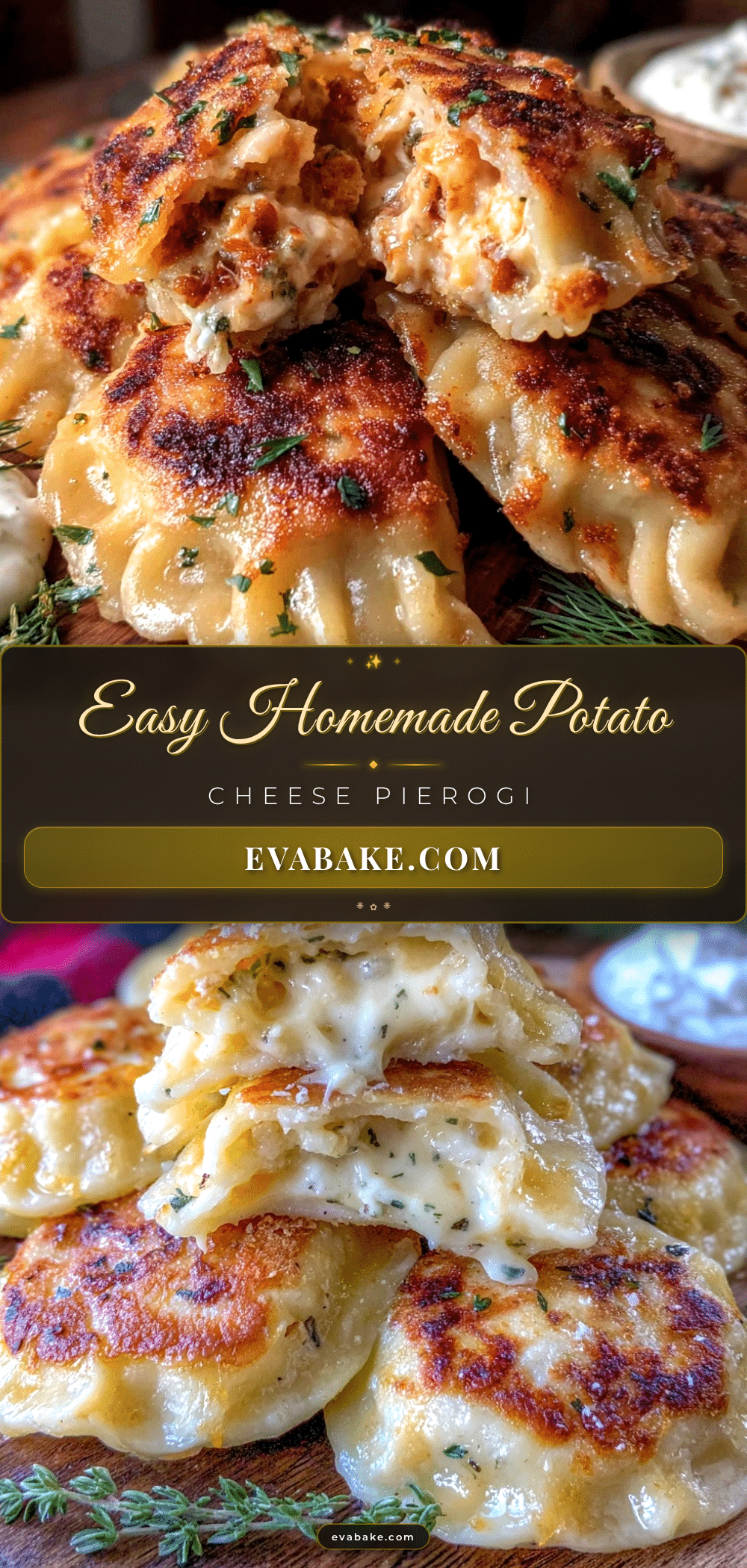
Easy Homemade Potato Cheese Pierogi Recipe Perfect for Beginners

A comforting and approachable recipe for homemade potato cheese pierogi with a tender dough and creamy cheesy filling, perfect for beginners and family meals.
- Prep Time: 20 minutes
- Cook Time: 40 minutes
- Total Time: 1 hour
- Yield: 24 pierogi (about 4 servings)
- Category: Main Course
- Cuisine: Eastern European
Ingredients
- All-purpose flour – 3 cups (360 g), sifted
- Large eggs – 2, at room temperature
- Water – 1/2 cup (120 ml), lukewarm
- Salt – 1 teaspoon
- Unsalted butter – 2 tablespoons, melted (optional)
- Russet potatoes – 4 medium (about 2 pounds / 900 g), peeled and chopped
- Cream cheese – 6 ounces (170 g), softened
- Sharp cheddar cheese – 1 cup (100 g), shredded
- Salt – 1/2 teaspoon, or to taste
- Black pepper – 1/4 teaspoon, freshly ground
- Yellow onion – 1 small, finely chopped and sautéed
- Sour cream – for dipping
- Chopped fresh chives or parsley – optional garnish
Instructions
- Place peeled and chopped russet potatoes in a large pot. Cover with cold water and add a pinch of salt. Bring to a boil and cook until tender, about 15-20 minutes. Drain well and return to the pot. Mash the potatoes until smooth and let cool.
- In a skillet over medium heat, sauté finely chopped onion in a tablespoon of butter until translucent and lightly golden, about 5 minutes. Stir sautéed onion, cream cheese, shredded cheddar, salt, and pepper into the cooled mashed potatoes. Mix until combined and creamy. Set aside.
- In a large bowl, combine the sifted flour and salt. In a separate small bowl, whisk the eggs with lukewarm water and melted butter. Gradually add the wet mixture to the flour, stirring with a wooden spoon or your hands until it forms a rough dough.
- Turn the dough onto a floured surface and knead for about 8-10 minutes until smooth and elastic. If the dough feels sticky, sprinkle with a little more flour. Wrap in plastic wrap or cover with a damp towel and let it rest for 30 minutes.
- Divide the rested dough into two portions. Roll one portion on a floured surface to about 1/8-inch (3 mm) thickness. Using a 3-inch (7.5 cm) round cutter or glass rim, cut out circles. Gather scraps, re-roll, and cut until all dough is used.
- Place about 1 tablespoon of filling in the center of each dough circle. Fold the dough over the filling to create a half-moon shape. Press edges firmly together to seal, then crimp with a fork or your fingers to prevent opening during cooking. If the dough resists sealing, brush edges lightly with water.
- Bring a large pot of salted water to a gentle boil. Add pierogi in batches—don’t overcrowd. Once they float to the surface, cook for an additional 2-3 minutes. Use a slotted spoon to remove and drain.
- Optional: Pan-fry boiled pierogi in butter over medium heat until golden and crispy on both sides, about 3 minutes per side. Serve hot with sour cream and fresh herbs.
Notes
Keep dough covered while working to prevent drying out. Chill filling if too soft to hold. Seal pierogi carefully to avoid bursting during cooking. For gluten-free, use almond or oat flour with adjustments. Pan-frying adds richness but is optional.
Nutrition
- Serving Size: 6 pierogi
- Calories: 320
- Sugar: 3
- Sodium: 400
- Fat: 12
- Saturated Fat: 6
- Carbohydrates: 40
- Fiber: 3
- Protein: 10
Keywords: potato cheese pierogi, homemade pierogi, easy pierogi recipe, potato dumplings, comfort food, beginner pierogi