The Friendsgiving potluck was in six hours and I’d completely forgotten. I mean, I remembered the event—I’d even RSVP’d with enthusiasm a week ago. What I hadn’t remembered was actually preparing anything. Everyone else would be bringing their signature dishes: Kevin’s legendary mac and cheese that takes two days, Sarah’s triple-layer pumpkin cake, and Mark’s slow-roasted turkey that he starts brining at dawn. I had a bag of gluten-free bread that was two days from going stale, some sad-looking celery in my crisper drawer, and exactly zero time.
Let me tell you, there’s nothing quite like the panic of staring into your pantry while mentally calculating if you can swing by the store, make something impressive, and still arrive on time. I’d recently gone gluten-free—not by choice, honestly, my body just decided wheat was the enemy—and I wasn’t about to show up empty-handed. So I grabbed that bread, the celery, an onion that was starting to sprout, and decided I’d figure it out on the fly.
I won’t pretend I wasn’t sweating when I walked in with my foil-covered baking dish. Kevin’s mac and cheese looked like something from a food magazine. Sarah’s cake had edible gold leaf, I’m not kidding. But you know what happened? My gluten-free herb stuffing was the first dish to disappear. People asked for the recipe before I’d even sat down. One guy—a total stranger—told me it was better than his grandma’s, and I saw his girlfriend elbow him for saying it. That’s the thing about this wholesome gluten-free herb stuffing: it doesn’t try to be fancy. It just tastes like home, and somehow that wins every time.
Why You’ll Love This Recipe
I’ve tested this recipe more times than I care to admit—through dry Thanksgivings, soggy Christmas dinners, and one particularly sad Easter where the stuffing turned into what I can only describe as bread pudding gone wrong. After all those trials, I can tell you with complete confidence that this version works. Every single time.
- Quick & Easy: From start to finish, this comes together in about 45 minutes. Most of that is hands-off baking time, which means you can focus on the other dishes or, you know, just pour yourself a glass of wine.
- Simple Ingredients: No specialty stores required. You’ll find everything at your regular grocery store, and you probably already have most of the herbs in your spice rack.
- Perfect for Holidays: Whether it’s Thanksgiving, Christmas, Easter, or just a cozy Sunday dinner, this stuffing fits right in. It’s the side dish that gets asked for by name.
- Crowd-Pleaser: Gluten-free or not, everyone goes back for seconds. I’ve served this to my gluten-loving friends and they couldn’t tell the difference. Not a single person has guessed it’s gluten-free.
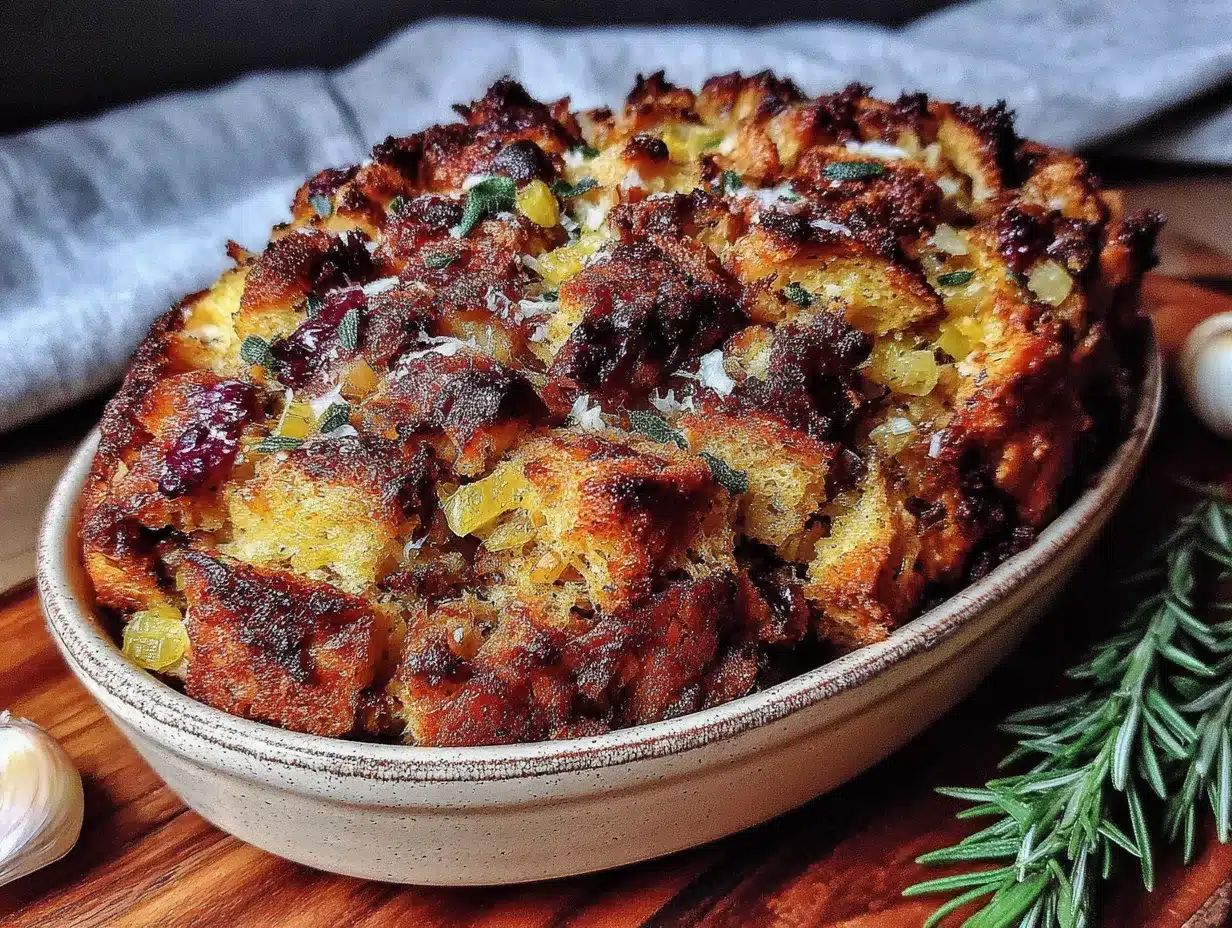
- Unbelievably Delicious: The secret is toasting the bread first. It gives you that perfect texture—crispy on top, tender in the middle, and packed with herb flavor in every single bite.
What makes this different from other gluten-free stuffing recipes? Most of them end up either too dry or too mushy. The gluten-free bread absorbs liquid differently than regular bread, and most recipes don’t account for that. I figured out the exact liquid-to-bread ratio through trial and error—and let me tell you, there were some errors. This version hits that sweet spot where every spoonful is perfectly moist without being soggy.
This isn’t just another recipe. It’s the one that makes you close your eyes after the first bite. It’s comfort food reimagined—healthier, faster, but with the same soul-soothing satisfaction that makes stuffing the best part of any holiday meal. Perfect for impressing guests without stress, or turning a simple dinner into something memorable.
What Ingredients You Will Need
This recipe uses simple, wholesome ingredients to deliver bold flavor and satisfying texture without any fuss. Most of these are pantry staples, which makes this perfect for last-minute holiday prep or a cozy weeknight side dish.
For the Stuffing Base
- Gluten-free bread, 1 large loaf (about 12-14 ounces), cut into 1-inch cubes — I prefer Schar or Canyon Bakehouse for best texture (they hold up well without getting mushy)
- Unsalted butter, 6 tablespoons (84 grams), plus more for greasing the dish
- Yellow onion, 1 large, diced (about 1½ cups)
- Celery stalks, 3-4, diced (about 1 cup)
- Garlic cloves, 4, minced
- Low-sodium vegetable broth, 1½ cups (360 ml) — use chicken broth if you’re not keeping it vegetarian
- Large eggs, 2, lightly beaten (adds richness and helps bind everything together)
For the Herb Blend
- Fresh sage leaves, 2 tablespoons, finely chopped (or 2 teaspoons dried)
- Fresh thyme leaves, 1 tablespoon (or 1 teaspoon dried)
- Fresh rosemary, 1 tablespoon, finely chopped (or 1 teaspoon dried)
- Fresh parsley, ¼ cup, chopped (adds freshness at the end)
- Dried marjoram, 1 teaspoon (optional but adds a lovely floral note)
Seasoning & Finishing
- Salt, 1 teaspoon (I use fine sea salt)
- Black pepper, ½ teaspoon, freshly ground
- Celery seed, ½ teaspoon (trust me on this one — it amplifies the celery flavor beautifully)
- Poultry seasoning, 1 teaspoon (look for a gluten-free brand like McCormick or Simply Organic)
Ingredient Selection Tips: When choosing gluten-free bread, look for one that’s sturdy and not too sweet. Avoid the soft, sandwich-style loaves as they tend to disintegrate. A rustic gluten-free sourdough or multigrain loaf works wonderfully. For the herbs, fresh makes a noticeable difference, but dried works in a pinch—just remember that dried herbs are more concentrated, so use about one-third of the amount.
Substitution Guidance: Dairy-free? Swap the butter with vegan butter or olive oil. Vegan? Use flax eggs (2 tablespoons ground flaxseed mixed with 6 tablespoons water) instead of regular eggs, and use vegetable broth. Low-sodium broth is important here because the bread absorbs the liquid and you don’t want it to end up salty.
Equipment Needed
You don’t need a fancy kitchen to make this stuffing. Here’s what you’ll need:
- Large baking sheet — for toasting the bread cubes. A rimmed sheet works best to prevent cubes from rolling off.
- 9×13-inch baking dish — this is the standard size for a generous batch. An 8×8 works for a smaller portion, just reduce the cooking time by about 10 minutes.
- Large skillet or sauté pan — for cooking the vegetables. I use my trusty cast iron, but any heavy-bottomed pan works.
- Large mixing bowl — for combining everything. You need room to toss without spilling.
- Sharp knife and cutting board — for prepping the vegetables and herbs.
- Wooden spoon or spatula — for stirring.
- Measuring cups and spoons — precise measurements matter for the liquid-to-bread ratio.
- Aluminum foil — for covering the dish during the first part of baking.
Budget-Friendly Tip: If you don’t have a 9×13 dish, a cast-iron skillet works beautifully. I’ve also used a disposable aluminum pan when bringing this to potlucks — it saves on cleanup and keeps the dish warm longer.
Personal Note: I learned the hard way that using a dark-colored baking dish means you need to check your stuffing about 5 minutes earlier than the recipe says. Dark pans absorb more heat and can brown the top too quickly. If that’s what you have, just keep an eye on it.
Preparation Method
Let’s make the best gluten-free herb stuffing you’ve ever had. I’ll walk you through each step with the exact details so you get perfect results every time.
Step 1: Toast the Bread Cubes
Preheat your oven to 350°F (175°C). Spread the bread cubes in a single layer on your baking sheet. Toast for 12-15 minutes, stirring halfway through, until the cubes are dry and lightly golden. They should feel crisp but not hard. Why this matters: Toasting removes excess moisture so the bread can absorb the broth without turning into mush. I once skipped this step when I was in a hurry, and the result was a sad, soggy mess. Don’t be like me.
Step 2: Sauté the Aromatics
While the bread is toasting, melt the butter in your large skillet over medium heat. Add the diced onion and celery, and cook for 6-8 minutes until softened and translucent. The onions should look glossy and the kitchen should smell incredible. Add the minced garlic and cook for another minute, just until fragrant—garlic burns fast, so don’t walk away. Stir in the celery seed, salt, pepper, and poultry seasoning, and cook for 30 seconds more. Remove from heat.
Step 3: Prepare the Broth Mixture
In a small bowl or measuring cup, whisk together the vegetable broth and beaten eggs until well combined. Set aside. Pro tip: Make sure your broth isn’t hot when you add the eggs, or you’ll end up with scrambled egg bits in your stuffing. Room temperature is perfect.
Step 4: Combine Everything
Transfer the toasted bread cubes to your large mixing bowl. Add the sautéed vegetables and all the fresh herbs (sage, thyme, rosemary, parsley, and marjoram if using). Toss gently to distribute everything evenly. Pour the broth-egg mixture over the top and fold carefully with a spatula until all the bread cubes are moistened. Don’t overmix—you want some texture, not a paste.
Step 5: Rest and Absorb
Let the mixture sit for 10 minutes. This is crucial. The gluten-free bread needs time to absorb the liquid fully. During this time, the mixture will look wet, but trust the process. After 10 minutes, give it one more gentle stir.
Step 6: Bake
Preheat your oven to 375°F (190°C). Grease your 9×13 baking dish with butter or non-stick spray. Transfer the stuffing mixture to the dish and spread it into an even layer. Cover tightly with aluminum foil and bake for 25 minutes. Remove the foil and bake for another 15-20 minutes, until the top is golden brown and crispy. The edges should look slightly caramelized, and the center should be firm to the touch.
Step 7: Rest and Serve
Let the stuffing rest for 5-10 minutes before serving. This allows the steam to settle and makes it easier to scoop. Garnish with extra fresh parsley if you’re feeling fancy. Serve warm.
Cooking Tips & Techniques
After making this recipe more times than I can count, I’ve collected some hard-won wisdom. Let me save you from my mistakes.
The Bread Matters More Than You Think: Not all gluten-free breads are created equal. Some are too soft and will turn into glue. Some are too dense and won’t absorb properly. My top picks are Schar’s Artisan Baker Multigrain or Canyon Bakehouse’s Mountain White. Both have that sturdy crumb that holds up beautifully. Avoid anything labeled “soft” or “fluffy.”
Don’t Skip the Toasting: I know it’s an extra step, and I know you’re busy. But this is non-negotiable. Toasting dries out the bread so it can absorb the broth without disintegrating. If you’re really pressed for time, you can leave the bread cubes out overnight to stale, but toasting gives you more control and better results.
Watch Your Liquid: Gluten-free bread is thirsty. It soaks up liquid differently than wheat bread, which is why I’ve landed on 1½ cups of broth as the sweet spot. Too little and your stuffing is dry and crumbly. Too much and you’ve got stuffing soup. If you’re adding extra ingredients like mushrooms or sausage, reduce the broth by ¼ cup to compensate for the moisture they’ll release.
The Egg is Your Friend: I tried making this without eggs once, thinking it would be lighter. It wasn’t. The eggs help bind everything together and give the stuffing that cohesive, sliceable texture. If you need it vegan, use flax eggs, but don’t skip the binder entirely.
My Biggest Mistake: The first time I made this for Thanksgiving, I forgot to cover it with foil for the first half of baking. The top burned while the inside stayed cold. Covering traps steam and ensures even cooking. Remove the foil at the end for that golden, crispy top we all love.
Variations & Adaptations
This recipe is wonderfully flexible. Here are some of my favorite ways to switch it up:
Sausage & Apple Stuffing
Brown ½ pound of gluten-free Italian sausage (casings removed) in the skillet before cooking the vegetables. Remove the sausage and set aside, then proceed with the recipe. Add 1 diced apple (Honeycrisp or Granny Smith) along with the celery. Stir the cooked sausage back in before adding the broth. The sweetness of the apple and the savory sausage create magic together.
Mushroom & Leek Version
Sauté 8 ounces of sliced cremini mushrooms with the onions and celery. Replace half the onion with 1 large leek (white and light green parts only, thoroughly washed and sliced). The mushrooms add an umami depth that makes this version feel extra luxurious. I serve this one alongside roast chicken for Sunday dinners.
Herb & Citrus Twist
Add the zest of 1 lemon and 1 orange to the sautéed vegetables. Replace half the vegetable broth with fresh orange juice. This bright, citrusy version is perfect for spring holidays or Easter brunch. The acidity cuts through the richness beautifully.
Vegan Adaptation
Use vegan butter or olive oil instead of regular butter. Replace the eggs with 2 flax eggs (2 tablespoons ground flaxseed mixed with 6 tablespoons water, let sit for 5 minutes). Use vegetable broth. The texture will be slightly less firm, but the flavor is still outstanding.
Low-Carb Option
Replace the bread with 4 cups of cauliflower florets, pulsed in a food processor until rice-sized. Toast the cauliflower rice in the oven at 400°F for 15 minutes before proceeding with the recipe. Reduce the broth to ¾ cup and skip the eggs. This version is surprisingly satisfying and won’t spike your blood sugar.
Serving & Storage Suggestions
Serve this stuffing warm, straight from the oven. The contrast between the crispy top and the tender, herb-infused interior is what makes it irresistible. I like to garnish with a sprinkle of fresh parsley and a few cracks of black pepper right before serving.
What to Serve With It: This stuffing pairs beautifully with roast turkey or chicken, but don’t limit it to Thanksgiving. It’s wonderful alongside roasted vegetables, a simple green salad, or even grilled sausages. For a complete holiday plate, serve with creamy mashed potatoes, roasted Brussels sprouts with balsamic glaze, and cranberry sauce. For a cozy weeknight meal, I’ve eaten this with one-pan lemon herb chicken and it was perfect.
Storage: Leftover stuffing keeps in an airtight container in the refrigerator for up to 4 days. The flavors actually meld and deepen overnight, so it might taste even better the next day. To reheat, place individual portions in a 350°F oven for 10-15 minutes, or microwave for 1-2 minutes. For crispy leftovers, reheat in a skillet with a little butter over medium heat.
Freezing: This stuffing freezes beautifully. Bake it completely, let it cool, then wrap tightly in foil and place in a freezer bag. Freeze for up to 3 months. To serve, thaw overnight in the refrigerator and reheat in a 350°F oven, covered, for 20-25 minutes. Remove the cover for the last 5 minutes to re-crisp the top.
Make-Ahead Tip: You can assemble the stuffing (without baking) up to 24 hours in advance. Cover and refrigerate. When you’re ready to bake, add about 10 minutes to the covered baking time since you’re starting from cold. This is a lifesaver for busy holiday mornings.
Nutritional Information & Benefits
This wholesome gluten-free herb stuffing isn’t just delicious—it’s packed with good-for-you ingredients. Here’s what you’re getting in each serving (based on 8 servings):
| Nutrient | Amount Per Serving |
|---|---|
| Calories | 245 |
| Total Fat | 12g |
| Saturated Fat | 6g |
| Carbohydrates | 28g |
| Fiber | 4g |
| Protein | 7g |
| Sodium | 480mg |
| Vitamin A | 15% DV |
| Vitamin C | 8% DV |
| Calcium | 6% DV |
| Iron | 10% DV |
Health Benefits: The fresh herbs in this recipe aren’t just for flavor—they’re packed with antioxidants. Sage has been shown to support brain health, thyme is rich in vitamin C, and rosemary contains anti-inflammatory compounds. Celery provides fiber and vitamin K, while onions offer prebiotics that support gut health. By using gluten-free bread, this recipe is accessible to those with celiac disease or gluten sensitivity without sacrificing taste or texture.
Dietary Considerations: This recipe is gluten-free, nut-free, and can easily be made dairy-free or vegan with simple substitutions. It’s suitable for those following a Mediterranean diet or a balanced, whole-foods approach to eating. As always, check your ingredient labels to ensure they’re certified gluten-free if that’s a medical necessity.
Conclusion
This wholesome gluten-free herb stuffing has become my go-to for every holiday, every potluck, and every time I need a little comfort on my plate. It’s proof that gluten-free doesn’t mean flavor-free, and that simple ingredients, treated with care, can create something truly memorable. I’ve watched people who swore they’d never like gluten-free anything go back for thirds. I’ve had friends text me months later asking for the recipe again because they can’t find it in their inbox.
What I love most about this recipe is how forgiving it is. You can add more herbs, swap in different vegetables, make it vegan or sausage-studded—it adapts to whatever you have on hand. It’s the kind of recipe that becomes yours over time, with each batch getting a little better as you learn what you love.
So go ahead, give it a try. Whether you’re hosting Thanksgiving, bringing a dish to a Friendsgiving, or just want a cozy side dish on a Sunday evening, this stuffing delivers. And when someone asks for the recipe—because they will—send them my way. I’d love to hear how it turned out for you. Drop a comment below and let me know what variations you tried, or tag me in your photos. Happy cooking, friends!
Frequently Asked Questions
Can I make this stuffing ahead of time?
Absolutely! You can assemble the stuffing (without baking) up to 24 hours in advance. Just cover it tightly and store it in the refrigerator. When you’re ready to bake, add about 10 minutes to the covered baking time since you’re starting from cold. The flavors actually meld and deepen overnight, so it might taste even better.
What’s the best gluten-free bread for stuffing?
Look for a sturdy, rustic-style gluten-free bread. My top picks are Schar’s Artisan Baker Multigrain, Canyon Bakehouse’s Mountain White, or a gluten-free sourdough from a local bakery. Avoid soft, sandwich-style loaves as they tend to turn mushy. The bread should have a firm crumb that holds its shape when cubed and toasted.
Can I use dried herbs instead of fresh?
Yes, you can substitute dried herbs for fresh. The general rule is to use one-third of the amount. So if a recipe calls for 1 tablespoon of fresh sage, use 1 teaspoon of dried. Keep in mind that dried herbs are more concentrated and their flavor can be more intense. I recommend adding them to the sautéed vegetables rather than the bread cubes so they can bloom in the heat.
How do I prevent my stuffing from getting soggy?
The key is toasting the bread cubes thoroughly before combining them with the liquid. This removes excess moisture so the bread can absorb the broth without disintegrating. Also, don’t overmix once you add the liquid—gentle folding is your friend. And let the mixture rest for 10 minutes before baking so the bread can absorb the liquid evenly. If your stuffing still seems too wet, add 5-10 minutes to the uncovered baking time.
Can I add meat to this stuffing?
Definitely! Brown ½ pound of gluten-free Italian sausage, crumbled breakfast sausage, or diced bacon in the skillet before cooking the vegetables. Remove the meat and set aside, then proceed with the recipe. Stir the cooked meat back in when you combine everything. Just reduce the broth by ¼ cup to account for the moisture the meat adds. This makes the stuffing even more substantial and perfect as a main dish.
Pin This Recipe!
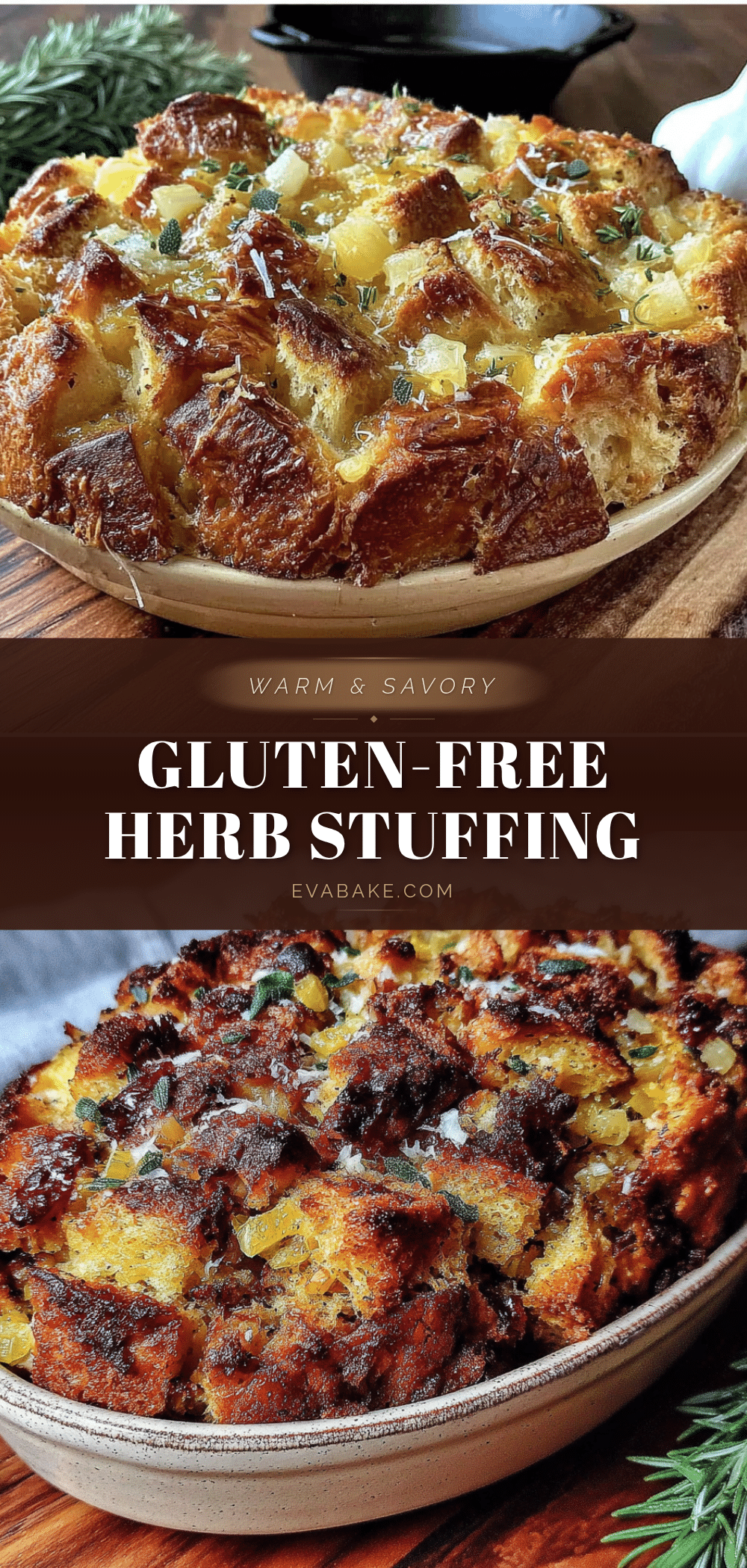
Best Gluten-Free Herb Stuffing Recipe (Easy & Homemade)
This wholesome gluten-free herb stuffing is quick, easy, and packed with flavor. Perfect for holidays or cozy dinners, it’s a crowd-pleaser that even gluten-lovers can’t resist.
- Prep Time: 15 minutes
- Cook Time: 45 minutes
- Total Time: 1 hour
- Yield: 8 servings 1x
- Category: Side Dish
- Cuisine: American
Ingredients
- 1 large loaf gluten-free bread (about 12–14 ounces), cut into 1-inch cubes
- 6 tablespoons unsalted butter (84 grams), plus more for greasing
- 1 large yellow onion, diced (about 1½ cups)
- 3–4 celery stalks, diced (about 1 cup)
- 4 garlic cloves, minced
- 1½ cups low-sodium vegetable broth (360 ml)
- 2 large eggs, lightly beaten
- 2 tablespoons fresh sage, finely chopped (or 2 teaspoons dried)
- 1 tablespoon fresh thyme leaves (or 1 teaspoon dried)
- 1 tablespoon fresh rosemary, finely chopped (or 1 teaspoon dried)
- ¼ cup fresh parsley, chopped
- 1 teaspoon dried marjoram (optional)
- 1 teaspoon fine sea salt
- ½ teaspoon freshly ground black pepper
- ½ teaspoon celery seed
- 1 teaspoon poultry seasoning (gluten-free brand like McCormick or Simply Organic)
Instructions
- Preheat oven to 350°F (175°C). Spread bread cubes in a single layer on a baking sheet. Toast for 12-15 minutes, stirring halfway, until dry and lightly golden.
- While bread toasts, melt butter in a large skillet over medium heat. Add onion and celery; cook 6-8 minutes until softened. Add garlic and cook 1 minute more. Stir in celery seed, salt, pepper, and poultry seasoning; cook 30 seconds. Remove from heat.
- In a small bowl, whisk together vegetable broth and beaten eggs until combined. Ensure broth is at room temperature to avoid scrambling the eggs.
- Transfer toasted bread cubes to a large mixing bowl. Add sautéed vegetables and all fresh herbs (sage, thyme, rosemary, parsley, marjoram if using). Toss gently. Pour broth-egg mixture over top and fold carefully until all cubes are moistened. Do not overmix.
- Let mixture sit for 10 minutes to allow bread to absorb liquid. Stir gently once more.
- Preheat oven to 375°F (190°C). Grease a 9×13-inch baking dish with butter or non-stick spray. Transfer stuffing mixture to dish and spread evenly. Cover tightly with aluminum foil and bake for 25 minutes.
- Remove foil and bake for another 15-20 minutes until top is golden brown and crispy. Let rest 5-10 minutes before serving. Garnish with extra parsley if desired.
Notes
Toast bread cubes thoroughly to prevent sogginess. Let mixture rest 10 minutes before baking for even absorption. For make-ahead, assemble without baking up to 24 hours in advance; add 10 minutes to covered baking time. For vegan option, use vegan butter, flax eggs (2 tbsp ground flaxseed + 6 tbsp water), and vegetable broth. For sausage & apple variation, brown ½ lb gluten-free Italian sausage before cooking vegetables and add 1 diced apple with celery.
Nutrition
- Serving Size: 1 serving (about 1 c
- Calories: 245
- Sugar: 4
- Sodium: 480
- Fat: 12
- Saturated Fat: 6
- Carbohydrates: 28
- Fiber: 4
- Protein: 7
Keywords: gluten-free stuffing, herb stuffing, Thanksgiving stuffing, easy stuffing, homemade stuffing, gluten-free side dish