Marta watched me staring at the squash display in the community garden shed and didn’t say anything at first. Then she picked up a knobby, pale-orange acorn squash and held it out like she was offering me a secret. “This one,” she said, her accent softening the words. “Roast it slow. Trust me.” I had been standing there for a good minute, completely lost. I mean, I knew how to roast a butternut squash, but acorn squash always felt a little… intimidating. The ridges. The tough skin. The way they roll around on the cutting board like they’re trying to escape. Marta just laughed and told me her grandmother used to make soup from these every Sunday after church. She didn’t give me a recipe that day—not really. She just told me how it smelled: like butter melting into brown sugar, like sage leaves crackling in hot oil, like the kind of warmth that makes you forget the cold creeping under the door.
That conversation stayed with me. Honestly, I thought about it every time I walked past acorn squash at the market. I finally texted Marta a week later and asked if she’d walk me through it. She sent me a voice note—three minutes long, full of background noise from her kitchen, her kids yelling in Polish in the background. She said “just a little cream” and “don’t be shy with the nutmeg” and “the pepitas make it, okay?” I wrote it all down on a napkin. That napkin is still tucked into my favorite cookbook.
This cozy acorn squash soup with toasted pepitas is my version of Marta’s Sunday soup. I’ve tweaked it just enough to make it mine—added a touch more sage, swapped in coconut milk once when I was out of cream (it worked beautifully, by the way), and figured out the perfect roasting temperature so the squash gets caramelized without turning mushy. But the soul of it? That’s all Marta. And maybe you’ve been there—standing in the grocery aisle, unsure which squash to grab, wondering if you’ll mess it up. Let me tell you, this recipe is forgiving. It’s patient. And it tastes like someone wrapped a blanket around your shoulders.
Why You’ll Love This Recipe
I’ve made this soup more times than I can count, and every single time, someone asks for the recipe. That’s not me bragging—that’s the acorn squash doing the heavy lifting. It has this naturally sweet, almost buttery flavor that roasts up into something truly special. And when you blend it with a few simple aromatics and top it with crunchy, toasted pepitas? Honestly, it’s the kind of bowl that makes you slow down and actually taste what you’re eating.
- Budget-Friendly: Acorn squash is one of the cheapest winter squashes out there. You can often find it for under two dollars, and one squash makes enough soup for a family of four. No fancy ingredients needed.
- Weeknight Easy: The oven does most of the work here. You roast the squash, sauté some onion and garlic, blend it all together, and you’re done. Active prep time is maybe 15 minutes.
- Picky Eater Approved: My kids have no idea they’re eating something healthy. The natural sweetness and creamy texture make it feel like a treat, not a vegetable lecture.
- Reheats Like a Dream: This is one of those soups that tastes even better the next day. The flavors meld together overnight, and the texture stays silky smooth. Perfect for meal prep or packed lunches.
- Customizable: Dairy-free? Use coconut milk. Need more protein? Add a can of white beans when you blend. Want extra heat? Toss in a pinch of cayenne. This recipe bends to whatever you have on hand.
What makes this version different from the dozens of squash soup recipes out there? It’s the roasting method. I don’t boil or steam the squash—I roast it cut-side down until the flesh is caramelized and deeply golden. That step adds a layer of flavor you simply cannot get any other way. Plus, the toasted pepitas with a hint of smoked paprika give it that perfect crunchy contrast. It’s comfort food that feels a little bit fancy, but costs next to nothing to make.
What Ingredients You Will Need
This recipe uses simple, humble ingredients that come together to create something genuinely luxurious. Most of these are probably already in your pantry or fridge, which makes this soup an excellent last-minute dinner solution. Here is everything you need and a little insight on why each ingredient matters.
- Acorn Squash (2 medium, about 2 pounds each): Look for squash that feel heavy for their size and have a deep green-orange color. Avoid any with soft spots or cracks. One squash yields roughly 2 to 2.5 cups of roasted flesh. I prefer acorn squash over butternut for this recipe because it has a thinner skin (easier to scoop!) and a more delicate, nutty sweetness.
- Yellow Onion (1 large, diced): Onion provides the savory backbone. I use yellow onions because they have the right balance of sweetness and bite. White onions work in a pinch, but red onions will change the color of the soup.
- Garlic (4 cloves, smashed): Roasted garlic adds a mellow, almost sweet depth. If you want a stronger garlic flavor, add a raw clove when blending—but start with one and taste first.
- Vegetable Broth (4 cups): Use a good-quality broth here since it is a major flavor component. I like Better Than Bouillon roasted vegetable base—it has a rich, savory taste that doesn’t overpower the squash. Low-sodium is best so you can control the salt.
- Coconut Milk (1 cup, full-fat): This adds creaminess without dairy. Full-fat is important for texture—light coconut milk will make the soup thinner and less luxurious. If you tolerate dairy well, heavy cream or half-and-half works beautifully too.
- Fresh Sage (6-8 leaves): Sage and winter squash are a classic pairing. The earthy, slightly peppery flavor cuts through the sweetness. Dried sage works in a pinch (use 1 teaspoon), but fresh really shines here.
- Olive Oil (3 tablespoons, divided): You need oil for roasting the squash and sautéing the aromatics. A good extra-virgin olive oil adds its own fruity notes, but any neutral oil will do.
- Maple Syrup (1 tablespoon): Just a touch to enhance the natural sweetness of the squash. Use pure maple syrup, not pancake syrup. Honey works as a substitute.
- Nutmeg (¼ teaspoon, freshly grated if possible): Nutmeg adds warmth and a subtle complexity that makes the soup taste like it simmered for hours. Pre-ground is fine, but freshly grated is noticeably better.
- Salt and Black Pepper (to taste): Don’t skimp on salt—it brings out the sweetness of the squash. I start with 1 teaspoon of fine sea salt and adjust from there.
- For the Toasted Pepitas:
- Pepitas (⅓ cup, raw hulled pumpkin seeds): These add the perfect crunchy contrast. Raw pepitas are widely available and inexpensive.
- Smoked Paprika (½ teaspoon): This gives the pepitas a smoky, savory kick. Regular paprika works, but smoked is worth seeking out.
- Pinch of Cayenne (optional): For a tiny hit of heat that balances the sweet soup.
Equipment Needed
You do not need a fancy kitchen to make this soup. Here is what you will need and a few honest thoughts on each tool.
- Baking Sheet (1 large, rimmed): A rimmed sheet prevents squash juices from spilling into your oven. I use a half-sheet pan—they are cheap at restaurant supply stores and last forever. If you only have a smaller pan, use two so the squash isn’t crowded.
- Sharp Chef’s Knife: Acorn squash are tough to cut. A dull knife is dangerous here. I use an 8-inch chef’s knife and I sharpen it before every squash season. If your knife is not sharp, microwave the whole squash for 2 minutes to soften the skin slightly.
- Large Soup Pot or Dutch Oven: A 5- to 6-quart pot is ideal. I use my enameled cast iron Dutch oven because it holds heat evenly, but any heavy-bottomed pot works. Avoid thin aluminum pots—they can scorch the aromatics.
- Immersion Blender or Regular Blender: An immersion blender is easier (blend right in the pot, less cleanup), but a regular blender gives a silkier texture. If using a regular blender, blend in batches and never fill it more than halfway with hot liquid. Remove the center cap from the lid and cover with a towel to let steam escape.
- Small Skillet: For toasting the pepitas. Any small non-stick or stainless steel pan works.
- Measuring Spoons and Cups: Precision matters less here than in baking, but having them handy makes the process smoother.
Preparation Method
Let me walk you through this step by step. I have made this soup more times than I can count, and I have learned a few things the hard way so you do not have to.
Step 1: Roast the Squash
Preheat your oven to 400°F (200°C). Carefully cut each acorn squash in half from stem to tip. Use a sturdy chef’s knife and go slow—acorn squash are dense. Scoop out the seeds and stringy pulp with a spoon. A grapefruit spoon with serrated edges works great here, but a regular spoon is fine. Brush the cut sides and cavities with 2 tablespoons of olive oil and season with salt and pepper. Place the squash halves cut-side down on a rimmed baking sheet. Roast for 35 to 45 minutes, until the flesh is tender enough that a fork slides in with almost no resistance. The bottoms should be deeply golden and caramelized. Let them cool for about 10 minutes—long enough to handle, but still warm.
Step 2: Toast the Pepitas
While the squash roasts, toast your pepitas. Heat a small skillet over medium heat. Add the pepitas and cook, shaking the pan frequently, until they start to pop and turn golden brown—about 3 to 4 minutes. Watch them closely; pepitas go from toasted to burnt very quickly. Remove from heat and stir in the smoked paprika, a pinch of salt, and cayenne if using. Transfer to a small bowl to cool. They will crisp up as they cool.
Step 3: Sauté the Aromatics
Heat the remaining 1 tablespoon of olive oil in your large pot over medium heat. Add the diced onion and a pinch of salt. Cook, stirring occasionally, until the onion is soft and translucent—about 6 to 8 minutes. Add the smashed garlic cloves and the fresh sage leaves. Cook for another minute until fragrant. Do not let the garlic brown; it will turn bitter.
Step 4: Scoop the Squash
Once the squash is cool enough to handle, use a large spoon to scoop the flesh away from the skin. It should come off in large, soft pieces. Discard the skins. Add all the roasted squash flesh to the pot with the onions and garlic.
Step 5: Simmer and Blend
Pour in the vegetable broth and maple syrup. Stir to combine, scraping up any browned bits from the bottom of the pot. Bring the soup to a gentle simmer, then reduce the heat to low and let it cook for 10 minutes. This allows all the flavors to meld. Remove from heat. If using an immersion blender, blend the soup directly in the pot until completely smooth. If using a regular blender, work in batches. Add the coconut milk and nutmeg, then blend again until silky. Taste and adjust salt and pepper. I usually add another ½ teaspoon of salt at this point.
Step 6: Serve
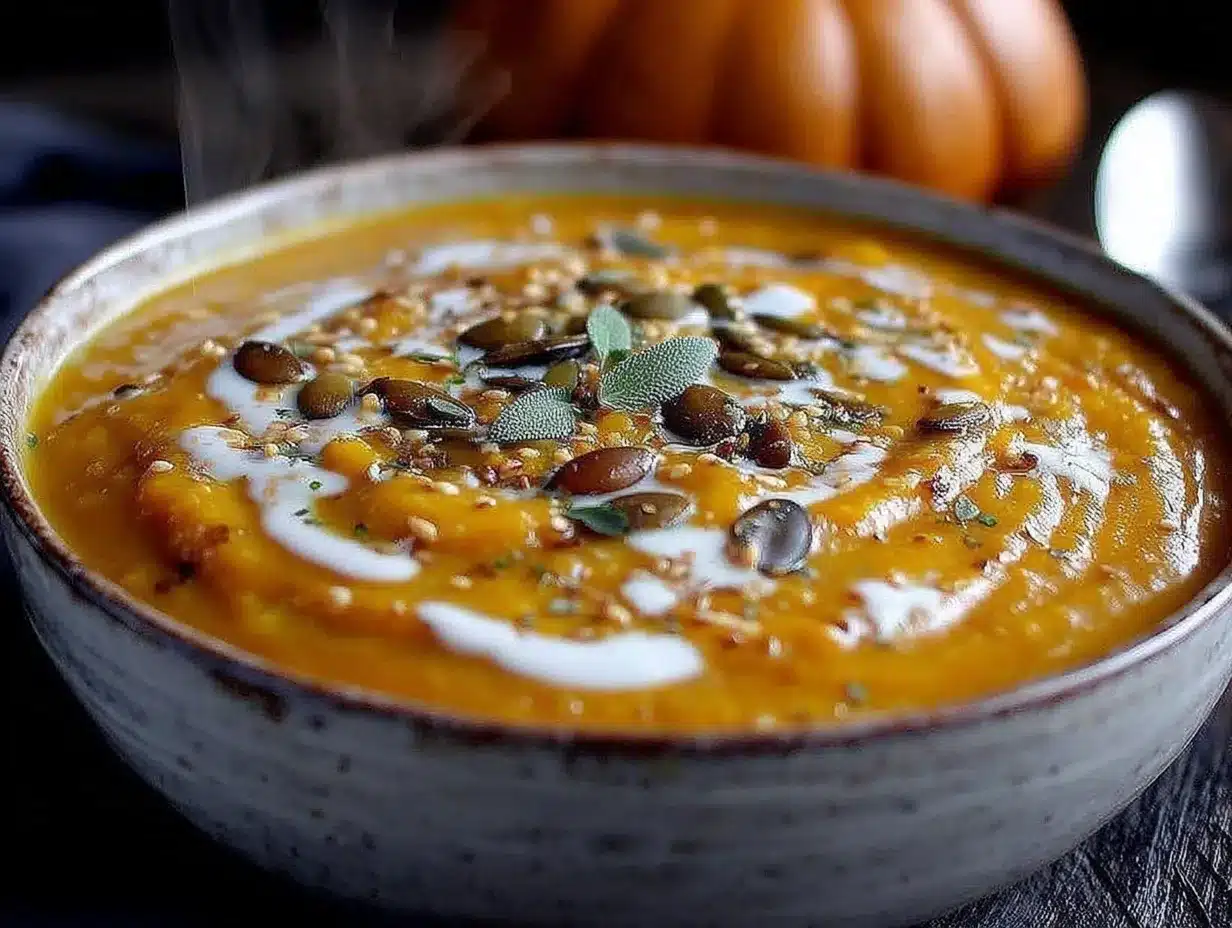
Ladle the soup into bowls. Swirl a little extra coconut milk on top if you are feeling fancy. Sprinkle generously with the toasted pepitas. Add a few fresh sage leaves or a crack of black pepper for color. Serve hot.
Cooking Tips & Techniques
I have burned my fair share of squash soup, and I have learned that a few small adjustments make all the difference. Here is what I wish someone had told me the first time.
Roast cut-side down every time. I know some recipes say to roast cut-side up with butter in the cavity. That works, but you get better caramelization when the cut surface is pressed against the hot pan. That browned, concentrated flavor is what makes this soup taste like it simmered all day. Trust me on this one.
Do not skip the maple syrup. Even if you are watching sugar, that tablespoon makes a difference. Acorn squash can vary in sweetness depending on the season and how long it was stored. The maple syrup guarantees a consistently sweet, balanced soup without tasting sugary.
Blend in batches if using a regular blender. I learned this one the hard way. Hot liquid expands when blended, and if you fill the blender too full, it will explode all over your kitchen. Blend no more than halfway full, remove the center cap, and cover with a folded kitchen towel. Start on low speed and gradually increase.
Taste before you add more salt. Different broths have different sodium levels. I always start with less salt than I think I need and add more at the end. You can always add salt, but you cannot take it out.
Make it ahead for better flavor. This soup is one of those rare dishes that genuinely improves overnight. The flavors deepen and meld together in the fridge. Make it a day ahead if you can. Just reheat gently over low heat, adding a splash of broth or water if it has thickened too much.
Variations & Adaptations
One of the reasons I love this recipe is how flexible it is. Here are a few ways to change it up depending on what you have or who you are feeding.
Make it dairy-free and vegan. This version already uses coconut milk, so it is naturally dairy-free. Just make sure your vegetable broth is vegan (most are). The coconut milk adds a subtle tropical note that pairs surprisingly well with the squash. If you are not a fan of coconut flavor, use unsweetened oat milk or cashew cream instead.
Add protein for a complete meal. This soup is satisfying on its own, but if you want to turn it into a full dinner, add a can of drained and rinsed cannellini beans when you blend. They disappear into the soup and add protein and fiber without changing the flavor. Leftover shredded rotisserie chicken stirred in at the end works great too.
Spice it up. For a smoky, spicy version, add ½ teaspoon of chipotle powder or a chopped chipotle pepper in adobo sauce when you sauté the onions. The heat pairs beautifully with the sweet squash and the smoky pepitas. My husband requests this version every time he has a cold.
Swap the squash. Acorn squash is the star here, but butternut squash, kabocha, or even pumpkin work well. Keep in mind that butternut is sweeter and denser, so you might need an extra splash of broth to thin it out. Kabocha has a similar texture to acorn and makes an excellent substitute.
Make it in a slow cooker. If you want a hands-off version, roast the squash as directed, then add everything except the coconut milk to a slow cooker. Cook on low for 4 hours or high for 2 hours. Blend, stir in the coconut milk, and serve. The pepitas should still be toasted fresh for maximum crunch.
Serving & Storage Suggestions
This soup is wonderful as a main dish with crusty bread or as a starter for a fall dinner party. I love serving it with a simple green salad dressed with lemon vinaigrette—the acidity cuts through the richness of the soup. For a heartier meal, serve it alongside a grilled cheese sandwich or a warm crusty no-knead bread for dipping.
For storage, let the soup cool completely before transferring to airtight containers. It will keep in the refrigerator for up to 5 days. The flavors actually improve after a day or two. To freeze, portion the soup into freezer-safe containers or zip-top bags. Leave about an inch of headspace for expansion. It freezes beautifully for up to 3 months. Thaw overnight in the refrigerator before reheating.
Reheat gently on the stovetop over medium-low heat, stirring occasionally. If the soup has thickened during storage, stir in a splash of broth or water until it reaches your desired consistency. I do not recommend microwaving this soup—it tends to heat unevenly and can develop a grainy texture. The pepitas should always be added fresh just before serving. They lose their crunch within hours, so store them separately in an airtight container at room temperature.
Nutritional Information & Benefits
This soup is as nourishing as it is delicious. Acorn squash is packed with vitamin A (one cup provides over 50% of your daily needs), vitamin C, potassium, and fiber. The orange flesh gets its color from beta-carotene, an antioxidant that supports eye health and immune function. Coconut milk provides healthy medium-chain triglycerides (MCTs) that are easily digested and used for energy. Pepitas are a fantastic source of magnesium, zinc, and plant-based protein—just a quarter cup offers nearly 5 grams of protein.
Here are the estimated nutritional values per serving (based on 6 servings):
| Nutrient | Amount |
|---|---|
| Calories | 245 |
| Total Fat | 14g |
| Saturated Fat | 6g |
| Carbohydrates | 28g |
| Fiber | 5g |
| Sugar | 8g |
| Protein | 6g |
| Vitamin A | 180% DV |
| Vitamin C | 35% DV |
| Potassium | 650mg |
This soup is naturally gluten-free, dairy-free (if using coconut milk), and vegan. It contains tree nuts only if you use coconut milk (coconut is classified as a tree nut by the FDA, though allergies are uncommon). Always check your broth and spice labels for hidden allergens.
Conclusion
This cozy acorn squash soup with toasted pepitas has become a staple in my fall and winter rotation for good reason. It is affordable, forgiving, and deeply satisfying in a way that feels like a hug in a bowl. Every time I make it, I think of Marta standing in that garden shed, handing me that knobby squash like it was a gift. And honestly? It was. This recipe taught me that the best dishes come from conversations, not cookbooks. From someone who took the time to show you something they love.
I hope you make this soup your own. Roast the squash a little longer if you like deeper caramelization. Add extra sage if you love that earthy flavor. Skip the pepitas if you are out—it is still delicious. The point is not perfection. The point is a warm bowl of something good shared with people you care about. If you make this recipe, I would love to hear about it. Leave a comment below and tell me how it turned out, what you changed, or who you shared it with. And if you have a recipe story like Marta’s, I would love to hear that too.
Now go roast some squash. Your kitchen is about to smell amazing.
Frequently Asked Questions
Can I use butternut squash instead of acorn squash?
Absolutely. Butternut squash is sweeter and denser, so the soup will be slightly thicker and richer. You may need to add an extra ¼ cup of broth to reach your desired consistency. The roasting time for butternut is similar—just make sure to peel it before roasting or scoop the flesh after.
How do I make this soup without an immersion blender?
A regular countertop blender works perfectly. Let the soup cool for 10 minutes before blending. Work in batches, filling the blender no more than halfway. Remove the center cap from the lid and cover with a folded towel to let steam escape. Start on low speed and gradually increase to high.
Can I freeze this soup?
Yes, this soup freezes exceptionally well. Let it cool completely, then transfer to freezer-safe containers or zip-top bags. Leave about an inch of headspace for expansion. It will keep for up to 3 months. Thaw overnight in the refrigerator and reheat gently on the stovetop. The pepitas should be made fresh after thawing.
What can I use instead of coconut milk?
Heavy cream, half-and-half, or full-fat oat milk all work well. If using dairy, add it after blending and heat gently—do not let it boil or it may curdle. For a lighter option, use unsweetened almond milk, but the soup will be thinner and less creamy.
My soup turned out too thin. How do I fix it?
Simmer the soup uncovered over medium-low heat for 10 to 15 minutes, stirring occasionally. The excess liquid will evaporate and the soup will thicken naturally. Alternatively, blend in a handful of raw cashews (soaked in hot water for 15 minutes) or a peeled and diced potato that has been boiled until tender. Both add body without changing the flavor.
Pin This Recipe!

Cozy Acorn Squash Soup with Toasted Pepitas

A creamy, naturally sweet acorn squash soup with caramelized roasted squash, aromatic sage, and crunchy toasted pepitas. This budget-friendly, weeknight-easy recipe is forgiving, customizable, and tastes like a warm hug in a bowl.
- Prep Time: 15 minutes
- Cook Time: 45 minutes
- Total Time: 1 hour
- Yield: 6 servings 1x
- Category: Soup
- Cuisine: American
Ingredients
- 2 medium acorn squash (about 2 pounds each)
- 1 large yellow onion, diced
- 4 cloves garlic, smashed
- 4 cups vegetable broth
- 1 cup full-fat coconut milk
- 6–8 fresh sage leaves
- 3 tablespoons olive oil, divided
- 1 tablespoon pure maple syrup
- ¼ teaspoon freshly grated nutmeg
- Salt and black pepper to taste
- ⅓ cup raw hulled pumpkin seeds (pepitas)
- ½ teaspoon smoked paprika
- Pinch of cayenne pepper (optional)
Instructions
- Preheat oven to 400°F (200°C). Cut each acorn squash in half from stem to tip. Scoop out seeds and stringy pulp. Brush cut sides and cavities with 2 tablespoons olive oil; season with salt and pepper. Place cut-side down on a rimmed baking sheet. Roast 35-45 minutes until tender and caramelized. Let cool 10 minutes.
- While squash roasts, toast pepitas in a small skillet over medium heat, shaking frequently, until golden and popping (3-4 minutes). Remove from heat; stir in smoked paprika, a pinch of salt, and cayenne if using. Transfer to a bowl to cool.
- Heat remaining 1 tablespoon olive oil in a large pot over medium heat. Add diced onion and a pinch of salt; cook until soft and translucent (6-8 minutes). Add smashed garlic and sage leaves; cook 1 minute until fragrant.
- Scoop roasted squash flesh from skins; add to pot with onions and garlic.
- Pour in vegetable broth and maple syrup; stir, scraping up browned bits. Bring to a gentle simmer; reduce heat to low and cook 10 minutes. Remove from heat.
- Blend soup until smooth using an immersion blender or regular blender (in batches, leaving lid slightly open to vent steam). Add coconut milk and nutmeg; blend again. Season with salt and pepper to taste.
- Ladle into bowls; swirl extra coconut milk on top if desired. Sprinkle generously with toasted pepitas. Garnish with fresh sage leaves or black pepper. Serve hot.
Notes
Roast squash cut-side down for best caramelization. Do not skip the maple syrup—it balances sweetness. Blend in batches if using a regular blender; never fill more than halfway with hot liquid. Soup improves overnight; make ahead for deeper flavor. Store pepitas separately to maintain crunch.
Nutrition
- Serving Size: 1 bowl (about 1.5 cu
- Calories: 245
- Sugar: 8
- Fat: 14
- Saturated Fat: 6
- Carbohydrates: 28
- Fiber: 5
- Protein: 6
Keywords: acorn squash soup, roasted squash soup, fall soup, winter soup, creamy soup, vegan soup, gluten-free soup, pepitas