“Wait, you put what in the pot?” my friend asked, eyebrows raised as I casually tossed tamarind paste into the bubbling broth. Honestly, I was a bit skeptical myself the first time I tried making this cozy Sinigang sour tamarind soup with tender pork ribs. It wasn’t planned—just one of those days when the fridge was half empty, and the craving for something warm and comforting hit hard. I grabbed the pork ribs, some sour tamarind paste, and a handful of vegetables and figured, why not?
The kitchen smelled tangy and inviting, and as the ribs simmered slowly, the flavors unfolded into this soul-soothing soup that felt like a big, warm hug. You know that feeling when the first bite makes you pause and realize you’ve stumbled on something special? That’s exactly what happened. It wasn’t just sour and savory; there was a deep richness from the pork ribs, and the sourness balanced perfectly with the subtle sweetness of fresh vegetables.
Since then, this Sinigang recipe has been on repeat—sometimes on a chilly evening when I want to unwind, other times as a no-fuss meal when friends drop by unexpectedly. What really makes it stick is how unpretentious yet unbelievably satisfying it is. It’s the kind of dish that reminds you food can be simple, honest, and nostalgic all at once. I’m glad it found its way into my kitchen—and trust me, once you try this cozy Sinigang sour tamarind soup with tender pork ribs, it might just find its way into yours too.
Why You’ll Love This Recipe
After making this Sinigang sour tamarind soup with tender pork ribs several times (okay, maybe more than a few!), I can say it’s a recipe that delivers comfort and flavor without fuss. It’s been tested, tweaked, and family-approved—and here’s why it’s worth a spot in your recipe box:
- Quick & Easy: While it might look like a slow-cooked classic, the prep is straightforward, and simmering does most of the work—ready in about 1.5 hours.
- Simple Ingredients: No exotic spices here; just pantry staples like tamarind paste, fresh veggies, and pork ribs you can find at any market.
- Perfect for Cozy Nights: This soup is a go-to for chilly evenings or when you need a comforting pick-me-up that warms from the inside out.
- Crowd-Pleaser: I’ve served this to skeptics before—those who usually shy away from sour soups—and they kept coming back for more.
- Unbelievably Delicious: The slow-simmered pork ribs get so tender they practically fall off the bone, soaking up the tangy broth with every bite.
What sets this Sinigang apart is the balance—no overwhelming sourness, just a gentle tang that complements the rich pork and fresh vegetables perfectly. I like blending a bit of fresh tamarind with store-bought paste to get that authentic vibe without the hassle of peeling and boiling tamarind pods. Plus, the way the broth brightens with a handful of greens at the end? It’s magic. Honestly, it’s comfort food reimagined for busy cooks who still want something that tastes like a warm hug.
What Ingredients You Will Need
This Sinigang recipe uses simple, wholesome ingredients to deliver bold flavor and satisfying texture without the fuss. Most of these are pantry staples or easy to grab from any grocery store. Here’s what you’ll need:
- Pork ribs: About 2 pounds (900g), cut into serving pieces—these give the soup its rich, meaty base.
- Tamarind paste: 3 tablespoons (45ml) for that signature sour kick. I recommend Alaga brand for a smooth, authentic flavor.
- Onion: 1 medium, peeled and quartered—adds depth to the broth.
- Tomatoes: 2 medium, quartered—bring subtle sweetness and acidity.
- Radish: 1 cup (about 100g), peeled and sliced—adds a nice peppery crunch.
- Long green beans: 1 cup (100g), trimmed and cut into 2-inch (5cm) pieces—fresh and crisp.
- Water spinach (kangkong) or spinach: 2 cups (60g), roughly chopped—added at the end for a fresh green touch.
- Fish sauce (patis): 2 tablespoons (30ml)—essential for umami depth. Use a quality brand like Marca Piña.
- Water: 8 cups (1.9 liters)—the soup’s base.
- Salt and pepper: To taste.
Substitution tips: If you want to keep it gluten-free, just double-check your fish sauce as some brands may contain wheat. For a vegetarian twist, substitute pork ribs with firm tofu and vegetable broth instead of water.
Equipment Needed
- Large stockpot or heavy-bottomed pot: Necessary for simmering the pork ribs slowly. A 6-quart (5.7L) pot works perfectly.
- Sharp knife and cutting board: For prepping ribs and vegetables.
- Ladle: To serve the soup neatly.
- Strainer or slotted spoon: Optional, if you want to skim off any impurities while cooking.
- Measuring spoons and cups: For precise seasoning and tamarind paste amounts.
If you don’t have a large stockpot, a Dutch oven is a great alternative and retains heat well for even cooking. I’ve tried this recipe in both, and the results are consistently tender ribs and rich broth. For budget-friendly options, thrift stores often have quality heavy pots at a fraction of retail prices. Just make sure whatever you use can handle gentle simmering without sticking.
Preparation Method
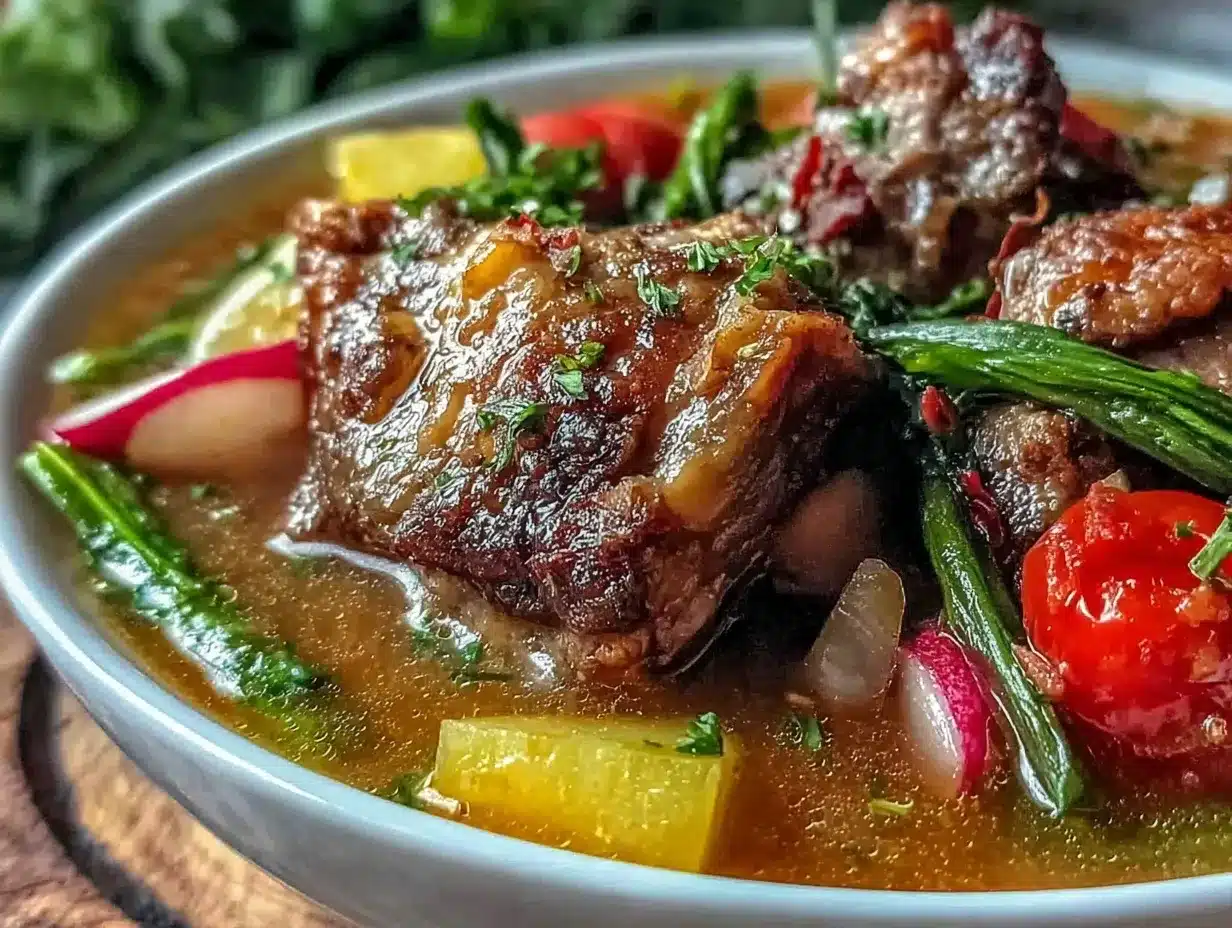
- Prepare the pork ribs. Rinse about 2 pounds (900g) of pork ribs under cold water and pat dry. Cut into serving pieces if not already pre-cut. This step should take about 5 minutes.
- Start the broth. In your large stockpot, combine the pork ribs, 8 cups (1.9 liters) of water, 1 medium quartered onion, and 2 quartered tomatoes. Bring to a boil over medium-high heat (about 10 minutes), then reduce to a gentle simmer.
- Simmer and skim. Let it simmer uncovered for 45 minutes to an hour. Occasionally skim off any foam or impurities that rise to the surface using a slotted spoon or strainer. This helps keep your broth clear and flavorful.
- Add the tamarind paste and fish sauce. Stir in 3 tablespoons (45ml) of tamarind paste and 2 tablespoons (30ml) fish sauce. Taste the broth—a balanced sour and salty profile is what you’re after. Adjust fish sauce or add a pinch of salt if needed.
- Add the vegetables. Toss in 1 cup (100g) sliced radish and 1 cup (100g) chopped long green beans. Simmer for another 7-10 minutes until the vegetables are tender but still slightly crisp.
- Finish with greens. Stir in 2 cups (60g) chopped water spinach or fresh spinach leaves. Cook just for 2 minutes until wilted—this keeps the greens bright and fresh.
- Final seasoning and serve. Give the soup a final taste and season with salt and pepper as needed. Ladle hot soup into bowls, making sure each serving gets tender pork ribs and a good mix of vegetables.
Pro tip: If your broth tastes too sour, a small pinch of sugar helps balance it without masking the tamarind’s brightness. Also, letting the soup rest for 10 minutes off the heat before serving deepens the flavors nicely.
Cooking Tips & Techniques
Getting those pork ribs tender and the broth perfectly tangy can feel tricky at first, but here’s what I’ve learned from trial and error:
- Low and slow simmering: Avoid boiling vigorously. A gentle simmer lets the pork ribs soften gradually and keeps the broth clear. I once rushed this step, and the broth turned cloudy and fatty—definitely less appealing.
- Skim the foam: As the pork cooks, bits of scum rise to the surface. Take a moment to skim them off for a cleaner taste and pretty presentation.
- Tamarind paste choice matters: Fresh tamarind pods are ideal but a hassle; good-quality tamarind paste works wonders and saves time. Just make sure it’s not overly salty or sweet.
- Adding vegetables at the right time: Radishes and green beans should go in with about 10 minutes left to keep their texture, while leafy greens wilt fast and should be last.
- Fish sauce for umami: It’s the secret behind that savory depth. Add gradually and taste often; too much can overpower.
Once, I forgot the fish sauce and ended up with a bland broth—lesson learned! Also, multitasking by prepping veggies while the broth simmers speeds things up. This recipe pairs well with simple steamed rice or even hearty chicken tortilla soup for a full meal lineup.
Variations & Adaptations
This Sinigang sour tamarind soup is versatile and welcomes tweaks to suit your mood or dietary needs:
- Seafood Sinigang: Swap pork ribs for shrimp, fish, or a mix of seafood. Reduce simmering time to 15-20 minutes so the seafood stays tender and fresh.
- Vegetarian version: Use vegetable broth and add mushrooms and tofu for protein. Omit fish sauce or replace with soy sauce or tamari.
- Spicier twist: Add sliced chili peppers or a dash of chili flakes to the broth for a gentle heat that wakes up the flavors.
- Seasonal veggies: Feel free to swap in whatever greens or root vegetables you have on hand—sweet potatoes add a lovely sweetness.
- Instant Pot shortcut: Pressure cook the pork ribs with broth and aromatics for 25 minutes, then add veggies and finish with greens off-heat.
Personally, I tried a batch with smoked pork ribs once, and the smoky undertone added a surprising depth that was a real crowd-pleaser. The variations make this recipe a keeper for different seasons and moods.
Serving & Storage Suggestions
This Sinigang sour tamarind soup is best served hot, straight from the pot, with plenty of broth to sip alongside tender pork ribs and crisp veggies. I like to garnish with fresh green onions or a wedge of calamansi if I have it on hand. It pairs wonderfully with steamed jasmine rice or plain white rice to soak up every drop of that tangy broth.
If you’re planning ahead, store leftovers in an airtight container in the refrigerator for up to 3 days. The flavors actually deepen overnight, making the next day’s meal even more comforting. When reheating, warm gently on the stove to avoid overcooking the vegetables—you want to keep that fresh snap.
For longer storage, freeze the pork and broth (without the leafy greens) in freezer-safe containers for up to 2 months. Thaw overnight in the fridge and add fresh greens when reheating. This way, you keep the soup vibrant and delicious.
Nutritional Information & Benefits
This Sinigang sour tamarind soup with tender pork ribs offers a hearty, nutritious meal that’s relatively low in calories but rich in protein and vitamins. Pork ribs provide good-quality protein and minerals like zinc and iron, important for energy and immune support.
Tamarind adds not only a distinctive sour flavor but also antioxidants and vitamin C, which can aid digestion and boost immunity. The fresh vegetables contribute fiber and essential nutrients, making this soup a balanced choice.
For those mindful of sodium, controlling the amount of fish sauce and salt is key. This recipe is naturally gluten-free, and with substitutions, it can be adapted for vegetarian or low-carb diets.
Conclusion
Cozy Sinigang sour tamarind soup with tender pork ribs is the kind of recipe that feels like a trusted friend in the kitchen—reliable, comforting, and full of heart. Whether you’re new to Filipino flavors or already a fan, this soup brings a perfect balance of tangy, savory, and fresh that warms the soul.
Feel free to tweak the ingredients and veggies to match your pantry and taste buds. I love how this recipe invites personalization without losing its signature charm. It’s one I come back to time and again, especially on evenings when I need a little comfort food that’s both satisfying and nourishing.
Give it a try, and I’d love to hear how you made it your own. Share your versions in the comments or tag your cozy Sinigang moments—you never know who might be inspired next. Here’s to many warm bowls ahead!
FAQs About Cozy Sinigang Sour Tamarind Soup with Tender Pork Ribs
What is the best cut of pork for Sinigang?
Pork ribs are ideal because they add rich flavor and become tender with slow simmering. You can also use pork shoulder or belly for a fattier, more succulent broth.
Can I make Sinigang without tamarind paste?
Yes, you can use fresh tamarind pods boiled in water or substitute with other souring agents like green mango or calamansi juice, but tamarind paste is the easiest and most consistent option.
How long does it take to cook the pork ribs until tender?
Simmering the ribs gently for about 45 minutes to 1 hour usually results in tender, fall-off-the-bone meat.
Can I prepare Sinigang in an Instant Pot?
Absolutely! Pressure cook the pork ribs with aromatics for about 25 minutes, then add veggies and greens after releasing the pressure for best texture.
What can I serve with Sinigang soup?
Steamed white rice is traditional and perfect for soaking up the broth. You might also enjoy it alongside other comforting dishes like ham and bean soup for a cozy meal.
Pin This Recipe!
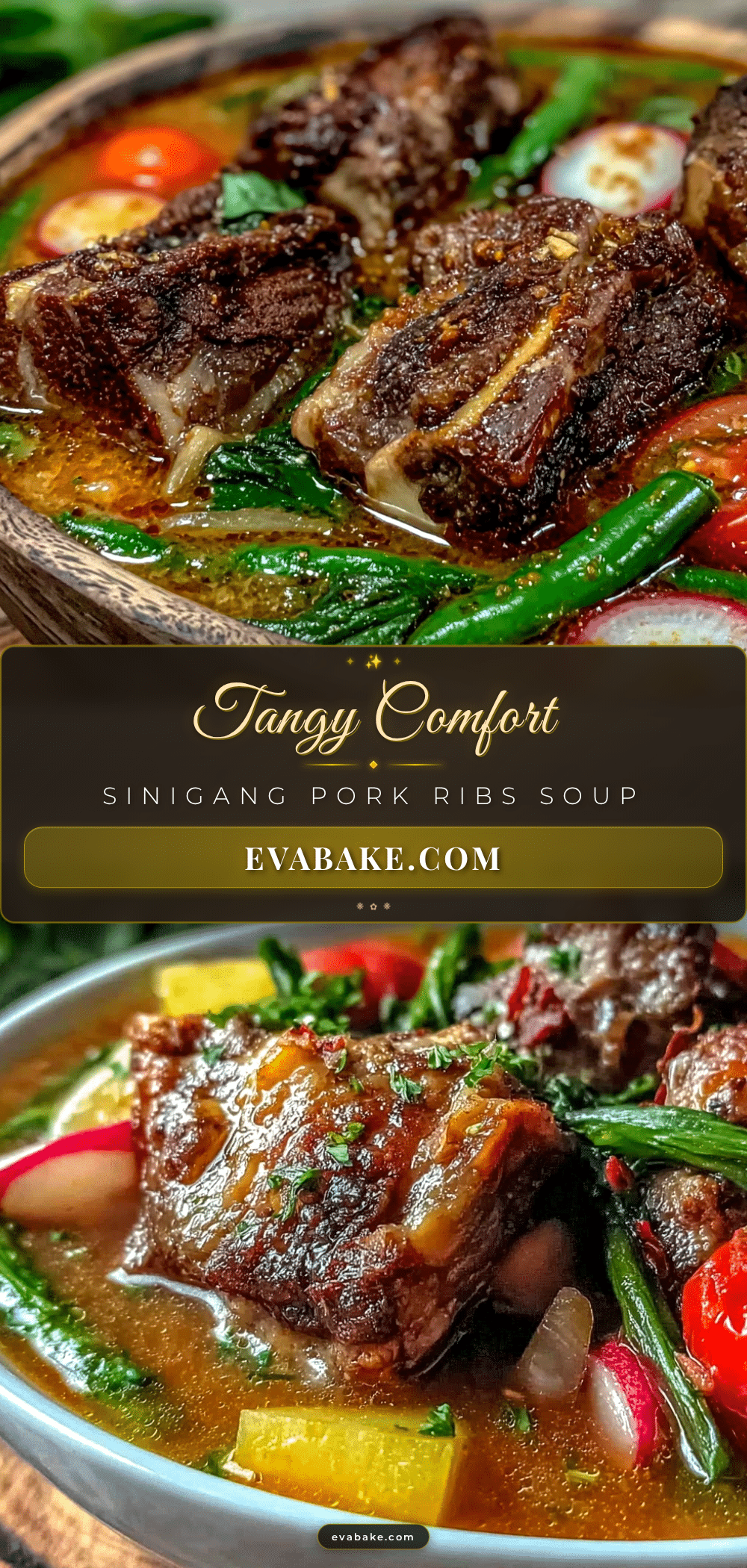
Cozy Sinigang Recipe with Tender Pork Ribs Easy Homemade Sour Tamarind Soup

A comforting Filipino sour tamarind soup featuring tender pork ribs simmered with fresh vegetables for a perfect balance of tangy and savory flavors.
- Prep Time: 10 minutes
- Cook Time: 1 hour 10 minutes
- Total Time: 1 hour 20 minutes
- Yield: 6 servings 1x
- Category: Main Course
- Cuisine: Filipino
Ingredients
- 2 pounds pork ribs, cut into serving pieces
- 3 tablespoons tamarind paste
- 1 medium onion, peeled and quartered
- 2 medium tomatoes, quartered
- 1 cup radish, peeled and sliced
- 1 cup long green beans, trimmed and cut into 2-inch pieces
- 2 cups water spinach (kangkong) or spinach, roughly chopped
- 2 tablespoons fish sauce (patis)
- 8 cups water
- Salt and pepper to taste
Instructions
- Rinse about 2 pounds of pork ribs under cold water and pat dry. Cut into serving pieces if not already pre-cut.
- In a large stockpot, combine pork ribs, 8 cups of water, 1 medium quartered onion, and 2 quartered tomatoes. Bring to a boil over medium-high heat, about 10 minutes, then reduce to a gentle simmer.
- Simmer uncovered for 45 minutes to 1 hour, occasionally skimming off any foam or impurities with a slotted spoon or strainer.
- Stir in 3 tablespoons tamarind paste and 2 tablespoons fish sauce. Taste and adjust seasoning with fish sauce or salt as needed.
- Add 1 cup sliced radish and 1 cup chopped long green beans. Simmer for another 7-10 minutes until vegetables are tender but still slightly crisp.
- Stir in 2 cups chopped water spinach or fresh spinach leaves. Cook for 2 minutes until wilted.
- Season with salt and pepper to taste. Ladle hot soup into bowls, ensuring each serving has tender pork ribs and a good mix of vegetables.
Notes
If broth tastes too sour, add a small pinch of sugar to balance the flavor. Letting the soup rest for 10 minutes off the heat deepens the flavors. For vegetarian version, substitute pork ribs with firm tofu and use vegetable broth instead of water, omit fish sauce or replace with soy sauce or tamari. Skim foam during simmering for clearer broth. Avoid vigorous boiling to keep broth clear and ribs tender.
Nutrition
- Serving Size: 1 bowl (approximatel
- Calories: 280
- Sugar: 4
- Sodium: 700
- Fat: 15
- Saturated Fat: 5
- Carbohydrates: 10
- Fiber: 2
- Protein: 22
Keywords: Sinigang, tamarind soup, pork ribs, Filipino soup, sour soup, comfort food, easy soup recipe