Third time this week I’d made it, and I still couldn’t tell you exactly when the butternut squash mac and cheese stopped being an experiment and started being a problem. The first batch was Tuesday—a desperate Tuesday, the kind where the fridge held half a squash, some cheddar, and absolutely no plan. I figured I’d hide the squash in the cheese sauce, feed it to my family, and call it a win. By Thursday morning, I was roasting squash at 7 a.m. just to have it ready for lunch. Nobody asked me to. The kids certainly didn’t complain. But there I was, elbow-deep in squash puree, wondering if this was normal behavior or if I needed to be stopped.
What kept pulling me back wasn’t just the taste—though honestly, that first bite of creamy, golden sauce tangled around tender pasta is something else. It was the way the squash melted into the cheese until you couldn’t tell where one ended and the other began. No chunks. No weird texture. Just a silky, velvety sauce that tasted richer than it had any right to be. I kept tweaking things—more mustard, less milk, a pinch of nutmeg one time, smoked paprika the next—trying to figure out if I could make it even better. By batch three, I stopped trying to improve it and just started enjoying it.
This creamy baked butternut squash mac and cheese isn’t trying to be healthy in a way that tastes like punishment. It’s just good mac and cheese that happens to have a vegetable hidden in plain sight. And honestly? That’s the kind of cooking I actually trust.
Why You’ll Love This Recipe
I’ve tested this recipe more times than I care to admit, and every single time it delivers the same thing: a bowl of mac and cheese that feels indulgent but doesn’t leave you feeling heavy. Here’s why it works:
- Quick & Easy: From start to table in about 45 minutes, and most of that is hands-off oven time. Perfect for a weeknight when you need comfort food fast.
- Simple Ingredients: No weird specialty items here. Butternut squash, pasta, cheese, milk, butter—stuff you probably already have or can grab without a second thought.
- Perfect for Fall: This is the kind of dish you want when the weather turns cool and you’re craving something warm and cozy. It also works beautifully for Thanksgiving sides or holiday gatherings.
- Crowd-Pleaser: Kids eat it without asking what’s in it. Adults ask for the recipe. I’ve served it to picky eaters and cheese snobs alike, and nobody has ever guessed there’s squash in the sauce.
- Unbelievably Delicious: The texture is what gets me every time. The squash makes the sauce incredibly creamy without needing a ton of heavy cream or extra cheese. It’s rich but not greasy, smooth but not thin.
What makes this version different from other recipes is the technique. I roast the squash instead of boiling it, which concentrates the natural sweetness and gives the sauce a deeper, almost nutty flavor. Then I blend it with the cheese sauce until it’s completely smooth—no lumps, no stringy bits, just pure creamy goodness. It’s the kind of mac and cheese that makes you close your eyes after the first bite, and honestly, that’s the highest compliment I can give any recipe.
What Ingredients You Will Need
This recipe uses simple, wholesome ingredients to deliver bold flavor and satisfying texture without the fuss. Most of these are pantry staples, and the ones that aren’t are easy to find at any grocery store.
- Butternut squash (1 medium, about 2-3 lbs): You’ll need about 2 cups of roasted squash puree. Look for a squash that feels heavy for its size with firm, unblemished skin. I usually buy pre-cut cubes from the store when I’m short on time, but roasting a whole squash gives the best flavor.
- Elbow macaroni (16 oz / 450g): Classic choice, but any short pasta works. Cavatappi, shells, or rotini all hold the sauce beautifully. I’ve even used gluten-free pasta with great results—just cook it al dente so it doesn’t get mushy in the oven.
- Sharp cheddar cheese (8 oz / 225g, shredded): The backbone of the sauce. I recommend shredding it yourself from a block—pre-shredded cheese has anti-caking agents that can make the sauce grainy. Sharp cheddar gives the most flavor, but mild works if you prefer a subtler taste.
- Gruyère or fontina cheese (4 oz / 115g, shredded): This is my secret weapon. Gruyère adds a nutty, slightly sweet flavor that pairs perfectly with the squash. Fontina is milder but melts like a dream. Either one takes the sauce from good to restaurant-quality.
- Whole milk (2 cups / 480ml): Full-fat milk gives the creamiest sauce. You can use 2% in a pinch, but the sauce won’t be as lush. For a dairy-free version, unsweetened oat milk works surprisingly well—just avoid almond milk, which can separate when heated.
- Unsalted butter (3 tbsp / 42g): Used for the roux that thickens the cheese sauce. If you only have salted butter, reduce the added salt by about ¼ teaspoon.
- All-purpose flour (3 tbsp / 24g): The thickening agent for the roux. For a gluten-free version, use a 1:1 gluten-free flour blend—I’ve tried several brands and they all work fine here.
- Dijon mustard (1 tsp): Don’t skip this! It doesn’t make the sauce taste like mustard—it just brightens the cheese flavor and adds a subtle tang that cuts through the richness.
- Garlic powder (½ tsp): Adds savory depth without being overpowering. Fresh garlic can make the sauce taste harsh, so stick with the powder here.
- Ground nutmeg (¼ tsp): A tiny amount that works magic with the squash and cheese. It’s one of those ingredients you won’t taste specifically, but you’ll notice if it’s missing.
- Smoked paprika (½ tsp, optional): Adds a subtle smoky flavor that complements the roasted squash. I add it about half the time, depending on my mood.
- Salt and black pepper (to taste): Season the sauce generously—the squash and pasta need it to bring out their flavors.
- Panko breadcrumbs (½ cup / 45g): For the topping. They add a wonderful crunch that contrasts with the creamy sauce. I use plain panko, but seasoned works too—just reduce the salt slightly.
- Parmesan cheese (¼ cup / 25g, grated): Mixed with the panko for extra flavor and browning. Real Parmigiano-Reggiano is worth the splurge here.
- Olive oil or melted butter (2 tbsp): Tossed with the panko mixture to help it brown evenly in the oven.
Equipment Needed
You don’t need a fancy kitchen to make this recipe, but a few key tools will make the process smoother:
- Baking sheet: For roasting the squash. A rimmed sheet works best to catch any caramelized juices.
- Large pot: For boiling the pasta. You’ll also use it for the cheese sauce, so make sure it’s big enough to hold everything.
- Blender or food processor: To puree the roasted squash until completely smooth. An immersion blender works too, but you’ll need a tall container to avoid splatters.
- 9×13-inch baking dish: For the final bake. A ceramic or glass dish works best—metal can sometimes react with the cheese sauce.
- Whisk: Essential for making a smooth roux without lumps.
- Cheese grater: Please, for the love of good mac and cheese, grate your own cheese. I learned this the hard way after a grainy sauce disaster.
- Measuring cups and spoons: For accuracy. I use a kitchen scale for the pasta and cheese when I’m feeling precise.
If you don’t have a blender, you can mash the roasted squash with a fork or potato masher, but the sauce won’t be as silky smooth. I’ve done it that way in a pinch, and it still tastes great—just with a slightly more rustic texture.
Preparation Method
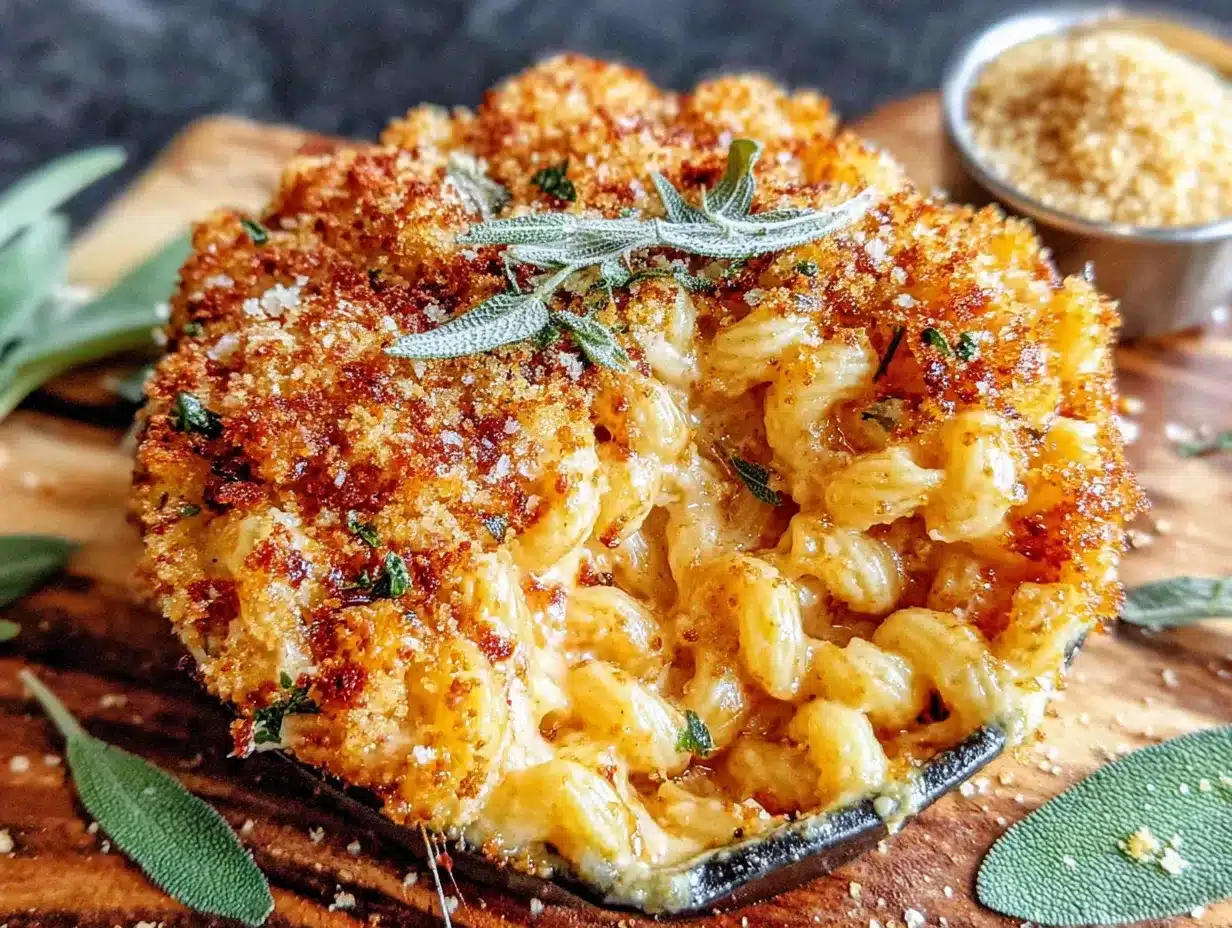
Step 1: Roast the Butternut Squash
Preheat your oven to 400°F (200°C). Cut the butternut squash in half lengthwise and scoop out the seeds. Place the halves cut-side down on a baking sheet lined with parchment paper. Roast for 35-40 minutes, until the flesh is tender enough to pierce easily with a fork. Let it cool slightly, then scoop the flesh into a blender. Puree until completely smooth—this should give you about 2 cups of puree. Set aside.
Step 2: Cook the Pasta
While the squash roasts, bring a large pot of salted water to a boil. Add the macaroni and cook for 1-2 minutes less than the package directions call for—it should be very al dente since it will continue cooking in the oven. Drain the pasta and set it aside. Don’t rinse it; the starch helps the sauce cling to the noodles.
Step 3: Make the Cheese Sauce
In the same large pot, melt the butter over medium heat. Whisk in the flour and cook for 1-2 minutes, stirring constantly, until the mixture is bubbly and golden. This is your roux, and it’s the foundation of a smooth, lump-free sauce. Slowly pour in the milk while whisking continuously to prevent lumps. Cook for 3-4 minutes, whisking often, until the sauce thickens enough to coat the back of a spoon.
Remove the pot from the heat and stir in the Dijon mustard, garlic powder, nutmeg, smoked paprika (if using), and a generous pinch of salt and pepper. Add the shredded cheddar and gruyère a handful at a time, stirring until each addition is fully melted before adding the next. Finally, stir in the butternut squash puree until the sauce is smooth and evenly colored. Taste and adjust seasoning—you want it slightly saltier than you think, as the pasta will absorb some of the salt.
Step 4: Combine and Assemble
Add the cooked pasta to the pot with the cheese sauce and stir until every piece is well coated. Pour the mixture into a greased 9×13-inch baking dish and spread it into an even layer. In a small bowl, mix the panko breadcrumbs, grated Parmesan, and olive oil or melted butter until the crumbs are evenly moistened. Sprinkle the topping over the mac and cheese.
Step 5: Bake Until Golden
Bake at 375°F (190°C) for 20-25 minutes, until the sauce is bubbly around the edges and the topping is golden brown and crispy. If you want extra browning, broil for the last 1-2 minutes—but watch it closely, because panko can burn fast. Let the dish rest for 5-10 minutes before serving. This is important—the sauce needs time to set up so it doesn’t run all over the plate.
Cooking Tips & Techniques
I’ve made this recipe enough times to know where things can go wrong. Here’s what I’ve learned the hard way:
Don’t overcook the pasta. This is the most common mistake I see. If you cook the pasta fully before baking, it turns into mush in the oven. Cook it 1-2 minutes under al dente, and it will finish cooking perfectly in the sauce. Trust me on this—I’ve ruined more than one batch by forgetting this rule.
Grate your own cheese. I know I’ve said this already, but it bears repeating. Pre-shredded cheese is coated in cellulose and other anti-caking agents that prevent it from melting smoothly. Your sauce will end up grainy instead of silky. A block of good cheddar and a grater take two extra minutes and make all the difference.
Season the sauce generously. Butternut squash is naturally sweet, and pasta is bland on its own. Your cheese sauce needs enough salt to bring out the flavors of both. I usually add about 1 teaspoon of salt to the sauce, then adjust at the end. Don’t be shy—you can always add more, but you can’t take it out.
Toast the panko for extra crunch. If you have an extra 5 minutes, toast the panko in a dry skillet over medium heat until golden before mixing it with the Parmesan and oil. It adds another layer of texture and flavor. I do this when I’m feeling fancy, but it’s not essential.
Let it rest before serving. I know it’s hard to wait when the kitchen smells this good, but letting the dish rest for 5-10 minutes allows the sauce to thicken slightly and the flavors to meld. If you serve it immediately, it will be runny and the layers won’t hold together.
Variations & Adaptations
One of the things I love about this recipe is how adaptable it is. Here are some variations I’ve tried and loved:
Make it gluten-free: Use gluten-free pasta and a 1:1 gluten-free flour blend for the roux. The panko topping can be replaced with crushed gluten-free crackers or almond flour mixed with Parmesan. I’ve tested this with several brands, and it works beautifully—just watch the pasta cooking time, as gluten-free pasta can go from al dente to mush very quickly.
Add protein: Stir in 2 cups of shredded rotisserie chicken, cooked bacon crumbles, or leftover honey miso glazed salmon (flaked into pieces) before baking for a heartier meal. I’ve done the chicken version for a weeknight dinner, and it turns this side dish into a full meal that everyone loves.
Swap the squash: If butternut squash isn’t available, roasted sweet potato or pumpkin puree works almost identically. The flavor will be slightly different—sweet potato adds a bit more sweetness, while pumpkin is milder—but the texture and method are the same. I’ve used canned pumpkin in a pinch, and it works fine; just make sure it’s pure pumpkin, not pumpkin pie filling.
Make it dairy-free: Use unsweetened oat milk or cashew milk for the sauce, dairy-free butter or coconut oil for the roux, and your favorite dairy-free shredded cheese. I’ve found that a blend of vegan cheddar and mozzarella works best. The sauce won’t be quite as creamy, but it’s still delicious. For the topping, use dairy-free Parmesan or nutritional yeast mixed with the panko.
Add vegetables: Stir in 2 cups of steamed broccoli florets, sautéed mushrooms, or roasted cherry tomatoes before baking. I’ve done the broccoli version, and it’s a great way to sneak even more vegetables into the dish. Just make sure any added vegetables are cooked before adding—they won’t cook enough in the short baking time.
Serving & Storage Suggestions
This creamy baked butternut squash mac and cheese is best served warm, straight from the oven, with a generous sprinkle of fresh black pepper and maybe some chopped parsley for color. The topping should be crispy, the sauce bubbly, and the pasta tender but not mushy.
For sides, I love serving this with a simple green salad dressed with lemon vinaigrette to cut through the richness. It also pairs beautifully with roasted vegetables like Brussels sprouts or asparagus. If you’re making it for a fall gathering, consider serving it alongside honey butter skillet cornbread for a truly comforting meal. For a protein boost, Greek yogurt chicken sheet pan dinner makes a great companion—the tangy chicken balances the creamy mac and cheese perfectly.
Storing leftovers: Transfer any leftovers to an airtight container and refrigerate for up to 4 days. The pasta will absorb some of the sauce as it sits, so it won’t be quite as creamy the next day, but the flavor actually gets better. To reheat, add a splash of milk or cream and warm in the microwave or on the stovetop, stirring occasionally, until heated through. For the crispiest topping, reheat in a 350°F (175°C) oven for 10-15 minutes.
Freezing: This recipe freezes well. Assemble the dish completely but don’t bake it. Cover tightly with foil and freeze for up to 3 months. When ready to bake, thaw overnight in the refrigerator, then bake as directed, adding 10-15 minutes to the baking time since you’re starting from cold. The topping may not be as crispy after freezing, but the flavor will still be wonderful.
Make-ahead tip: You can prepare the cheese sauce and roast the squash up to 2 days in advance. Store them separately in the refrigerator, then combine with freshly cooked pasta and bake when you’re ready. This makes it perfect for holiday entertaining or busy weeknights.
Nutritional Information & Benefits
Per serving (based on 8 servings): approximately 420 calories, 18g protein, 45g carbohydrates, 20g fat, 8g saturated fat, 45mg cholesterol, 580mg sodium, 3g fiber, 6g sugar. These values are estimates and will vary based on specific ingredients used.
The butternut squash is the real star here nutritionally. It’s packed with vitamin A (over 400% of your daily needs per serving), vitamin C, potassium, and fiber. The beta-carotene in squash is a powerful antioxidant that supports eye health and immune function. By using squash to replace some of the cheese and cream, this recipe cuts about 100 calories and 8 grams of fat per serving compared to traditional mac and cheese, without sacrificing any of the creamy texture or flavor.
This recipe is vegetarian, and with the substitutions mentioned above, it can easily be made gluten-free or dairy-free. It contains dairy and gluten in its standard form, so be mindful of those allergens when serving guests. The cheese sauce is a good source of calcium and protein, making this a more balanced comfort food option than you might expect.
Conclusion
I’ve made a lot of mac and cheese in my time—boxed stuff in college, fancy versions at restaurants, and everything in between. But this creamy baked butternut squash mac and cheese is the one I keep coming back to. It’s the one I make when I need comfort food that doesn’t leave me feeling sluggish. It’s the one I serve to guests who think they don’t like squash. It’s the one that makes me feel like I’ve actually figured something out in the kitchen.
The beauty of this recipe is that it’s forgiving. You can tweak the cheese blend, swap the squash for sweet potato, add protein or vegetables—it all works. The basic technique of roasting the squash and blending it into a creamy cheese sauce is solid, and once you’ve got that down, you can make it your own. That’s the kind of cooking I love: a reliable foundation with room to play.
I’d love to hear how this turns out for you. Did you add something unexpected? Did your kids eat it without asking what was in it? Drop a comment below or tag me in your photos—I genuinely get excited every time someone tries this recipe and loves it. And if you’re looking for more cozy fall recipes, don’t miss our cozy crockpot fall vegetable and barley soup or creamy sage brown butter butternut squash ravioli for more squash inspiration. Happy cooking, friends!
Frequently Asked Questions
Can I use pre-cut butternut squash from the store?
Absolutely. Pre-cut cubes save time and work just as well. Roast them on a baking sheet at 400°F (200°C) for 25-30 minutes, or until tender. You’ll need about 3 cups of raw cubes to get 2 cups of puree.
Why did my cheese sauce turn out grainy?
This usually happens for one of two reasons: you used pre-shredded cheese with anti-caking agents, or you overheated the sauce. Always grate your own cheese and keep the heat at medium or medium-low when melting it into the sauce. If the sauce gets too hot, the proteins in the cheese can separate and become grainy.
Can I make this without a blender?
Yes, but the texture won’t be as smooth. You can mash the roasted squash with a potato masher or fork, or press it through a fine-mesh sieve. The sauce will have a slightly more rustic texture, but it will still taste delicious. Just make sure there are no large chunks of squash in the sauce.
How do I know when the mac and cheese is done baking?
The dish is done when the sauce is bubbly around the edges and the topping is golden brown and crispy. If you insert a knife into the center, it should come out hot. The internal temperature should be around 165°F (74°C). Let it rest for 5-10 minutes before serving to allow the sauce to set.
Can I double this recipe for a crowd?
Definitely. Double all the ingredients and use a larger baking dish or two 9×13-inch dishes. The baking time may increase by 5-10 minutes, so keep an eye on it. If you’re making it for a holiday gathering, this recipe travels well—just assemble it at home and bake it at your destination.
Pin This Recipe!
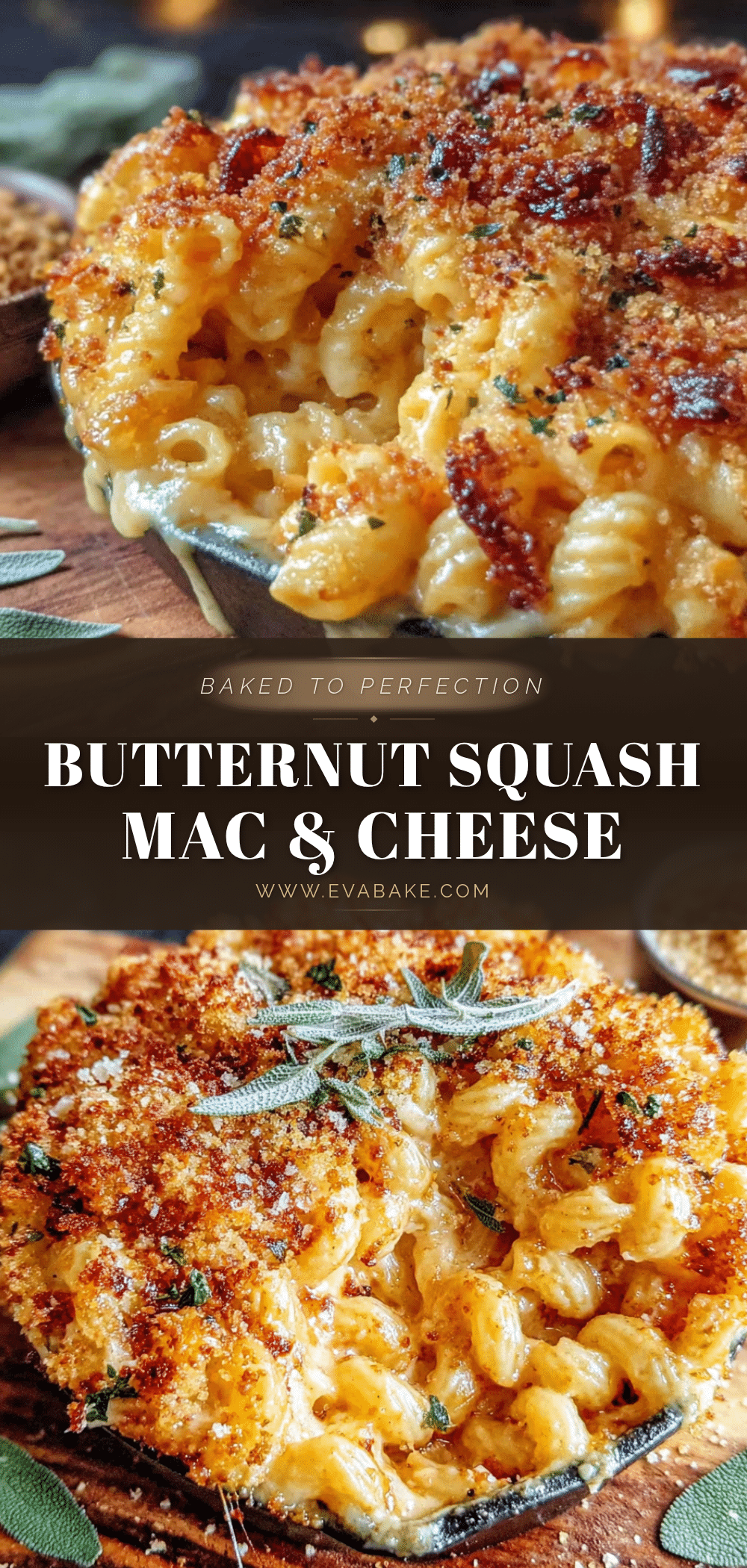
Creamy Baked Butternut Squash Mac and Cheese

A creamy, indulgent mac and cheese with roasted butternut squash blended into the cheese sauce for extra richness and nutrition. Perfect for fall, this crowd-pleaser is ready in about 45 minutes.
- Prep Time: 15 minutes
- Cook Time: 30 minutes
- Total Time: 45 minutes
- Yield: 8 servings 1x
- Category: Main Course
- Cuisine: American
Ingredients
- 1 medium butternut squash (about 2–3 lbs), roasted and pureed (about 2 cups puree)
- 16 oz (450g) elbow macaroni or other short pasta
- 8 oz (225g) sharp cheddar cheese, shredded
- 4 oz (115g) Gruyère or fontina cheese, shredded
- 2 cups (480ml) whole milk
- 3 tbsp (42g) unsalted butter
- 3 tbsp (24g) all-purpose flour
- 1 tsp Dijon mustard
- ½ tsp garlic powder
- ¼ tsp ground nutmeg
- ½ tsp smoked paprika (optional)
- Salt and black pepper to taste
- ½ cup (45g) panko breadcrumbs
- ¼ cup (25g) grated Parmesan cheese
- 2 tbsp olive oil or melted butter
Instructions
- Preheat oven to 400°F (200°C). Cut butternut squash in half lengthwise, scoop out seeds, and place cut-side down on a parchment-lined baking sheet. Roast for 35-40 minutes until tender. Let cool slightly, then scoop flesh into a blender and puree until smooth. Set aside.
- Bring a large pot of salted water to a boil. Cook pasta 1-2 minutes less than package directions (very al dente). Drain and set aside (do not rinse).
- In the same pot, melt butter over medium heat. Whisk in flour and cook for 1-2 minutes until bubbly and golden. Slowly whisk in milk and cook for 3-4 minutes until thickened.
- Remove from heat. Stir in Dijon mustard, garlic powder, nutmeg, smoked paprika (if using), salt, and pepper. Add shredded cheddar and Gruyère a handful at a time, stirring until melted. Stir in butternut squash puree until smooth. Adjust seasoning.
- Add cooked pasta to the sauce and stir to coat. Pour into a greased 9×13-inch baking dish.
- In a small bowl, mix panko, Parmesan, and olive oil or melted butter until moistened. Sprinkle over the mac and cheese.
- Bake at 375°F (190°C) for 20-25 minutes until bubbly and golden. For extra browning, broil 1-2 minutes. Let rest 5-10 minutes before serving.
Notes
Don’t overcook the pasta—cook it 1-2 minutes under al dente. Grate your own cheese for a smooth sauce. Season the sauce generously. Let the dish rest before serving to allow the sauce to set. For extra crunch, toast the panko in a dry skillet before mixing with Parmesan and oil.
Nutrition
- Serving Size: 1 serving (about 1/8
- Calories: 420
- Sugar: 6
- Sodium: 580
- Fat: 20
- Saturated Fat: 8
- Carbohydrates: 45
- Fiber: 3
- Protein: 18
Keywords: butternut squash mac and cheese, baked mac and cheese, creamy mac and cheese, fall comfort food, vegetarian mac and cheese