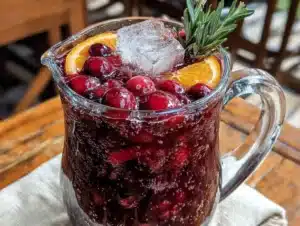
I was standing in the frozen foods aisle last Tuesday, staring at a family-sized turkey roasting bag, when the smell hit me. Not a real smell—a memory smell. Sage and butter and something faintly sweet, like the inside of my grandmother’s coat closet where she kept her good linens. And just like that, I was seven years old, sitting at the tiny card table in my grandmother Betty’s kitchen while she pulled a golden turkey breast from the oven, steam rolling off it like a slow-motion wave. I’d forgotten that sound—the way the skin crackled when she touched it with a fork. I’d forgotten how she’d wink and say, “This one’s just for us, kiddo,” because the grown-ups got the big bird in the dining room.
I don’t have Betty’s kitchen anymore. She’s been gone six years now, and honestly, I still haven’t figured out how to make turkey that tastes like hers. But last week, standing there with a bag of frozen peas in my hand, I got this sudden, aching urge to try again. Not a whole turkey—that’s ridiculous for two people. Just a breast. Something manageable for a Tuesday night when you’re tired and hungry and you need the kind of meal that feels like a hug.
So I grabbed a small roasting pan, some fresh herbs I definitely overpaid for, and a stick of butter that was probably too expensive for a Tuesday. And I came home and made this Easy Herb Butter Roasted Turkey Breast for Two. It’s not Betty’s recipe—I don’t think she ever wrote it down. But it’s mine now, and it’s close. Close enough that when I pulled it out of the oven and heard that crackle, I had to stop and blink a few times. Maybe you’ve been there—chasing a taste you can’t quite name but can’t quite let go of either. This one’s for us, kiddo.
Why You’ll Love This Recipe
Let me be honest with you—I’ve made a lot of turkey breasts that came out dry, bland, or just plain sad. This one is none of those things. After testing this recipe about six times (my neighbors are very well-fed now), I can tell you exactly why it works and why you’ll keep coming back to it.
- Quick & Easy: From prep to table in under 90 minutes, with only about 15 minutes of active work. Perfect for a weeknight when you want something special without spending all evening in the kitchen.
- Simple Ingredients: You probably already have butter, garlic, and basic herbs in your kitchen. The only thing you might need to grab is a small turkey breast—around 2 to 3 pounds—which most grocery stores carry in the fresh meat section.
- Perfect for Two: No leftovers that go bad before you finish them. No wrestling with a 15-pound bird. Just the right amount for a cozy dinner for two with maybe enough left for a sandwich the next day.
- Foolproof Moisture: The herb butter goes under the skin, not just on top. This is the trick that keeps the meat juicy while the skin gets perfectly crispy. I learned this the hard way after years of dry turkey.
- Actually Impressive: This looks like you spent hours on it, but between us, it’s mostly hands-off oven time. Perfect for date nights, small celebrations, or just making a Tuesday feel a little more special.
What makes this different from every other roasted turkey breast recipe out there? Two things. First, the butter-to-herb ratio. Most recipes drown the butter in herbs, which sounds good but actually makes the butter less effective at basting the meat. I use just enough herbs to flavor the butter without overwhelming it. Second, I start the turkey at a higher temperature to get that crispy skin, then drop the heat to finish cooking gently. That two-temperature trick is the difference between “pretty good” and “close your eyes after the first bite” good.
This isn’t just another turkey recipe. It’s the one that makes you look forward to turkey again, even when it’s not Thanksgiving. The kind of meal that turns a regular Wednesday into something that feels like a small celebration. And honestly? After the year we’ve all had, we deserve that.
What Ingredients You Will Need
This recipe uses simple, mostly pantry-staple ingredients to deliver big flavor without the fuss. Here’s what you’ll need and why each one matters:
For the Herb Butter:
- 4 tablespoons unsalted butter, softened (Use good butter here—I prefer Kerrygold or Plugrà. The quality really comes through since butter is the star of this recipe. Let it sit out for about 30 minutes before starting so it’s easy to work with.)
- 2 cloves garlic, minced (Fresh garlic only, please. The jarred stuff has a different flavor that doesn’t distribute as well through the butter. If you’re in a pinch, use 1/2 teaspoon garlic powder instead.)
- 1 tablespoon fresh rosemary, finely chopped (Dried rosemary works in a pinch—use 1 teaspoon—but fresh really shines here. Strip the leaves off the woody stem before chopping.)
- 1 tablespoon fresh thyme leaves (About 6 to 8 sprigs. Run your fingers down the stem to strip the leaves off easily. If using dried, go with 1 teaspoon.)
- 1 teaspoon fresh sage, finely chopped (This is optional but highly recommended. Sage has that classic turkey flavor that makes you think of Thanksgiving. About 3 to 4 leaves will do it.)
- 1/2 teaspoon salt (I use fine sea salt here. Table salt is fine too, just don’t use coarse kosher for the butter since it won’t dissolve properly.)
- 1/4 teaspoon black pepper, freshly ground (Pre-ground works, but freshly ground has more punch. Trust me on this one.)
- 1/2 teaspoon lemon zest (From about half a lemon. This brightens everything up and cuts through the richness. Don’t skip it—it’s not optional.)
For the Turkey:
- 1 bone-in, skin-on turkey breast, about 2 to 3 pounds (This is the perfect size for two people with maybe one leftover sandwich. Look for one that’s uniform in thickness so it cooks evenly. I like the Butterball brand because they’re consistently good, but store brand works fine too. If you can only find a larger one, just adjust the cooking time—add about 10 minutes per extra pound.)
- 1 tablespoon olive oil (For rubbing on the outside of the skin before roasting. This helps the skin crisp up without burning the butter.)
- 1/2 cup chicken broth or turkey stock (Pour this into the bottom of the roasting pan. It creates steam that keeps the meat moist and forms the base for an easy pan sauce later. Use low-sodium if you can—you can always add more salt later.)
- 1 small onion, quartered (Optional, but I add it to the pan for extra flavor in the drippings. You don’t eat it—it’s just there to perfume the steam.)
- 2 sprigs fresh rosemary and 3 sprigs fresh thyme (For the pan. These get all roasty and release their oils into the steam. They’re not for eating, just for flavor.)
For the Optional Pan Sauce:
- 1 tablespoon all-purpose flour (For thickening. You can use cornstarch if you’re gluten-free—mix 1 teaspoon with 1 tablespoon cold water first.)
- 1/2 cup additional chicken broth (To deglaze the pan and make enough sauce.)
- Salt and pepper to taste
A quick note on substitutions: If you don’t have fresh herbs, dried will work but use about one-third the amount. The flavor won’t be quite as bright, but it’ll still be good. For a dairy-free version, use vegan butter—just make sure it’s the stick kind, not the spreadable tub kind, which has too much water.
Equipment Needed
You don’t need a fancy kitchen for this recipe, but having the right tools makes everything easier. Here’s what you’ll need:
- Small roasting pan or 9×13 baking dish (A metal pan works best because it conducts heat well and helps the skin crisp. Glass or ceramic works too, but you might need to add 5 to 10 minutes to the cooking time. I use a cheap metal roasting pan I got for $12 at the grocery store—it’s held up for years.)
- Instant-read thermometer (This is non-negotiable. Guessing when turkey is done is how you end up with dry meat. I love my Thermapen, but a $15 digital one from Amazon works great too. Just make sure it’s reliable.)
- Small bowl for mixing the herb butter
- Chef’s knife and cutting board (For chopping herbs and mincing garlic. A sharp knife makes this job so much faster.)
- Kitchen twine (Optional, but helpful for tying the turkey breast into a uniform shape. If you don’t have it, no worries—the breast will still cook fine.)
- Aluminum foil (For tenting the turkey if the skin browns too quickly, and for resting after cooking.)
- Measuring spoons
- Basting brush or spoon (For brushing the butter mixture under the skin. A spoon works fine if you don’t have a brush.)
If you don’t have a roasting pan, a cast-iron skillet works beautifully. The high sides keep the juices contained, and the even heat distribution helps the turkey cook evenly. Just make sure your skillet is at least 10 inches across to fit the breast comfortably.
Preparation Method
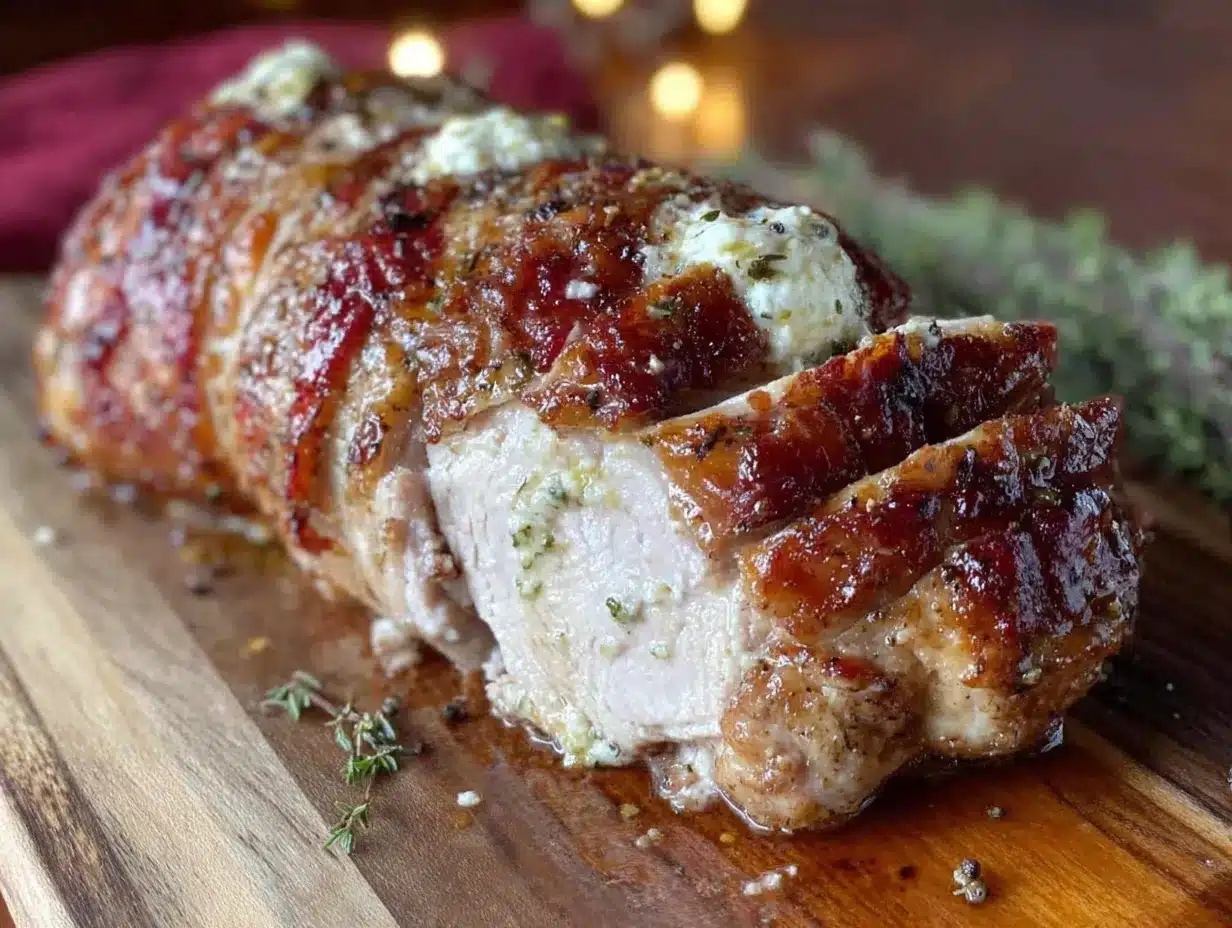
Let me walk you through this step by step. I’ve made this recipe enough times to know exactly where things can go wrong, so I’ll point those out as we go.
Step 1: Preheat and Prep (5 minutes)
Preheat your oven to 425°F (220°C). Position the rack in the middle of the oven. While the oven heats, take your turkey breast out of the fridge and let it sit on the counter for about 20 minutes. This takes the chill off and helps it cook more evenly. Don’t skip this—cold meat cooks unevenly and the outside will dry out before the inside is done.
Step 2: Make the Herb Butter (5 minutes)
In a small bowl, combine the softened butter, minced garlic, chopped rosemary, thyme, sage (if using), salt, pepper, and lemon zest. Mash everything together with a fork until it’s well combined. The butter should be soft enough to spread easily but not melted. If it’s too firm, let it sit at room temperature for another 10 minutes. Taste a tiny bit—it should be savory and aromatic with a hint of brightness from the lemon. Adjust salt if needed.
Step 3: Prep the Turkey (5 minutes)
Pat the turkey breast dry with paper towels. This is crucial—wet skin won’t get crispy. Use a few paper towels and really press them into the skin to absorb as much moisture as possible. Place the turkey breast on a cutting board, skin side up.
Using your fingers, gently loosen the skin from the meat. Start at the edge of the breast and work your fingers underneath, being careful not to tear the skin. You want to create a pocket between the skin and the meat. This is where the magic happens. Take about two-thirds of the herb butter and spread it evenly under the skin, directly onto the meat. Use your fingers to push it around so it covers as much of the breast as possible. Don’t worry if some butter squishes out the sides—just wipe it off the skin with a paper towel.
Step 4: Season the Outside (2 minutes)
Rub the remaining herb butter all over the outside of the skin. Then drizzle the olive oil over the top and rub it in. The oil helps the skin brown without burning the butter. Sprinkle a little extra salt and pepper on top if you like. If you’re using kitchen twine, tie the breast crosswise in two or three places to create a nice, even shape. This helps it cook more uniformly.
Step 5: Set Up the Pan (2 minutes)
Place the quartered onion and the extra herb sprigs in the center of your roasting pan. Pour the chicken broth into the pan, being careful not to pour it over the herbs. Place the turkey breast on top of the onion and herbs. The turkey shouldn’t be sitting in liquid—it should be elevated slightly. If your pan is too big and the broth spreads out too thin, add a little more.
Step 6: Roast at High Heat (20 minutes)
Place the pan in the preheated oven and roast at 425°F for 20 minutes. This high heat kick-starts the browning process and gives you that gorgeous golden skin. Don’t open the oven during this time—every time you open the door, you lose heat and steam, which makes the skin less crispy.
Step 7: Reduce Heat and Continue Roasting (25 to 35 minutes)
After 20 minutes, reduce the oven temperature to 350°F (175°C). Don’t take the turkey out—just turn the dial down. Continue roasting for another 25 to 35 minutes, or until the internal temperature reaches 155°F (68°C) when measured at the thickest part of the breast. The temperature will rise to 160°F (71°C) during resting, which is the safe temperature for turkey. Start checking the temperature at the 20-minute mark if your breast is on the smaller side. If the skin is browning too quickly, tent loosely with aluminum foil.
Step 8: Rest the Turkey (10 to 15 minutes)
Remove the turkey from the oven and transfer it to a cutting board. Tent loosely with foil and let it rest for at least 10 minutes, preferably 15. This is not optional—resting allows the juices to redistribute throughout the meat. If you cut into it too soon, all those delicious juices will run out onto the cutting board and you’ll have dry turkey. I know it’s hard to wait, but trust me.
Step 9: Make the Pan Sauce (Optional, 5 minutes)
While the turkey rests, make a quick pan sauce. Remove the onion and herb sprigs from the roasting pan and discard. Place the pan on the stovetop over medium heat. Add the flour and whisk constantly for about 1 minute—this cooks out the raw flour taste. Slowly pour in the additional chicken broth while whisking continuously. Scrape up any browned bits from the bottom of the pan—that’s pure flavor. Let it simmer for 2 to 3 minutes until thickened slightly. Season with salt and pepper to taste. Strain through a fine-mesh sieve if you want a smooth sauce, or leave it rustic.
Step 10: Slice and Serve (2 minutes)
Slice the turkey breast against the grain into 1/2-inch thick slices. Arrange on a platter and spoon some of the pan sauce over the top. Serve immediately with the remaining sauce on the side.
Cooking Tips & Techniques
I’ve made this recipe about eight times now, and I’ve learned a few things the hard way so you don’t have to. Here are my best tips for perfect results every time:
Don’t Skip the Rest Time
I mentioned this in the method, but it bears repeating. The first time I made this recipe, I was so hungry I cut into the turkey after about 5 minutes of resting. The juices flooded the cutting board and the meat was noticeably drier. Now I set a timer for 15 minutes and walk away. The difference is night and day. Use that time to make the sauce or set the table.
Use a Thermometer, Not a Timer
Every oven runs differently, and turkey breasts vary in size and shape. A timer is a rough guide at best. An instant-read thermometer is the only way to know for sure when your turkey is done. Insert it into the thickest part of the breast, avoiding the bone. Pull the turkey at 155°F—it will carry over to 160°F during resting. I once had a turkey breast that looked perfectly golden on the outside but was only 140°F inside. The thermometer saved dinner.
Pat That Skin Dry
I cannot stress this enough. Moisture is the enemy of crispy skin. I use three paper towels and really press them into the skin. Some people even leave the turkey uncovered in the fridge overnight to dry out the skin, but that’s overkill for a weeknight recipe. Just pat it really, really well right before you add the butter.
Room Temperature Butter is Key
Cold butter won’t spread under the skin properly. It’ll just sit in clumps. Leave your butter out for at least 30 minutes before starting. If you forgot, cut it into small cubes and microwave in 5-second bursts until it’s soft but not melted. Melted butter won’t hold the herbs as well and will just run off the meat.
One Mistake I Made
The first time I tested this, I used dried herbs in the butter. The flavor was okay but flat—like something was missing. Fresh herbs really do make a difference here because their oils are still intact. If you can only get dried, toast them in a dry pan for about 30 seconds before adding them to the butter. It wakes up the flavor.
Multitasking Strategy
While the turkey roasts, prep your sides. Roasted vegetables or a simple salad work great. The turkey needs about 45 minutes total roasting time, plus 15 minutes resting. That’s a full hour to get everything else ready. I usually throw some baby potatoes in the oven with the turkey during the last 30 minutes and make a quick salad while everything rests.
Variations & Adaptations
This recipe is forgiving, so feel free to make it your own. Here are some variations I’ve tried and loved:
Citrus Herb Version
Add the zest of a whole orange to the herb butter along with 1 teaspoon of fresh orange juice. Replace the lemon zest with orange zest. The citrus brightens the flavor and pairs beautifully with rosemary and thyme. I made this for a friend who doesn’t love sage, and she said it was the best turkey she’d ever had.
Spicy Honey Butter Version
Add 1 tablespoon of honey and 1/2 teaspoon of red pepper flakes to the butter mixture. The honey helps the skin caramelize and the heat gives a nice kick. This is my go-to when I want something a little different. Just watch the skin closely toward the end—honey can burn if the oven is too hot.
Garlic Lovers Version
Use 4 cloves of garlic instead of 2, and add 1 teaspoon of garlic powder to the outside of the skin before roasting. I’ve also tried roasting a whole head of garlic alongside the turkey and squeezing the roasted cloves into the pan sauce—highly recommended if you have the time.
Dietary Adaptations
For a dairy-free version, use vegan butter sticks (not tub spread) and proceed as directed. For a lower-sodium version, use unsalted butter and skip the extra salt on the outside—the herbs and lemon will still give plenty of flavor. For a gluten-free version, skip the flour in the pan sauce and use 1 teaspoon of cornstarch mixed with 1 tablespoon of cold water instead.
Different Cooking Methods
You can also make this in an air fryer if you have one large enough. Cook at 360°F for about 25 to 30 minutes, flipping halfway through, until the internal temperature reaches 155°F. The skin gets incredibly crispy this way. Just make sure the turkey breast fits in your air fryer basket without touching the heating element. I’ve also done this on a grill over indirect heat at 350°F for about 45 minutes—the smoky flavor is amazing.
Serving & Storage Suggestions
Serving: Serve the turkey breast sliced and arranged on a warm platter with the pan sauce drizzled over the top. I like to garnish with a few fresh herb sprigs for color. This dish pairs beautifully with roasted vegetables (I love roasted carrots and Brussels sprouts), mashed potatoes, or a simple green salad with a lemon vinaigrette. For a complete meal, add some crusty bread to soak up the pan sauce—don’t waste a drop of that goodness.
Temperature: Serve hot, ideally within 15 minutes of slicing. If you need to hold it longer, keep the sliced turkey in a warm oven (200°F) covered with foil for up to 30 minutes, but the meat will continue to cook slightly, so it’s best to serve right away.
Storage: Store leftover turkey in an airtight container in the refrigerator for up to 4 days. The meat will be even more flavorful the next day as the herb flavors continue to meld. I actually love cold turkey sandwiches the next day—just slice it thin and pile it on good bread with a smear of leftover pan sauce and some arugula.
Reheating: The best way to reheat is in a low oven (300°F) covered with foil, with a splash of chicken broth to add moisture. Heat for about 10 to 15 minutes, or until warmed through. Avoid the microwave if you can—it tends to dry out the meat and toughen the texture. If you’re in a hurry, slice the turkey thin and reheat in a hot skillet with a little butter for about 2 minutes per side.
Freezing: You can freeze cooked turkey breast for up to 3 months. Slice it first and wrap tightly in plastic wrap, then foil, then place in a freezer bag. Thaw overnight in the refrigerator and reheat as directed above. The texture won’t be quite as good as fresh, but it’s still delicious in soups, salads, or sandwiches.
Nutritional Information & Benefits
Here’s the approximate nutritional breakdown for one serving (about 6 ounces of cooked turkey breast with pan sauce, assuming 3 servings total from a 2.5-pound breast):
| Nutrient | Amount |
|---|---|
| Calories | 320 |
| Protein | 42g |
| Fat | 14g |
| Saturated Fat | 7g |
| Carbohydrates | 4g |
| Fiber | 0g |
| Sugar | 1g |
| Sodium | 520mg |
Turkey breast is an excellent source of lean protein, which supports muscle health and keeps you feeling full. It’s also rich in B vitamins, particularly B6 and B12, which help with energy metabolism. The herbs in this recipe—rosemary, thyme, and sage—contain antioxidants that may help reduce inflammation. Garlic is known for its immune-supporting properties, and lemon zest adds a small amount of vitamin C.
This recipe is naturally low-carb and can be made gluten-free with a simple substitution for the pan sauce thickener. It’s also relatively low in calories compared to darker cuts of turkey or beef, making it a great option if you’re watching your calorie intake. The butter adds some saturated fat, but the overall fat content is moderate for a main dish.
Dietary Considerations: This recipe contains dairy (butter) and gluten (flour in the optional sauce). For dairy-free, use vegan butter. For gluten-free, use cornstarch instead of flour. It’s naturally nut-free and egg-free. Always check your specific ingredient labels for allergens.
Conclusion
Look, I know turkey can feel like a special occasion thing—something you only make for Thanksgiving or Christmas dinner. But this Easy Herb Butter Roasted Turkey Breast for Two is proof that you don’t need a holiday to enjoy really good turkey. It’s simple enough for a Tuesday night but impressive enough that you’ll want to make it for company. The herb butter does all the heavy lifting here, keeping the meat juicy and flavorful while the skin turns perfectly golden and crisp.
What I love most about this recipe is how forgiving it is. You don’t need to be a professional chef to get it right. You just need good ingredients, a thermometer, and about 15 minutes of actual hands-on time. The oven does the rest. And when you pull that beautiful golden turkey out of the oven and the smell fills your kitchen—that smell of butter and herbs and comfort—you’ll understand why I keep making this, even when it’s not Thanksgiving.
I’d love to hear how yours turns out. Did you try a variation? Did you make the pan sauce? Did you, like me, have to stop yourself from eating all the crispy skin before dinner? Drop a comment below and let me know. And if you share a photo on Pinterest or Instagram, tag me—I love seeing your creations. Happy cooking, friends. This one’s for us.
Frequently Asked Questions
Can I use a frozen turkey breast for this recipe?
Yes, but you’ll need to thaw it completely in the refrigerator first. A 2 to 3 pound breast takes about 24 hours to thaw. Never cook a frozen turkey breast—it will cook unevenly and the outside will dry out before the inside is done. Plan ahead and move it from the freezer to the fridge the day before you want to cook it.
How do I know when the turkey is done without a thermometer?
Honestly, I really recommend using a thermometer. It’s the only reliable way to know. But if you don’t have one, pierce the thickest part of the breast with a knife. The juices should run clear, not pink. The meat should feel firm but not hard when pressed. And the internal temperature should feel hot to the touch when you insert a skewer for 10 seconds. But please, get a thermometer—they’re cheap and they’ll save you from dry turkey.
Can I make the herb butter ahead of time?
Absolutely. You can make the herb butter up to 3 days in advance. Just wrap it tightly in plastic wrap or store it in a small airtight container in the refrigerator. Let it come to room temperature for about 20 minutes before using so it’s spreadable. You can also freeze the herb butter for up to 3 months—just thaw in the fridge overnight before using.
What if I only have dried herbs?
Dried herbs will work, but the flavor won’t be as bright. Use about one-third of the amount called for fresh herbs. So 1 teaspoon dried rosemary instead of 1 tablespoon fresh, 1 teaspoon dried thyme instead of 1 tablespoon fresh, and 1/3 teaspoon dried sage instead of 1 teaspoon fresh. Toast the dried herbs in a dry pan for about 30 seconds before adding them to the butter to help release their oils.
Can I double this recipe for more people?
Yes, but you’ll need a larger turkey breast—about 4 to 5 pounds for four people. The cooking time will increase by about 15 to 20 minutes. Use the same temperature method: 20 minutes at 425°F, then reduce to 350°F and cook until the internal temperature reaches 155°F. Make sure your roasting pan is big enough to hold the larger breast without crowding. You’ll also want to double the herb butter recipe.
Pin This Recipe!
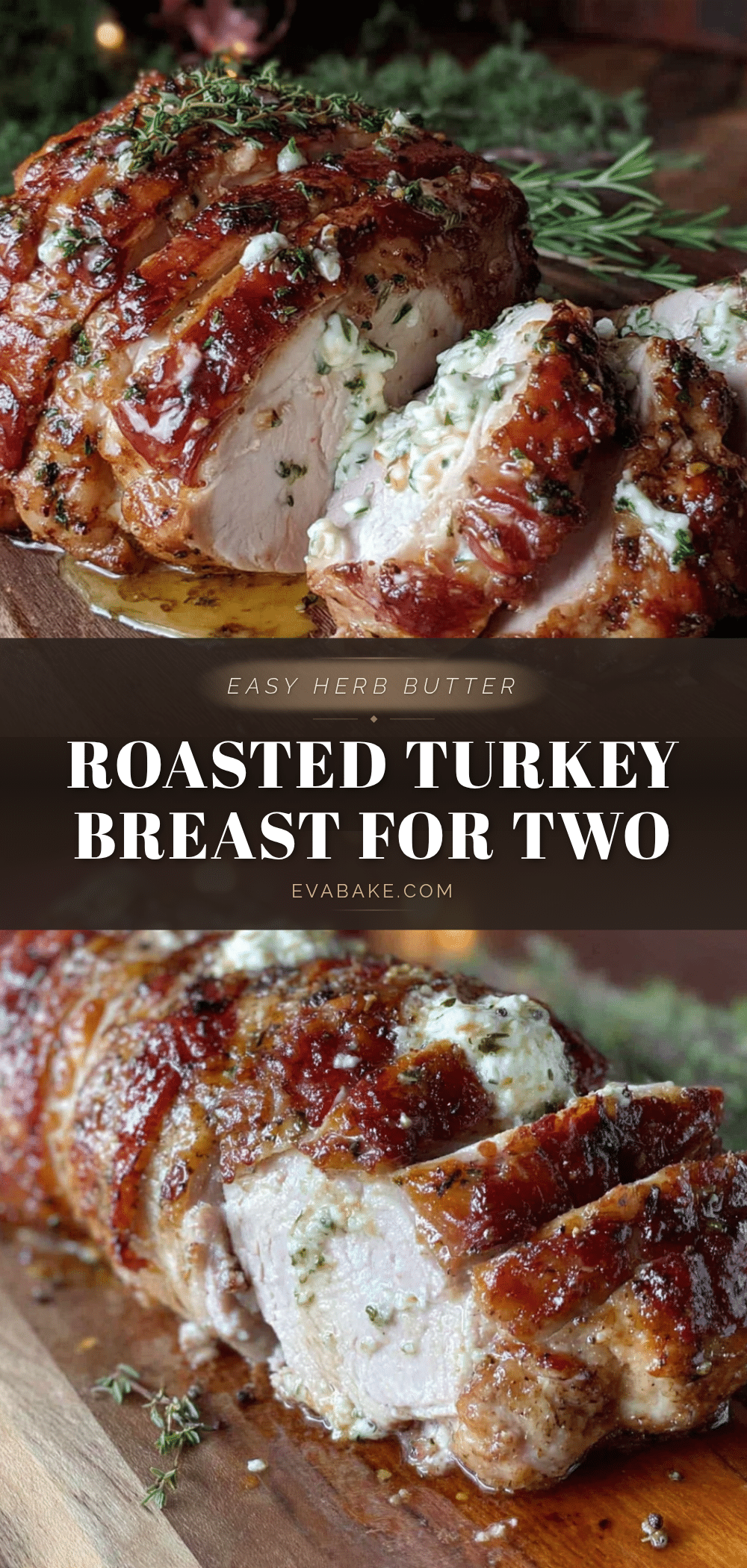
Easy Herb Butter Roasted Turkey Breast for Two
A simple and juicy roasted turkey breast for two, made with herb butter under the skin for maximum flavor and moisture. Perfect for a cozy weeknight dinner or small celebration.
- Prep Time: 15 minutes
- Cook Time: 45 minutes
- Total Time: 1 hour 30 minutes
- Yield: 3 servings 1x
- Category: Main Course
- Cuisine: American
Ingredients
- 4 tablespoons unsalted butter, softened
- 2 cloves garlic, minced
- 1 tablespoon fresh rosemary, finely chopped
- 1 tablespoon fresh thyme leaves
- 1 teaspoon fresh sage, finely chopped
- 1/2 teaspoon salt
- 1/4 teaspoon black pepper, freshly ground
- 1/2 teaspoon lemon zest
- 1 bone-in, skin-on turkey breast, about 2 to 3 pounds
- 1 tablespoon olive oil
- 1/2 cup chicken broth or turkey stock
- 1 small onion, quartered (optional)
- 2 sprigs fresh rosemary and 3 sprigs fresh thyme (for the pan)
- 1 tablespoon all-purpose flour (for optional pan sauce)
- 1/2 cup additional chicken broth (for optional pan sauce)
- Salt and pepper to taste (for optional pan sauce)
Instructions
- Preheat oven to 425°F (220°C). Position rack in the middle. Let turkey breast sit at room temperature for 20 minutes.
- In a small bowl, combine softened butter, minced garlic, chopped rosemary, thyme, sage, salt, pepper, and lemon zest. Mash with a fork until well combined.
- Pat turkey breast dry with paper towels. Gently loosen skin from meat using fingers, creating a pocket. Spread about two-thirds of herb butter under the skin directly onto the meat.
- Rub remaining herb butter all over the outside of the skin. Drizzle olive oil over the top and rub in. Sprinkle with extra salt and pepper if desired. Optionally tie with kitchen twine.
- Place quartered onion and extra herb sprigs in the center of a small roasting pan. Pour chicken broth into the pan. Place turkey breast on top of onion and herbs.
- Roast at 425°F for 20 minutes without opening the oven.
- Reduce oven temperature to 350°F (175°C) and continue roasting for 25 to 35 minutes, until internal temperature reaches 155°F (68°C) at the thickest part. Tent with foil if skin browns too quickly.
- Remove turkey from oven and transfer to a cutting board. Tent loosely with foil and rest for 10 to 15 minutes.
- While turkey rests, make optional pan sauce: Discard onion and herb sprigs from pan. Place pan on stovetop over medium heat. Add flour and whisk for 1 minute. Slowly pour in additional chicken broth while whisking, scraping up browned bits. Simmer for 2 to 3 minutes until thickened. Season with salt and pepper.
- Slice turkey against the grain into 1/2-inch thick slices. Arrange on a platter and spoon pan sauce over the top. Serve immediately.
Notes
For best results, use fresh herbs and room temperature butter. Pat the turkey skin very dry for crispy skin. Let the turkey rest for at least 10 minutes before slicing. The herb butter can be made up to 3 days ahead.
Nutrition
- Serving Size: 6 ounces cooked turk
- Calories: 320
- Sugar: 1
- Sodium: 520
- Fat: 14
- Saturated Fat: 7
- Carbohydrates: 4
- Protein: 42
Keywords: turkey breast, herb butter, roasted turkey, easy turkey recipe, turkey for two, weeknight dinner