“You’ve got to try this stew,” my coworker said one afternoon, sliding a steaming bowl of kimchi jjigae across the table. Honestly, I was skeptical — fermented cabbage stew? But the aroma was irresistible; spicy, tangy, with a hint of smokiness that teased my nose. That afternoon, as I spooned the first bite, the tender pork belly melted in my mouth, and the kimchi’s tang hit just right. It wasn’t just food; it felt like a warm, cozy hug after a long day. That moment turned me into a believer of Flavorful Kimchi Jjigae Stew with Tender Pork Belly.
Over the next few weeks, I found myself making this stew repeatedly—sometimes late at night when the kitchen was quiet, other times rushing through dinner prep but craving something satisfying and simple. The stew’s layers of flavor deepened with every simmer, and the pork belly’s richness balanced perfectly with the kimchi’s zing. It became my go-to comfort food that somehow managed to feel both rustic and special.
What really stuck with me was how easy this recipe is, even if you’re not familiar with Korean cooking. It’s honest, straightforward, and delivers that soul-soothing satisfaction every single time. If you’re like me—sometimes craving bold flavors but needing something quick and unpretentious—this stew might just become your new favorite too.
Why You’ll Love This Recipe
This Flavorful Kimchi Jjigae Stew with Tender Pork Belly has been tested in my kitchen countless times, earning nods from family, friends, and even the pickiest eaters. Here’s why it’s worth making again and again:
- Quick & Easy: Ready in about 45 minutes, it’s perfect for busy weeknights or when you want something hearty without the fuss.
- Simple Ingredients: No need for hard-to-find items—you probably have kimchi and pork belly in your fridge or nearby market.
- Perfect for Cozy Dinners: This stew shines when the weather turns cool or you want a soul-warming meal after a hectic day.
- Crowd-Pleaser: Whether it’s dinner for two or a small gathering, it always gets rave reviews for its bold but balanced flavors.
- Unbelievably Delicious: The tender pork belly combined with the rich, tangy broth delivers a flavor and texture combo that’s simply addictive.
This isn’t just another kimchi stew recipe. I’ve fine-tuned it to balance spice and savoriness without overwhelming the palate. The pork belly is seared just right for that melt-in-your-mouth texture, and the broth simmers long enough to develop depth while keeping bright notes from the kimchi. Plus, I added a splash of fish sauce that you might not expect but trust me—it makes all the difference.
It’s the kind of dish that makes you pause and savor each spoonful, the kind that brings a little warmth and comfort when you need it most. And honestly, it’s a great way to impress friends without spending hours in the kitchen—something I appreciate after making dishes like the hearty ham and bean soup or the classic chicken tortilla soup.
What Ingredients You Will Need
This recipe uses simple, wholesome ingredients to deliver bold flavor and satisfying texture without the fuss. Most are pantry staples or items that can be found easily at Asian markets or well-stocked groceries.
- Pork Belly: About 1 pound (450g), sliced into bite-sized pieces. Look for pork belly with a nice balance of meat and fat for tender, flavorful bites.
- Kimchi: 1.5 cups (about 230g), roughly chopped. Use well-fermented kimchi for deeper flavor—if it’s too young, the stew might lack that characteristic tang.
- Kimchi Juice: 1/4 cup (60ml), from the kimchi jar—adds a punch of acidity and spice.
- Onion: 1 medium, thinly sliced—adds sweetness to balance the tang.
- Garlic: 4 cloves, minced—aroma booster.
- Gochugaru (Korean Red Pepper Flakes): 1 tablespoon—for gentle heat and color. Adjust to taste.
- Gochujang (Korean Chili Paste): 1 tablespoon—adds depth and a slightly sweet heat.
- Tofu: 1 block (about 14 oz or 400g), firm or medium, cut into cubes. Optional but highly recommended for texture contrast.
- Green Onions: 2 stalks, sliced thinly—for garnish and fresh bite.
- Dashi or Anchovy Broth: 4 cups (960ml). I prefer homemade anchovy broth, but store-bought dashi powder works fine in a pinch.
- Soy Sauce: 1 tablespoon—for umami depth.
- Sesame Oil: 1 teaspoon, toasted—added at the end for a nutty finish.
- Fish Sauce: 1 teaspoon (optional but recommended)—adds that subtle oceanic umami that’s hard to replicate.
- Salt and Pepper: To taste—season carefully since kimchi and broth can be salty.
If you can’t find gochugaru or gochujang, you can substitute with mild chili powder and a touch of miso paste, but the authentic Korean flavor will be mellowed. For a vegetarian version, skip the pork belly and use shiitake mushroom broth instead.
Equipment Needed
- Heavy-bottomed Pot or Dutch Oven: Essential for even heat distribution and simmering the stew without scorching.
- Sharp Knife and Cutting Board: For prepping pork belly, kimchi, and veggies.
- Measuring Cups and Spoons: To get the seasoning balance just right.
- Wooden Spoon or Ladle: For stirring without damaging the pot’s surface.
- Optional: A fine mesh strainer if making your own anchovy broth to remove solids.
I’ve tried this stew in everything from a basic saucepan to my trusty cast iron Dutch oven. The latter holds heat beautifully and makes simmering effortless. If you don’t have a Dutch oven, just keep the heat low and stir occasionally to avoid sticking.
For beginners, a medium-sized pot around 4-5 quarts (3.8-4.7 liters) works perfectly—big enough to hold all the ingredients comfortably without overcrowding.
Preparation Method
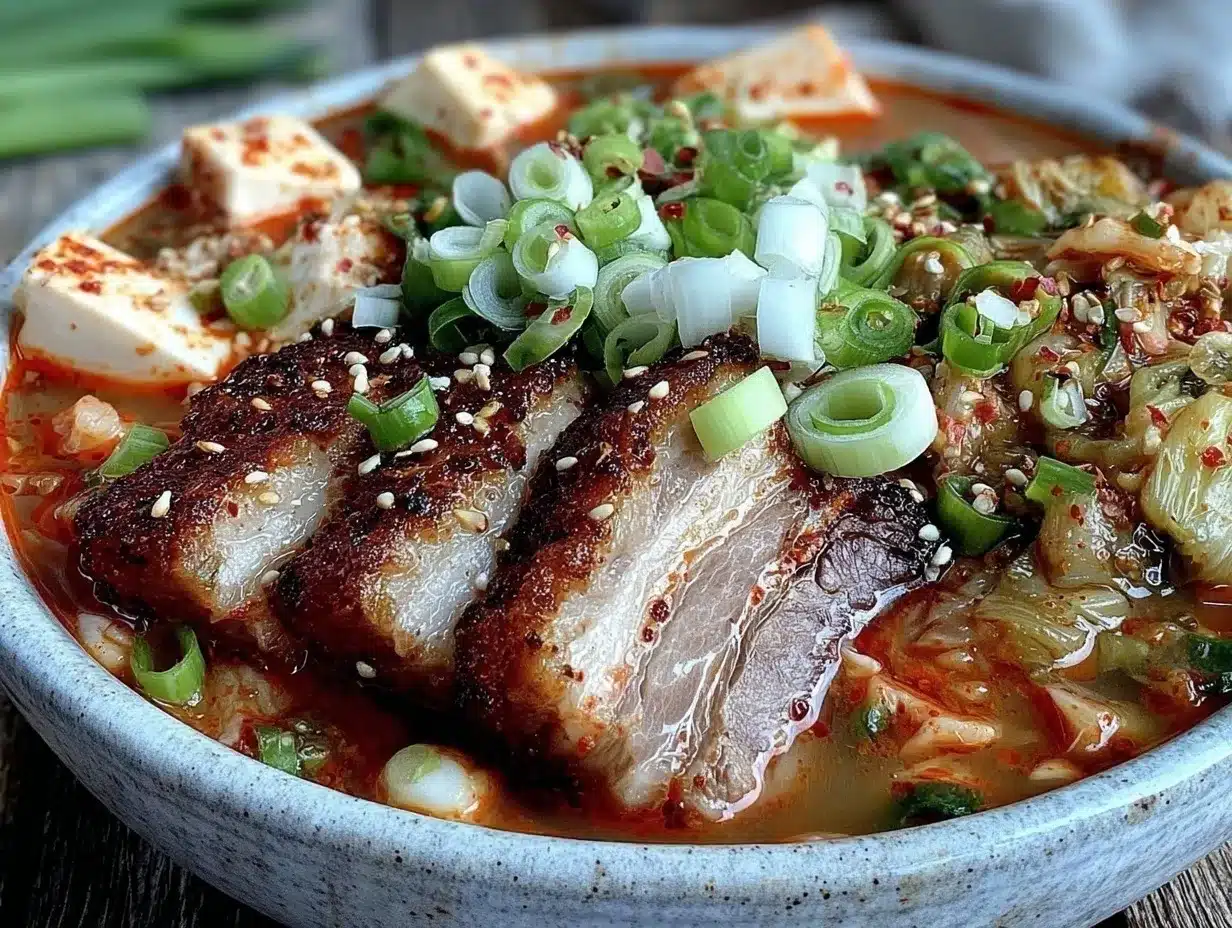
- Prep the Pork Belly and Kimchi: Slice about 1 pound (450g) of pork belly into bite-sized pieces. Roughly chop 1.5 cups (230g) of kimchi and reserve 1/4 cup (60ml) of kimchi juice. Thinly slice 1 medium onion and mince 4 garlic cloves. This step takes about 10 minutes.
- Sear the Pork Belly: Heat a heavy-bottomed pot over medium-high heat. Add the pork belly pieces (no oil needed as the fat renders out). Cook until they’re golden brown and slightly crispy on the edges, about 6-8 minutes. This step adds a delicious depth to the stew.
- Add Aromatics: Add the sliced onion and minced garlic to the pot. Stir and cook for 2-3 minutes until fragrant and the onions start to soften.
- Incorporate Kimchi and Seasonings: Stir in the chopped kimchi, 1 tablespoon gochugaru, and 1 tablespoon gochujang. Cook for another 3-4 minutes, letting the kimchi soften and the spice blend release its aroma.
- Add Broth and Simmer: Pour in 4 cups (960ml) of dashi or anchovy broth along with 1 tablespoon soy sauce and 1 teaspoon fish sauce. Bring to a gentle boil, then reduce heat to low and simmer uncovered for 20 minutes. This slow simmer lets the flavors blend and the pork belly become tender.
- Add Tofu and Adjust Seasoning: Gently add cubed tofu (14 oz or 400g) to the pot. Simmer for another 5-7 minutes. Taste the broth and add salt or pepper if needed. The tofu soaks up the stew’s flavor beautifully.
- Finish and Garnish: Turn off the heat and stir in 1 teaspoon toasted sesame oil. Sprinkle sliced green onions on top before serving for a fresh pop of color and brightness.
When done right, the stew will have a rich, reddish broth with tender pork belly that practically falls apart, soft but intact tofu, and a perfect balance of spicy, sour, and savory notes. If the broth tastes too sharp, a pinch of sugar can smooth it out nicely.
Pro tip: Letting the stew rest for 10 minutes before serving allows the flavors to marry even better. It’s worth the wait.
Cooking Tips & Techniques
There’s a bit of art in making kimchi jjigae just right. Here are some things I learned the hard way:
- Don’t Rush the Searing: Browning the pork belly properly develops flavor and texture. It’s tempting to toss everything in and simmer, but those crispy edges add a smoky richness that’s key.
- Use Good Kimchi: The stew depends heavily on the quality and age of your kimchi. Overly fresh or bland kimchi won’t give you the full depth of flavor. I usually use kimchi that’s at least a few weeks old in the fridge.
- Simmer Gently: Boiling too hard can make the pork tough and the broth cloudy. A gentle simmer lets flavors infuse without breaking down ingredients too much.
- Monitor Salt Levels: Since kimchi and broth are salty, add soy sauce and fish sauce gradually, tasting as you go. It’s easier to add salt than take it away.
- Multitask with Side Dishes: While the stew simmers, you can prep quick sides like steamed rice or simple kimchi pancakes. This makes dinner come together smoothly without last-minute scrambling.
- Personal Lesson: I once forgot the fish sauce and ended up with a stew that was good but missed that umami kick. Adding even a small amount lifts the whole dish.
Variations & Adaptations
This stew is flexible and adapts well to different preferences and dietary needs:
- Spicy Level: Adjust gochugaru and gochujang amounts to taste. For a milder stew, reduce these and add a bit more broth.
- Protein Swap: Substitute pork belly with pork shoulder or even chicken thighs for a leaner option. For vegetarians, use extra tofu and shiitake mushrooms with vegetable stock instead of anchovy broth.
- Seasonal Veggies: Add zucchini, mushrooms, or enoki mushrooms near the end of cooking for more texture and freshness.
- Low-Carb: Skip the tofu or replace with konjac noodles for a lighter stew that’s still hearty.
- Personal Favorite: Once, I added a handful of rice cakes (tteok) for a chewy surprise. It soaked up the broth beautifully and made the stew even more comforting.
If you want a slightly different take, you might enjoy how I paired this stew with the creamy spiced ginger turmeric golden milk latte for a soothing finish to the meal.
Serving & Storage Suggestions
Serve the kimchi jjigae hot, straight from the pot, ideally with steamed white rice or short-grain rice to soak up the flavorful broth. For presentation, garnish generously with sliced green onions and a drizzle of sesame oil.
This stew pairs beautifully with simple side dishes like sautéed spinach or cucumber kimchi to keep the meal balanced and refreshing. A cold Korean beer or light green tea also complements the spice and richness.
Leftovers store well in an airtight container in the fridge for up to 3 days. The flavors deepen overnight, but the tofu may absorb more broth, so you might want to add a splash of water or broth when reheating. Gently reheat on the stovetop over low heat to prevent the pork from drying out.
For longer storage, you can freeze the stew without tofu for up to 2 months. Add fresh tofu when reheating to keep its texture intact.
Nutritional Information & Benefits
This Flavorful Kimchi Jjigae Stew with Tender Pork Belly packs nutrition alongside comfort. A typical serving (about 1.5 cups or 350g) provides approximately:
| Calories | 350-400 kcal |
|---|---|
| Protein | 20-25g |
| Fat | 25g (mostly from pork belly) |
| Carbohydrates | 10-15g |
| Fiber | 2-3g (from kimchi and tofu) |
Kimchi is a fermented food rich in probiotics, supporting gut health and digestion. Pork belly provides satiating protein and fat, making this stew filling. The garlic and chili pepper contribute antioxidants and immune support.
Note: This recipe contains soy (tofu), fish sauce (fish), and pork, so it’s not suitable for vegetarians or those avoiding these allergens without substitutions.
From a wellness perspective, this stew feels indulgent but also nourishing, balancing spicy, savory, and sour flavors that can stimulate appetite and digestion especially in colder months.
Conclusion
If you’re after a stew that hits all the right notes — spicy, tangy, rich, and downright comforting — this Flavorful Kimchi Jjigae Stew with Tender Pork Belly is a must-try. It’s approachable for beginners but rewarding enough for seasoned cooks craving authentic Korean flavors.
Feel free to tweak the spice level or add your favorite veggies to make it your own. I love how this stew brings warmth to hectic evenings and creates a moment to slow down and savor good food.
Try it out, and I’d love to hear how you make it your own or what sides you pair it with — comments and stories always brighten my day. Happy cooking and here’s to many bowls of cozy stew ahead!
Frequently Asked Questions
What can I use instead of pork belly in kimchi jjigae?
You can substitute pork shoulder or pork ribs for a leaner option. Chicken thighs also work well and cook a bit faster. For a vegetarian version, use extra tofu and mushrooms with vegetable broth.
Can I make kimchi jjigae without kimchi juice?
Yes, but the juice adds essential tang and spice. If you don’t have kimchi juice, add a splash of rice vinegar and a pinch of chili flakes to mimic the flavor.
How spicy is this stew? Can I make it milder?
The spiciness depends on how much gochugaru and gochujang you use. To make it milder, reduce these ingredients and taste as you cook. You can always add more later if you want more heat.
Is it okay to freeze kimchi jjigae?
You can freeze the stew without tofu for up to 2 months. When reheating, add fresh tofu to keep the texture from becoming mushy.
What are good side dishes to serve with kimchi jjigae?
Steamed rice is a classic pairing. You can also serve it with simple vegetable banchan (Korean side dishes) like cucumber kimchi or sautéed spinach. I enjoy it with dishes like hearty ham and bean soup for a warm meal combo.
Pin This Recipe!
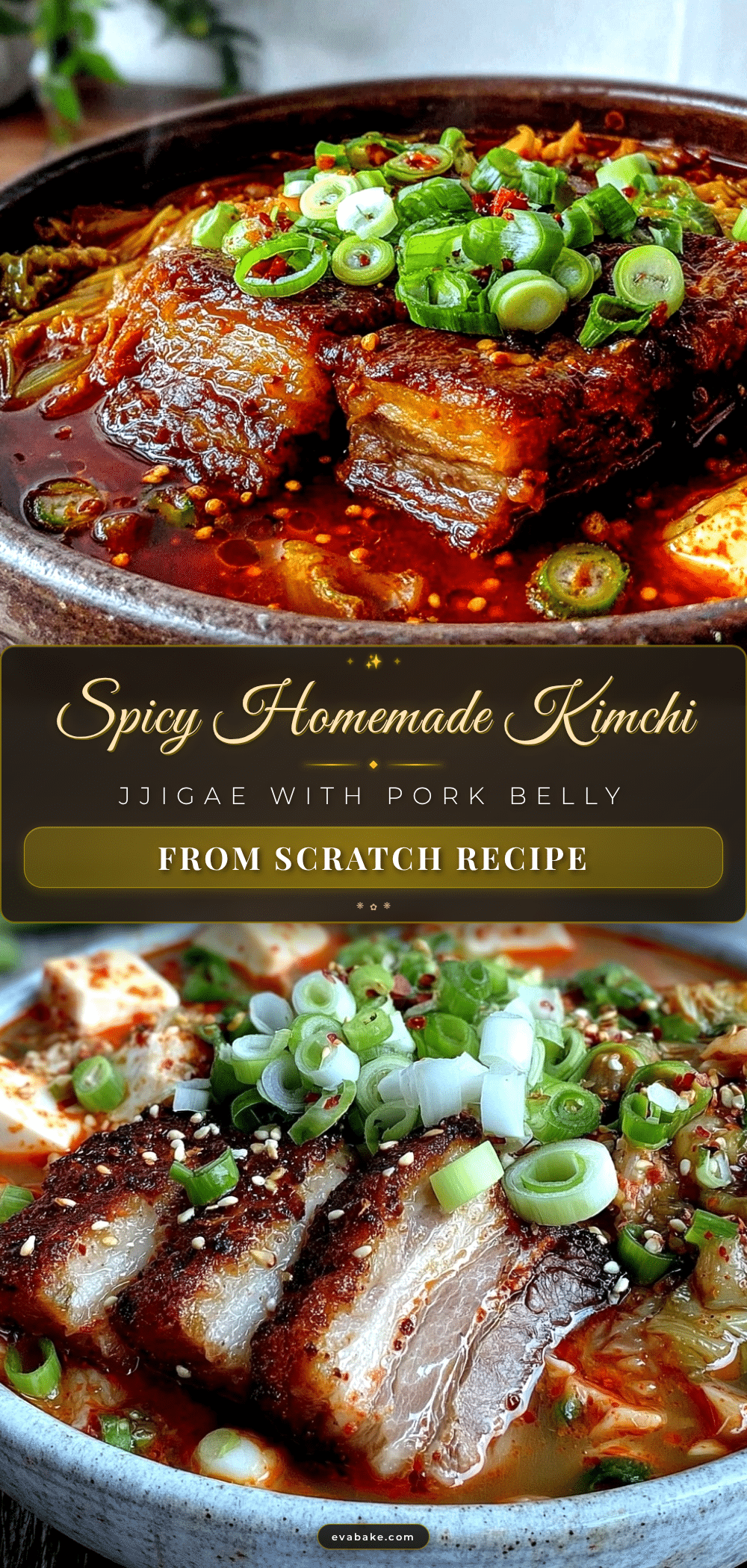
Flavorful Kimchi Jjigae Stew with Tender Pork Belly
A spicy, tangy Korean stew featuring tender pork belly and well-fermented kimchi, perfect for cozy dinners and easy to prepare even for beginners.
- Prep Time: 10 minutes
- Cook Time: 35 minutes
- Total Time: 45 minutes
- Yield: 4 servings 1x
- Category: Main Course
- Cuisine: Korean
Ingredients
- 1 pound (450g) pork belly, sliced into bite-sized pieces
- 1.5 cups (about 230g) kimchi, roughly chopped
- 1/4 cup (60ml) kimchi juice
- 1 medium onion, thinly sliced
- 4 cloves garlic, minced
- 1 tablespoon gochugaru (Korean red pepper flakes)
- 1 tablespoon gochujang (Korean chili paste)
- 1 block (14 oz or 400g) firm or medium tofu, cut into cubes (optional but recommended)
- 2 stalks green onions, sliced thinly
- 4 cups (960ml) dashi or anchovy broth
- 1 tablespoon soy sauce
- 1 teaspoon toasted sesame oil
- 1 teaspoon fish sauce (optional but recommended)
- Salt and pepper to taste
Instructions
- Slice pork belly into bite-sized pieces. Roughly chop kimchi and reserve kimchi juice. Thinly slice onion and mince garlic. (About 10 minutes)
- Heat a heavy-bottomed pot over medium-high heat. Add pork belly pieces and cook until golden brown and slightly crispy, about 6-8 minutes.
- Add sliced onion and minced garlic to the pot. Stir and cook for 2-3 minutes until fragrant and onions soften.
- Stir in chopped kimchi, gochugaru, and gochujang. Cook for 3-4 minutes until kimchi softens and spices release aroma.
- Pour in dashi or anchovy broth, soy sauce, and fish sauce. Bring to a gentle boil, then reduce heat to low and simmer uncovered for 20 minutes.
- Add cubed tofu gently to the pot. Simmer for another 5-7 minutes. Taste and adjust seasoning with salt or pepper as needed.
- Turn off heat and stir in toasted sesame oil. Garnish with sliced green onions before serving.
Notes
Use well-fermented kimchi for best flavor. Sear pork belly properly for depth and texture. Simmer gently to keep broth clear and pork tender. Adjust salt carefully due to salty kimchi and broth. Let stew rest 10 minutes before serving to deepen flavors. For vegetarian version, omit pork belly and use shiitake mushroom broth.
Nutrition
- Serving Size: About 1.5 cups (350g
- Calories: 350400
- Fat: 25
- Carbohydrates: 1015
- Fiber: 23
- Protein: 2025
Keywords: kimchi jjigae, Korean stew, pork belly stew, spicy kimchi stew, easy Korean recipe, comfort food, tofu stew