I was standing in the middle of the grocery store, staring at a forty-dollar piece of meat, and I honestly thought about walking away. My mother-in-law was coming for dinner, and I had this idea that I needed to make something that felt—I don’t know—important. But here’s the thing. I had never made a prime rib roast before. Not once. I’d watched cooking shows where chefs tied it up all fancy and talked about carryover heat like it was some kind of secret handshake, but me? I was a weeknight pasta person. A sheet-pan chicken kind of cook.
But I bought it anyway. That beautiful, bone-in rib roast wrapped in butcher paper. I brought it home, let it sit on the counter, and spent the next hour convincing myself I hadn’t made a huge mistake. I called my grandmother, who told me to rub it with garlic and butter and not overthink it. “Meat wants to be treated simple,” she said. So I did. I made a garlic herb butter that smelled like the best part of Sunday dinner, slathered it all over that roast, and crossed my fingers.
Three hours later, we were sitting at the table, and my mother-in-law actually closed her eyes after the first bite. She didn’t say anything for a solid ten seconds. And I thought—okay. I get it now. This isn’t just a recipe. This is the kind of meal that makes people feel taken care of. That first roast changed something in my kitchen confidence. And now, years later, this Perfect Prime Rib Roast with Garlic Herb Butter is the dish I make when I want to say “you matter” without using words.
Why You’ll Love This Recipe
- Foolproof for Beginners: If I can nail this on my first try, you absolutely can. The method is straightforward, and I’ve tested it more times than I can count to make sure it works every single time.
- Incredible Flavor with Minimal Work: The garlic herb butter does all the heavy lifting. You mix it, you spread it, and the oven takes care of the rest. No complicated marinades or basting routines.
- Perfect for Special Occasions: Christmas dinner, anniversary celebrations, or just because you want to feel fancy on a Tuesday—this roast makes any moment feel like an event. It pairs beautifully with something like a perfect summer grazing board with prosciutto, brie, and figs for a truly memorable spread.
- Restaurant-Quality at Home: That perfectly pink center with a deeply browned crust? You get it without the markup. Your wallet will thank you.
- Leftovers Are a Gift: Cold prime rib sandwiches the next day might actually be better than the main event. I’m not joking.
What makes this version different from the dozens of other prime rib recipes out there is the technique. Most recipes tell you to blast the heat high and then turn it down. That works, but it’s stressful. My method uses a steady, moderate heat with a final high-heat sear at the end. It gives you more control, less anxiety, and a crust that shatters when you cut into it. Plus, that garlic herb butter isn’t just for show—it infuses the meat from the outside in while keeping every bite juicy and rich.
This is the recipe that made me believe I could cook anything. And honestly? I want you to feel that way too.
What Ingredients You Will Need
This recipe keeps things simple with ingredients that do real work. No weird specialty items, just good-quality staples that come together to make something spectacular.
- Bone-in Prime Rib Roast (5-7 pounds): The bone adds flavor and helps regulate heat during cooking. I prefer a 3-rib roast for most gatherings, but you can scale up or down. Look for good marbling—those thin white lines running through the meat are what keep it tender. Ask your butcher to trim the excess fat cap to about ¼ inch.
- Unsalted Butter (½ cup, softened): Butter is the vehicle for all that garlic and herb goodness. Use unsalted so you control the salt level. Let it come to room temperature before mixing, or it won’t spread evenly.
- Garlic (6 cloves, minced): Fresh garlic only here. The pre-minced stuff in a jar has a different flavor—more sharp, less sweet. Take the extra minute to mince fresh cloves. Your taste buds will notice.
- Fresh Rosemary (2 tablespoons, finely chopped): Rosemary and beef are a classic pairing for a reason. It brings an almost piney, aromatic quality that cuts through the richness. Strip the leaves off the woody stems before chopping.
- Fresh Thyme (1 tablespoon, leaves removed from stems): Thyme is more subtle than rosemary, but it adds a layer of earthiness that rounds everything out. Run your fingers down the stem to strip the tiny leaves off easily.
- Kosher Salt (2 tablespoons): Use kosher salt, not table salt. The larger flakes distribute more evenly and stick to the meat better. Diamond Crystal or Morton’s both work fine.
- Freshly Ground Black Pepper (1 tablespoon): Freshly ground makes a real difference here. Pre-ground pepper loses its punch over time, and you want that bold, spicy kick against the rich beef.
- Olive Oil (1 tablespoon): A little oil helps the salt and pepper adhere before the butter goes on. Use a good-quality extra virgin if you have it, but regular olive oil is fine.
For the Au Jus (Optional but Highly Recommended):
- Beef Broth (2 cups): Use low-sodium so you can control the saltiness. Better Than Bouillon paste dissolved in water works beautifully if you don’t have broth on hand.
- Red Wine (½ cup): A dry red like Cabernet Sauvignon or Merlot adds depth. If you don’t cook with wine, just use additional broth.
- Pan Drippings: This is the gold. Those browned bits stuck to the bottom of the roasting pan are pure flavor.
Equipment Needed
You don’t need a professional kitchen to pull this off. Here’s what you’ll actually use:
- Roasting Pan with a Rack: The rack lifts the roast so air circulates underneath, promoting even cooking. No rack? Roll up a few pieces of aluminum foil into coils and set the roast on those. It works in a pinch.
- Instant-Read Meat Thermometer: This is non-negotiable. Guessing doneness by touch or time is how prime rib gets ruined. A good digital thermometer costs around fifteen dollars and pays for itself the first time you use it.
- Chef’s Knife: A sharp, heavy knife makes slicing that beautiful roast clean and easy. Dull knives crush the meat and make it look ragged.
- Small Bowl: For mixing your garlic herb butter.
- Kitchen Twine: Tying the roast between the bones helps it cook evenly and keeps its shape. Most butchers will do this for you if you ask.
- Aluminum Foil: For tenting the roast while it rests. Patience is hard, but tenting keeps it warm.
- Cutting Board: Preferably one with a groove to catch juices. Those juices are liquid gold for your au jus.
Preparation Method
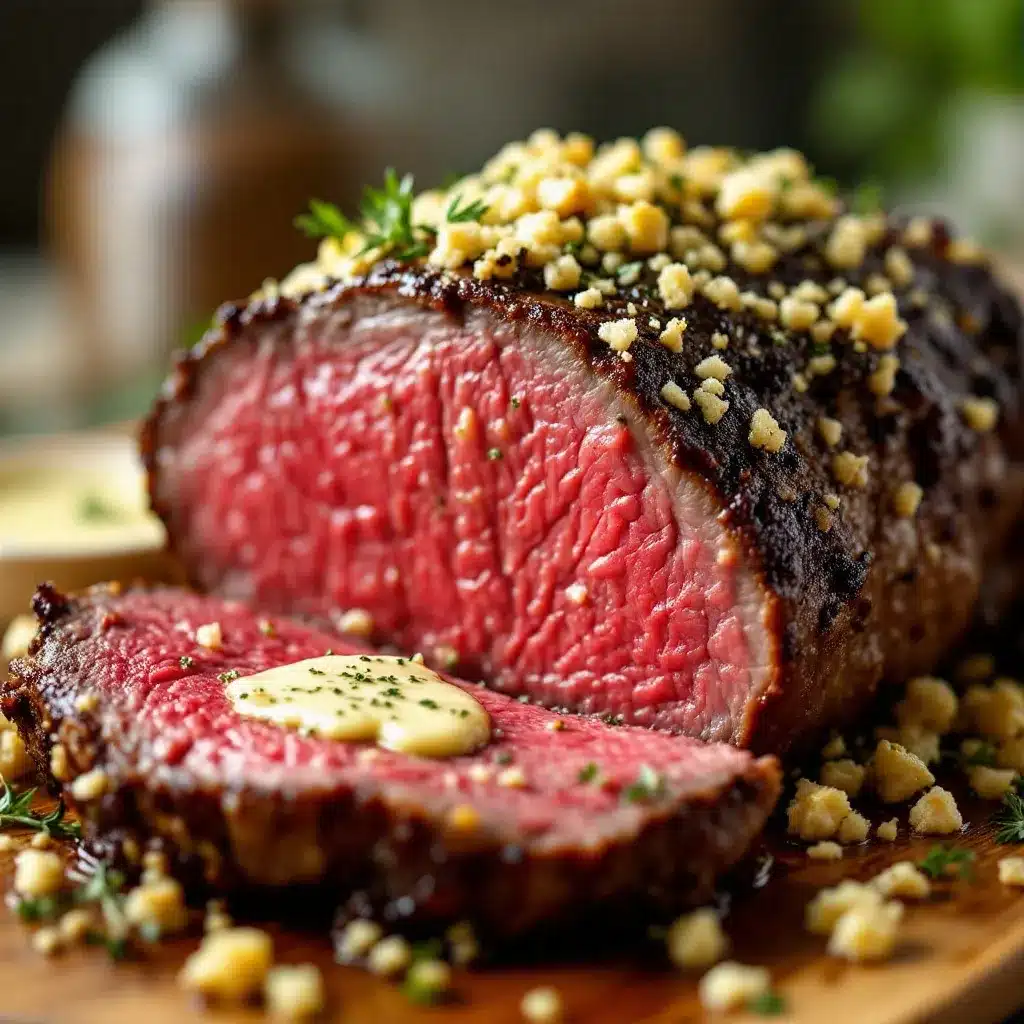
Let’s walk through this step by step. I’ve made every mistake possible so you don’t have to.
- Take the Roast Out of the Fridge (2-3 hours before cooking): This is the most important step that people skip. A cold roast straight from the fridge will cook unevenly—the outside will be overdone by the time the center reaches medium-rare. Remove the roast from its packaging, pat it completely dry with paper towels, and let it sit on a plate on the counter. Two hours for a smaller roast, three for a larger one. It should feel cool but not cold to the touch.
- Preheat Your Oven to 325°F (163°C): While the roast comes to temperature, get your oven going. Position the rack in the lower third of the oven. This keeps the roast away from the top heating element and promotes even cooking.
- Make the Garlic Herb Butter: In your small bowl, combine the softened butter, minced garlic, chopped rosemary, and thyme leaves. Mix until everything is evenly distributed. The butter should be spreadable but not melted. If your kitchen is cold and the butter is stiff, let it sit out another fifteen minutes.
- Season the Roast: Drizzle the olive oil over the entire roast and rub it in with your hands. Then sprinkle the kosher salt and black pepper evenly over all surfaces. Don’t be shy—you want good coverage. The salt will start to draw out some moisture, which is fine. That moisture mixed with the fat creates the crust.
- Apply the Garlic Herb Butter: Using your hands, spread the butter mixture all over the roast. Really get in there. Cover every exposed surface, including the sides and the meat between the bones. The butter will feel a little messy—that’s perfect. It melts into the meat as it cooks, creating that incredible crust and infusing flavor deep into the outer layers.
- Place the Roast on the Rack: Set the roast bone-side down in your roasting pan on the rack. The bones act as a natural roasting rack, but the rack underneath adds extra air circulation. If your roast came tied, leave the twine in place.
- Roast at 325°F (163°C) for 20 minutes per pound: For a 5-pound roast, that’s about 1 hour and 40 minutes. For a 7-pound roast, about 2 hours and 20 minutes. This is a guideline—your thermometer is the real boss here. Start checking the internal temperature about 30 minutes before you think it might be done.
- Check the Temperature (Target: 120-125°F for medium-rare): Insert your thermometer into the thickest part of the meat, away from the bone. The bone conducts heat differently and will give you a false reading. For medium-rare, pull the roast when the center hits 120-125°F. For medium, pull at 130-135°F. The temperature will rise another 5-10 degrees while it rests, so don’t wait until it’s at your desired doneness in the oven.
- Increase Heat to 500°F (260°C) for the Sear (5-10 minutes): Once the roast hits your target temperature, remove it from the oven and tent it loosely with foil. Crank the oven up to 500°F. When it’s screaming hot, return the roast (uncovered) to the oven for 5-10 minutes. Watch it closely. You want the exterior to turn deep brown and crusty, not black. This final blast of heat creates that beautiful, crackling crust without overcooking the interior.
- Rest the Roast (20-30 minutes, covered loosely with foil): This is not optional. Resting allows the juices to redistribute throughout the meat. If you cut into it immediately, all those precious juices will run out onto the cutting board instead of staying in the meat. Set it on a cutting board, tent it loosely with foil, and walk away. Set a timer if you have to.
- Make the Au Jus (While the Roast Rests): Pour off all but about 2 tablespoons of fat from the roasting pan. Place the pan on the stovetop over medium-high heat. Add the red wine and scrape up all those browned bits with a wooden spoon. Let the wine reduce by half, about 2 minutes. Add the beef broth, bring to a simmer, and cook for 5 minutes. Strain through a fine-mesh sieve if you want it smooth, or leave it rustic. Season with salt and pepper to taste.
- Slice and Serve: Remove the kitchen twine. Using your sharpest knife, slice between the bones to separate them from the roast. Then slice the meat against the grain into ½-inch thick pieces. The grain runs along the length of the roast, so you’re slicing perpendicular to that. Serve immediately with the warm au jus on the side.
Cooking Tips & Techniques
I have burned, dried out, and undercooked more roasts than I want to admit. Here’s what I learned the hard way.
Don’t skip the resting time before cooking. I once rushed this step and ended up with a roast that was medium-well on the outside and rare in the center. The temperature differential was so extreme that no amount of resting could fix it. That two-hour counter rest is your insurance policy.
Your oven temperature might be wrong. Ovens lie. I’m serious. Mine runs about 25 degrees hot, which I only discovered after buying an inexpensive oven thermometer. Pop one in your oven and see what it actually reads compared to what you set it to. It costs about six dollars and saves you from overdone roasts.
Use the reverse sear method for even better results. This recipe already uses a variation of it, but if you want to be extra precise, roast at 225°F (107°C) for about 3-4 hours until the center hits 120°F, then sear at 500°F for 5-8 minutes. It takes longer, but the edge-to-edge doneness is almost magical. I do this when I have time and want to impress myself.
Let the meat tell you when it’s done. I know I sound like a broken record about the thermometer, but it’s because I’ve ruined expensive roasts by trusting time alone. Every roast is different. The shape, the fat content, the exact starting temperature—they all affect cooking time. Your thermometer is the only thing that knows the truth.
If you don’t have a roasting rack, use vegetables. Chop up some carrots, onions, and celery into large chunks, spread them in the pan, and set the roast on top. The vegetables elevate the meat, flavor the drippings, and make a fantastic base for your au jus. It’s a two-for-one deal.
Variations & Adaptations
This recipe is flexible, and I’ve tried several twists over the years. Here are my favorites:
Horseradish Crust Version: Add 2 tablespoons of prepared horseradish to the garlic herb butter. The sharp, pungent heat of horseradish cuts through the richness of the beef in the most incredible way. I made this for a friend who claimed she didn’t like prime rib, and she asked for seconds. It’s that good.
Herb-Crusted Variation: After applying the garlic herb butter, roll the roast in an additional ¼ cup of finely chopped fresh herbs (parsley, more rosemary, and chives work beautifully). The herbs form a gorgeous green crust that looks stunning on the plate and adds another layer of freshness.
Garlic Lover’s Version: Use 10-12 cloves of garlic instead of 6. Roast them whole alongside the meat for the last 30 minutes of cooking, then mash them into the au jus. The roasted garlic becomes sweet and spreadable, and it takes the flavor profile to a whole new level.
For a Smaller Gathering: This recipe scales down beautifully. Use a 2-3 pound boneless ribeye roast instead. The cooking time will be shorter—about 15 minutes per pound at 325°F. Everything else stays the same.
Dairy-Free Adaptation: Substitute the butter with a high-quality vegan butter or ghee (if you can tolerate dairy but want to reduce it). The texture will be slightly different, but the flavor is still fantastic. I’ve used Miyoko’s European Style Cultured Vegan Butter with great results.
Serving & Storage Suggestions
This roast is a showstopper, and how you serve it matters almost as much as how you cook it.
Serving Temperature: Serve the prime rib warm, not piping hot. After resting, it should be around 130-135°F for medium-rare. Slice it just before serving so it doesn’t cool down too quickly. Arrange the slices on a warm platter and spoon a little au jus over the top.
What to Serve With It: Creamy mashed potatoes are the classic choice—the butter and cream soak up the au jus beautifully. Roasted asparagus or crispy pan-seared pork chops with apple cider butter sauce would be a surprising but delicious pairing if you want to mix things up. A simple arugula salad with lemon vinaigrette cuts through the richness perfectly. And don’t forget Yorkshire pudding if you’re feeling traditional.
Storage Instructions: Leftover prime rib is a gift. Store sliced meat in an airtight container in the refrigerator for up to 4 days. The au jus keeps for about a week in a separate container. The flavors actually deepen overnight as the herbs continue to infuse.
Reheating Tips: The microwave will ruin your beautiful leftovers. Instead, reheat slices gently in a skillet over medium-low heat with a splash of beef broth or au jus. Cover the pan for 2-3 minutes to warm the meat through without drying it out. For the best results, I actually prefer eating leftover prime rib cold, sliced thin on a sandwich with horseradish sauce and arugula.
Freezer Instructions: Cooked prime rib freezes surprisingly well. Wrap individual slices tightly in plastic wrap, then place them in a freezer bag. They’ll keep for up to 3 months. Thaw overnight in the refrigerator and reheat gently as described above.
Nutritional Information & Benefits
Prime rib is an indulgence, no question about it. But it also has some redeeming qualities worth noting.
Estimated Nutritional Values (per 6-ounce serving, without au jus):
- Calories: 450-500
- Protein: 45-50 grams
- Fat: 30-35 grams
- Saturated Fat: 12-15 grams
- Carbohydrates: 0 grams
- Sodium: 600-700 mg (varies with salt amount)
- Iron: 20% of daily value
- Vitamin B12: 80% of daily value
Health Benefits: Beef is one of the best natural sources of vitamin B12, which supports nerve function and red blood cell formation. It’s also rich in zinc, which is important for immune health, and iron, which helps prevent anemia. The protein content makes it a satisfying meal that keeps you full for hours.
Dietary Considerations: This recipe is naturally gluten-free, low-carb, and keto-friendly. If you’re watching your sodium, reduce the salt to 1 tablespoon and use low-sodium broth for the au jus. The fat content is significant, so if you’re on a low-fat diet, this is more of an occasional treat than a weekly staple.
Potential Allergens: Dairy (butter). For a dairy-free version, use the substitution mentioned in the variations section.
Conclusion
Here’s the thing about this perfect prime rib roast. It taught me that cooking something impressive isn’t about having secret skills or fancy equipment. It’s about trusting a simple process and giving yourself permission to try. That first roast I made, the one I almost walked away from in the grocery store? It turned out better than I ever expected. Not because I’m a natural chef, but because I followed the steps, used a thermometer, and let the meat do what meat does best.
This recipe has become my go-to for every special occasion. Christmas, birthdays, anniversaries—any time I want to make people feel loved and cared for. And honestly? It works every single time. The garlic herb butter creates this incredible crust that gives way to tender, juicy meat that practically melts on your tongue. The au jus adds that final touch of richness that makes everyone reach for seconds.
I want you to try this. I want you to buy that expensive piece of meat, bring it home, and trust yourself. Maybe take a picture and tag me—I love seeing people’s first prime rib triumphs. And if you have questions, drop them in the comments. I answer every single one because I remember what it felt like to stand in that grocery store aisle, unsure but hopeful.
Go make something beautiful. You’ve got this.
Frequently Asked Questions
Can I use a boneless prime rib roast instead of bone-in?
Absolutely. Boneless roasts cook a little faster since there’s no bone to slow down heat transfer. Figure about 15 minutes per pound at 325°F instead of 20. The bone adds flavor and helps with even cooking, but a boneless roast will still be delicious. Just tie it with kitchen twine to help it hold its shape.
What if I don’t have fresh herbs?
You can use dried herbs in a pinch, but the flavor won’t be quite as bright. Use 1 teaspoon of dried rosemary and ½ teaspoon of dried thyme instead of the fresh amounts. Let the butter sit for 15 minutes after mixing to allow the dried herbs to rehydrate and release their flavor.
How do I know when the roast is done without a thermometer?
Honestly, I really recommend using a thermometer. But if you absolutely can’t, the touch test gives you a rough idea. Medium-rare meat feels like the fleshy part of your palm when you touch your thumb to your pinky finger. It should have some give but still feel firm. This method takes practice, so don’t rely on it for an expensive roast until you’ve tested it against a thermometer a few times.
Can I prepare the garlic herb butter ahead of time?
Yes, and I actually recommend it. Make the butter up to 3 days in advance and keep it in the refrigerator. Let it come to room temperature for about 30 minutes before spreading it on the roast. You can also freeze the butter for up to 3 months—just wrap it tightly in plastic wrap and thaw overnight in the fridge before using.
What’s the best way to slice prime rib for sandwiches the next day?
Use the sharpest knife you have and slice the cold meat as thin as you possibly can. Cold prime rib slices much more cleanly than warm. Pile it high on crusty bread with a smear of horseradish sauce, some arugula, and a drizzle of warmed au jus. It might actually be better than the original dinner—don’t tell anyone I said that.
Pin This Recipe!
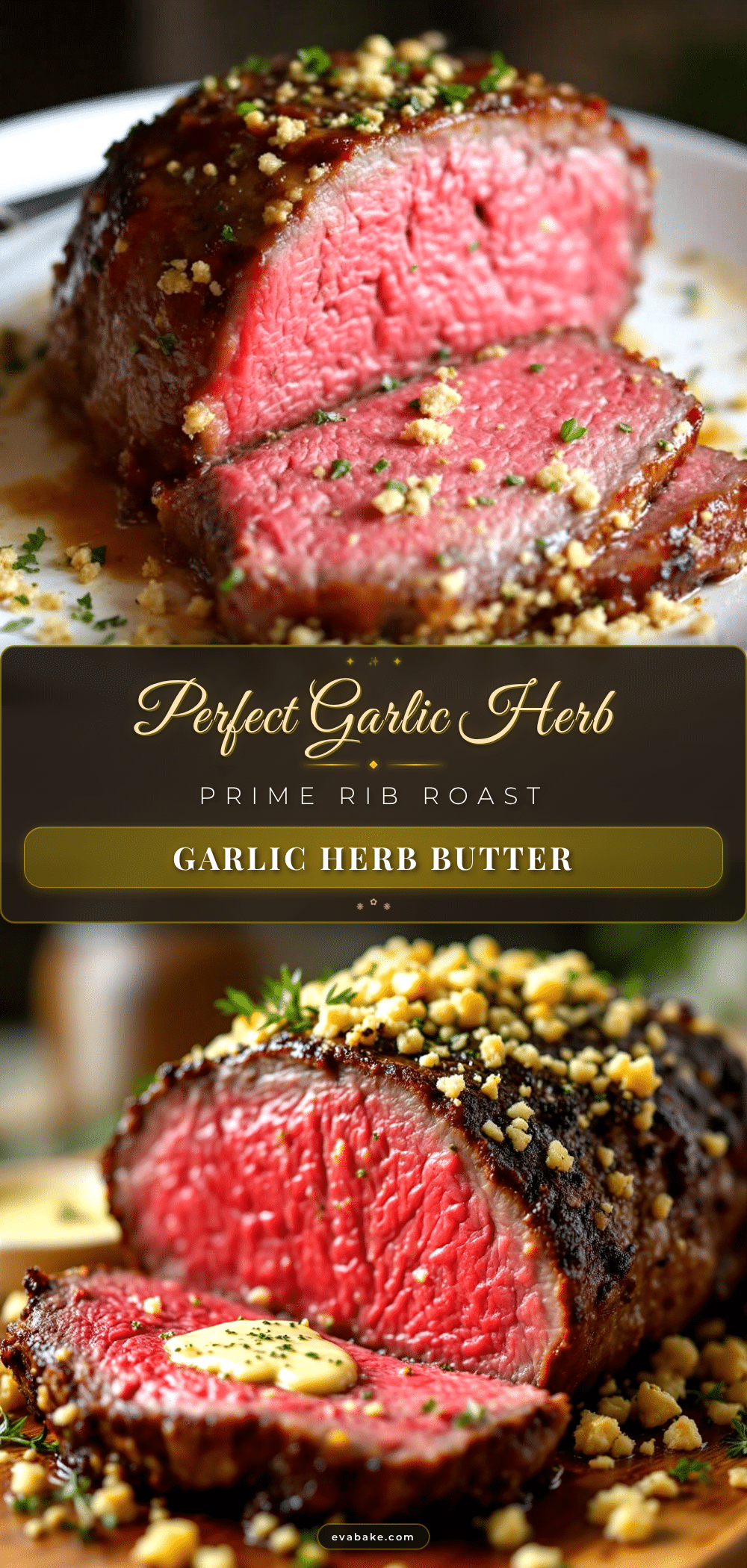
Perfect Prime Rib Roast with Garlic Herb Butter: Best Easy Recipe
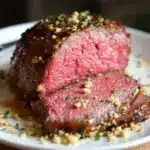
A foolproof prime rib roast recipe with garlic herb butter that delivers a perfectly pink center and deeply browned crust. This special occasion dish is surprisingly simple and makes anyone feel like a confident cook.
- Prep Time: 15 minutes
- Cook Time: 1 hour 40 minutes to 2 hours 20 minutes (for 5-7 lb roast)
- Total Time: 2 hours to 2 hours 50 minutes (plus 2-3 hours resting before cooking)
- Yield: 8-10 servings
- Category: Main Course
- Cuisine: American
Ingredients
- Bone-in Prime Rib Roast (5-7 pounds)
- Unsalted Butter (½ cup, softened)
- Garlic (6 cloves, minced)
- Fresh Rosemary (2 tablespoons, finely chopped)
- Fresh Thyme (1 tablespoon, leaves removed from stems)
- Kosher Salt (2 tablespoons)
- Freshly Ground Black Pepper (1 tablespoon)
- Olive Oil (1 tablespoon)
- Beef Broth (2 cups, low-sodium)
- Red Wine (½ cup, dry like Cabernet Sauvignon or Merlot)
- Pan Drippings
Instructions
- Take the Roast Out of the Fridge (2-3 hours before cooking): Remove the roast from its packaging, pat it completely dry with paper towels, and let it sit on a plate on the counter. Two hours for a smaller roast, three for a larger one.
- Preheat Your Oven to 325°F (163°C): Position the rack in the lower third of the oven.
- Make the Garlic Herb Butter: In a small bowl, combine the softened butter, minced garlic, chopped rosemary, and thyme leaves. Mix until evenly distributed.
- Season the Roast: Drizzle the olive oil over the entire roast and rub it in. Sprinkle the kosher salt and black pepper evenly over all surfaces.
- Apply the Garlic Herb Butter: Using your hands, spread the butter mixture all over the roast, covering every exposed surface including the sides and between the bones.
- Place the Roast on the Rack: Set the roast bone-side down in your roasting pan on the rack. Leave the twine in place if tied.
- Roast at 325°F (163°C) for 20 minutes per pound: For a 5-pound roast, about 1 hour 40 minutes; for a 7-pound roast, about 2 hours 20 minutes. Start checking internal temperature 30 minutes before you think it might be done.
- Check the Temperature (Target: 120-125°F for medium-rare): Insert thermometer into the thickest part of the meat, away from the bone. For medium-rare, pull at 120-125°F; for medium, pull at 130-135°F.
- Increase Heat to 500°F (260°C) for the Sear (5-10 minutes): Remove roast, tent loosely with foil, crank oven to 500°F, then return roast (uncovered) for 5-10 minutes until deep brown and crusty.
- Rest the Roast (20-30 minutes, covered loosely with foil): Set on a cutting board, tent loosely with foil, and let rest.
- Make the Au Jus (While the Roast Rests): Pour off all but 2 tablespoons fat from roasting pan. Place pan on stovetop over medium-high heat, add red wine, scrape up browned bits, let wine reduce by half (about 2 minutes). Add beef broth, bring to simmer, cook 5 minutes. Strain if desired. Season with salt and pepper.
- Slice and Serve: Remove kitchen twine. Slice between bones to separate them, then slice meat against the grain into ½-inch thick pieces. Serve immediately with warm au jus.
Notes
Don’t skip the resting time before cooking. Your oven temperature might be wrong—use an oven thermometer. Use the reverse sear method for even better results: roast at 225°F for 3-4 hours until center hits 120°F, then sear at 500°F for 5-8 minutes. Let the meat tell you when it’s done with a thermometer. If you don’t have a roasting rack, use vegetables like carrots, onions, and celery.
Nutrition
- Serving Size: 6 ounces
- Calories: 475
- Sodium: 650
- Fat: 32.5
- Saturated Fat: 13.5
- Protein: 47.5
Keywords: prime rib, prime rib roast, garlic herb butter, roast beef, Christmas dinner, special occasion, beef roast, bone-in prime rib, easy prime rib recipe