“You want dinner ready in thirty minutes? No problem.” Those words popped into my head one evening while juggling a mountain of work emails and the subtle growl of hunger from my stomach. Honestly, the thought of cooking felt like a chore that day, but I knew I needed something fast and satisfying. That’s when I remembered a quick savory gyudon beef bowl recipe a friend had once mentioned during a casual chat — something Japanese, simple, and totally comforting. I was skeptical at first. Beef bowls? Could it really be that easy and flavorful without a ton of fuss?
Fast forward to me slicing thin strips of beef while the onions sizzled in the pan, and soon the kitchen was filled with a rich, savory aroma that made me pause and just breathe it in. The sauce was perfectly balanced—sweet, salty, and umami all at once, clinging to the tender meat. I tossed it over steaming white rice, and honestly, it felt like a little victory after a hectic day. Since then, this quick savory gyudon beef bowl has become my go-to weeknight dinner when I want something hearty but don’t want to spend hours in the kitchen. What’s cool is how it fits into busy life rhythms without sacrificing flavor or soul.
It’s not just about convenience, either. This recipe has stuck with me because it reminds me that a few simple ingredients can come together to make magic — and that sometimes the best meals happen when you’re just trying to get dinner on the table quickly but end up with something genuinely satisfying. I’m sharing this recipe because I think you’ll appreciate that balance too.
Why You’ll Love This Recipe
This quick savory gyudon beef bowl has been tested more times than I can count—sometimes twice in one week! The magic happens in how effortlessly the flavors meld, giving you a comforting meal without the long wait. Here’s why it’s a must-try:
- Quick & Easy: Ready in about 25 minutes, it’s perfect for hectic weeknights when you’re craving something homemade but don’t have hours to cook.
- Simple Ingredients: No need for exotic or hard-to-find items; most ingredients are pantry staples or easy substitutions.
- Perfect for Weeknights: Whether you’re cooking for one or a small family, this recipe scales well and satisfies everyone.
- Crowd-Pleaser: The savory-sweet flavor combo tends to win over both kids and adults. It’s the kind of dish that gets repeated requests.
- Unbelievably Delicious: The tender beef and caramelized onions drenched in a soy-ginger sauce create a texture and flavor combo that’s seriously comforting.
What sets this recipe apart? Instead of just tossing beef and sauce together, I take a little extra care with how the onions are cooked—they get soft and almost jammy, which adds a natural sweetness that balances the savory sauce. Plus, I use a splash of mirin and a bit of dashi powder to add depth without complexity. It’s not just another beef bowl; it’s the one that feels like a warm hug after a long day.
What Ingredients You Will Need
This quick savory gyudon beef bowl uses simple, wholesome ingredients to deliver bold flavor and satisfying texture without the fuss. Most of what you need is probably already in your kitchen.
- Beef – Thinly sliced ribeye or sirloin (about 8 oz / 225g). I prefer ribeye for its tenderness and marbling, but sirloin works great too.
- Onions – 1 large yellow onion, thinly sliced (adds sweetness and depth).
- Garlic – 2 cloves, minced (for that subtle aromatic kick).
- Ginger – 1 teaspoon freshly grated (brightens the sauce).
- Soy Sauce – 1/4 cup (60 ml), preferably low sodium for better control.
- Mirin – 2 tablespoons (30 ml), a sweet rice wine that rounds out the dish. If you don’t have mirin, use a mix of 1 tablespoon sugar and 1 tablespoon sake or water.
- Sake – 2 tablespoons (30 ml) – optional, but it adds a nice complexity.
- Dashi Powder – 1 teaspoon (adds umami without needing to make broth from scratch). Look for trusted brands like Instant Hondashi.
- Sugar – 1 teaspoon (balances the saltiness).
- Vegetable Oil – 1 tablespoon (for sautéing).
- Steamed Rice – Cooked Japanese short-grain rice, about 2 cups (400g) cooked, for serving.
- Optional Garnishes – Thinly sliced green onions, pickled ginger, or a soft-boiled egg for extra flavor and texture.
If you want a gluten-free version, swap the soy sauce for tamari. For a dairy-free option, this recipe is naturally compliant, so no worries there. The ingredients are straightforward, but the little details like the mirin and dashi powder really push the flavor into authentic territory without needing complicated steps.
Equipment Needed
- Large skillet or frying pan – A non-stick or stainless steel pan works best for even cooking.
- Sharp knife – Essential for thinly slicing the beef and onions quickly and safely.
- Cutting board – Preferably a sturdy one for slicing.
- Measuring spoons & cups – For accurate seasoning.
- Rice cooker or pot – To cook the Japanese short-grain rice.
If you don’t have a rice cooker, a heavy-bottom pot with a tight lid works fine—just be sure to rinse the rice well before cooking for the best texture. I’ve used both budget-friendly and high-end pans; the key is a pan that heats evenly and doesn’t stick. My favorite skillet is a cast iron one that I season regularly, but a good non-stick pan can save you scrub time.
Preparation Method
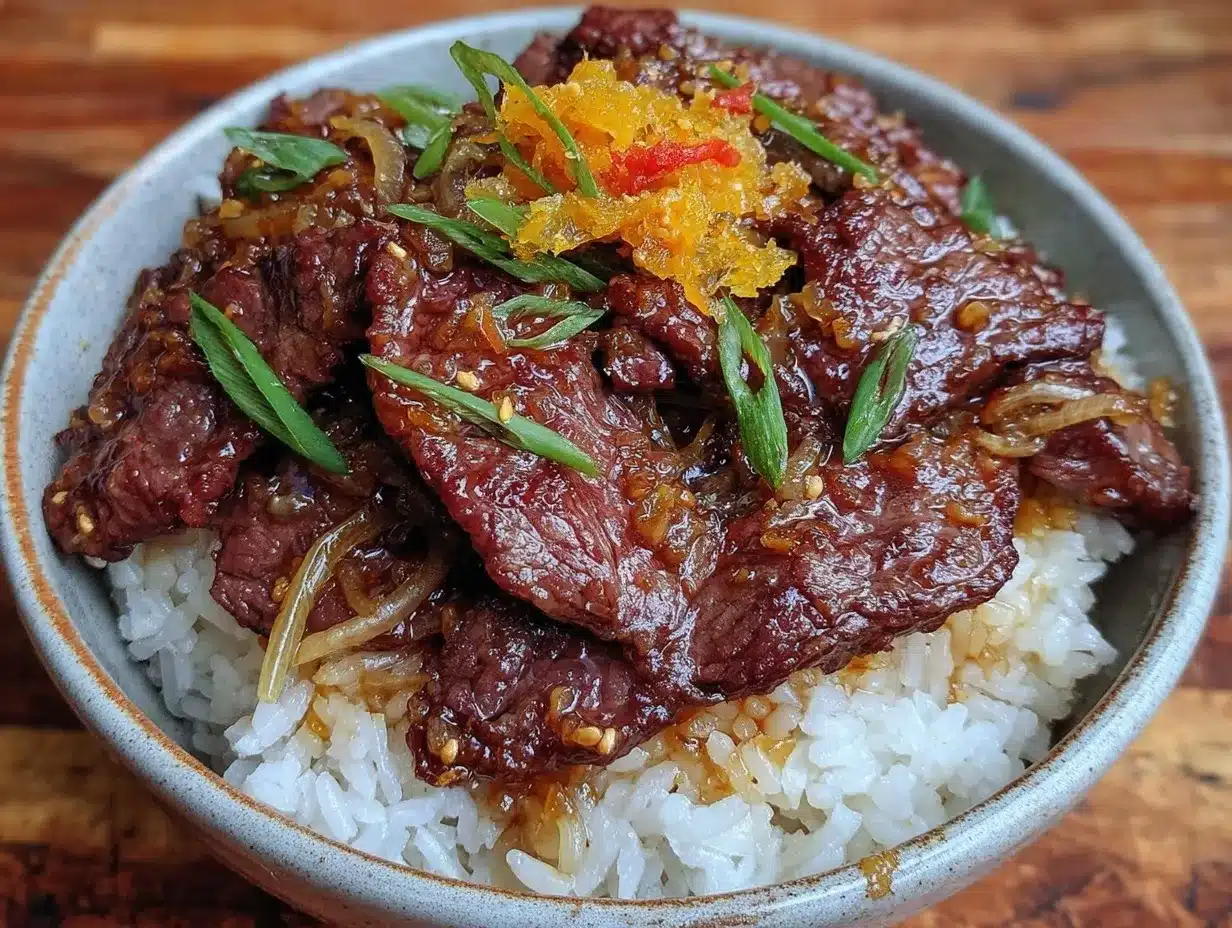
- Prepare the rice: Start by cooking your Japanese short-grain rice according to package instructions. This usually takes about 20 minutes. Rinse the rice under cold water until the water runs clear, then cook for fluffy, sticky rice perfect for bowls.
- Slice the beef and onions: While the rice cooks, thinly slice the beef across the grain into bite-sized strips (about 1/8 inch / 3 mm thick). Peel and thinly slice the onion into half-moons. Mince the garlic and grate fresh ginger.
- Cook the onions: Heat 1 tablespoon vegetable oil in a large skillet over medium heat. Add the sliced onions and cook for about 8 minutes, stirring occasionally, until soft and translucent with a slight caramelization. This step brings out natural sweetness.
- Add garlic and ginger: Stir in the minced garlic and grated ginger, cooking for 1 more minute until fragrant. Be careful not to burn the garlic.
- Add the beef: Increase heat to medium-high, then add the sliced beef to the pan. Cook for about 2-3 minutes, stirring often, until the beef just starts to brown but isn’t fully cooked through.
- Make the sauce: In a small bowl, mix together soy sauce, mirin, sake (if using), dashi powder, and sugar. Pour this mixture over the beef and onions. Reduce heat to medium and simmer for 3-5 minutes until the beef is tender and the sauce has slightly thickened.
- Check seasoning: Taste the sauce and adjust if needed—add a bit more soy sauce for saltiness or a pinch more sugar if you want it sweeter.
- Assemble the bowl: Spoon a generous portion of steamed rice into bowls. Top with the savory beef and onion mixture along with some of the sauce from the pan.
- Add garnishes: Finish with sliced green onions, pickled ginger, or a soft-boiled egg if you like a rich touch.
Tips: Don’t overcook the beef or it’ll get tough. Keep an eye on the sauce as it simmers; it should coat the meat without becoming syrupy. You know the sauce is right when it clings to the beef like a warm blanket.
Cooking Tips & Techniques
One thing I learned the hard way is that slicing the beef thinly is key. If your slices are too thick, the beef takes longer to cook and can become chewy. Using ribeye or sirloin with a bit of marbling helps keep the meat tender and flavorful.
Also, caramelizing the onions slowly over medium heat — not rushing this step — creates a natural sweetness that balances the salty soy sauce. It’s tempting to crank up the heat to speed things up, but patience here really pays off.
When adding the sauce, keep the heat moderate so it reduces gently. Too high, and the soy sauce can taste bitter. I also recommend stirring frequently to prevent sticking and to help the flavors meld.
If you’re pressed for time, you can prep the rice earlier or use leftover rice—it reheats beautifully with a quick steam. Multitasking is your friend here: get the rice going first, then prep and cook the beef while it cooks.
Variations & Adaptations
This beef bowl is super flexible, which makes it great for different tastes or dietary needs.
- Vegetarian version: Swap beef for thinly sliced king oyster mushrooms or tofu strips. Use vegetarian dashi or mushroom broth powder to keep the umami punch.
- Spicy twist: Add a teaspoon of chili paste (like gochujang or sriracha) to the sauce for a spicy kick that wakes up the whole bowl.
- Low-carb option: Serve the beef and onions over cauliflower rice or shirataki rice for a lighter take.
- Seasonal veggies: Toss in sliced bell peppers or snap peas along with the onions for added color and crunch.
Personally, I once tried adding a splash of orange juice to the sauce for a citrusy brightness—it was an unexpected but pleasant surprise. Feel free to experiment with what you have on hand!
Serving & Storage Suggestions
Serve your quick savory gyudon beef bowl immediately for the best experience—hot, saucy, and fresh. Presentation-wise, a simple bowl with a sprinkle of sliced green onions and a side of pickled ginger makes it look inviting and authentic.
This dish pairs beautifully with a light miso soup or a refreshing cucumber salad to balance the richness. If you’re looking for a comforting soup to go alongside, my classic chicken tortilla soup is a cozy companion.
Leftovers keep well in the fridge for up to 3 days, stored in an airtight container. Reheat gently in a skillet or microwave, adding a splash of water or broth to loosen the sauce if it thickened too much. Flavors actually deepen overnight, so the next day’s bowl is just as satisfying.
Nutritional Information & Benefits
This gyudon beef bowl is a balanced meal featuring protein from the beef, carbohydrates from the rice, and micronutrients from the onions and ginger. A typical serving contains approximately:
| Nutrient | Amount |
|---|---|
| Calories | 450-500 kcal |
| Protein | 28g |
| Carbohydrates | 50g |
| Fat | 12g |
| Fiber | 2g |
The ginger and garlic bring anti-inflammatory benefits, while the dashi powder adds natural umami that can reduce the need for extra salt. For gluten-free diets, swapping soy sauce with tamari keeps it safe. Just be mindful of the sodium content in soy sauce if you’re watching salt intake.
Conclusion
This quick savory gyudon beef bowl recipe is a solid choice for anyone craving a tasty, fuss-free meal during busy nights. It’s adaptable, packed with flavor, and doesn’t ask for much prep or special ingredients. I love how it brings warmth and satisfaction without the usual time commitment. You can tweak it however you like — maybe add some greens or spice it up — and still end up with a dish that feels like a home-cooked win.
Give it a try when you want a comforting dinner that feels special but gets on the table fast. And if you’re into easy, flavorful meals, you might enjoy my garlic parmesan chicken and rice skillet too. Cooking doesn’t have to be complicated to be delicious.
I’d love to hear how you make this recipe your own—drop a comment if you add your own spin or have tips for quick dinners that save the day!
Frequently Asked Questions (FAQs)
What cut of beef is best for gyudon?
Thinly sliced ribeye or sirloin works best for tenderness and flavor. You can also use pre-sliced beef from an Asian market labeled for hot pot or stir fry.
Can I make gyudon without mirin?
Yes. Substitute mirin with a mix of 1 tablespoon sugar and 1 tablespoon sake or water to mimic the sweetness and mild acidity.
How do I store leftovers?
Keep leftovers in an airtight container in the fridge for up to 3 days. Reheat gently with a splash of water or broth to loosen the sauce.
Is this recipe gluten-free?
It can be if you swap regular soy sauce for tamari and ensure your dashi powder is gluten-free.
Can I prepare this recipe in advance?
You can prep the beef and sauce ahead of time, but it’s best cooked fresh. Rice can be cooked earlier and reheated when ready.
Pin This Recipe!
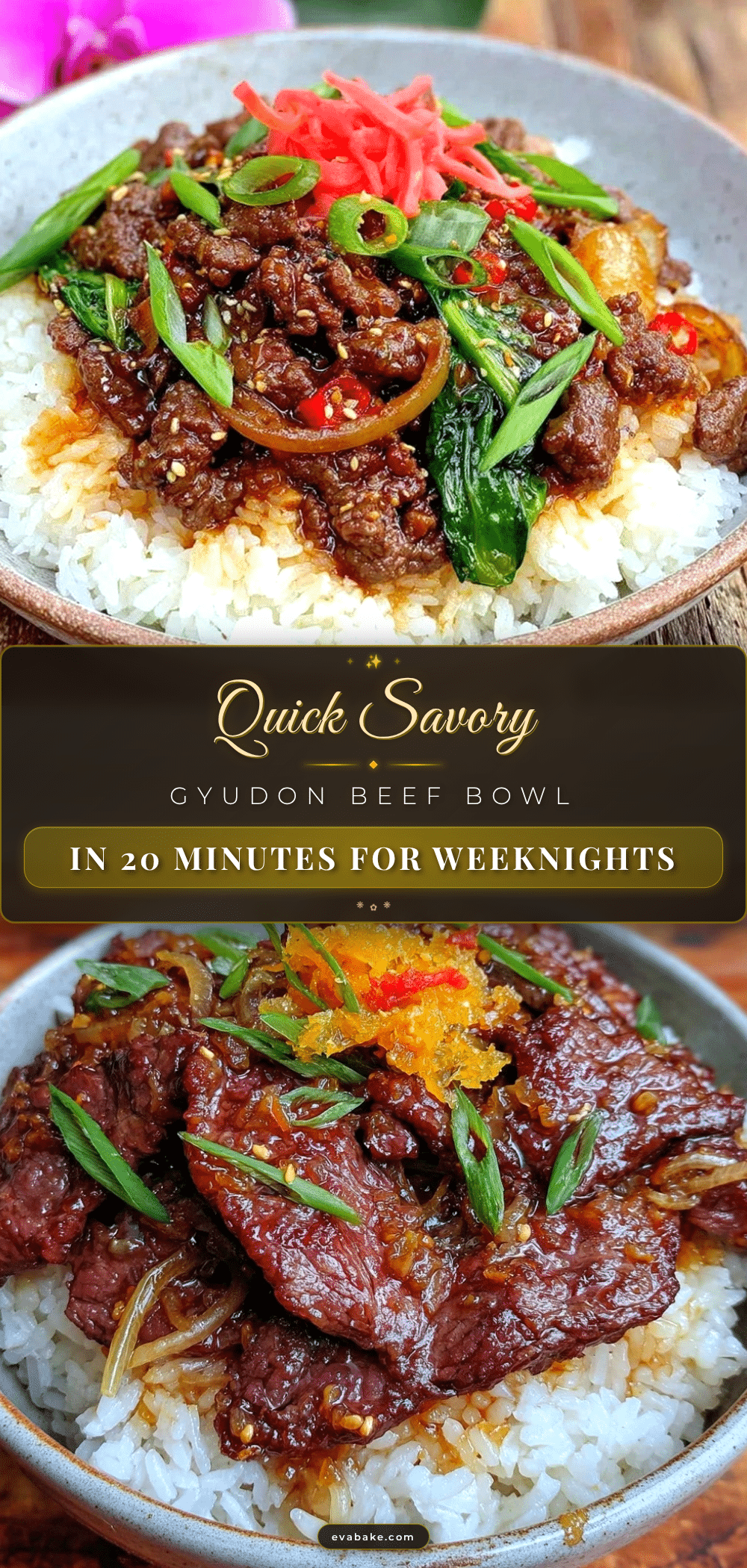
Quick Savory Gyudon Beef Bowl Recipe Easy Weeknight Dinner Idea
A quick and easy Japanese beef bowl recipe featuring thinly sliced beef and caramelized onions in a savory-sweet soy-ginger sauce served over steamed rice. Perfect for a satisfying weeknight dinner ready in about 25 minutes.
- Prep Time: 10 minutes
- Cook Time: 15 minutes
- Total Time: 25 minutes
- Yield: 2 servings 1x
- Category: Main Course
- Cuisine: Japanese
Ingredients
- 8 oz (225 g) thinly sliced ribeye or sirloin beef
- 1 large yellow onion, thinly sliced
- 2 cloves garlic, minced
- 1 teaspoon freshly grated ginger
- 1/4 cup (60 ml) low sodium soy sauce
- 2 tablespoons (30 ml) mirin (or substitute with 1 tablespoon sugar + 1 tablespoon sake or water)
- 2 tablespoons (30 ml) sake (optional)
- 1 teaspoon dashi powder
- 1 teaspoon sugar
- 1 tablespoon vegetable oil
- 2 cups (400 g) cooked Japanese short-grain rice
- Optional garnishes: thinly sliced green onions, pickled ginger, soft-boiled egg
Instructions
- Prepare the rice: Rinse Japanese short-grain rice under cold water until water runs clear, then cook according to package instructions (about 20 minutes).
- Slice the beef and onions: Thinly slice beef across the grain into 1/8 inch (3 mm) strips. Peel and thinly slice the onion into half-moons. Mince garlic and grate ginger.
- Cook the onions: Heat 1 tablespoon vegetable oil in a large skillet over medium heat. Add sliced onions and cook for about 8 minutes, stirring occasionally, until soft and translucent with slight caramelization.
- Add garlic and ginger: Stir in minced garlic and grated ginger, cooking for 1 minute until fragrant. Avoid burning the garlic.
- Add the beef: Increase heat to medium-high, add sliced beef, and cook for 2-3 minutes, stirring often, until beef starts to brown but is not fully cooked.
- Make the sauce: In a small bowl, mix soy sauce, mirin, sake (if using), dashi powder, and sugar. Pour over beef and onions. Reduce heat to medium and simmer for 3-5 minutes until beef is tender and sauce thickens slightly.
- Check seasoning: Taste and adjust with more soy sauce or sugar if desired.
- Assemble the bowl: Spoon steamed rice into bowls and top with beef and onion mixture along with sauce.
- Add garnishes: Finish with sliced green onions, pickled ginger, or a soft-boiled egg if desired.
Notes
Do not overcook the beef to keep it tender. Slowly caramelize onions for natural sweetness. Keep heat moderate when simmering sauce to avoid bitterness. Use tamari for gluten-free version. Leftovers keep well refrigerated for up to 3 days and reheat with a splash of water or broth.
Nutrition
- Serving Size: 1 bowl (approximatel
- Calories: 475
- Fat: 12
- Carbohydrates: 50
- Fiber: 2
- Protein: 28
Keywords: gyudon, beef bowl, Japanese beef bowl, quick dinner, weeknight meal, savory beef, easy recipe