I was standing in the middle of the grocery store parking lot last October, balancing a too-heavy bag of onions and a carton of chicken broth that was definitely leaking, when the wind shifted and carried the smell of sage and roasting turkey from somewhere—a nearby house, a car with the windows down, I couldn’t tell. And suddenly I was eight years old, standing on a step stool in my Aunt Celia’s cramped kitchen, watching her tear chunks of day-old bread into a massive ceramic bowl that had a hairline crack running right down the side. She never replaced that bowl. Said it had character.
Aunt Celia passed about five years ago, and honestly, I haven’t had her stuffing since. Not that anyone else in the family ever tried to make it—they were too intimidated, or maybe they just knew it wouldn’t be the same. But that parking lot moment stuck with me. I kept thinking about the way that stuffing tasted: crispy on top, soft in the middle, and somehow both rich and light at the same time. The secret, I eventually realized, wasn’t just the bread—it was the bread. She used a homemade sourdough focaccia her neighbor brought over every Thanksgiving morning, still warm from the oven. You know that feeling when you’re chasing a memory you can almost taste but can’t quite replicate? That was me for the last three years.
So this fall, I finally did something about it. I made my own sourdough focaccia, let it go slightly stale, and turned it into the stuffing I’d been dreaming about. And you know what? It worked. Maybe even better than I remembered, if I’m being honest. This sourdough focaccia stuffing is everything you want from a holiday side dish—crispy edges, tender center, and that unmistakable tangy depth that only sourdough can bring. It’s the recipe I keep making, not just for Thanksgiving, but for any fall dinner that needs a little extra warmth.
Why You’ll Love This Sourdough Focaccia Stuffing
Let me tell you why this sourdough focaccia stuffing has become my go-to fall recipe. First off, it’s not your average stuffing. The sourdough focaccia gives it this incredible texture that regular bread just can’t match—chewy and sturdy enough to hold up to all that broth and butter without turning into mush. I’ve tested this recipe six times over the past two months (my neighbors are very well-fed), and I can say with confidence: this is the best version.
- Incredible Texture: The focaccia’s airy crumb soaks up the broth perfectly while the crust stays slightly chewy. You get crispy edges and a soft, almost custard-like center in every bite.
- Simple Ingredients: No weird processed stuff here. You need sourdough focaccia (store-bought or homemade), vegetables, herbs, broth, and eggs. That’s it.
- Perfect for Fall Gatherings: Whether it’s Thanksgiving, Friendsgiving, or a cozy Sunday roast, this stuffing fits right in. It’s impressive enough for company but easy enough for a regular weeknight.
- Crowd-Pleaser: I brought this to a potluck last week, and three people asked for the recipe before they’d even finished their first helping. Kids and adults both go for seconds.
- Make-Ahead Friendly: You can prep the focaccia cubes days in advance and assemble the stuffing the night before. Less stress, more enjoyment.
What makes this sourdough focaccia stuffing different from every other stuffing recipe out there? It’s the bread. Sourdough focaccia has a naturally tangy flavor and a sturdy structure that doesn’t collapse under pressure. Plus, I’ve perfected the herb-to-broth ratio so every bite is flavorful without being soggy. This isn’t just another stuffing—it’s the one that makes you close your eyes after that first forkful and go, “Oh, that’s what stuffing should taste like.”
What Ingredients You Will Need
This sourdough focaccia stuffing uses simple, wholesome ingredients that come together to create something truly special. Most of these are pantry staples, which makes this recipe super approachable even on a busy holiday morning.
For the Bread Base
- Sourdough focaccia, 1 large (about 1.5 pounds or 680g) – Cut into 1-inch cubes. Day-old or slightly stale works best. I love getting mine from a local bakery, but homemade works beautifully too. The tanginess is key here.
For the Vegetable Mix

- Unsalted butter, 1/2 cup (1 stick or 113g) – Adds richness. Use dairy-free butter if needed.
- Yellow onion, 2 medium (about 300g) – Diced. Sweet onions like Vidalia work too.
- Celery stalks, 4 large (about 200g) – Diced. Don’t skip these—they add that classic stuffing crunch.
- Garlic cloves, 4 (about 20g) – Minced. Fresh is non-negotiable here.
- Fresh sage, 2 tablespoons (about 6g) – Finely chopped. This is the soul of the stuffing.
- Fresh rosemary, 1 tablespoon (about 4g) – Finely chopped.
- Fresh thyme, 1 tablespoon (about 3g) – Leaves only, no stems.
- Fresh parsley, 1/4 cup (about 15g) – Chopped, for freshness at the end.
For the Liquid Base
- Low-sodium chicken or vegetable broth, 2 cups (480ml) – I prefer Swanson’s low-sodium broth for better control over saltiness.
- Large eggs, 2 – Beaten. These help bind everything together.
- Salt, 1 teaspoon (6g) – Plus more to taste.
- Black pepper, 1/2 teaspoon (2g) – Freshly ground is best.
Optional Add-Ins
- Cooked Italian sausage, 1/2 pound (225g) – Crumbled, for a meatier version.
- Dried cranberries, 1/2 cup (60g) – Adds sweetness and color.
- Toasted pecans or walnuts, 1/2 cup (60g) – For crunch.
If you’re using homemade sourdough focaccia, make sure it’s at least a day old. Fresh focaccia is too soft and will turn mushy. I learned this the hard way during my first test—it turned into bread pudding instead of stuffing. Still tasty, but not what we’re going for here! For a gluten-free option, use gluten-free sourdough focaccia. The texture will be slightly different, but the flavor will still shine.
Equipment Needed
You don’t need a fancy kitchen to make this sourdough focaccia stuffing. Here’s what you’ll need:
- Large baking sheet – For toasting the focaccia cubes. A rimmed sheet works best to prevent spills.
- Large skillet or sauté pan – For cooking the vegetables. A 12-inch pan gives you plenty of room.
- Large mixing bowl – For combining everything. Go bigger than you think you need—trust me on this.
- 9×13-inch baking dish – A glass or ceramic dish works perfectly. Metal works too, but glass gives better browning.
- Sharp knife and cutting board – For dicing vegetables and herbs.
- Measuring cups and spoons – Accuracy matters, especially with the broth.
- Aluminum foil – For covering during the first part of baking.
If you don’t have a 9×13 dish, a 10-inch cast iron skillet works beautifully. The sides are high enough to hold everything, and the heat distribution is fantastic. I’ve also used a disposable aluminum pan when bringing this to gatherings—works like a charm and saves on cleanup. Just make sure to place it on a sturdy baking sheet for support.
Preparation Method
Let’s walk through this step by step. I promise it’s easier than it looks.
- Preheat your oven to 375°F (190°C). While it’s heating, cut your sourdough focaccia into 1-inch cubes. You should have about 10 cups of cubes. Spread them in a single layer on a large baking sheet. Bake for 12-15 minutes, tossing halfway through, until they’re lightly golden and dry to the touch. They’ll continue to crisp up as they cool. Set aside to cool completely.
- In your large skillet, melt the butter over medium heat. Add the diced onion and celery. Cook, stirring occasionally, for about 8-10 minutes until the onions are translucent and the celery has softened. You want them tender but not browned—we’re building flavor, not caramelizing. Add the minced garlic and cook for another minute until fragrant. Your kitchen should smell amazing right about now.
- Add the fresh herbs. Stir in the sage, rosemary, and thyme. Cook for 1-2 minutes until the herbs are fragrant and slightly darkened. Remove the pan from heat and let it cool for a few minutes. This step is crucial—if you add hot herbs to the eggs, they’ll scramble. Trust me, I’ve made that mistake.
- In a separate small bowl, whisk together the broth, beaten eggs, salt, and pepper. Set aside. This is your liquid base that will bring everything together.
- In your large mixing bowl, combine the toasted focaccia cubes and the cooked vegetable-herb mixture. Toss gently with your hands or a large spoon to distribute everything evenly. Make sure every cube gets some love.
- Pour the broth-egg mixture over the bread mixture. Use a spatula to fold everything together gently but thoroughly. Don’t mash it—you want the cubes to stay intact. Let it sit for 10 minutes. This resting time allows the bread to absorb the liquid. If the mixture looks dry after 10 minutes, add a splash more broth. If it looks soupy, don’t worry—the bread will absorb more as it bakes.
- Transfer the mixture to your greased 9×13-inch baking dish. Spread it evenly. Don’t press it down—you want some texture and air pockets for those crispy bits. Cover tightly with aluminum foil.
- Bake covered for 30 minutes. This steams the stuffing and ensures the center is fully cooked. Then remove the foil and bake for another 15-20 minutes until the top is golden brown and crispy. The edges should be dark and crunchy—those are the best parts.
- Let it rest for 5-10 minutes before serving. This allows the structure to set. Garnish with fresh parsley for a pop of color and freshness.
Your sourdough focaccia stuffing should look gorgeous—golden brown on top, with visible herbs and tender bread cubes. The smell alone will have everyone hovering around the kitchen.
Cooking Tips & Techniques
After six rounds of testing, I’ve picked up a few tricks that make this sourdough focaccia stuffing foolproof. Let me share them with you.
Toast the bread thoroughly. This is the number one tip I can give you. Under-toasted focaccia cubes will turn into mush the second they hit the broth. You want them dry and slightly golden, almost like croutons. If you’re making this ahead, you can toast the cubes up to three days in advance and store them in an airtight container at room temperature.
Don’t skip the resting time. After you pour the broth mixture over the bread, let it sit for a full 10 minutes. This gives the focaccia time to absorb the liquid evenly. I once rushed this step and ended up with dry pockets and soggy spots. Not ideal.
Watch your salt levels. Sourdough focaccia already has salt, and broth adds more. I recommend using low-sodium broth and tasting the vegetable mixture before adding the eggs. You can always add more salt at the table, but you can’t take it out.
Use fresh herbs. Dried herbs have their place, but not here. Fresh sage, rosemary, and thyme bring a brightness that dried herbs can’t match. If you must use dried, reduce the amounts by half and add them to the butter along with the garlic.
Make extra crispy bits. If you love those crunchy edges as much as I do, spread the stuffing slightly thinner in the dish, or use a larger baking dish. More surface area equals more crispy goodness.
My biggest failure? The first time I made this, I used fresh focaccia straight from the bakery. It was still warm. The result was a soggy, dense mess that looked more like porridge than stuffing. Learn from my mistake—stale or toasted bread is non-negotiable.
Variations & Adaptations
This sourdough focaccia stuffing is incredibly versatile. Here are some ways to make it your own.
Meat Lover’s Stuffing
Brown 1/2 pound of Italian sausage (casings removed) or bacon in the skillet before cooking the vegetables. Remove the meat, leaving about 2 tablespoons of fat in the pan, then proceed with the recipe. Stir the cooked meat back in when you combine the bread and vegetables. The smoky flavor is incredible.
Vegetarian/Vegan Version
Use vegetable broth instead of chicken broth, and substitute the butter with olive oil or a high-quality vegan butter. Omit the eggs and add an extra 1/4 cup of broth—the focaccia is sturdy enough to hold together without eggs. I’ve tested this version, and honestly, I couldn’t tell the difference.
Apple & Cranberry Twist
Add 1 diced apple (Honeycrisp or Granny Smith) to the skillet with the onions and celery. Stir in 1/2 cup dried cranberries when you combine everything. The sweetness cuts through the savory herbs beautifully. This is my favorite variation for Thanksgiving.
Mushroom & Thyme
Sauté 8 ounces of sliced cremini or shiitake mushrooms in the butter before adding the onions. Cook until they release their liquid and start to brown. Add an extra teaspoon of fresh thyme. This version is earthy and deeply savory—perfect for mushroom lovers.
Gluten-Free Adaptation
Use gluten-free sourdough focaccia (many bakeries now offer this). The texture will be slightly denser, but the flavor is still fantastic. Toast the cubes a few minutes longer to ensure they’re thoroughly dried out.
Serving & Storage Suggestions
This sourdough focaccia stuffing is best served warm, straight from the oven. The contrast between the crispy top and the tender interior is at its peak within 15 minutes of baking. I like to garnish it with a sprinkle of fresh parsley and a few cracks of black pepper right before bringing it to the table.
What to serve with it: This stuffing pairs beautifully with roasted turkey or chicken, of course. But don’t limit yourself to Thanksgiving—it’s fantastic alongside a simple roast chicken, pork chops, or even a hearty vegetable stew. For a complete fall meal, serve it with roasted Brussels sprouts and a cranberry sauce.
Storage: Leftover stuffing keeps well in an airtight container in the refrigerator for up to 4 days. The flavors actually meld together overnight, making day-two stuffing even better. I’ve been known to eat it cold straight from the fridge—don’t judge me until you’ve tried it.
Reheating: The best way to reheat stuffing is in the oven. Spread it on a baking sheet and warm it at 350°F (175°C) for about 10-15 minutes. This restores the crispy edges. The microwave works in a pinch, but it will make the stuffing softer. If you’re reheating a large batch, cover it with foil for the first 10 minutes, then uncover for the last 5 to crisp up the top.
Freezing: You can freeze this stuffing either before or after baking. To freeze before baking, assemble the stuffing in the baking dish, cover tightly with foil, and freeze for up to 3 months. Thaw overnight in the refrigerator, then bake as directed (add about 10 minutes to the covered baking time). To freeze after baking, let it cool completely, then wrap tightly and freeze. Reheat directly from frozen at 350°F (175°C) for 25-30 minutes.
Nutritional Information & Benefits
Here’s an approximate nutritional breakdown per serving (based on 10 servings):
- Calories: 320
- Total Fat: 14g
- Saturated Fat: 8g
- Cholesterol: 65mg
- Sodium: 580mg
- Total Carbohydrates: 38g
- Dietary Fiber: 3g
- Sugars: 4g
- Protein: 9g
Sourdough bread has some surprising benefits. The fermentation process breaks down phytic acid, making the nutrients more bioavailable. It also has a lower glycemic index compared to regular white bread, which means it won’t spike your blood sugar as much. Plus, the herbs in this stuffing—sage, rosemary, and thyme—are packed with antioxidants and anti-inflammatory compounds. So yes, you can feel a little bit good about eating this comforting dish.
This recipe contains gluten, dairy, and eggs. For allergen-friendly versions, check the variations section above.
Conclusion
This sourdough focaccia stuffing has become my most-requested recipe, and I honestly think it will become yours too. It’s everything you want from a fall side dish—warm, comforting, full of herbaceous flavor, and with that perfect contrast of crispy and tender textures. The sourdough focaccia makes all the difference, adding a tangy depth that regular bread just can’t replicate.
I love that this recipe feels both nostalgic and new at the same time. It honors the stuffing I remember from Aunt Celia’s kitchen while making it completely my own. And now it can be yours too. Play around with the variations, add your own twist, and make it part of your fall traditions.
Have you tried this sourdough focaccia stuffing? I’d love to hear how it turned out! Drop a comment below and let me know what variations you tried. And if you loved it as much as I do, share it with a friend who needs a new stuffing recipe in their life. Happy cooking, friends!
Frequently Asked Questions
Can I use regular sourdough bread instead of focaccia?
You can, but the texture will be different. Focaccia has a higher oil content and a softer, airier crumb that soaks up broth beautifully without falling apart. Regular sourdough will work in a pinch, but you’ll want to toast it a bit longer and maybe add an extra tablespoon of melted butter to compensate for the lower fat content.
How far ahead can I make this sourdough focaccia stuffing?
You can assemble the stuffing up to 24 hours in advance. Just prepare it through step 6, cover the dish tightly, and refrigerate. When you’re ready to bake, add about 10 minutes to the covered baking time since you’re starting from cold. You can also toast the focaccia cubes up to 3 days ahead and store them in an airtight container.
Why did my stuffing turn out soggy?
This usually happens for one of three reasons: the bread wasn’t toasted enough, you added too much broth, or you pressed the mixture down in the baking dish. Make sure your focaccia cubes are thoroughly dried out before combining, measure your broth carefully, and spread the mixture loosely in the dish. Also, don’t skip the uncovered baking time—that final blast of heat is what creates those crispy edges.
Can I make this stuffing dairy-free?
Absolutely. Substitute the butter with olive oil or a good-quality vegan butter. I recommend using a vegan butter with a high fat content for the best texture. The rest of the recipe remains the same, and honestly, the flavor is still incredible. I’ve served the dairy-free version to unsuspecting guests, and no one noticed the difference.
What’s the best way to get crispy edges on the stuffing?
Two things: spread the mixture in a thinner layer, and don’t cover it for the entire baking time. I like to use a slightly larger dish (like a 9×13) and spread the stuffing to the edges. The uncovered baking time at the end is crucial—those last 15-20 minutes are when the magic happens. If you want even more crunch, broil it for the last 2-3 minutes, but watch it carefully so it doesn’t burn.
Pin This Recipe!
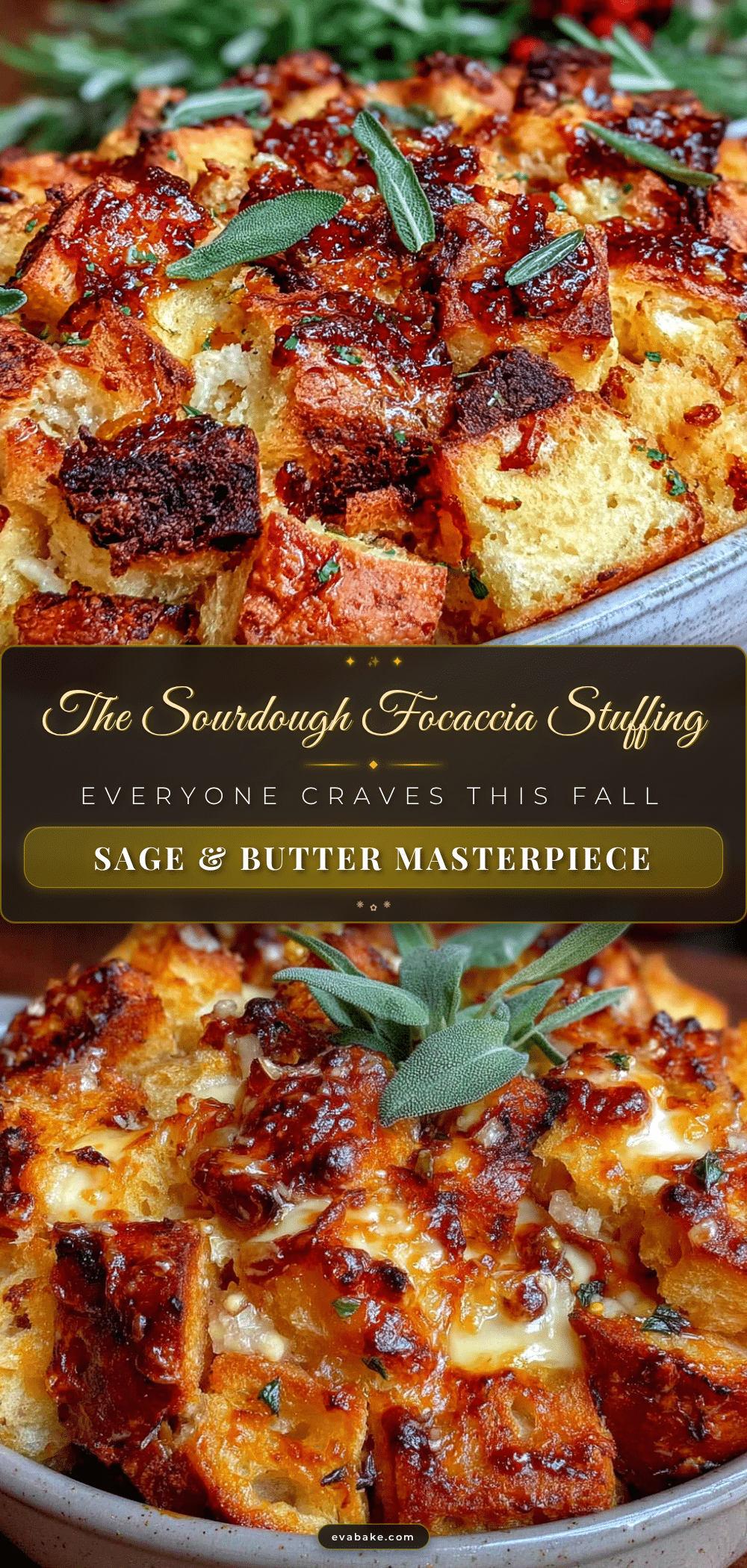
The Best Sourdough Focaccia Stuffing: Easy Fall Recipe

This sourdough focaccia stuffing is everything you want from a holiday side dish—crispy edges, tender center, and that unmistakable tangy depth that only sourdough can bring. It’s the recipe I keep making, not just for Thanksgiving, but for any fall dinner that needs a little extra warmth.
- Prep Time: 20 minutes
- Cook Time: 60 minutes
- Total Time: 1 hour 20 minutes
- Yield: 10 servings 1x
- Category: Side Dish
- Cuisine: American
Ingredients
- 1 large sourdough focaccia (about 1.5 pounds or 680g), cut into 1-inch cubes
- 1/2 cup (1 stick or 113g) unsalted butter
- 2 medium yellow onions (about 300g), diced
- 4 large celery stalks (about 200g), diced
- 4 garlic cloves (about 20g), minced
- 2 tablespoons fresh sage (about 6g), finely chopped
- 1 tablespoon fresh rosemary (about 4g), finely chopped
- 1 tablespoon fresh thyme leaves (about 3g)
- 1/4 cup fresh parsley (about 15g), chopped
- 2 cups (480ml) low-sodium chicken or vegetable broth
- 2 large eggs, beaten
- 1 teaspoon (6g) salt
- 1/2 teaspoon (2g) black pepper, freshly ground
- 1/2 pound (225g) cooked Italian sausage, crumbled (optional)
- 1/2 cup (60g) dried cranberries (optional)
- 1/2 cup (60g) toasted pecans or walnuts (optional)
Instructions
- Preheat your oven to 375°F (190°C). Cut sourdough focaccia into 1-inch cubes (about 10 cups). Spread in a single layer on a large baking sheet. Bake for 12-15 minutes, tossing halfway, until lightly golden and dry. Set aside to cool completely.
- In a large skillet, melt butter over medium heat. Add diced onion and celery. Cook, stirring occasionally, for 8-10 minutes until onions are translucent and celery is softened. Add minced garlic and cook for 1 minute until fragrant.
- Stir in sage, rosemary, and thyme. Cook for 1-2 minutes until fragrant. Remove from heat and let cool for a few minutes.
- In a small bowl, whisk together broth, beaten eggs, salt, and pepper. Set aside.
- In a large mixing bowl, combine toasted focaccia cubes and cooked vegetable-herb mixture. Toss gently to distribute evenly.
- Pour broth-egg mixture over the bread mixture. Fold gently but thoroughly. Let sit for 10 minutes to allow bread to absorb liquid. If dry, add a splash more broth.
- Transfer mixture to a greased 9×13-inch baking dish. Spread evenly without pressing down. Cover tightly with aluminum foil.
- Bake covered for 30 minutes. Remove foil and bake for another 15-20 minutes until top is golden brown and crispy.
- Let rest for 5-10 minutes before serving. Garnish with fresh parsley.
Notes
Toast the bread thoroughly to prevent mushiness. Don’t skip the resting time after adding broth. Use low-sodium broth to control salt levels. Fresh herbs are essential for best flavor. For extra crispy edges, spread stuffing thinner or use a larger dish. Can be assembled up to 24 hours in advance.
Nutrition
- Serving Size: 1 serving (about 1 c
- Calories: 320
- Sugar: 4
- Sodium: 580
- Fat: 14
- Saturated Fat: 8
- Carbohydrates: 38
- Fiber: 3
- Protein: 9
Keywords: sourdough focaccia stuffing, fall recipe, Thanksgiving stuffing, sourdough stuffing, holiday side dish