The aroma of warm spices and simmering vegetables filled the tiny kitchen as I wiped the sweat from my brow, juggling a pot on the stove and a bowl of fluffy couscous. Honestly, making Wholesome Moroccan Couscous with Seven Vegetables from Scratch wasn’t planned—it was one of those evenings where the fridge was half-empty, and I had to think fast. I remember glancing at the pile of random veggies and wondering if this mix of carrots, zucchini, and squash would actually come together into something edible. The skepticism was real.
But as the vibrant colors softened in the broth, and the cinnamon and cumin released their magic, I found myself sneaking tastes between stirring, surprised at the depth of flavor from such simple ingredients. It wasn’t just food; it was this quiet, grounding moment amid chaos, a reminder that a handful of wholesome ingredients could offer comfort and joy without fuss. That night, I learned that making this Moroccan couscous dish from scratch isn’t just about feeding the body—it’s a kind of therapy, a way to slow down and savor the little things.
Over time, this recipe stuck with me not just because it’s nourishing and colorful, but because it’s flexible and welcoming to improvisation. It’s the kind of dish I turn to when I want something hearty and familiar but still a little adventurous. And honestly? It has a way of making the kitchen feel like home, even on the busiest days.
Why You’ll Love This Recipe
I’ve made this Wholesome Moroccan Couscous with Seven Vegetables more times than I can count, tweaking it here and there to find the perfect balance of flavors and textures. It’s one of those recipes that feels like a win every time, and here’s why:
- Quick & Easy: Ready in about 45 minutes, it fits right into busy weeknights when you want something nourishing but don’t want to spend hours in the kitchen.
- Simple Ingredients: No rare or fancy items required—most are pantry staples or fresh produce you can find at any local market.
- Perfect for Cozy Dinners: Whether it’s a chilly evening or a casual family meal, this dish feels like a warm hug on a plate.
- Crowd-Pleaser: My friends and family always ask for seconds—even the picky eaters appreciate the comforting spice blend and tender veggies.
- Unbelievably Delicious: The subtle sweetness of the seven vegetables pairs beautifully with the fragrant spices, creating a complex yet comforting flavor profile.
What makes this Moroccan couscous recipe stand out from others is the way the vegetables are layered and cooked slowly to build flavor from scratch, rather than relying on pre-made spice blends or shortcuts. The couscous itself is steamed just right for a light, fluffy texture—not mushy or dry. I also love tweaking the seasoning with a pinch of saffron or fresh herbs when I feel fancy, which really brings the dish to life.
Honestly, it’s the kind of recipe that makes you pause after the first bite and say, “Yeah, this is exactly what I needed.” If you want a wholesome meal that’s soulful but still manageable for your weeknight routine, this Moroccan couscous is it.
What Ingredients You Will Need
This recipe uses simple, wholesome ingredients to deliver bold flavor and satisfying texture without the fuss. Most of the vegetables are easy to find year-round, and the spices can be stocked up in your pantry for other dishes too. Here’s what I use to bring this dish together:
- Couscous: 2 cups (about 340g) of medium or fine couscous – I prefer Bob’s Red Mill for consistent fluffiness.
- Vegetables:
- 2 medium carrots, peeled and cut into chunks (adds sweetness and color)
- 1 medium zucchini, chopped
- 1 small eggplant, diced
- 1 yellow squash, sliced
- 1 cup chickpeas, cooked or canned (rinsed well)
- 1 medium onion, finely chopped
- 2 tomatoes, diced (fresh or canned work fine)
- Broth & Liquids:
- 4 cups vegetable broth or water (for cooking the couscous and vegetables)
- 2 tablespoons olive oil (adds richness and depth)
- Spices:
- 1 teaspoon ground cumin
- 1 teaspoon ground coriander
- 1/2 teaspoon ground cinnamon (gives subtle warmth)
- 1/2 teaspoon turmeric (adds earthiness and color)
- 1/4 teaspoon cayenne pepper (optional, for a gentle kick)
- Salt and freshly ground black pepper, to taste
- Fresh Herbs:
- Handful of chopped fresh cilantro or parsley (for garnish and brightness)
- Optional:
- Raisins or dried apricots, chopped (adds nice contrast of sweetness)
- Toasted slivered almonds or pine nuts (for crunch)
When it comes to the vegetables, feel free to swap based on season or preference. In summer, fresh tomatoes and squash shine brightest, while in winter, root vegetables like turnips or sweet potatoes work beautifully. For a gluten-free version, try swapping couscous with quinoa or millet.
Equipment Needed
For this Moroccan couscous recipe, you don’t need anything fancy, but a few kitchen essentials will make the process smooth and enjoyable:
- Large deep skillet or sauté pan: For cooking the vegetables and simmering the broth. I use a 12-inch nonstick pan which makes stirring easy and cleanup quick.
- Large pot with lid or a couscoussier: Traditionally, couscous is steamed using a special pot called a couscoussier, but if you don’t have one, a large pot with a steamer basket or even a fine sieve over boiling water will do.
- Mixing bowls: For rinsing and soaking chickpeas or tossing couscous with seasonings.
- Wooden spoon or silicone spatula: For stirring without scratching your pan.
- Measuring cups and spoons: To keep the spice balance just right.
If you’re on a budget, a simple large pot and a fine mesh sieve are enough for steaming the couscous. Just keep an eye on the water level to avoid scorching. Personally, I find that using a wide pan for cooking the vegetables helps them soften evenly and lets the spices mingle beautifully.
Preparation Method
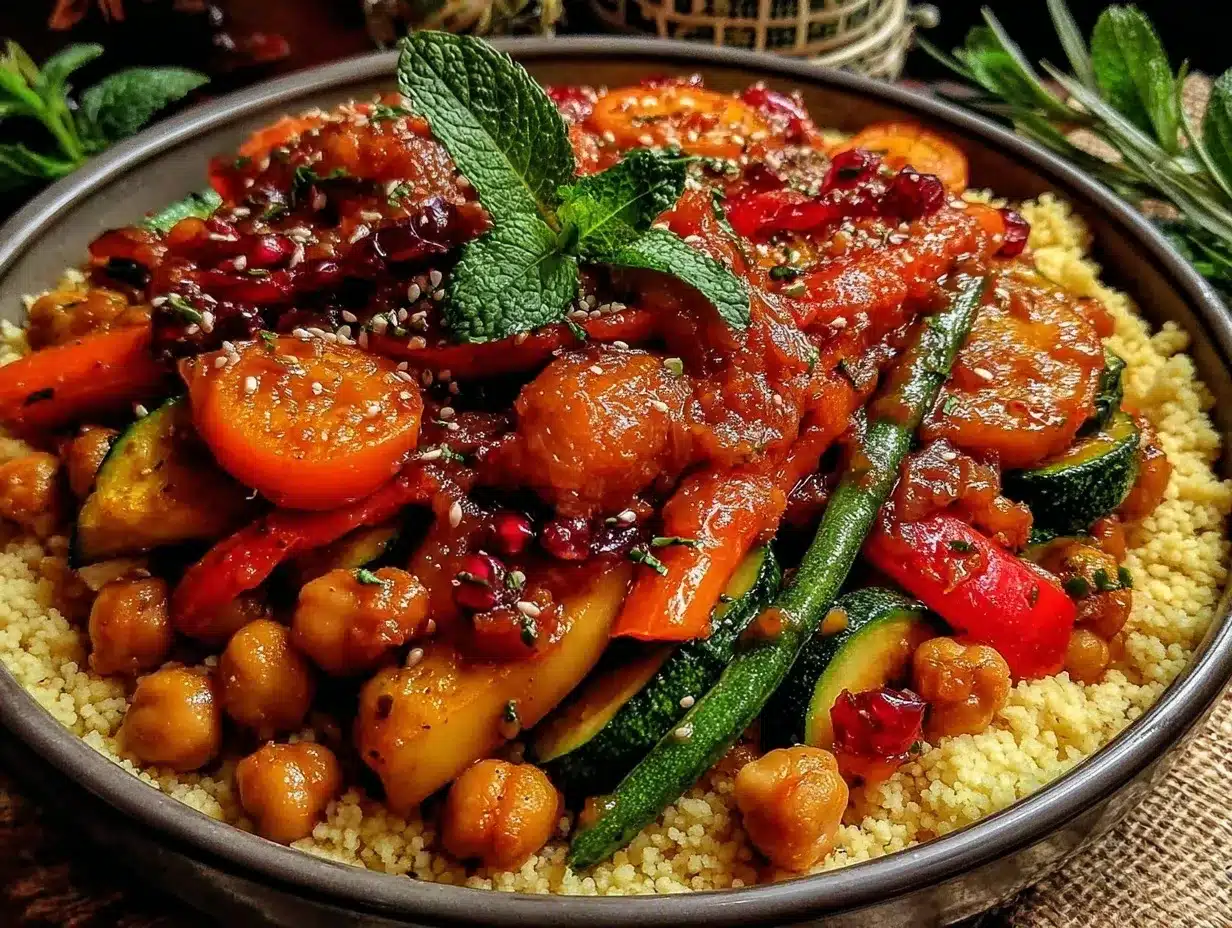
- Prepare the vegetables: Wash and chop all the vegetables into bite-sized pieces. Peel the carrots and dice the eggplant, zucchini, and squash evenly so they cook at the same rate. This usually takes about 10 minutes.
- Sauté the onions: Heat 2 tablespoons of olive oil over medium heat in your large skillet. Add the chopped onion and cook, stirring occasionally, until translucent and soft—about 5 minutes. The kitchen will start smelling fragrant already.
- Add spices: Stir in the cumin, coriander, cinnamon, turmeric, and cayenne pepper with the onions. Cook for 1-2 minutes until the spices bloom and the aroma deepens. Be careful not to burn them; you want a warm, inviting scent, not bitterness.
- Add vegetables and tomatoes: Toss in the carrots, eggplant, zucchini, squash, and diced tomatoes. Stir well to coat them with the spiced onion mix. Cook for 5 minutes, stirring occasionally.
- Add broth and chickpeas: Pour in 4 cups (960 ml) of vegetable broth or water and add the chickpeas. Season with salt and pepper to taste. Bring the mixture to a gentle simmer.
- Simmer: Cover the pan and let the vegetables cook gently for about 20 minutes or until tender but not mushy. Give it a stir halfway through. The vegetables should be soft and fragrant, with the broth slightly reduced but still saucy.
- Prepare the couscous: While the vegetables simmer, place the couscous in a large bowl. Pour 2 cups (480 ml) of boiling water or broth over it, add a pinch of salt, and cover tightly with a plate or plastic wrap. Let it steam for 5-7 minutes.
- Fluff the couscous: Use a fork to fluff the couscous gently, breaking up any clumps. Drizzle with a bit of olive oil or a pat of butter if desired to keep it light and fluffy.
- Combine and serve: Spoon the cooked vegetables over the couscous or gently fold them together in the pot. Garnish with fresh chopped cilantro or parsley, and sprinkle with toasted nuts or dried fruit if using.
Quick tip: If the couscous seems dry, add a splash of the vegetable broth to loosen it up. If the veggie sauce is too watery, remove the lid and simmer uncovered for a few minutes to reduce. The balance of moisture is key to that perfect couscous texture.
Cooking Tips & Techniques
Here are some insights I’ve picked up from making Moroccan couscous over and over:
- Don’t rush the spice blooming: Toasting your spices briefly in the oil before adding veggies makes a huge difference. It releases their essential oils and layers flavor.
- Uniform chopping: Cutting vegetables into similar-sized pieces ensures even cooking. Nothing ruins a cozy dinner like some veggies being mushy while others are still crunchy.
- Steaming couscous properly: If you want the real deal, steam your couscous twice—first after hydrating, then again after fluffing. I usually skip this for a quicker meal, but it’s worth trying if you have time.
- Use good broth: I always recommend homemade vegetable broth or a high-quality store-bought brand like Pacific Foods for deeper flavor.
- Multitasking: While the veggies simmer, prep your couscous and chop herbs to keep things moving smoothly.
- Adjust seasoning gradually: Taste as you go—cinnamon and cayenne can overpower if added too early or in excess.
One time, I accidentally added too much cinnamon and had to balance it out with extra broth and a squeeze of lemon. It turned into a happy accident with a bright twist that I still do sometimes. So, don’t be afraid to experiment a little once you know the basics!
Variations & Adaptations
This Moroccan couscous recipe lends itself well to personalization. Here are a few ways I’ve played around with it:
- Vegan and Gluten-Free: Swap couscous for quinoa or millet to avoid gluten. Use vegetable broth and skip any optional dairy toppings.
- Seasonal Veggies: In fall, try adding roasted butternut squash or sweet potatoes. Spring calls for fresh peas and asparagus for a lighter feel.
- Protein Boost: Stir in cooked chicken, lamb, or chickpeas for a heartier meal. I love adding spiced lamb meatballs when I want something special.
- Spice Level: Add harissa paste or extra cayenne for a fiery kick, or keep it mild for kids and sensitive palates.
- Sweet & Savory: Toss in dried fruits like apricots or raisins and sprinkle with toasted almonds to add texture and a touch of sweetness.
Personally, I once swapped in roasted eggplant and added a splash of fresh lemon juice before serving—it freshened the whole dish beautifully. It’s a forgiving recipe that welcomes your creativity.
Serving & Storage Suggestions
This Moroccan couscous is best served warm, fresh from the pot, with a sprinkle of fresh herbs to brighten the plate. I like to serve it alongside a simple cucumber and tomato salad dressed with lemon and olive oil for a refreshing contrast.
It also pairs wonderfully with grilled meats or a side of crispy oven-roasted chicken shawarma for a full Moroccan-inspired feast.
For storage, place leftovers in an airtight container in the refrigerator for up to 3 days. The flavors actually deepen overnight, making it a great make-ahead meal. To reheat, warm gently in a pan over low heat with a splash of broth or water to prevent drying out.
If you want to freeze it, keep the couscous and vegetables separate if possible, as couscous can get a bit mushy after freezing. Thaw overnight in the fridge and reheat thoroughly before serving.
Nutritional Information & Benefits
This wholesome Moroccan couscous with seven vegetables is a balanced meal packed with fiber, vitamins, and plant-based protein from chickpeas. The mix of colorful vegetables provides antioxidants and essential nutrients like vitamin A (from carrots), vitamin C (from tomatoes and squash), and potassium (from eggplant).
The spices—cumin, coriander, turmeric, and cinnamon—not only add flavor but have anti-inflammatory properties and support digestion. Couscous itself is a good source of selenium, which helps with immune function.
If gluten-free, swapping the couscous with quinoa adds complete protein and keeps the dish nutritious and hearty. Just watch out for any nut allergies if you add toasted nuts as garnish.
From my experience, this is a recipe that satisfies hunger and nurtures wellness without feeling heavy or complicated.
Conclusion
Making Wholesome Moroccan Couscous with Seven Vegetables from Scratch is more than just preparing a meal—it’s about embracing simplicity and rich flavors that feel like home. This recipe is approachable, flexible, and full of character, perfect for anyone wanting a satisfying dish that’s both healthy and full of soul.
Feel free to make it your own with different veggies or spice levels, and don’t hesitate to add your favorite accompaniments. I love how this recipe invites you to slow down and enjoy the process, just like sinking into a cozy bowl of spiced golden milk latte on chilly nights.
If you try it, drop a comment sharing your tweaks or how it turned out—I’m always curious to hear your versions and kitchen stories. Here’s to many more comforting, wholesome meals crafted from scratch in your kitchen!
FAQs
- Can I make this recipe ahead of time? Yes! The flavors develop beautifully after resting, so it’s perfect for prepping a day in advance. Store in the fridge and reheat gently.
- What’s the best way to steam couscous if I don’t have a couscoussier? Use a fine mesh sieve or colander over a pot of boiling water, cover tightly, and steam for about 10 minutes for light, fluffy couscous.
- Can I use frozen vegetables instead of fresh? Absolutely. Just adjust cooking times as frozen veggies tend to cook faster and release more water.
- How can I make this dish spicier? Add harissa paste, extra cayenne, or a pinch of smoked paprika to the vegetable mix for more heat and smokiness.
- Is this recipe suitable for gluten-free diets? Traditional couscous contains gluten, but swapping with quinoa or millet makes it gluten-free and just as delicious.
Pin This Recipe!
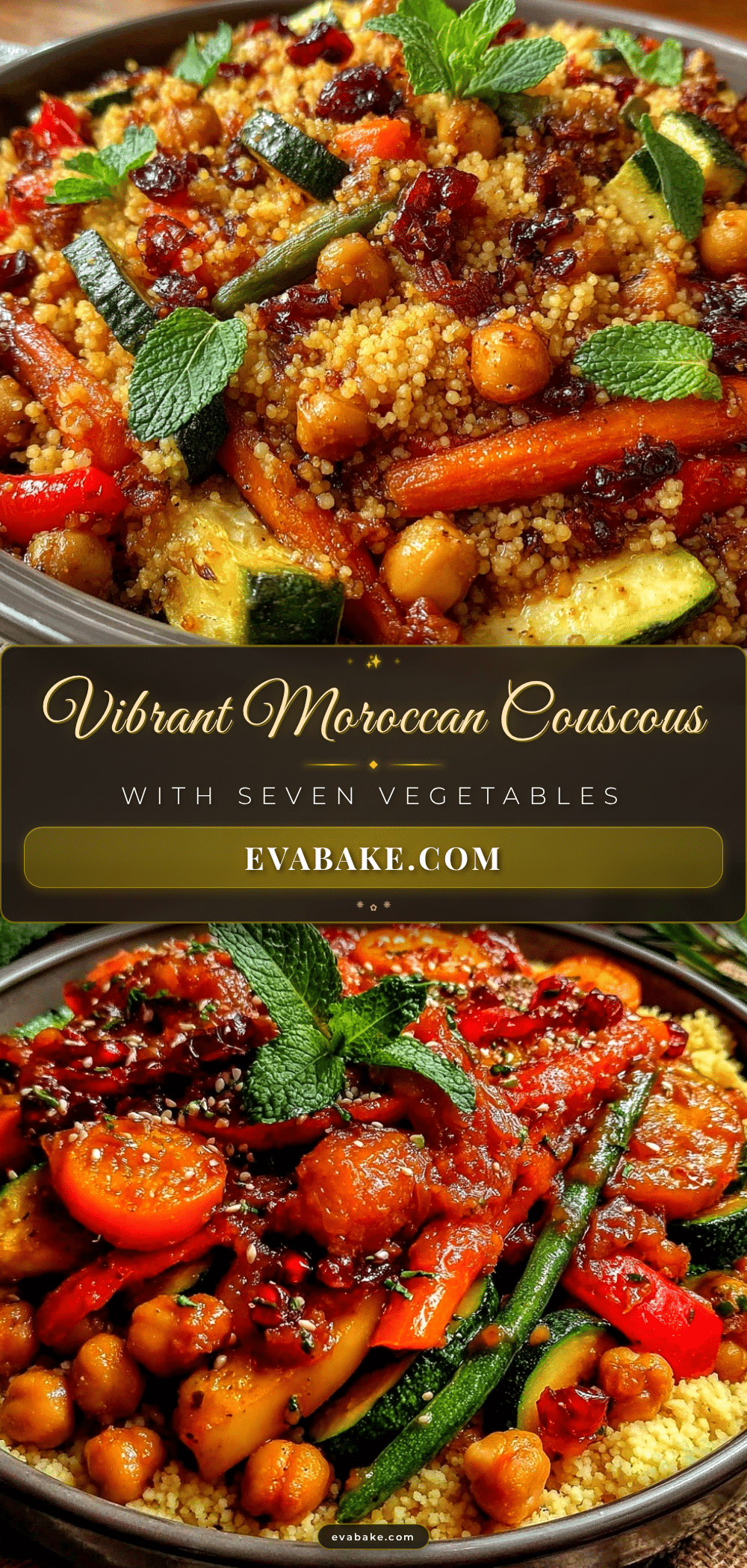
Wholesome Moroccan Couscous with 7 Vegetables

A nourishing and colorful Moroccan couscous dish made from scratch with seven vegetables and fragrant spices, perfect for a cozy and wholesome meal.
- Prep Time: 15 minutes
- Cook Time: 30 minutes
- Total Time: 45 minutes
- Yield: 4 servings 1x
- Category: Main Course
- Cuisine: Moroccan
Ingredients
- 2 cups (about 340g) medium or fine couscous
- 2 medium carrots, peeled and cut into chunks
- 1 medium zucchini, chopped
- 1 small eggplant, diced
- 1 yellow squash, sliced
- 1 cup chickpeas, cooked or canned (rinsed well)
- 1 medium onion, finely chopped
- 2 tomatoes, diced (fresh or canned)
- 4 cups vegetable broth or water
- 2 tablespoons olive oil
- 1 teaspoon ground cumin
- 1 teaspoon ground coriander
- 1/2 teaspoon ground cinnamon
- 1/2 teaspoon turmeric
- 1/4 teaspoon cayenne pepper (optional)
- Salt and freshly ground black pepper, to taste
- Handful of chopped fresh cilantro or parsley (for garnish)
- Optional: raisins or dried apricots, chopped
- Optional: toasted slivered almonds or pine nuts
Instructions
- Wash and chop all the vegetables into bite-sized pieces. Peel the carrots and dice the eggplant, zucchini, and squash evenly.
- Heat 2 tablespoons of olive oil over medium heat in a large skillet. Add the chopped onion and cook until translucent and soft, about 5 minutes.
- Stir in cumin, coriander, cinnamon, turmeric, and cayenne pepper with the onions. Cook for 1-2 minutes until spices bloom.
- Add carrots, eggplant, zucchini, squash, and diced tomatoes. Stir well and cook for 5 minutes, stirring occasionally.
- Pour in 4 cups of vegetable broth or water and add chickpeas. Season with salt and pepper. Bring to a gentle simmer.
- Cover and let vegetables cook gently for about 20 minutes until tender but not mushy, stirring halfway through.
- While vegetables simmer, place couscous in a large bowl. Pour 2 cups of boiling water or broth over it, add a pinch of salt, and cover tightly. Let steam for 5-7 minutes.
- Fluff couscous with a fork, breaking up clumps. Drizzle with olive oil or butter if desired.
- Spoon cooked vegetables over couscous or gently fold together. Garnish with fresh cilantro or parsley and sprinkle with toasted nuts or dried fruit if using.
Notes
Toast spices briefly in oil before adding vegetables to release essential oils and deepen flavor. Cut vegetables uniformly for even cooking. Steam couscous twice for best texture if time allows. Use good quality vegetable broth for richer flavor. Adjust seasoning gradually and taste as you go. Add a splash of broth if couscous is dry or simmer uncovered if vegetable sauce is too watery.
Nutrition
- Serving Size: 1 serving (about 1.5
- Calories: 350
- Sugar: 8
- Sodium: 450
- Fat: 8
- Saturated Fat: 1
- Carbohydrates: 58
- Fiber: 8
- Protein: 10
Keywords: Moroccan couscous, seven vegetables, vegetarian, easy recipe, healthy dinner, couscous recipe, plant-based, gluten-free option