There was a stretch where fall dinners felt like a compromise. You could have something deeply flavorful, but it meant standing over the stove for two hours. Or you could have something hands-off, but it tasted, well, a little flat. I had been looking for a slow cooker pot roast that actually tasted like it had been braised all day in a proper Dutch oven—deep, rich, savory, with vegetables that held their shape and didn’t turn into mush. For a while, I just accepted that the slow cooker version wasn’t going to deliver that same kind of satisfaction. The meat would be tender enough, sure, but the gravy was always thin, the flavor one-note, and the carrots and potatoes had a sad, waterlogged texture.
Then one particularly chilly October afternoon—the kind where the wind has a bite and the kitchen windows steam up from the kettle—I decided to stop accepting the compromise. I pulled out my old slow cooker, a six-quart workhorse that had seen better days, and I got stubborn about it. I wanted the pot roast that you smell before you even open the front door. The one where the gravy clings to the meat like it means it. The one where the parsnips are still slightly firm but completely infused with beefy, herby goodness. (My husband walked in around hour six and just stood there, inhaling. He didn’t say a word. He just pointed at the slow cooker and nodded.)
This cozy slow cooker fall pot roast with root vegetables is the result of that stubborn afternoon. It is not a shortcut recipe. It asks for a proper sear, a good deglaze, and a little patience. But the payoff is a dinner that feels like a real meal—the kind that makes everyone slow down and actually sit at the table together.
Why You Will Love This Recipe
This isn’t just another dump-and-go slow cooker recipe. It is built on a few key techniques that make all the difference between a pot roast that is “fine” and one that is genuinely memorable. Here is why this one stands out:
- Deep, Layered Flavor from a Proper Sear: I know, it is an extra step. But browning the chuck roast on all sides before it goes into the slow cooker builds a crust that translates into pure umami. The fond on the bottom of the pan is the foundation of the gravy.
- Vegetables That Hold Their Texture: No one wants mushy vegetables. By adding the heartier roots (potatoes, carrots) halfway through cooking and the more delicate ones (parsnips) near the end, every piece retains a pleasant bite.
- A Silky, Rich Gravy Without Cornstarch Slurry: The secret is a simple roux made right in the slow cooker at the end. It thickens the juices into a gravy that coats the back of a spoon—no lumps, no starchy taste.
- Completely Hands-Off After the Prep: Once everything is in the pot, you walk away for 7 to 8 hours. It is the ultimate set-it-and-forget-it meal for busy fall days, whether you are working from home or out doing errands.
- Built for Leftovers (If There Are Any): This pot roast gets even better the next day. The flavors meld overnight, and the meat becomes even more tender. Shred it for sandwiches, pile it on toast, or just reheat it as-is for an even better second dinner.
Honestly, this is the kind of recipe that makes you feel like you have it all together. You put in a little focused effort in the morning, and then you get to enjoy the aroma all day long. By dinner, everyone is already in a good mood.
What Ingredients You Will Need
This recipe relies on simple, wholesome ingredients that work together to create something greater than the sum of their parts. The quality of your beef and the freshness of your root vegetables will directly impact the final dish, so choose wisely.
For the Pot Roast
- 3 to 4 pounds boneless beef chuck roast: This is the cut for pot roast. It has enough marbling to stay moist and tender during long, slow cooking. Look for a roast with good fat distribution. (I have had great luck with roasts from local butcher shops, but a well-marbled roast from the grocery store works perfectly too.)
- 2 tablespoons olive oil or avocado oil: For searing the meat. Avocado oil has a higher smoke point, but olive oil works just fine if you watch the heat.
- 1 large yellow onion, roughly chopped: The backbone of the flavor base. It melts into the gravy as it cooks.
- 4 cloves garlic, minced: Adds a gentle, savory warmth. Do not skip it.
- 2 tablespoons tomato paste: This is a flavor bomb. It adds depth, color, and a hint of acidity that balances the richness of the beef.
- 1 cup dry red wine (like Cabernet Sauvignon or Merlot): The alcohol cooks off, leaving behind a complex, fruity depth. If you prefer not to use wine, substitute with an equal amount of beef broth plus 1 tablespoon of balsamic vinegar.
- 2 cups low-sodium beef broth: Use a good quality broth here. It is the main liquid component.
- 2 tablespoons Worcestershire sauce: Adds umami and a subtle tang.
- 2 sprigs fresh rosemary: A classic pairing with beef. The flavor infuses the meat beautifully.
- 3 sprigs fresh thyme: Earthy and slightly floral. It complements the root vegetables perfectly.
- 2 bay leaves: For an aromatic, slightly woodsy note.
- 1 teaspoon kosher salt, plus more for seasoning: Use a generous hand when salting the meat before searing.
- ½ teaspoon black pepper, plus more for seasoning: Freshly cracked is best.
For the Root Vegetables
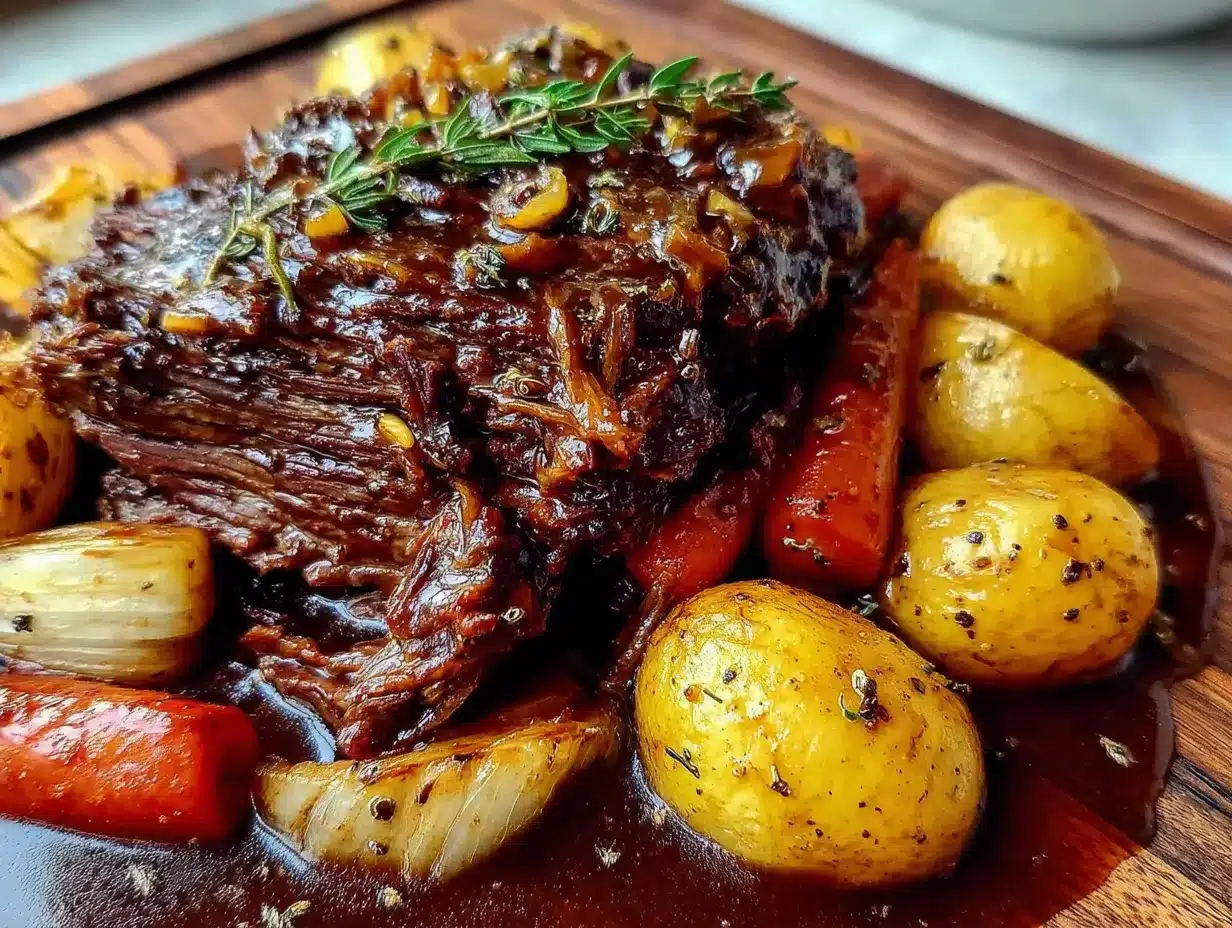
- 1 pound Yukon Gold potatoes, peeled and cut into 2-inch chunks: They hold their shape better than Russets and have a buttery texture. Red potatoes work well too.
- 3 large carrots, peeled and cut into 2-inch chunks: For sweetness and color.
- 2 parsnips, peeled and cut into 2-inch chunks: Parsnips have a sweet, slightly peppery flavor that is quintessentially fall. Do not skip them if you can find them.
- 1 large turnip or 2 small turnips, peeled and cut into 2-inch chunks: Adds a mild, earthy bite. If you are not a turnip fan, substitute with an extra carrot or potato.
For the Gravy
- 3 tablespoons unsalted butter: For the roux base.
- 3 tablespoons all-purpose flour: Thickens the cooking liquid into a silky gravy.
- Salt and pepper to taste: Always taste and adjust at the end.
That is it. No long list of specialty ingredients. Just good, honest food that comes together in one pot.
Equipment Needed
You do not need a lot of fancy gadgets for this recipe, but having the right tools makes the process smoother. Here is what you will need:
- A 6-quart or larger slow cooker: This is non-negotiable. A 6-quart model gives the meat and vegetables enough room to cook evenly. If your slow cooker is smaller, you may need to reduce the recipe by a third.
- A large, heavy-bottomed skillet or Dutch oven: For searing the meat and sautéing the aromatics. Cast iron is ideal, but any heavy pan will do. Do not use a non-stick pan for the deglazing step—you want those browned bits to release.
- A good set of tongs: For flipping the roast and handling the hot vegetables.
- A sharp chef’s knife: For cutting the vegetables into uniform chunks. Even cooking starts with even cuts.
- A wooden spoon or silicone spatula: For deglazing the pan. The wooden spoon is great for scraping up all that flavorful fond.
- A small whisk: For making the roux and ensuring a lump-free gravy.
- A ladle: For transferring the cooking liquid to a bowl or measuring cup when making the gravy.
If you do not have a heavy-bottomed skillet, you can sear the meat directly in a slow cooker that has a stovetop-safe insert. Just be careful not to scratch the surface. (I learned that one the hard way with my first slow cooker.)
Preparation Method
This recipe has a few steps, but they are all straightforward. Take your time with the searing—it is the most important part.
- Pat the chuck roast dry with paper towels. This is crucial. If the meat is wet, it will steam instead of sear, and you will not get that beautiful brown crust. Season the roast generously on all sides with salt and pepper.
- Heat the olive oil in your large skillet over medium-high heat. Wait until the oil is shimmering—almost smoking. Carefully place the seasoned roast in the pan. Do not crowd it. Let it sear undisturbed for 4 to 5 minutes, until a deep, dark brown crust forms. Flip the roast and repeat on all sides, including the ends. This should take about 15 minutes total. Transfer the seared roast to a plate.
- Reduce the heat to medium. Add the chopped onion to the same skillet. Cook for 5 to 6 minutes, stirring occasionally, until the onion is softened and translucent, scraping up any browned bits from the bottom of the pan. Add the minced garlic and cook for 1 minute more, until fragrant.
- Stir in the tomato paste. Cook for 1 to 2 minutes, stirring constantly. The tomato paste will darken slightly and become fragrant. This step deepens its flavor.
- Pour in the red wine. Use a wooden spoon to scrape up every last bit of the browned fond from the bottom of the pan. Let the wine simmer for 2 to 3 minutes, until it has reduced by about half. It will smell incredible.
- Add the beef broth and Worcestershire sauce. Stir to combine, then bring the mixture to a simmer. Turn off the heat.
- Place the seared chuck roast into the slow cooker. Pour the onion-wine-broth mixture over the top. Add the fresh rosemary sprigs, thyme sprigs, and bay leaves. Cover the slow cooker and cook on LOW for 6 hours.
- After 6 hours, add the root vegetables. Carefully place the potato chunks, carrot chunks, turnip chunks, and parsnip chunks around the roast. Try to submerge them in the liquid as much as possible. Cover the slow cooker again and continue cooking on LOW for another 2 to 3 hours, until the meat is fork-tender and the vegetables are soft but not falling apart. (Total cooking time: 8 to 9 hours on LOW, or 5 to 6 hours on HIGH if you are short on time.)
- Remove the roast and vegetables from the slow cooker. Use tongs to transfer them to a serving platter. Tent loosely with foil to keep warm. Discard the rosemary sprigs, thyme sprigs, and bay leaves.
- Make the gravy. Ladle about 2 cups of the cooking liquid from the slow cooker into a bowl or measuring cup. In a small saucepan (or back in your now-empty skillet), melt the butter over medium heat. Whisk in the flour and cook for 1 to 2 minutes, stirring constantly, until the mixture is golden and bubbling. Slowly whisk in the reserved cooking liquid. Continue whisking until the gravy thickens, about 2 to 3 minutes. Season with salt and pepper to taste.
- Serve immediately. Pour the gravy over the pot roast and vegetables, or serve it on the side.
Sensory cue: At the 6-hour mark, the kitchen should smell deeply savory and herbal. The meat should be just starting to pull apart when poked with a fork. By the end of cooking, it should yield completely to the slightest pressure.
Cooking Tips & Techniques
I have made this recipe more times than I can count, and I have definitely made my share of mistakes. Here are the lessons I learned so you do not have to.
- The sear is not optional. I know it is tempting to skip it when you are in a hurry. Do not. The Maillard reaction that happens during searing creates hundreds of flavor compounds that no amount of slow cooking can replicate. It is the difference between a brown roast and a flavorful roast.
- Do not lift the lid. Every time you lift the lid on a slow cooker, you release a significant amount of heat and add 20 to 30 minutes to the cooking time. Resist the urge to peek. Trust the process.
- Cut the vegetables into uniform pieces. This ensures they cook evenly. If some pieces are much larger than others, you will end up with a mix of undercooked and overcooked vegetables. I aim for 2-inch chunks.
- If your gravy is too thin, make a roux. The roux method is more reliable than a cornstarch slurry because it integrates seamlessly into the liquid without leaving a starchy aftertaste. Just be patient and whisk constantly.
- If your gravy is too thick, add a splash of beef broth. You can always thin it out, but you cannot fix a gravy that is too thin after the fact (unless you make more roux).
- Let the meat rest before slicing. After you remove the roast from the slow cooker, let it sit for 5 to 10 minutes. This allows the juices to redistribute, resulting in slices that are moist and tender rather than dry.
One time, I forgot to add the bay leaves. The pot roast was still good, but it was missing that subtle, woodsy depth. It is a small detail, but it matters. (I also once used a cheap red wine that was too tannic, and the gravy had a bitter edge. Use something you would actually drink.)
Variations & Adaptations
This recipe is a fantastic base, and it welcomes customization. Here are a few ways to make it your own:
- Herb Swap: Not a fan of rosemary? Substitute with 1 teaspoon of dried oregano or 2 sprigs of fresh sage. The sage pairs beautifully with the root vegetables.
- Vegetable Variations: Feel free to swap in other fall vegetables. Celery root (celeriac), rutabaga, sweet potatoes, or even butternut squash work wonderfully. Just remember that more delicate vegetables like squash should be added later in the cooking process to prevent them from turning to mush.
- Make it Dairy-Free: The gravy calls for butter, but you can easily substitute it with a high-quality vegan butter or even a bit of olive oil mixed with a touch of nutritional yeast for flavor. The roux will still work.
- Make it Gluten-Free: Swap the all-purpose flour in the roux with a gluten-free all-purpose blend or use arrowroot powder. (Note: arrowroot thickens differently; use 2 tablespoons of arrowroot mixed with 2 tablespoons of cold water to make a slurry, then whisk it into the hot liquid.)
- Spicy Kick: Add ½ teaspoon of smoked paprika or a pinch of cayenne pepper to the onion mixture for a subtle warmth. It does not make the dish spicy, just more complex.
- Slow Cooker to Instant Pot: You can adapt this recipe for an Instant Pot. Use the sauté function for searing and deglazing, then pressure cook on HIGH for 60 minutes for the meat, followed by a quick release. Add the vegetables and pressure cook for another 5 minutes. The timing is much faster, but the flavor is still excellent.
I personally love adding a handful of quartered cremini mushrooms in the last hour of cooking. They soak up all that savory gravy and become little flavor bombs. It is a small addition that makes a big difference.
Serving & Storage Suggestions
This pot roast is a meal in itself, but a few thoughtful sides can make it even more special.
- Serving Temperature: Serve the pot roast and vegetables hot, with the gravy poured generously over everything. A sprinkle of fresh chopped parsley or thyme adds a nice pop of color.
- What to Serve With It: This dish is hearty enough to stand alone, but it pairs beautifully with crusty bread for sopping up the gravy, or a simple green salad with a bright vinaigrette to cut through the richness. For a truly cozy meal, serve it alongside some creamy crockpot butternut squash and gruyere soup as a starter.
- Storing Leftovers: Store any leftover pot roast and vegetables in an airtight container in the refrigerator for up to 4 days. The flavors will actually meld and deepen overnight, making the leftovers even more delicious.
- Freezing: This pot roast freezes beautifully. Let it cool completely, then transfer the meat, vegetables, and gravy to a freezer-safe container. It will keep for up to 3 months. Thaw in the refrigerator overnight before reheating.
- Reheating: The best way to reheat pot roast is gently. Place the leftovers in a covered baking dish with a splash of beef broth, and warm in a 300°F oven for 15 to 20 minutes. You can also reheat it in a saucepan over low heat on the stovetop. Avoid the microwave if possible—it can make the meat tough and the vegetables rubbery.
Honestly, I sometimes look forward to the leftovers more than the first dinner. The gravy thickens up beautifully, and the meat becomes even more tender. It is perfect for a quick lunch or a second cozy dinner.
Nutritional Information & Benefits
This pot roast is a comforting, satisfying meal that also offers some nutritional value. Please note that these are estimates and will vary based on specific ingredients and portion sizes.
- Estimated per serving (based on 8 servings): Calories: 450-550, Fat: 20-30g, Protein: 35-45g, Carbohydrates: 30-40g, Fiber: 5-7g, Sugar: 8-10g, Sodium: 600-800mg.
- High in Protein: Beef chuck is an excellent source of high-quality protein, which is essential for muscle repair and overall health.
- Rich in Vitamins and Minerals: The root vegetables provide a good dose of Vitamin A (from carrots), Vitamin C (from potatoes and turnips), and potassium. Parsnips are particularly high in fiber and folate.
- Iron-Rich: Beef is a fantastic source of heme iron, which is more easily absorbed by the body than the iron found in plant-based foods. This is especially beneficial for anyone with low iron levels.
- Dietary Considerations: This recipe is naturally gluten-free (if you use a gluten-free flour for the roux) and dairy-free (if you use a dairy-free butter substitute). It is also low in added sugars.
I love that this meal feels indulgent but is actually full of good-for-you ingredients. It is the kind of food that nourishes both body and soul, especially on a cold fall evening. If you are looking for a lighter meal to balance out the week, try this wholesome slow cooker white bean, chicken, and kale Tuscan soup.
Conclusion
This cozy slow cooker fall pot roast with root vegetables is more than just a recipe—it is a ritual. It is the meal you make when you want to fill your home with the kind of warmth that only comes from something that has been simmering all day. It is the dinner that brings everyone to the table without being asked, the leftovers that make the next day feel a little bit special.
What I love most about this recipe is how forgiving it is. You can tweak the vegetables, swap the herbs, adjust the seasoning—and it will still turn out beautifully. It is a template for a perfect fall dinner, not a rigid set of rules. So make it your own. Add a pinch of smoked paprika if you are feeling bold. Throw in some mushrooms if you have them. Serve it with a pile of mashed potatoes or just a big hunk of bread.
I would love to hear how it turns out for you. Did you make any substitutions? Did your family love it as much as mine does? Drop a comment below and let me know. And if you are looking for another cozy, one-pot meal to add to your fall rotation, do not miss this never-dry brown sugar glazed meatloaf—it is another weeknight winner.
Happy cooking, and stay warm out there.
Frequently Asked Questions
Can I use a different cut of beef for this pot roast?
Yes, you can. While chuck roast is the best choice for its marbling and tenderness, you can also use bottom round, brisket, or even a rump roast. Just be aware that leaner cuts may be slightly less tender. You can compensate by cooking on LOW for a longer time (up to 10 hours) to help break down the connective tissue.
Can I prepare this recipe the night before?
Absolutely. You can sear the roast, sauté the onions and garlic, and deglaze the pan with wine the night before. Store the seared roast and the wine-onion mixture separately in the refrigerator. In the morning, simply combine everything in the slow cooker and proceed with the recipe. This is a great time-saver for busy mornings.
Why did my vegetables turn out mushy?
This usually happens when the vegetables are added too early in the cooking process. Root vegetables need about 2 to 3 hours on LOW to become tender without falling apart. If you added them at the beginning with the meat, they would cook for 8 to 9 hours and turn to mush. Always add them halfway through the cooking time for the best texture.
Can I cook this on HIGH instead of LOW?
Yes, you can. If you are short on time, cook the meat on HIGH for 4 to 5 hours, then add the vegetables and cook on HIGH for another 1.5 to 2 hours. The texture will be slightly different—the meat may be a bit less tender—but it will still be delicious. I prefer LOW for the most tender, fall-apart results.
How do I thicken the gravy without a roux?
If you prefer not to make a roux, you can use a cornstarch slurry. Mix 2 tablespoons of cornstarch with 2 tablespoons of cold water until smooth. Stir the slurry into the hot cooking liquid in the slow cooker and let it cook on HIGH for 15 to 20 minutes, until thickened. You can also use arrowroot powder in the same way.
Pin This Recipe!
Cozy Slow Cooker Fall Pot Roast with Root Vegetables
A deeply flavorful slow cooker pot roast with tender beef and root vegetables, featuring a rich, silky gravy. This set-it-and-forget-it meal delivers the taste of a proper braise without the fuss.
- Prep Time: 20 minutes
- Cook Time: 8 hours
- Total Time: 8 hours 20 minutes
- Yield: 8 servings 1x
- Category: Main Course
- Cuisine: American
Ingredients
- 3 to 4 pounds boneless beef chuck roast
- 2 tablespoons olive oil or avocado oil
- 1 large yellow onion, roughly chopped
- 4 cloves garlic, minced
- 2 tablespoons tomato paste
- 1 cup dry red wine (like Cabernet Sauvignon or Merlot)
- 2 cups low-sodium beef broth
- 2 tablespoons Worcestershire sauce
- 2 sprigs fresh rosemary
- 3 sprigs fresh thyme
- 2 bay leaves
- 1 teaspoon kosher salt, plus more for seasoning
- ½ teaspoon black pepper, plus more for seasoning
- 1 pound Yukon Gold potatoes, peeled and cut into 2-inch chunks
- 3 large carrots, peeled and cut into 2-inch chunks
- 2 parsnips, peeled and cut into 2-inch chunks
- 1 large turnip or 2 small turnips, peeled and cut into 2-inch chunks
- 3 tablespoons unsalted butter
- 3 tablespoons all-purpose flour
- Salt and pepper to taste
Instructions
- Pat the chuck roast dry with paper towels. Season generously on all sides with salt and pepper.
- Heat the olive oil in a large skillet over medium-high heat until shimmering. Sear the roast for 4-5 minutes per side, including ends, until a deep brown crust forms (about 15 minutes total). Transfer to a plate.
- Reduce heat to medium. Add the chopped onion to the same skillet and cook for 5-6 minutes until softened. Add minced garlic and cook for 1 minute more.
- Stir in the tomato paste and cook for 1-2 minutes, stirring constantly.
- Pour in the red wine and scrape up any browned bits from the bottom of the pan. Let simmer for 2-3 minutes until reduced by half.
- Add the beef broth and Worcestershire sauce. Stir to combine and bring to a simmer. Turn off the heat.
- Place the seared roast into the slow cooker. Pour the onion-wine-broth mixture over the top. Add rosemary, thyme, and bay leaves. Cover and cook on LOW for 6 hours.
- After 6 hours, add the potato, carrot, turnip, and parsnip chunks around the roast, submerging them in the liquid as much as possible. Cover and continue cooking on LOW for another 2-3 hours, until the meat is fork-tender and vegetables are soft.
- Remove the roast and vegetables to a serving platter and tent with foil. Discard the herb sprigs and bay leaves.
- Ladle about 2 cups of the cooking liquid into a bowl. In a small saucepan, melt the butter over medium heat. Whisk in the flour and cook for 1-2 minutes until golden and bubbling. Slowly whisk in the reserved liquid and continue whisking until thickened, about 2-3 minutes. Season with salt and pepper.
- Serve the pot roast and vegetables with the gravy poured over or on the side.
Notes
For best results, do not skip the searing step. Add vegetables halfway through cooking to avoid mushiness. Let the meat rest for 5-10 minutes before slicing. Leftovers can be stored in the refrigerator for up to 4 days or frozen for up to 3 months.
Nutrition
- Serving Size: 1 serving (about 1/8
- Calories: 500
- Sugar: 9
- Sodium: 700
- Fat: 25
- Saturated Fat: 10
- Carbohydrates: 35
- Fiber: 6
- Protein: 40
Keywords: slow cooker pot roast, fall pot roast, root vegetables, beef chuck roast, comfort food, one-pot meal