The smell of sage hitting hot butter is what got me. Not the golden shallots, not the creamy potatoes—though those are important—but that first pop of browning butter hitting the pan. I was standing in my kitchen last November, staring at a bag of russets I’d grabbed on autopilot at the store, trying to figure out how to make mashed potatoes feel like something special without spending all day on them. My mom used to make them for Thanksgiving with a stick of butter and a splash of milk, and they were fine. Good, even. But I wanted more depth, more texture, more oomph without adding a ton of work.
The brown butter sage thing wasn’t planned. I’d made sage brown butter for pasta a few weeks before (honestly, it was a happy accident—I forgot the butter on the stove and it turned nutty and dark), and I thought, why not try it on potatoes? So I tossed a few sage leaves in the hot butter, watched them crisp up, and poured the whole thing over a bowl of mashed Yukon Golds. Then I fried some shallots because, well, I had them. And that first bite? I actually laughed. It was ridiculous how good it was. The nutty butter, the earthy sage, the sweet crispy shallots, the silky potatoes—it all clicked.
These creamy brown butter sage mashed potatoes with crispy shallots have since become my go-to for every holiday, dinner party, and random Tuesday when I need comfort food that feels fancy. They’re rich but not heavy, elegant but totally doable on a weeknight. And the best part? The whole thing comes together in about 45 minutes, start to finish. No fussing, no stress, just really, really good potatoes.
Why You’ll Love This Recipe
Let me tell you why this recipe has earned a permanent spot in my rotation. After testing it for friends, family, and a few skeptical dinner guests (one guy said he “didn’t like mashed potatoes” and then asked for seconds), I can honestly say it delivers every single time.
- Quick & Easy: From start to table in about 45 minutes. No complicated techniques, no fancy equipment—just a pot, a pan, and a little patience.
- Simple Ingredients: You probably have butter, sage, shallots, and potatoes in your kitchen right now. If not, a quick trip to the store is all you need.
- Perfect for Holidays & Weeknights: These potatoes are elegant enough for Thanksgiving or Christmas dinner but easy enough to whip up on a chilly Tuesday. They’ve saved me more than once when I needed a side dish that impresses without stress.
- Crowd-Pleaser: I’ve served these to kids, picky eaters, and serious foodies. The crispy shallots win everyone over. Honestly, I’ve seen people pick them off the top and eat them like chips.
- Unbelievably Delicious: The combination of nutty brown butter, fragrant sage, and creamy potatoes is next-level. The crispy shallots add a crunch that makes every bite interesting.
What makes this recipe different from the rest? It’s the technique. Most mashed potato recipes just boil and mash, but here, you’re building flavor in layers. The brown butter adds a toasty, almost caramel-like richness, the sage brings an earthy note, and the shallots give you that addictive crunch. It’s not just another potato dish—it’s the one people remember.
And honestly, this recipe connects emotionally because it’s comfort food reimagined. It’s healthier than the heavy cream-and-butter versions (we use milk and a reasonable amount of butter), faster than most holiday recipes, and it has the same soul-soothing satisfaction. Perfect for impressing guests without stress, or turning a simple meal into something memorable.
What Ingredients You Will Need
This recipe uses simple, wholesome ingredients to deliver bold flavor and satisfying texture without the fuss. Most of these are pantry staples, but a few deserve a little extra attention.
For the Mashed Potatoes
- 2 pounds Yukon Gold potatoes (about 6 medium) – peeled and quartered. Yukon Golds are my favorite because they’re naturally buttery and creamy. Russets work too, but they’re starchier and can get gluey if over-mixed.
- 4 tablespoons unsalted butter – softened, cut into small pieces. I use Kerrygold for the best flavor, but any good-quality butter works.
- ½ cup whole milk – warmed. Whole milk gives the richest texture, but 2% works in a pinch. For a dairy-free version, use unsweetened oat milk.
- 1 teaspoon salt – plus more for the cooking water. I prefer fine sea salt for even seasoning.
- ¼ teaspoon black pepper – freshly ground, preferably.
- Optional: ¼ cup sour cream or cream cheese for extra tang and creaminess. I sometimes add this when I want them extra decadent.
For the Brown Butter Sage Sauce
- 4 tablespoons unsalted butter – this will be browned, so use a light-colored pan to monitor the color.
- 10-12 fresh sage leaves – whole or roughly chopped. Fresh sage is non-negotiable here; dried sage won’t give you the same texture or flavor.
- ¼ teaspoon salt – a pinch to balance the richness.
For the Crispy Shallots
- 2 large shallots – thinly sliced into rings. Look for firm, dry shallots with no soft spots.
- ¼ cup all-purpose flour – for dusting. You can use rice flour for a gluten-free option.
- ½ cup vegetable or canola oil – for frying. Use a neutral oil with a high smoke point.
- ¼ teaspoon salt – for seasoning after frying.
Ingredient tips from my kitchen: For the potatoes, I always buy Yukon Golds because they hold their shape during boiling and mash into a silky, buttery puree. For the sage, look for bright green leaves without brown spots—they’ll crisp up beautifully. And for the shallots, slice them as evenly as possible so they cook at the same rate. If you’re short on time, you can skip the crispy shallots, but honestly, they’re the best part. I’ve tried this with fried onions from a can in a pinch, and it’s just not the same.
Equipment Needed
You don’t need a lot of fancy tools for this recipe, which is one of the reasons I love it. Here’s what you’ll need:
- Large pot – for boiling the potatoes. A 4- to 5-quart pot works well.
- Colander – for draining the potatoes.
- Potato masher or ricer – I prefer a ricer for the smoothest texture, but a good old-fashioned masher works great too. Avoid using a food processor or blender—they’ll make the potatoes gluey.
- Small skillet – for browning the butter and sage. A light-colored skillet helps you see the color change.
- Medium skillet or saucepan – for frying the shallots.
- Slotted spoon – for removing the shallots from the oil.
- Paper towels – for draining the crispy shallots.
- Measuring cups and spoons – accuracy matters here.
- Chef’s knife and cutting board – for prepping the potatoes, shallots, and sage.
Budget-friendly tip: If you don’t have a ricer, a potato masher is perfectly fine. Just don’t over-mash or the potatoes will become gummy. And if you don’t have a small skillet for the shallots, a small saucepan works just as well—you just need enough depth to submerge the shallots in oil.
Preparation Method
Let’s walk through this step by step. I’ve added some personal tips and sensory cues to help you nail it every time.
Step 1: Prepare the Potatoes
Peel the potatoes and cut them into even 1-inch chunks. This ensures they cook at the same rate. Place them in a large pot and cover with cold water by about 1 inch. Add a generous pinch of salt—about 1 tablespoon. Bring to a boil over high heat, then reduce to a simmer. Cook for 15-20 minutes, until the potatoes are fork-tender. You should be able to pierce a piece easily with a fork, and it should almost fall apart. Drain the potatoes in a colander and let them sit for 2-3 minutes to steam off excess moisture. This is important—too much water will make your mashed potatoes watery.
Step 2: Mash the Potatoes
Return the drained potatoes to the pot (off the heat). If you’re using a ricer, rice them directly into the pot. If using a masher, mash until smooth but don’t overdo it. Add the 4 tablespoons of softened butter, cut into pieces, and stir gently until melted. Then pour in the warm milk, starting with ½ cup, and stir until combined. You want the potatoes to be creamy but not runny. Add salt and pepper to taste. If they seem too thick, add a splash more warm milk. Cover and set aside while you make the toppings.
Step 3: Make the Crispy Shallots
While the potatoes are cooking, prepare the shallots. Thinly slice 2 large shallots into rings. In a medium skillet, heat ½ cup vegetable oil over medium heat. While the oil heats, toss the shallot rings in ¼ cup flour until lightly coated. Shake off excess flour. To test if the oil is ready, drop one shallot ring in—it should sizzle immediately. Fry the shallots in batches, without overcrowding, for 2-3 minutes, stirring occasionally, until golden brown and crispy. They’ll darken slightly after you remove them, so take them out when they’re a shade lighter than you want. Use a slotted spoon to transfer them to a paper towel-lined plate. Sprinkle with ¼ teaspoon salt immediately.
Step 4: Brown the Butter and Sage
In a small skillet, melt 4 tablespoons butter over medium heat. Swirl the pan occasionally. After about 2-3 minutes, the butter will start to foam and turn golden. Watch closely—it can go from brown to burnt quickly. When it smells nutty and the milk solids at the bottom turn amber (about 4-5 minutes total), add the sage leaves. They’ll sizzle and crisp up in about 30 seconds. Remove from heat immediately. The sage will darken and become fragrant.
Step 5: Assemble and Serve
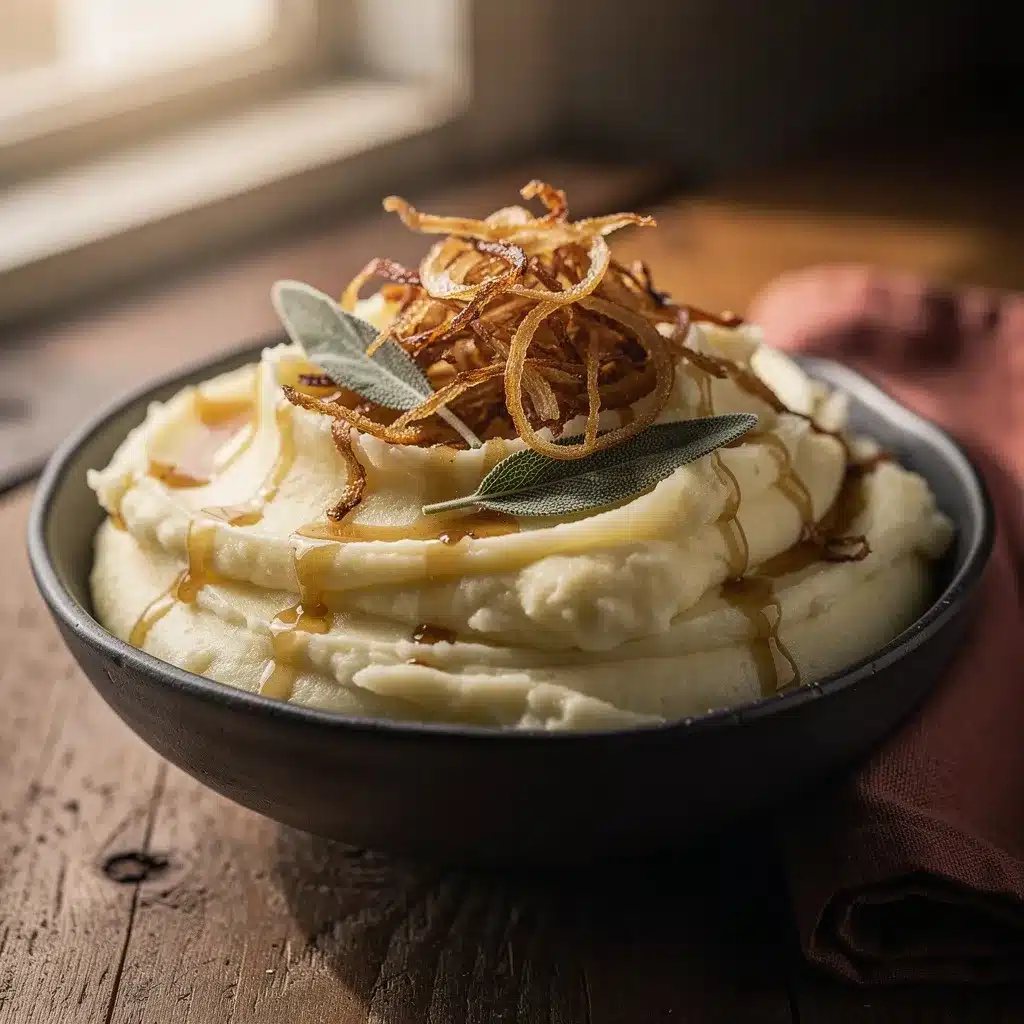
Spoon the mashed potatoes into a serving bowl. Pour the brown butter and sage over the top, making sure to scrape out all those browned bits from the pan. Sprinkle the crispy shallots generously over everything. Serve immediately while the shallots are still crunchy and the butter is warm.
Cooking Tips & Techniques
I’ve made these potatoes more times than I can count, and I’ve learned a few things the hard way. Here are my best tips:
- Don’t overwork the potatoes. Over-mashing activates the starch and makes them gluey. Use a ricer for the smoothest texture, or mash gently by hand. I once used a hand mixer out of laziness and ended up with wallpaper paste. Never again.
- Warm your milk. Cold milk will cool down the potatoes and make them stiff. Heat it in the microwave for 30 seconds or in a small saucepan until warm to the touch.
- Watch the butter like a hawk. Brown butter goes from perfect to burnt in seconds. The first time I made it, I got distracted by my phone and ended up with black butter. It smelled terrible. Use a light-colored pan so you can see the color change, and remove it from heat as soon as it turns amber.
- Fry shallots in batches. If you overcrowd the pan, the shallots will steam instead of fry, and you’ll end up with soggy, greasy rings. Work in small batches and let the oil come back to temperature between batches.
- Season the cooking water. Salting the water as you boil the potatoes seasons them from the inside out. You’ll need less salt later, and the flavor will be more even.
- Make ahead tip: You can make the mashed potatoes up to 2 days ahead. Reheat them gently on the stovetop with a splash of milk, then add the brown butter and shallots just before serving. The shallots are best fresh, but you can fry them a few hours ahead and store them in an airtight container.
Variations & Adaptations
This recipe is incredibly versatile. Here are some ways to make it your own:
- Dairy-Free Version: Substitute the butter with vegan butter (like Miyoko’s) and use unsweetened oat milk or cashew milk. The brown butter effect won’t be exactly the same, but the sage and shallots still deliver plenty of flavor.
- Herb Swap: Don’t have sage? Try fresh rosemary or thyme. Rosemary brown butter is amazing with these potatoes, especially in winter. Thyme adds a milder, slightly lemony note.
- Add Garlic: Add 2-3 crushed garlic cloves to the butter as it browns, then remove them before pouring over the potatoes. Garlic brown butter is a game-changer.
- Cheesy Twist: Stir in ½ cup grated Parmesan or sharp cheddar into the mashed potatoes before topping. The cheese adds a savory depth that pairs beautifully with the sage.
- Roasted Garlic Version: Instead of boiling the potatoes, roast them with a head of garlic until tender, then mash everything together. The roasted garlic adds a sweet, mellow flavor that’s incredible.
- Spicy Kick: Add a pinch of red pepper flakes to the brown butter as it cooks. The heat cuts through the richness beautifully.
I once made a version with roasted garlic and crispy prosciutto instead of shallots for a dinner party, and it was a huge hit. Don’t be afraid to experiment—this recipe is forgiving.
Serving & Storage Suggestions
These potatoes are best served warm, right after you’ve poured the brown butter and sprinkled the shallots. The contrast of warm, creamy potatoes, nutty butter, and crunchy shallots is pure magic.
Serving ideas: They’re a natural side for roasted chicken, grilled steak, or holiday turkey. I love serving them alongside a simple green salad or roasted vegetables for a complete meal. For a cozy dinner, pair them with creamy one-pot Tuscan chicken pasta or tender slow cooker BBQ pulled pork sliders for a contrast of textures.
Storage: Store leftover mashed potatoes (without the shallots) in an airtight container in the refrigerator for up to 4 days. The crispy shallots are best eaten fresh, but you can store them separately in an airtight container at room temperature for up to 2 days—they’ll lose some crunch but still taste great.
Reheating: Reheat the potatoes gently on the stovetop over low heat, stirring occasionally and adding a splash of milk to loosen them up. You can also microwave them in 30-second bursts, stirring between each. Add fresh crispy shallots just before serving.
Freezing: These potatoes freeze surprisingly well. Let them cool completely, then transfer to a freezer-safe container. Freeze for up to 3 months. Thaw overnight in the refrigerator, then reheat on the stovetop with a splash of milk. The texture will be slightly less creamy, but still delicious. Don’t freeze the shallots—make fresh ones when you’re ready to serve.
The flavors actually deepen after a day in the fridge. I’ve been known to make a double batch just for leftovers.
Nutritional Information & Benefits
Here’s the approximate nutritional breakdown per serving (based on 6 servings):
- Calories: 320
- Fat: 18g
- Saturated Fat: 10g
- Carbohydrates: 35g
- Fiber: 3g
- Sugar: 3g
- Protein: 5g
- Sodium: 480mg
Health benefits: Potatoes are a good source of vitamin C, potassium, and vitamin B6. The sage in this recipe contains antioxidants and anti-inflammatory compounds. Butter, in moderation, provides fat-soluble vitamins A, D, E, and K. This dish is naturally gluten-free (just use rice flour for the shallots if needed) and can be made dairy-free with simple substitutions.
Dietary considerations: This recipe contains dairy (butter, milk) and gluten (flour for shallots). For a gluten-free version, use rice flour or cornstarch for the shallots. For a dairy-free version, use vegan butter and plant-based milk. The potatoes themselves are naturally vegan and gluten-free.
I like to remind myself that food is about balance. These potatoes are indulgent, but they’re made with real, whole ingredients. And honestly, a serving of comfort now and then is good for the soul.
Conclusion
These creamy brown butter sage mashed potatoes with crispy shallots have become my signature dish for a reason. They’re the kind of side dish that steals the show, the one people ask for by name at family gatherings. The nutty brown butter, the fragrant sage, the crunchy shallots, the silky potatoes—every element works together to create something truly special.
I hope you’ll try this recipe and make it your own. Add a little extra sage if you love it, swap in rosemary if that’s what you have, or skip the shallots if you’re short on time. The beauty of this dish is that it’s forgiving and adaptable. And when you take that first bite, I hope you close your eyes and smile, just like I did that first time in my kitchen.
If you make these potatoes, I’d love to hear about it. Drop a comment below and tell me how they turned out, or share your own twist on the recipe. And if you’re looking for more cozy side dishes, check out my creamy butternut squash soup or my creamy classic potato salad.
Happy cooking, friends. You’ve got this.
Frequently Asked Questions
Can I make these mashed potatoes ahead of time?
Yes, absolutely. You can make the mashed potatoes up to 2 days ahead. Store them in the fridge in an airtight container. When you’re ready to serve, reheat them gently on the stovetop with a splash of milk, then add the fresh brown butter and crispy shallots. The shallots are best made fresh, but you can fry them a few hours ahead and store them in an airtight container.
What’s the best potato for creamy mashed potatoes?
Yukon Gold potatoes are my top choice. They have a naturally buttery flavor and a creamy texture that’s perfect for mashing. Russets work too, but they’re starchier and can become gluey if over-mixed. Red potatoes are waxier and won’t get as creamy. Stick with Yukon Golds for the best results.
Can I use dried sage instead of fresh?
I don’t recommend it. Fresh sage leaves crisp up beautifully in the brown butter and add a wonderful texture and fragrance. Dried sage is more potent and can become bitter when cooked in butter. If you’re in a pinch, you can use dried sage, but add it sparingly and don’t expect the same crispy texture.
How do I keep the crispy shallots from getting soggy?
The key is to fry them in small batches and drain them well on paper towels. Make sure the oil is hot enough (about 350°F) before adding the shallots. After frying, spread them in a single layer on paper towels and let them cool completely before storing. If you’re serving them immediately, just pile them on top of the potatoes—they’ll stay crunchy for about 30 minutes.
Can I freeze these mashed potatoes?
Yes, they freeze well. Let the mashed potatoes cool completely, then transfer them to a freezer-safe container. Freeze for up to 3 months. Thaw overnight in the refrigerator, then reheat gently on the stovetop with a splash of milk. The texture will be slightly less creamy than fresh, but still delicious. Don’t freeze the shallots—make fresh ones when you’re ready to serve.
Pin This Recipe!
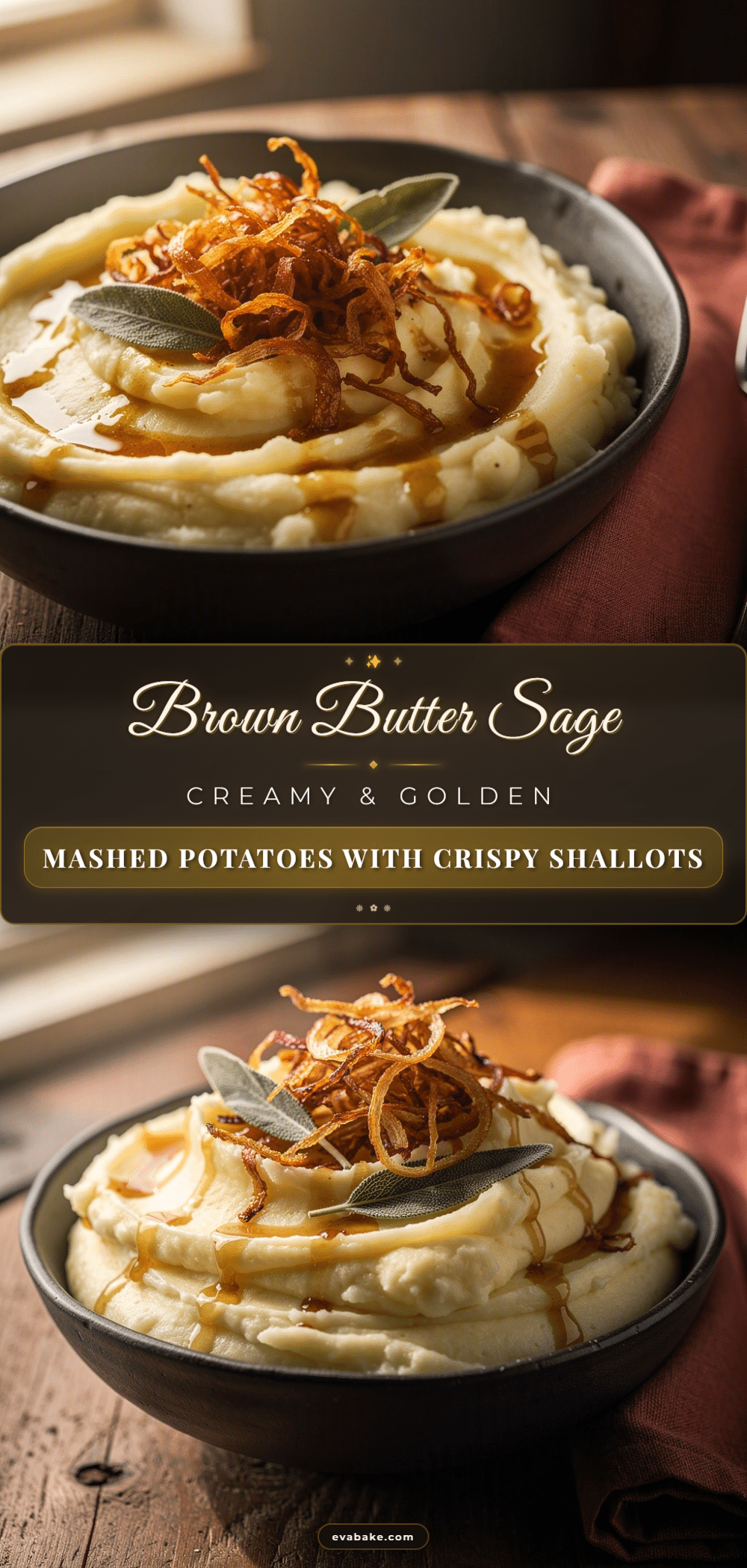
Creamy Brown Butter Sage Mashed Potatoes with Crispy Shallots

These creamy brown butter sage mashed potatoes with crispy shallots are rich but not heavy, elegant but totally doable on a weeknight. The nutty brown butter, fragrant sage, and crunchy shallots transform simple potatoes into a show-stopping side dish perfect for holidays or cozy dinners.
- Prep Time: 15 minutes
- Cook Time: 30 minutes
- Total Time: 45 minutes
- Yield: 6 servings 1x
- Category: Side Dish
- Cuisine: American
Ingredients
- 2 pounds Yukon Gold potatoes (about 6 medium), peeled and quartered
- 4 tablespoons unsalted butter, softened and cut into small pieces
- ½ cup whole milk, warmed
- 1 teaspoon salt, plus more for cooking water
- ¼ teaspoon black pepper, freshly ground
- Optional: ¼ cup sour cream or cream cheese
- 4 tablespoons unsalted butter (for brown butter sauce)
- 10–12 fresh sage leaves, whole or roughly chopped
- ¼ teaspoon salt (for brown butter sauce)
- 2 large shallots, thinly sliced into rings
- ¼ cup all-purpose flour (or rice flour for gluten-free)
- ½ cup vegetable or canola oil (for frying)
- ¼ teaspoon salt (for crispy shallots)
Instructions
- Peel the potatoes and cut into even 1-inch chunks. Place in a large pot and cover with cold water by about 1 inch. Add 1 tablespoon salt. Bring to a boil over high heat, then reduce to a simmer. Cook for 15-20 minutes until fork-tender. Drain in a colander and let sit for 2-3 minutes to steam off excess moisture.
- Return drained potatoes to the pot (off heat). Rice or mash until smooth. Add 4 tablespoons softened butter, cut into pieces, and stir gently until melted. Pour in ½ cup warm milk and stir until combined. Season with 1 teaspoon salt and ¼ teaspoon pepper. Cover and set aside.
- While potatoes cook, thinly slice shallots into rings. In a medium skillet, heat ½ cup vegetable oil over medium heat. Toss shallot rings in ¼ cup flour until lightly coated, shaking off excess. Fry in batches for 2-3 minutes until golden brown and crispy. Transfer to paper towel-lined plate and sprinkle with ¼ teaspoon salt immediately.
- In a small skillet, melt 4 tablespoons butter over medium heat. Swirl occasionally. After 2-3 minutes, butter will foam and turn golden. When it smells nutty and milk solids turn amber (about 4-5 minutes total), add sage leaves. Cook for 30 seconds until sizzling and crisp. Remove from heat immediately.
- Spoon mashed potatoes into a serving bowl. Pour brown butter and sage over the top, scraping out browned bits from the pan. Sprinkle crispy shallots generously over everything. Serve immediately while shallots are crunchy and butter is warm.
Notes
Don’t overwork the potatoes or they’ll become gluey. Use a ricer for smoothest texture. Warm the milk before adding to keep potatoes hot. Watch brown butter carefully as it can burn quickly. Fry shallots in small batches to ensure crispiness. Make mashed potatoes up to 2 days ahead; reheat gently with a splash of milk. Crispy shallots are best fresh but can be made a few hours ahead and stored in an airtight container.
Nutrition
- Serving Size: 1 serving
- Calories: 320
- Sugar: 3
- Sodium: 480
- Fat: 18
- Saturated Fat: 10
- Carbohydrates: 35
- Fiber: 3
- Protein: 5
Keywords: mashed potatoes, brown butter, sage, crispy shallots, Thanksgiving side dish, holiday potatoes, creamy potatoes, comfort food