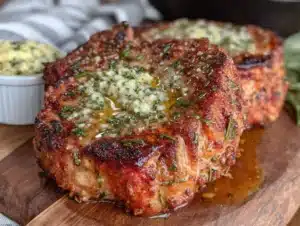
My neighbor, Sarah, asked why I couldn’t just sear the pork chops first and finish them in the pan with the glaze. I started to explain why that wouldn’t work—something about the crust getting soggy, the glaze burning, the whole thing falling apart. Then I stopped. I had been planning to do the whole oven-baking thing, a method I’d used for years and honestly felt pretty smug about. But Sarah, who once set a kitchen towel on fire boiling pasta, was looking at me with this simple, logical question. I sighed, poured myself another coffee, and said, “Fine. Let’s try it your way.”
That Tuesday afternoon, the kitchen smelled like a fall festival. The apples I’d picked up from the farmer’s market that weekend were sitting in a bowl, and I had a fresh bottle of cider in the fridge. I figured if I was going to be wrong, I might as well be wrong with good ingredients. I seasoned the pork chops, got the cast iron screaming hot, and seared them until they were golden brown. Then, instead of transferring them to a baking dish, I deglazed the pan with apple cider, let it reduce, and tossed the chops back in. I mean, honestly, I was waiting for disaster. The glaze was bubbling, the chops were sizzling, and I was sure I’d end up with a sticky mess.
But you know that feeling when something just clicks? The glaze clung to the pork like it was made for it—a perfect, glossy coat that was both sweet and tangy. The crust stayed crispy, not soggy. Sarah was standing in my doorway, and I had to admit she was right. That fall crispy pork chops with apple cider glaze became my new go-to. It’s simpler, faster, and honestly better than the fussy oven method I’d been clinging to. Sometimes the best lessons come from letting someone else take the lead—even if they did almost burn down the kitchen once.
Why You’ll Love This Recipe
Let me tell you why this recipe has become a staple in my kitchen every autumn. I’ve tested it about a dozen times now—yes, a dozen—and every single batch has been a hit. It’s the kind of dish that makes you look like you spent hours in the kitchen when really, you’re done in under 30 minutes.
- Quick & Easy: From start to finish, you’re looking at about 25 minutes. Perfect for those busy weeknights when you want something cozy but don’t have time to fuss.
- Simple Ingredients: You probably have most of this in your pantry right now. No fancy grocery trips needed—just pork chops, apple cider, and a few pantry staples.
- Perfect for Fall: This is the ultimate autumn dish. The apple cider glaze screams “October” and pairs perfectly with everything from mashed potatoes to roasted Brussels sprouts.
- Crowd-Pleaser: I’ve served these to my picky brother-in-law and my foodie aunt, and both went back for seconds. Kids love the sweet glaze, and adults appreciate the savory crust.
- Unbelievably Delicious: The texture is what gets me every time—crispy, golden-brown exterior with a tender, juicy inside, all wrapped in that tangy-sweet glaze.
What makes this version different from all the other pork chop recipes out there? It’s the technique. By searing first and then glazing in the same pan, you get a crust that stays crunchy even after the glaze goes on. No soggy edges, no burnt sugar—just perfect, restaurant-quality results at home. I’ve tried the baked version, the slow-cooker version, and even the air-fryer version, and nothing beats this one-pan method.
This recipe isn’t just good—it’s the kind that makes you close your eyes after the first bite. The sweetness of the apple cider hits first, then the savory pork, then that little kick of mustard and thyme. It’s comfort food reimagined—faster, simpler, but with the same soul-soothing satisfaction. Perfect for impressing guests without stress, or turning a simple Tuesday dinner into something memorable.
What Ingredients You Will Need
This recipe uses simple, wholesome ingredients to deliver bold flavor and satisfying texture without the fuss. Most of these are pantry staples or easy fall finds, so you can whip this up anytime the craving hits.
For the Pork Chops
- 4 bone-in pork chops, about 1-inch thick (bone-in gives you more flavor and stays juicier)
- 1 teaspoon kosher salt
- ½ teaspoon black pepper, freshly ground
- 1 teaspoon garlic powder
- 1 teaspoon smoked paprika (adds that deep, smoky flavor)
- 2 tablespoons olive oil, for searing
- 2 tablespoons unsalted butter (I use Kerrygold for the richness)
For the Apple Cider Glaze
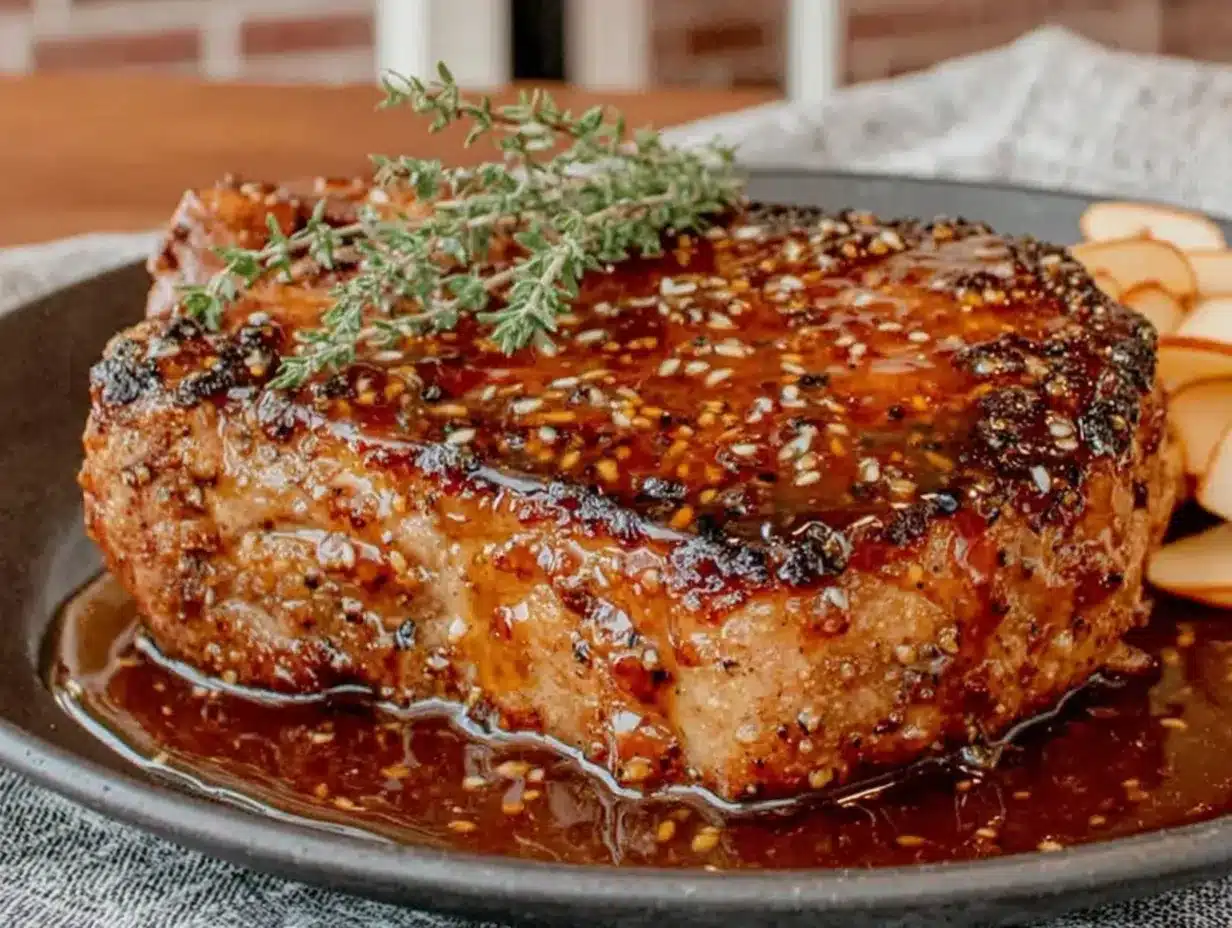
- 1 cup apple cider, unfiltered if you can find it (the cloudier the better for flavor)
- 2 tablespoons apple cider vinegar (balances the sweetness)
- 2 tablespoons brown sugar, packed (light or dark both work)
- 1 tablespoon Dijon mustard (adds a subtle tang and helps emulsify the glaze)
- 1 sprig fresh thyme (or ½ teaspoon dried)
- 1 small shallot, thinly sliced (optional, but adds a lovely mild onion flavor)
When picking your pork chops, look for ones with good marbling—that fat is where the flavor lives. I prefer chops from a local butcher when I can, but grocery store chops work fine too. Just make sure they’re at least 1-inch thick; thinner chops will cook too fast and might dry out before the glaze sets.
For the apple cider, I recommend getting unfiltered cider from a farmer’s market if it’s in season. It has a deeper, more complex apple flavor that really shines in the glaze. In a pinch, regular apple juice works, but you’ll miss that slight tartness. I’ve tried this with both, and the unfiltered cider is hands-down better.
Substitution wise, you can swap the Dijon mustard for whole grain mustard if you want a little texture. Use honey instead of brown sugar for a different sweetness profile. And if you don’t have fresh thyme, dried works—just use half the amount. For a gluten-free version, this recipe is already gluten-free as written, so no changes needed there.
Equipment Needed
You don’t need a lot of fancy equipment for this recipe, which is one of the reasons I love it. Here’s what you’ll need:
- Large cast-iron skillet (12-inch is ideal)—this is my go-to for getting that perfect sear. If you don’t have cast iron, a heavy-bottomed stainless steel pan works great too.
- Tongs for flipping the pork chops without piercing the meat
- Meat thermometer—honestly, this is non-negotiable if you want perfectly cooked pork every time. I use a Thermapen and it’s worth every penny.
- Cutting board and sharp knife for prepping the shallot
- Small bowl for mixing the dry rub
- Measuring cups and spoons
If you don’t have a cast-iron skillet, don’t stress. I’ve made this in a stainless steel pan and even a non-stick skillet, and it still turns out great. Just make sure whatever pan you use can handle high heat without warping. My first attempt was in a cheap non-stick pan, and the glaze didn’t reduce properly because the pan couldn’t hold the heat. Lesson learned.
One tip for cast-iron owners: make sure your skillet is well-seasoned before you start. A sticky or rusty pan can mess with the sear and leave a weird taste. I season mine with a thin layer of oil after every use, and it’s never let me down.
Preparation Method
Alright, let’s get cooking. I’ll walk you through this step by step, including all the little tricks I’ve picked up along the way.
- Pat the pork chops dry with paper towels. This is crucial—wet meat won’t sear properly. Let them sit on the counter for 10-15 minutes to come to room temperature. Cold meat seizes up in the pan and cooks unevenly.
- Mix the dry rub in a small bowl: kosher salt, black pepper, garlic powder, and smoked paprika. Sprinkle this mixture generously over both sides of the pork chops, pressing it in with your fingers. Don’t be shy with the seasoning—pork chops can handle it.
- Heat your cast-iron skillet over medium-high heat for about 3 minutes. Add the olive oil and swirl to coat. You want the oil shimmering but not smoking. If it starts smoking, reduce the heat slightly—you’ve gone too far.
- Sear the pork chops in the hot skillet. Place them in the pan away from you to avoid oil splatter. Cook for 4-5 minutes on the first side without moving them. I know it’s tempting to peek, but leave them alone. You’re looking for a deep golden-brown crust. Flip and cook for another 3-4 minutes on the second side.
- Check the temperature with your meat thermometer. You’re aiming for 135°F (57°C) at this stage—the pork will continue cooking in the glaze. If they’re not there yet, give them another minute per side. Remove the pork chops to a plate and tent loosely with foil.
- Make the glaze in the same skillet. Reduce the heat to medium and add the butter. Once it melts, toss in the sliced shallot if you’re using it. Cook for 1 minute until softened. Then pour in the apple cider, apple cider vinegar, brown sugar, and Dijon mustard. Add the thyme sprig.
- Let the glaze reduce for 5-7 minutes, stirring occasionally. You want it to thicken to a syrupy consistency that coats the back of a spoon. It should reduce by about half. Keep an eye on it—if it gets too thick, add a splash of water to thin it out.
- Return the pork chops to the skillet. Spoon the glaze over the tops, turning them to coat evenly. Cook for another 2-3 minutes, spooning the glaze over the chops as they heat through. The internal temperature should reach 145°F (63°C) for perfectly cooked pork.
- Rest before serving. Remove the pork chops from the pan and let them rest on a cutting board for 5 minutes. This lets the juices redistribute so every bite is tender and moist. Pour any remaining glaze from the pan over the top before serving.
One thing I learned the hard way: don’t overcrowd the pan. If you’re cooking more than 4 chops, do it in batches. Crowding lowers the pan temperature and steams the meat instead of searing it. I made this mistake the first time I doubled the recipe for a family dinner, and the crust was sad and pale. Never again.
The glaze should be bubbling gently, not furiously. If it’s boiling too hard, the sugar can burn and turn bitter. You want a steady, gentle simmer—that’s where the magic happens.
Cooking Tips & Techniques
After making these fall crispy pork chops with apple cider glaze more times than I care to count, I’ve picked up a few tricks that make a real difference. Let me share them with you.
The biggest mistake people make is moving the pork chops too much in the pan. I get it—you want to check if they’re browning, you want to flip them early, you want to shake the pan. But every time you move a chop, you’re disrupting the crust formation. Let them sit. Trust the process. I burned my first batch because I kept flipping them every minute, and they never developed that beautiful golden crust.
Another common issue is the glaze breaking or separating. This happens when you add the pork chops back too early, before the glaze has reduced enough. The water from the meat dilutes the glaze, and it turns into a thin, greasy mess. Wait until the glaze is thick and syrupy—it should coat the back of a spoon—before adding the chops back in.
Timing is everything with this dish. I start my sides before I even season the pork. That way, everything finishes at the same time. I’ll get some mashed potatoes or roasted vegetables going, then start the pork. By the time the glaze is reducing, the sides are almost done. It’s a beautiful dance when it all comes together.
For consistently perfect results, use a meat thermometer. I cannot stress this enough. Pork that’s cooked to 145°F (63°C) is safe, juicy, and tender. Go much beyond that, and you’re in dry, tough territory. I’ve ruined many a pork chop by overcooking them before I got smart and bought a thermometer. It’s a game-changer.
One last tip: let the glaze rest for a minute off the heat before spooning it over the chops. It thickens slightly as it cools, giving you a better coating. I learned this from a chef friend who said, “Glaze is like paint—you want it the right consistency, not too runny, not too thick.” She was right.
Variations & Adaptations
This recipe is surprisingly flexible. I’ve played around with it quite a bit, and here are some variations that turned out great.
Dietary Variations: For a low-carb version, skip the brown sugar and use a sugar-free alternative like monk fruit sweetener. The glaze will be slightly less sticky, but the flavor is still fantastic. For a dairy-free option, substitute the butter with coconut oil or a plant-based butter. I’ve tried both, and the coconut oil adds a subtle tropical note that actually pairs well with the apple cider.
Seasonal Twists: In the summer, swap the apple cider for fresh peach nectar and use a bit of rosemary instead of thyme. It’s a completely different dish but just as delicious. In the winter, add a pinch of cinnamon and nutmeg to the glaze for a warmer, spicier flavor. I did this for Christmas dinner last year, and my family went crazy for it.
Flavor Variations: Try adding a splash of bourbon or whiskey to the glaze for a grown-up twist. The alcohol cooks off, leaving behind a rich, smoky depth. I used a small-batch bourbon once, and it was incredible. You can also swap the Dijon mustard for whole grain mustard for a little texture, or add a minced garlic clove along with the shallot for extra savory notes.
Cooking Method Variations: If you don’t want to use the stovetop, you can finish these in the oven. Sear the chops in an oven-safe skillet, then transfer to a 375°F (190°C) oven for 10-12 minutes. Make the glaze on the stovetop while they bake, then toss them together at the end. I’ve done this when I was juggling multiple dishes, and it works beautifully.
Personal Variation I Love: I once added a handful of fresh cranberries to the glaze while it was reducing. They burst and softened, creating these little pockets of tartness that cut through the sweetness of the cider. It was accidental—I had cranberries left over from a pie—but it was so good that I’ve done it on purpose ever since.
Serving & Storage Suggestions
These fall crispy pork chops with apple cider glaze are best served hot, right after resting. The contrast between the crispy crust and the tender meat is at its peak within the first 15 minutes. I like to serve them with a generous spoonful of the glaze over the top and maybe a sprig of fresh thyme for color.
What to serve with them: This dish pairs beautifully with creamy mashed potatoes—the glaze acts like a gravy, pooling around the potatoes. Roasted Brussels sprouts with bacon are another favorite in my house. The bitterness of the sprouts balances the sweetness of the glaze. For something lighter, try a simple arugula salad with shaved Parmesan and a lemon vinaigrette. The peppery arugula is a nice contrast.
Beverage pairings: A crisp hard cider is the obvious choice and it works perfectly. For wine drinkers, a dry Riesling or a Pinot Noir both complement the apple flavors. My personal favorite is a glass of cold-brew iced tea with a splash of apple cider—it’s like the drinkable version of the glaze.
Storage instructions: Leftover pork chops can be stored in an airtight container in the refrigerator for up to 3 days. The glaze will thicken as it cools, so don’t worry if it looks a bit congealed—it will loosen up when reheated. I don’t recommend freezing these, as the texture of the pork can suffer and the glaze can separate.
Reheating methods: The best way to reheat is in a skillet over medium-low heat. Add a splash of water or apple cider to thin the glaze, cover the pan, and heat for 5-7 minutes, flipping once. This keeps the pork moist and the glaze glossy. The microwave works in a pinch, but it will make the crust soggy. I’ve done it when I was desperate, and it’s fine, but not great.
One thing I’ve noticed: the flavors actually deepen overnight. The apple cider glaze seeps into the pork a little, and the second day, the chops taste even more complex. So if you have leftovers, consider yourself lucky.
Nutritional Information & Benefits
Here’s a rough estimate of the nutritional values per serving (one pork chop with glaze). These numbers will vary based on the exact ingredients and portion sizes, but they give you a good idea.
| Nutrient | Amount per Serving |
|---|---|
| Calories | 380-420 |
| Protein | 35g |
| Fat | 22g |
| Saturated Fat | 8g |
| Carbohydrates | 18g |
| Fiber | 0g |
| Sugar | 15g |
| Sodium | 650mg |
Pork chops are an excellent source of high-quality protein, which is great for muscle maintenance and repair. They also provide B vitamins, particularly B12 and niacin, which support energy metabolism. The apple cider in the glaze contains antioxidants called polyphenols, which have been linked to various health benefits, including improved heart health.
This recipe is naturally gluten-free and can be made low-carb with the sugar substitution I mentioned earlier. If you’re watching your sodium, reduce the salt in the dry rub and use low-sodium broth if you add any. The smoked paprika adds a nice depth of flavor that can help compensate for less salt.
One thing I appreciate about this dish: it feels indulgent but isn’t overly heavy. You get that comfort-food satisfaction without the post-dinner sluggishness. It’s the kind of meal that leaves you feeling satisfied, not stuffed.
Conclusion
I know I’ve said it a few times already, but these fall crispy pork chops with apple cider glaze are genuinely one of my favorite recipes to make when the leaves start turning. They’re simple enough for a Tuesday night but impressive enough for company. The combination of that crunchy, seasoned crust with the sweet-tart glaze is something I never get tired of.
I hope you give this recipe a try and make it your own. Maybe you’ll add a little more thyme, or skip the shallot, or try that bourbon version I mentioned. That’s the beauty of cooking—you can tweak and adjust until it’s exactly what you want. And honestly, some of the best dishes come from those little experiments.
If you do make these, I’d love to hear how they turned out. Drop a comment below and let me know if you tried any variations, or just tell me about your dinner. And if you’re looking for more fall recipes, check out my cozy fall pork chop recipes for more inspiration. Happy cooking, friends!
Frequently Asked Questions
Can I use boneless pork chops for this recipe?
Absolutely. Boneless pork chops work fine, but they tend to cook faster, so keep an eye on the temperature. Reduce the searing time by about a minute per side. Bone-in chops are more forgiving and usually juicier, but boneless is a great option if that’s what you have on hand.
What if I don’t have apple cider?
You can substitute apple juice or even pear nectar in a pinch. The flavor will be slightly different—apple juice is sweeter and less tangy—but it still works. If using apple juice, add an extra tablespoon of apple cider vinegar to balance the sweetness.
How do I know when the pork chops are done?
The most reliable way is with a meat thermometer. Insert it into the thickest part of the chop, avoiding the bone. You’re looking for 145°F (63°C). If you don’t have a thermometer, make a small cut in the thickest part—the meat should be slightly pink with clear juices. Overcooked pork will be white and dry.
Can I make the glaze ahead of time?
Yes, you can make the glaze up to 3 days in advance. Store it in an airtight container in the refrigerator. When you’re ready to use it, reheat it gently in a saucepan, adding a splash of water or cider if it’s too thick. Then sear the pork chops and toss them in the warmed glaze.
What sides go best with these pork chops?
Mashed potatoes are my top pick because the glaze doubles as a gravy. Roasted root vegetables like carrots and parsnips also pair beautifully. For something green, try sautéed kale or roasted Brussels sprouts. A simple apple and fennel slaw would also be amazing and keeps with the fall theme.
Pin This Recipe!
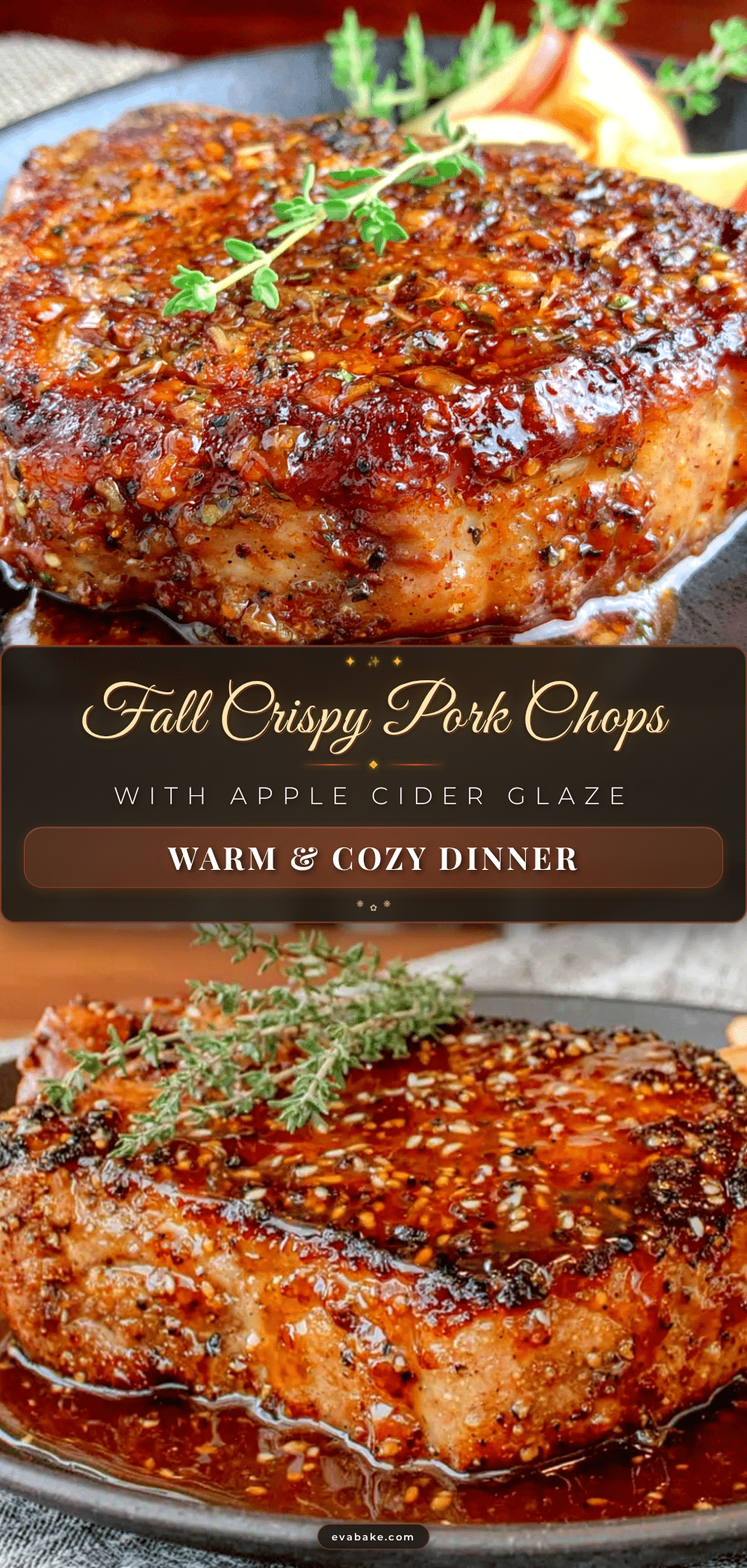
Fall Crispy Pork Chops with Easy Apple Cider Glaze
These fall crispy pork chops with apple cider glaze are quick, easy, and perfect for autumn. The seared chops are finished in a sweet-tangy apple cider glaze for a crispy, juicy, and flavorful dinner in under 30 minutes.
- Prep Time: 10 minutes
- Cook Time: 15 minutes
- Total Time: 25 minutes
- Yield: 4 servings 1x
- Category: Main Course
- Cuisine: American
Ingredients
- 4 bone-in pork chops, about 1-inch thick
- 1 teaspoon kosher salt
- ½ teaspoon black pepper, freshly ground
- 1 teaspoon garlic powder
- 1 teaspoon smoked paprika
- 2 tablespoons olive oil
- 2 tablespoons unsalted butter
- 1 cup apple cider, unfiltered
- 2 tablespoons apple cider vinegar
- 2 tablespoons brown sugar, packed
- 1 tablespoon Dijon mustard
- 1 sprig fresh thyme (or ½ teaspoon dried)
- 1 small shallot, thinly sliced (optional)
Instructions
- Pat the pork chops dry with paper towels. Let them sit on the counter for 10-15 minutes to come to room temperature.
- Mix the dry rub in a small bowl: kosher salt, black pepper, garlic powder, and smoked paprika. Sprinkle generously over both sides of the pork chops, pressing it in.
- Heat your cast-iron skillet over medium-high heat for about 3 minutes. Add the olive oil and swirl to coat.
- Sear the pork chops in the hot skillet. Cook for 4-5 minutes on the first side without moving them. Flip and cook for another 3-4 minutes on the second side.
- Check the temperature with a meat thermometer. Aim for 135°F (57°C). Remove the pork chops to a plate and tent loosely with foil.
- Make the glaze in the same skillet. Reduce heat to medium and add the butter. Once melted, add the sliced shallot (if using) and cook for 1 minute. Pour in apple cider, apple cider vinegar, brown sugar, Dijon mustard, and add the thyme sprig.
- Let the glaze reduce for 5-7 minutes, stirring occasionally, until it thickens to a syrupy consistency.
- Return the pork chops to the skillet. Spoon the glaze over the tops, turning to coat evenly. Cook for another 2-3 minutes, spooning glaze over the chops. Internal temperature should reach 145°F (63°C).
- Remove pork chops from the pan and let rest on a cutting board for 5 minutes. Pour any remaining glaze over the top before serving.
Notes
Pat the pork chops dry for a better sear. Don’t overcrowd the pan; cook in batches if needed. Let the glaze reduce until syrupy before adding the pork back. Use a meat thermometer for perfectly cooked pork (145°F). Leftovers can be stored in the refrigerator for up to 3 days; reheat in a skillet with a splash of water or cider.
Nutrition
- Serving Size: 1 pork chop with gla
- Calories: 400
- Sugar: 15
- Sodium: 650
- Fat: 22
- Saturated Fat: 8
- Carbohydrates: 18
- Protein: 35
Keywords: pork chops, apple cider glaze, fall recipe, crispy pork chops, easy dinner, one-pan meal