“You have to make that ham again this year.” That’s what my brother said last Christmas, mouth half-full, reaching across the table for another slice before he’d even finished chewing. And honestly? I couldn’t blame him.
I used to be intimidated by ham. It felt like a centerpiece you only pull out for serious occasions, something that required a culinary degree or at least a grandmother standing next to you with years of wisdom. But this Perfect Brown Sugar Glazed Ham with Pineapple changed all that for me. It was the first holiday main dish I ever made completely on my own, and I remember standing in the kitchen, peeking through the oven door every ten minutes because I was convinced I’d mess it up somehow.
Spoiler alert: I didn’t. And that sticky, sweet, caramelized crust that formed on top? That was the moment I realized a simple brown sugar glaze with pineapple wasn’t just good—it was the kind of thing people start requesting months in advance.
The smell alone is worth the effort. It fills your whole house with this warm, sweet-savory aroma that makes everyone wander into the kitchen asking when dinner will be ready. And the best part? This recipe is actually pretty forgiving. Even if you’re new to cooking a whole ham, this method gives you a beautiful result with very little fuss. It’s the kind of dish that makes you look like you worked way harder than you actually did.
Why You’ll Love This Recipe
I’ve tested this Perfect Brown Sugar Glazed Ham with Pineapple more times than I can count, tweaking the glaze ratios and cooking times until everything clicked. Here’s why this version stands out from the dozens of other ham recipes out there.
- Incredibly Easy for a Showstopper : Despite looking like something from a fancy holiday magazine, this ham comes together with minimal hands-on time. The oven does most of the work while you prep your side dishes.
- Simple Pantry Ingredients : Brown sugar, pineapple, a little mustard, and some spices—that’s it. No weird specialty items or expensive imported ingredients.
- Perfect for Holidays and Gatherings : Whether it’s Christmas dinner, Easter brunch, or a big Sunday supper, this ham feeds a crowd and makes everyone feel special.
- Always Gets Rave Reviews : I’ve served this to picky eaters, meat-and-potatoes types, and even folks who claimed they didn’t like ham. Every single one of them went back for seconds.
- That Caramelized Crust : The brown sugar and pineapple juice create this sticky, slightly crispy glaze on the outside while the meat stays juicy and tender inside. It’s a texture and flavor combo that’s hard to beat.
What makes this recipe different from the rest is the balance. A lot of glazed hams end up too sweet or too one-note. By adding a touch of Dijon mustard and warming spices like cloves and cinnamon, the glaze gets this subtle complexity that keeps every bite interesting. Plus, the pineapple rings baked on top aren’t just for decoration—they infuse the ham with moisture and a gentle fruity tang that cuts through the richness.
This isn’t just another holiday ham. It’s the one that makes people close their eyes after the first bite and go quiet for a second. That’s the kind of reaction you want at your table.
What Ingredients You Will Need
This recipe uses simple, straightforward ingredients to create something truly special. Most of these are probably already in your pantry, which makes this perfect for last-minute holiday planning or when you’re hosting and don’t want to run around to multiple stores.
For the Ham
- 1 (8-10 pound) bone-in fully cooked spiral-cut ham – I prefer a spiral-cut ham because it’s pre-sliced, making serving a breeze. The bone adds flavor and helps keep the meat moist during reheating. Look for one that’s labeled “fully cooked” or “ready to eat” since we’re just warming it through and adding the glaze.
- Whole cloves (optional but traditional) – If you want that classic ham look with the little clove studs, go for it. They add a subtle warmth, but you can skip them if you’re not a fan.
For the Brown Sugar Glaze
- 1 cup packed light brown sugar – Light brown sugar gives a milder molasses flavor that doesn’t overpower the pineapple. Dark brown sugar works too, but the flavor will be deeper and more intense.
- 1/2 cup pineapple juice – Use canned pineapple juice or the juice from a can of pineapple rings. It adds sweetness and acidity that balances the richness of the ham.
- 1/4 cup honey – Honey helps the glaze stick and gives it a beautiful shine. Maple syrup is a great substitute if that’s what you have.
- 2 tablespoons Dijon mustard – Don’t skip this! The mustard cuts the sweetness and adds a savory depth that makes the glaze more interesting. Whole grain mustard works too.
- 1 teaspoon ground cinnamon – A pinch of warmth that complements the brown sugar and pineapple beautifully.
- 1/2 teaspoon ground cloves – Traditional ham spices. If you studded the ham with whole cloves, you can reduce this to 1/4 teaspoon.
- 1/4 teaspoon ground nutmeg – Optional, but I love the subtle nuttiness it adds.
For the Pineapple Topping
- 1 can (20 ounces) pineapple rings in juice – Drain them but save the juice for the glaze. The rings get caramelized and slightly charred around the edges as they bake, becoming almost candy-like.
- Maraschino cherries (optional) – For that classic retro look. Use them to secure the pineapple rings with toothpicks if you’re going for full presentation mode.
Ingredient Tips: I always use Dole pineapple rings because they’re consistently sweet and tender. For the brown sugar, Domino or C&H are my go-to brands. If you can find a ham from Hormel or Smithfield, they tend to be less salty and more evenly cooked. And one more thing—let your ham sit at room temperature for about 30 minutes before you start. It warms up more evenly that way.
Equipment Needed
You don’t need a ton of fancy equipment for this recipe, which is part of what makes it so approachable.
- Large roasting pan with a rack – The rack keeps the ham elevated so it cooks evenly and the glaze can drip down. If you don’t have a rack, you can use crumpled aluminum foil balls to lift the ham up.
- Aluminum foil – You’ll tent the ham for the first part of cooking to keep it from drying out.
- Small saucepan – For making the glaze on the stovetop.
- Basting brush – A silicone brush works best for spreading the glaze evenly. A pastry brush or even a clean spoon works in a pinch.
- Meat thermometer – This is non-negotiable for me. Even though the ham is fully cooked, you want to make sure it reaches a safe internal temperature of 140°F for the best texture.
- Sharp knife and cutting board – For slicing if your ham isn’t spiral-cut.
- Toothpicks – If you’re using cherries to secure the pineapple rings.
I bought a cheap roasting pan from Target years ago, and it’s still going strong. You really don’t need to spend a lot of money on equipment for this. The one thing I’d splurge on is a good instant-read thermometer—it takes the guesswork out of cooking meat and saves you from serving a dry ham.
Preparation Method
Let’s walk through this step by step. I’ll include all the little details I’ve learned from making this ham more times than I can count.
Step 1: Prep the Ham
Preheat your oven to 325°F (163°C). Take your ham out of its packaging and pat it dry with paper towels. If your ham has a plastic disk or cap on the bone, remove that. Place the ham cut-side down on the rack in your roasting pan. This position helps the meat stay juicy as it reheats. Score the outside of the ham in a diamond pattern about 1/4-inch deep if it isn’t already scored. This helps the glaze seep into the meat and creates those pretty little crisscross lines. If you’re using whole cloves, press one into the center of each diamond. Don’t go overboard—about 20 to 30 cloves total is plenty.
Step 2: Make the Glaze
In a small saucepan over medium heat, combine the brown sugar, pineapple juice, honey, Dijon mustard, cinnamon, ground cloves, and nutmeg. Whisk everything together until the sugar dissolves and the mixture starts to simmer, about 3 to 4 minutes. Let it bubble gently for another 2 minutes until it thickens slightly. It should look like a syrupy sauce that coats the back of a spoon. Remove it from the heat and set it aside. Taste it—it should be sweet with a little tang from the mustard and warmth from the spices. Adjust anything if you want, but this ratio is pretty spot-on.
Step 3: First Bake (Covered)
Take a large sheet of aluminum foil and tent it loosely over the ham, making sure it doesn’t touch the surface. This traps steam and keeps the ham from drying out during the first part of cooking. Place the ham in the preheated oven and bake for about 10 minutes per pound. For an 8-pound ham, that’s roughly 1 hour and 20 minutes. For a 10-pound ham, about 1 hour and 40 minutes. At the halfway point, baste the ham with some of the glaze using your brush. Don’t worry if it drips off—that’s normal. Just keep layering it on.
Step 4: Add the Pineapple and Glaze
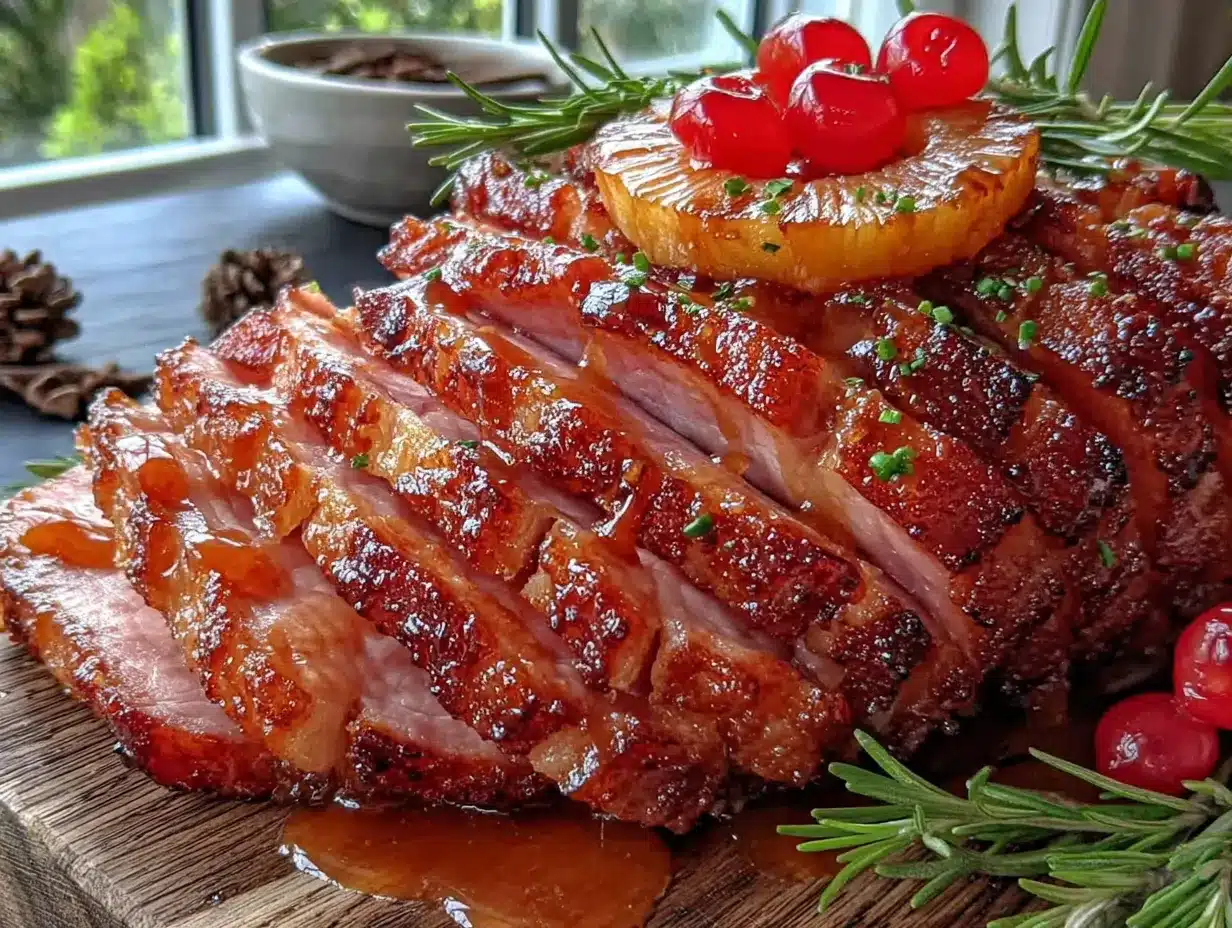
After the initial covered baking time, remove the foil. Arrange the pineapple rings over the surface of the ham, securing each one with a toothpick and a maraschino cherry if you’re using them. Brush the entire ham generously with the remaining glaze, getting it into all the nooks and crannies between the slices. Don’t be shy here—this is what creates that gorgeous caramelized crust.
Step 5: Second Bake (Uncovered)
Return the ham to the oven, this time uncovered. Bake for another 20 to 30 minutes, basting every 10 minutes with the pan juices and any extra glaze. You’ll know it’s ready when the glaze is sticky and bubbling, the pineapple edges are starting to brown, and an instant-read thermometer inserted into the thickest part (without touching the bone) reads 140°F (60°C). The internal temperature should rise a few more degrees as it rests.
Step 6: Rest and Serve
Take the ham out of the oven and tent it loosely with foil again. Let it rest for 15 to 20 minutes before carving. This is crucial—the juices need time to redistribute so every slice is moist and tender. If you cut into it too soon, all that goodness ends up on the cutting board instead of in your mouth. Transfer the ham to a serving platter, arrange the pineapple rings around it, and spoon some of the pan juices over the top. If you want, you can strain the pan drippings and serve them on the side as an extra sauce.
Cooking Tips & Techniques
I’ve made plenty of mistakes with ham over the years, so let me save you from repeating them.
Don’t overcook it. The biggest mistake people make is treating a fully cooked ham like raw meat. You’re just reheating it and adding flavor. Overcooking dries it out and makes it tough. Trust your thermometer—140°F is the sweet spot.
Baste, baste, baste. That sticky glaze is the star of the show, and it needs attention. Set a timer and baste every 10 minutes during the uncovered phase. Each layer adds more flavor and builds that beautiful caramelized crust.
Let it rest. I know you’re hungry and the house smells amazing, but rushing this step is a recipe for disappointment. The 15-minute rest makes a noticeable difference in texture.
Score carefully. Don’t cut too deep when scoring the ham. A quarter-inch is plenty. If you cut too deep, the meat can dry out and the slices might fall apart when you’re carving.
Use the pan juices. Don’t throw away those flavorful drippings at the bottom of the pan. They’re liquid gold. Spoon them over the sliced ham or use them to make a quick sauce. I sometimes add a splash of bourbon or apple cider vinegar to the pan juices for an extra kick.
One time I forgot to tent the ham during the first bake, and the outside dried out while the center was still cold. Now I set a reminder on my phone so I don’t skip that step. We all learn the hard way sometimes.
Variations & Adaptations
This recipe is flexible, so feel free to make it your own. Here are some variations I’ve tried and loved.
Spicy Brown Sugar Glaze
Add 1 teaspoon of chipotle powder or a minced jalapeño to the glaze for a smoky, spicy kick. The heat balances beautifully with the sweet pineapple and brown sugar. I made this version for a New Year’s Eve party, and it disappeared faster than the original.
Maple Bourbon Glaze
Swap the honey for maple syrup and add 2 tablespoons of bourbon to the glaze. The bourbon adds a warm, oaky depth that pairs perfectly with the ham. Just let it cook for an extra minute to burn off the alcohol.
Honey Garlic Glaze
Replace the Dijon mustard with 3 cloves of minced garlic and use honey instead of brown sugar. This creates a stickier, more savory glaze that’s incredible if you’re not a fan of overly sweet ham. My dad actually prefers this version now.
Pineapple-Free Version
If you’re not a pineapple fan (I know, controversial), you can skip the rings and use orange juice or apple cider instead of pineapple juice in the glaze. The result is still sweet and tangy, just with a different fruit profile.
Dietary Adaptations
For a gluten-free version, this recipe is naturally gluten-free as written. Just double-check your Dijon mustard and ham labels. For a lower-sugar option, use a sugar substitute like Swerve Brown Sugar and reduce the honey to 2 tablespoons. The texture will be slightly different, but it still tastes great.
Serving & Storage Suggestions
This ham is the centerpiece of the meal, so let it shine. Serve it warm, right after its rest, on a large platter with the pineapple rings arranged around it. The contrast of the dark, caramelized glaze against the pink meat is absolutely stunning.
What to serve with it: Classic sides like creamy mashed potatoes, roasted green beans with almonds, or a simple buttered noodle dish are perfect. A bright, tangy fresh watermelon feta mint skewers with zesty chili lime dressing would add a refreshing counterpoint to the rich ham. For a starch, you can’t go wrong with cozy pumpkin cream cheese swirl muffins with cinnamon streusel if you’re serving this for a fall or holiday brunch. And if you want a lighter option, a fresh cold pasta salad with sun-dried tomatoes is an easy make-ahead side that complements the ham’s sweetness.
Storage: Leftover ham keeps beautifully. Remove the meat from the bone and store it in an airtight container in the refrigerator for up to 5 days. The glaze will continue to soak into the meat, making it even more flavorful the next day.
Reheating: To reheat slices, place them in a skillet over medium-low heat with a splash of pineapple juice or water. Cover and warm for 2 to 3 minutes per side. You can also microwave individual portions, but the texture won’t be as good. For larger amounts, wrap the ham in foil and warm it in a 300°F oven for 10 to 15 minutes.
Freezing: Ham freezes well for up to 3 months. Slice it first, wrap portions tightly in plastic wrap and then foil, and store in a freezer bag. Thaw overnight in the refrigerator before reheating. The flavors actually deepen a bit after freezing, which is a nice bonus.
One thing I love about this ham is that the leftovers are just as good as the first meal. I’ve made sandwiches, added it to omelets, and even chopped it up for a savory loaded pulled pork totchos-style dish using ham instead of pork. It’s incredibly versatile.
Nutritional Information & Benefits
Ham is a good source of protein, B vitamins, and minerals like zinc and phosphorus. The pineapple in this recipe adds vitamin C and bromelain, an enzyme that can aid digestion. That said, ham is also high in sodium, so it’s best enjoyed as part of a balanced meal with plenty of vegetables and whole grains.
Here’s an approximate nutritional breakdown per serving (based on 3 ounces of ham with glaze):
| Nutrient | Amount |
|---|---|
| Calories | 220 |
| Protein | 18g |
| Fat | 8g |
| Saturated Fat | 3g |
| Carbohydrates | 18g |
| Sugar | 16g |
| Sodium | 850mg |
Dietary Considerations: This recipe is naturally gluten-free and dairy-free. If you’re watching your sugar intake, you can reduce the brown sugar and honey slightly, though the glaze won’t be as thick or caramelized. Ham is also keto-friendly in moderation if you skip the glaze or use a sugar-free alternative.
I don’t pretend this is a health food, but it’s a celebration dish. And honestly, a little indulgence around the holidays is part of what makes them special. Balance it out with lighter meals the rest of the week.
Frequently Asked Questions
Can I use a boneless ham instead of bone-in?
Absolutely. Boneless hams cook faster and are easier to slice, but they tend to be a little drier and less flavorful than bone-in. If using boneless, reduce the initial covered baking time to about 8 minutes per pound and watch the internal temperature closely.
How do I keep the ham from drying out?
Two things: don’t overcook it, and keep it covered for the first part of baking. The foil tent traps steam and moisture, which keeps the meat tender. Basting regularly during the uncovered phase also helps.
Can I make the glaze ahead of time?
Yes! The glaze can be made up to 3 days in advance. Store it in an airtight container in the refrigerator. When you’re ready to use it, warm it gently on the stovetop or in the microwave until it’s liquid enough to brush on.
What if my ham is already spiral-cut? Do I still need to score it?
Nope. Spiral-cut hams are already sliced, so scoring is unnecessary. Just focus on getting the glaze between the slices. You can use a spoon or brush to gently separate the slices and apply the glaze directly to the exposed surfaces.
Can I use fresh pineapple instead of canned?
You can, but fresh pineapple contains an enzyme called bromelain that can break down the meat’s texture if it sits too long. If you use fresh pineapple, add it only during the last 15 minutes of baking. Canned pineapple is more predictable and works perfectly here.
Conclusion
This Perfect Brown Sugar Glazed Ham with Pineapple is more than just a recipe—it’s the kind of dish that becomes a tradition. The first time I made it, I was nervous and unsure. Now it’s the thing my family asks for every single holiday, and I never get tired of hearing them say “this is the best ham you’ve ever made” year after year.
The beauty of this recipe is that it looks and tastes like you spent all day in the kitchen, but the actual hands-on time is minimal. It’s forgiving, it’s flexible, and it delivers every single time. Whether you’re hosting your first holiday dinner or you’re a seasoned pro looking for a reliable showstopper, this ham will not let you down.
I’d love to hear how yours turns out. Did you add your own twist to the glaze? Serve it with a favorite side dish? Leave a comment below and let me know—I read every single one and I love seeing what you all create. And if you share a photo on social media, tag me so I can cheer you on.
Now go make that ham. Your table is waiting.
Pin This Recipe!
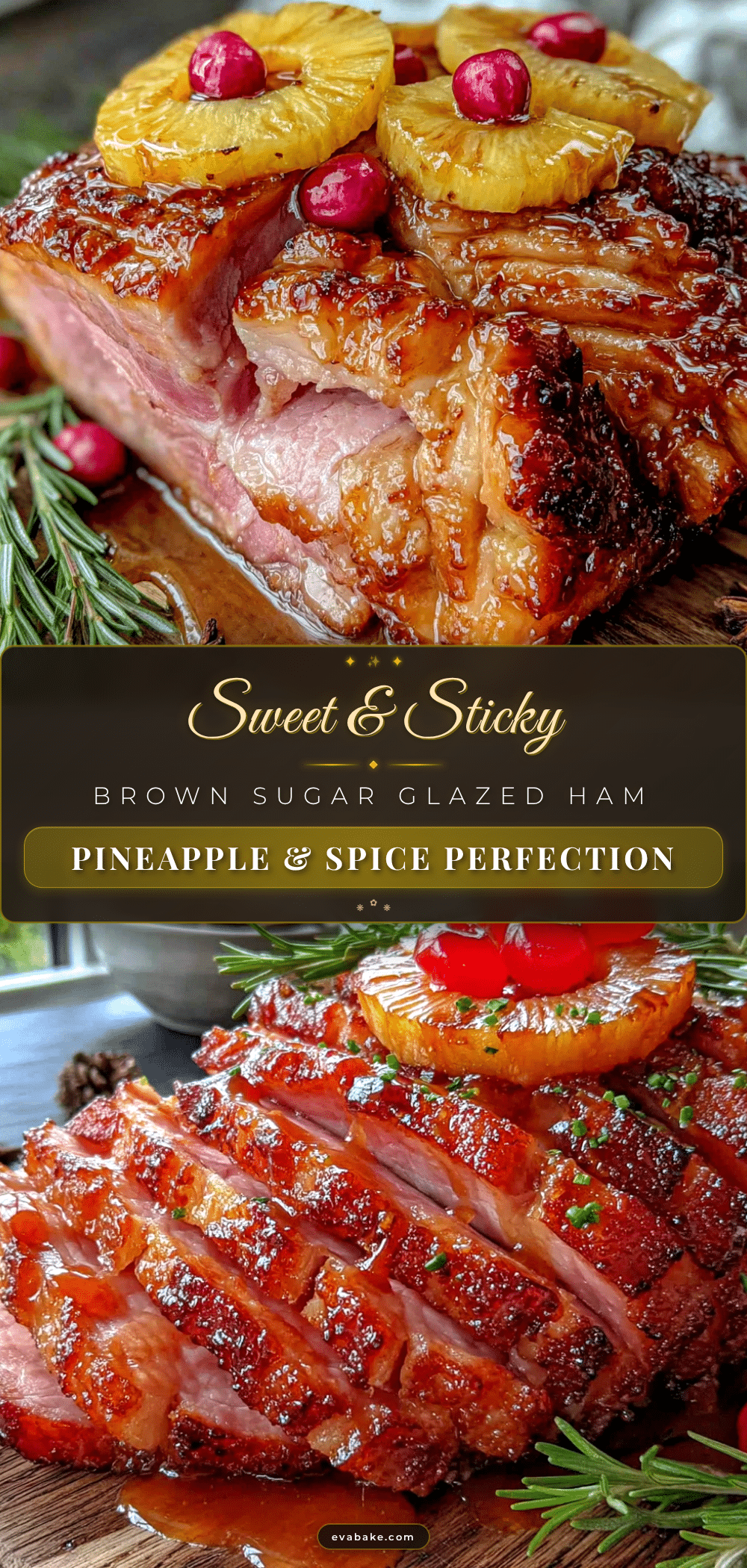
Perfect Brown Sugar Glazed Ham with Pineapple – Easy Holiday Recipe
This Perfect Brown Sugar Glazed Ham with Pineapple is a showstopper holiday main dish with a sticky, sweet, caramelized crust and juicy, tender meat. It’s incredibly easy to make with simple pantry ingredients and always gets rave reviews.
- Prep Time: 15 minutes
- Cook Time: 1 hour 40 minutes to 2 hours 10 minutes
- Total Time: 1 hour 55 minutes to 2 hours 25 minutes
- Yield: 12 servings 1x
- Category: Main Course
- Cuisine: American
Ingredients
- 1 (8-10 pound) bone-in fully cooked spiral-cut ham
- Whole cloves (optional but traditional)
- 1 cup packed light brown sugar
- 1/2 cup pineapple juice
- 1/4 cup honey
- 2 tablespoons Dijon mustard
- 1 teaspoon ground cinnamon
- 1/2 teaspoon ground cloves
- 1/4 teaspoon ground nutmeg (optional)
- 1 can (20 ounces) pineapple rings in juice
- Maraschino cherries (optional)
Instructions
- Preheat your oven to 325°F (163°C). Take your ham out of its packaging and pat it dry with paper towels. Remove any plastic disk or cap on the bone. Place the ham cut-side down on the rack in your roasting pan. Score the outside of the ham in a diamond pattern about 1/4-inch deep if it isn’t already scored. If using whole cloves, press one into the center of each diamond (about 20 to 30 cloves total).
- In a small saucepan over medium heat, combine the brown sugar, pineapple juice, honey, Dijon mustard, cinnamon, ground cloves, and nutmeg. Whisk until the sugar dissolves and the mixture starts to simmer, about 3 to 4 minutes. Let it bubble gently for another 2 minutes until it thickens slightly. Remove from heat and set aside.
- Tent a large sheet of aluminum foil loosely over the ham, making sure it doesn’t touch the surface. Place the ham in the preheated oven and bake for about 10 minutes per pound (for an 8-pound ham, about 1 hour 20 minutes; for a 10-pound ham, about 1 hour 40 minutes). At the halfway point, baste the ham with some of the glaze.
- After the initial covered baking time, remove the foil. Arrange the pineapple rings over the surface of the ham, securing each one with a toothpick and a maraschino cherry if using. Brush the entire ham generously with the remaining glaze, getting it into all the nooks and crannies between the slices.
- Return the ham to the oven, uncovered. Bake for another 20 to 30 minutes, basting every 10 minutes with the pan juices and any extra glaze. The ham is ready when the glaze is sticky and bubbling, the pineapple edges are starting to brown, and an instant-read thermometer inserted into the thickest part (without touching the bone) reads 140°F (60°C).
- Remove the ham from the oven and tent it loosely with foil again. Let it rest for 15 to 20 minutes before carving. Transfer the ham to a serving platter, arrange the pineapple rings around it, and spoon some of the pan juices over the top. If desired, strain the pan drippings and serve on the side as an extra sauce.
Notes
Don’t overcook the ham; it’s fully cooked and just needs reheating to 140°F. Baste frequently during the uncovered phase for a caramelized crust. Let the ham rest for 15-20 minutes before carving to redistribute juices. Score the ham only 1/4-inch deep to prevent drying out. Use the pan juices as a sauce.
Nutrition
- Serving Size: 3 ounces of ham with
- Calories: 220
- Sugar: 16
- Sodium: 850
- Fat: 8
- Saturated Fat: 3
- Carbohydrates: 18
- Protein: 18
Keywords: brown sugar glazed ham, pineapple ham, holiday ham, Easter ham, Christmas ham, spiral ham, glazed ham recipe